Did you know that up to 30% of small engine failures stem from carburetor issues? If your Honda lawn mower struggles to start or runs unevenly, cleaning the carburetor is often the key fix. Properly cleaning a Honda lawn mower carburetor can restore your mower’s performance and extend its lifespan.
You’ll need to follow precise steps to safely remove, clean, and reassemble the carburetor without causing damage. Understanding this process can save you time and money. Taking care when handling the carburetor ensures your mower runs smoothly again.
Key Takeaways
- Turn off the mower, disconnect the spark plug wire, and drain the fuel to ensure a safe and clean workspace before starting.
- Remove the carburetor by loosening mounting bolts, disconnecting throttle linkage and fuel line, and carefully detaching it from the engine.
- Soak carburetor components in cleaner, scrub thoroughly, and use compressed air to dry all passages and parts completely.
- Replace gaskets, realign the float and needle valve, and reassemble the carburetor ensuring smooth linkage movement.
- Reinstall the carburetor, reconnect fuel and throttle lines, then troubleshoot common issues like clogged jets or air leaks if problems persist.
Gather Tools and Materials for Honda Lawn Mower Carburetor Cleaning
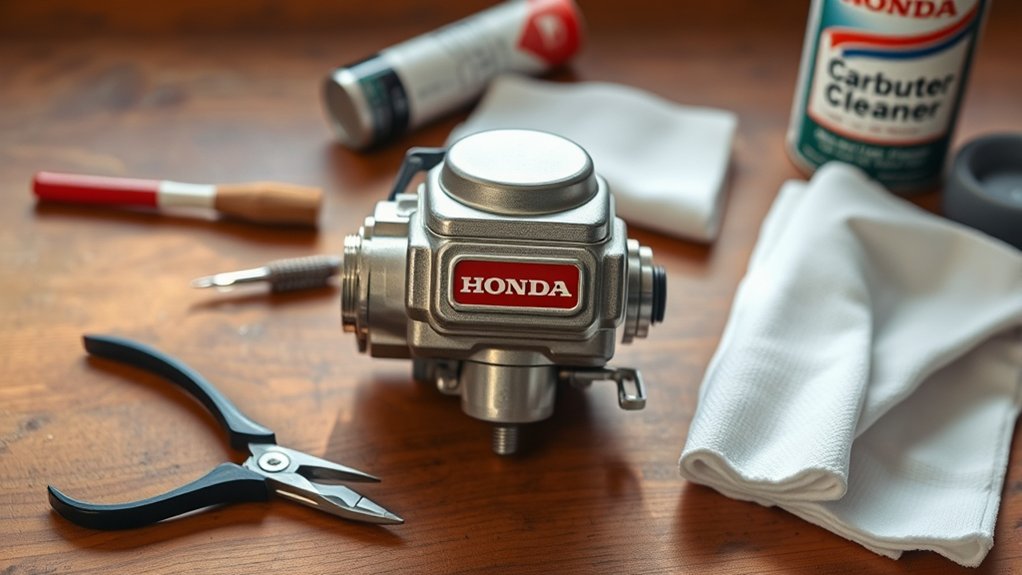
Where do you begin when cleaning your Honda lawn mower carburetor? Start by gathering the necessary tools and safety equipment to ensure an efficient process. You’ll need a screwdriver set, a socket wrench, carburetor cleaner spray, compressed air, and a clean workspace.
Don’t forget safety gloves and eye protection to prevent injury from chemicals and debris. Organizing your tools beforehand streamlines the job and reduces the risk of errors.
Adhering to a maintenance scheduling routine helps you stay on top of carburetor care, preventing buildup and prolonging mower life. By preparing your tools and prioritizing safety, you set the foundation for a successful carburetor cleaning that maintains optimal engine performance.
Prepare Your Honda Mower: Safety and Fuel Drain Tips
Before you begin cleaning, ensure your Honda mower is turned off and cooled down to prevent accidents. Prioritize cleanup safety by working in a well-ventilated area and wearing gloves to protect your hands from fuel and debris. Properly draining the fuel is essential to avoid spills and fire hazards during carburetor maintenance.
Always turn off and cool your Honda mower before cleaning, working safely with gloves in a ventilated area.
Follow these steps for safe preparation:
- Disconnect the spark plug wire to prevent accidental starts.
- Use a fuel siphon or carefully open the fuel valve to drain gasoline into an approved container.
- Remove the fuel tank cap to allow air in, speeding up the fuel drain process.
- Wipe any spilled fuel promptly to maintain a safe, clean workspace.
These precautions ensure efficient fuel drain and enhance overall cleanup safety.
How to Remove the Honda Lawn Mower Carburetor
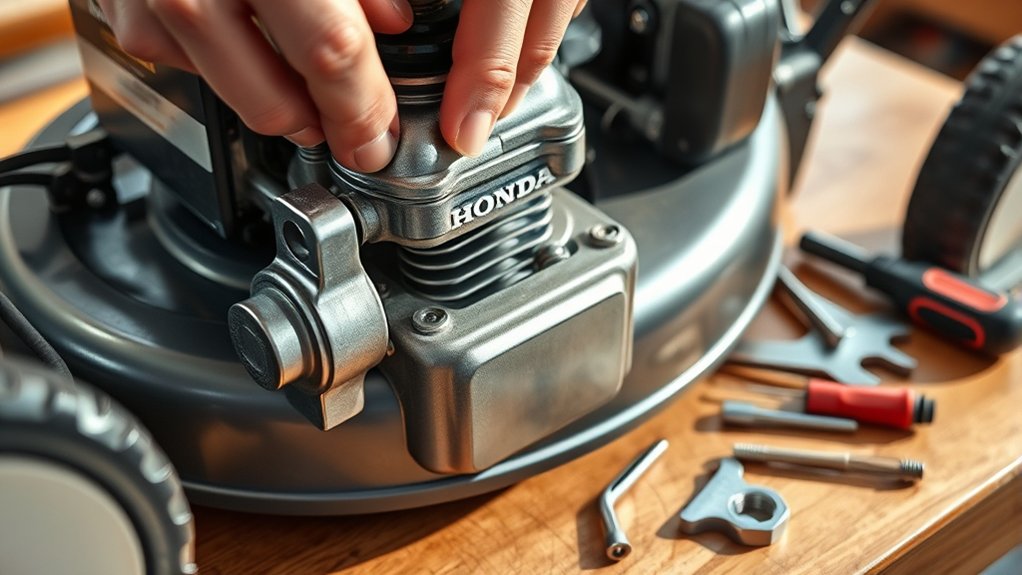
How do you safely remove the carburetor from your Honda lawn mower? First, ensure the mower is off, cooled, and fuel is drained as a key safety precaution. Disconnect the spark plug wire to prevent accidental starts.
Locate the carburetor near the engine intake. Begin removing carburetor by detaching the air filter cover and element to access mounting bolts. Carefully loosen and remove these bolts, keeping track of any washers or gaskets.
Disconnect the throttle linkage and fuel line; use a clamp or rag to catch any residual fuel and avoid spills. Follow safety precautions by working in a well-ventilated area and wearing gloves to prevent contact with fuel.
With all connections freed, gently lift the carburetor off the engine for cleaning or inspection.
Clean and Reassemble the Carburetor for Best Performance
Why does cleaning the carburetor thoroughly matter? Proper cleaning techniques ensure all fuel passages are free of debris, preventing poor engine performance or stalling. Avoid maintenance myths that suggest a quick rinse is enough; residues can remain in tiny jets and seals.
Thorough carburetor cleaning clears debris from fuel passages, preventing engine stalls and performance issues.
After soaking and scrubbing, dry all parts completely using compressed air for best results. When reassembling, follow these steps:
- Align the float and needle valve precisely to avoid fuel leaks.
- Replace gaskets to maintain airtight seals.
- Tighten screws evenly to prevent warping the carburetor body.
- Double-check all linkages for smooth movement.
This methodical approach guarantees optimal fuel flow and combustion, extending your mower’s lifespan and efficiency.
Troubleshoot Common Honda Lawn Mower Carburetor Problems
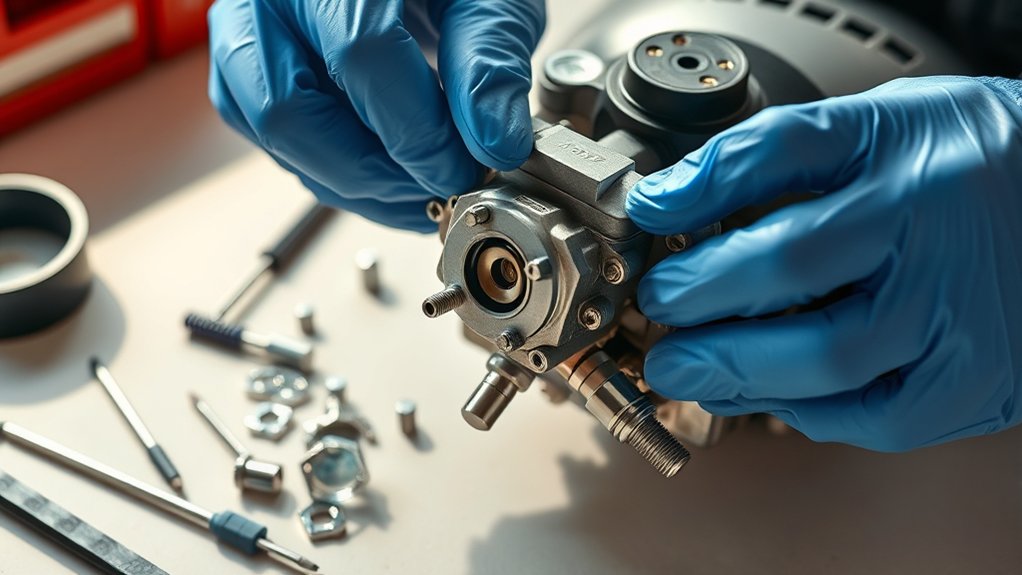
Thorough cleaning and proper reassembly set the stage for identifying carburetor issues effectively. Use comprehensive diagnostics to pinpoint common failure modes such as fuel flow blockages, stuck float valves, and air leaks.
Check each part systematically for wear or damage.
| Symptom | Possible Cause | Recommended Action |
|---|---|---|
| Engine stalls | Clogged jets | Clean jets with carb cleaner |
| Hard starting | Faulty float valve | Replace or adjust valve |
| Rough idle | Air leaks | Inspect and seal connections |
| Poor acceleration | Dirty needle valve | Clean or replace valve |
Frequently Asked Questions
How Often Should I Replace My Honda Lawn Mower Carburetor?
You should replace your Honda lawn mower carburetor every 3-5 years, depending on usage. Monitor performance issues; carburetor lifespan varies, but replacement frequency increases if fuel quality or maintenance is poor.
Can I Use Fuel Additives to Prevent Carburetor Issues?
Yes, you can use fuel additives as part of preventive maintenance to keep your Honda lawn mower’s carburetor clean. They help prevent varnish buildup, improve fuel stability, and reduce clogging.
Using additives can extend carburetor life and performance.
What Type of Fuel Is Best for Honda Lawn Mowers?
You should use fresh, ethanol-free gasoline with fuel stability additives to minimize ethanol effects on ignition timing and prevent carburetor issues. Avoid oil mixing unless it’s a 2-stroke engine, ensuring optimal mower performance and longevity.
How Do I Store My Mower During Winter to Protect the Carburetor?
Like a fortress guarding its treasures, add winterizing fuel to prevent gum buildup. Drain or stabilize the tank, clean the carburetor, and store your mower in a dry, well-ventilated area using proper storage solutions for lasting protection.
Are There Specific Honda Carburetor Models for Different Mower Types?
Yes, Honda designs specific carburetor models tailored to mower type differences, ensuring optimal performance.
You’ll need to match your mower’s engine and model number to find the correct carburetor model for compatibility and efficiency.
Conclusion
Cleaning your Honda lawn mower carburetor can boost engine efficiency by up to 30%, reducing fuel consumption and emissions. By following proper safety steps and thoroughly cleaning all components, you’ll ensure smooth starts and consistent idling.
Remember to inspect gaskets and linkages during reassembly to prevent leaks. Regular maintenance like this prolongs your mower’s life and keeps it running at peak performance.
Incorporating these steps into your routine will save you time and costly repairs down the line, making cleaning your Honda lawn mower carburetor an essential part of mower upkeep.