You’ll want to start by parking your vehicle on a flat surface and letting the engine cool completely to avoid burns.
Cleaning oil off an engine begins with protecting sensitive parts like electrical components and air intakes using plastic covers or tape.
Use a strong degreaser and brushes to target oil buildup, then rinse carefully with low-pressure water.
Dry the engine thoroughly to prevent moisture damage.
Regular inspection and maintenance help prevent future leaks.
Following these steps guarantees effective cleaning, and more detailed guidance can help you handle tougher engine oil challenges.
Key Takeaways
- Allow the engine to cool completely and disconnect the battery before cleaning to ensure safety.
- Cover sensitive electrical parts and air intakes with plastic or waterproof tape to prevent moisture damage.
- Apply a suitable degreaser evenly on oil-soiled engine areas and let it sit before rinsing with low-pressure water.
- Use cleaning brushes and absorbent mats to remove oil residue from tight spaces and catch drips.
- Dry the engine thoroughly with compressed air or clean rags to prevent moisture-related issues.
Preparing Your Engine for Cleaning Oil
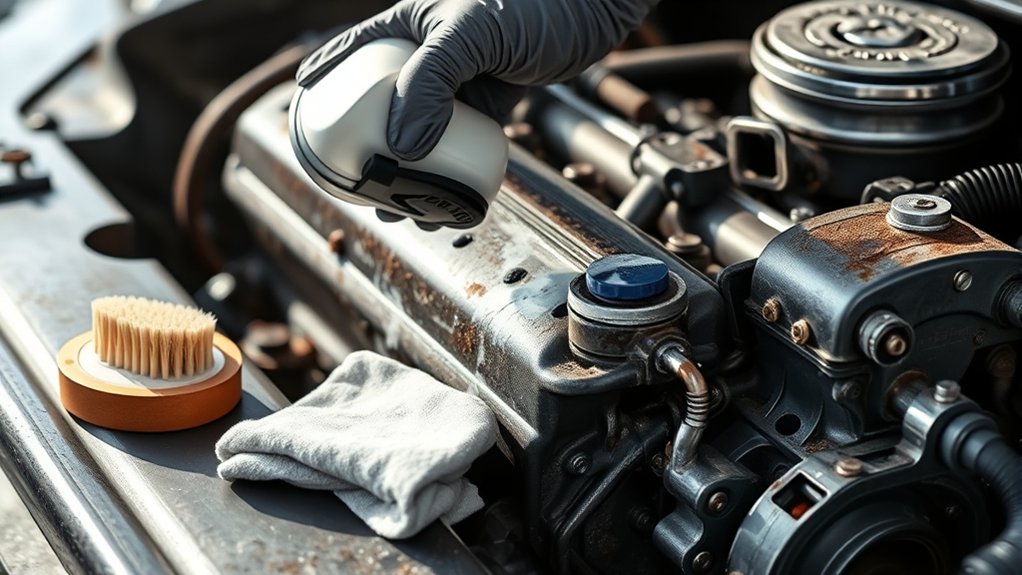
Before you begin cleaning oil off your engine, you need to prepare the workspace and the engine itself properly. Start by parking your vehicle on a flat, well-ventilated surface and letting the engine cool completely to avoid burns and guarantee effective cleaning.
Gather all necessary tools and protective gear to streamline the process. As part of engine maintenance tips, inspect the engine for excessive oil residue effects, such as grime buildup that can cause overheating or reduced efficiency.
Cover nearby electrical components with plastic bags to prevent water damage, but don’t seal the engine entirely at this stage. Confirming proper preparation helps you avoid complications during cleaning and protects the engine’s performance, extending its lifespan.
This step sets the foundation for safe, effective oil removal.
Protecting Sensitive Engine Parts Before Cleaning
Before you start cleaning, make certain to cover all electrical components with plastic or waterproof tape to prevent water damage.
Seal air intake openings tightly to avoid moisture entering the engine. Taking these steps protects critical parts and guarantees a safe cleaning process.
Cover Electrical Components
When cleaning oil off your engine, you’ll want to shield all electrical components to prevent water and cleaning agents from causing damage or short circuits. Start by identifying exposed wiring, connectors, and sensors. Then, follow these steps:
- Use electrical tape to tightly wrap exposed wires and connectors, guaranteeing a secure, moisture-resistant seal.
- Apply waterproof covers over sensitive parts like the ignition coil and fuse box.
- Secure covers with zip ties or clamps to prevent displacement during cleaning.
- Double-check all seals for gaps or loose areas before proceeding with degreasing.
These precautions guarantee you protect crucial engine electronics from moisture intrusion, maintaining system integrity while you remove oil residues efficiently.
Seal Air Intake Openings
After securing electrical components, turn your attention to sealing the air intake openings. This step is essential for engine protection, preventing water or cleaning solvents from entering sensitive parts, which could degrade engine performance.
Choose seal methods based on your engine’s design and oil types involved. Use quality tape or plastic covers to guarantee a tight seal.
| Seal Method | Suitable Oil Types | Maintenance Tips |
|---|---|---|
| Plastic Wrap | Light to Medium Viscosity | Replace after each cleaning |
| Adhesive Tape | Heavy and Synthetic Oils | Inspect for wear before use |
| Custom Caps | All Oil Types | Store for repeated cleaning use |
Adhering to these cleaning safety steps improves engine longevity and informs cleaning frequency decisions.
Tools and Products You’ll Need for Oil Removal
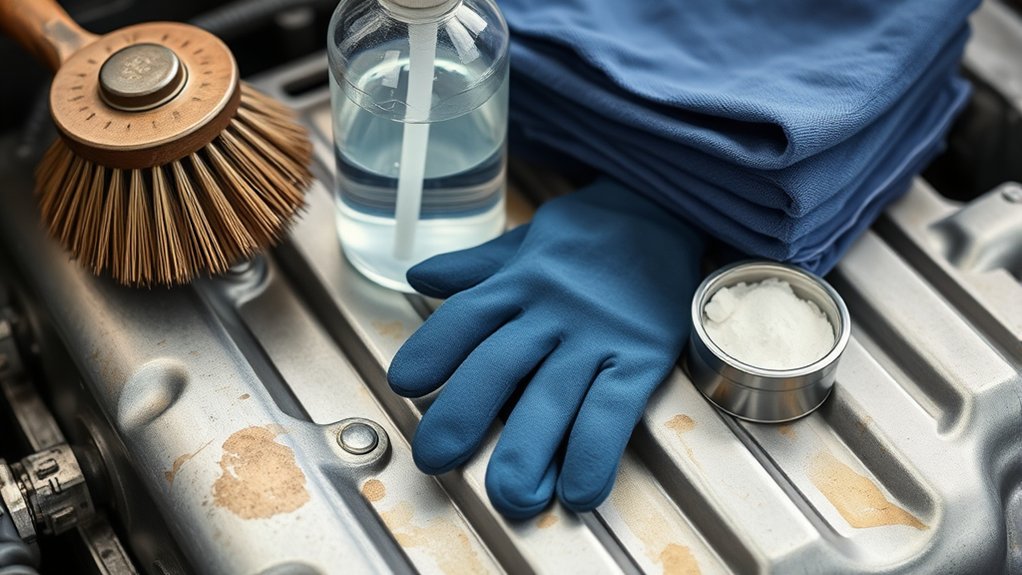
You’ll need specific tools like brushes, rags, and a spray bottle to effectively remove oil from your engine. Choosing the right degreasing product is critical for breaking down stubborn oil without damaging components.
Let’s review the essential tools and recommended cleaners to get the job done efficiently.
Essential Cleaning Tools
Several specialized tools and products are vital for effectively removing oil from an engine. First, you’ll need cleaning brushes of various sizes to reach tight engine components and dislodge grime. Second, use absorbent mats to catch drips and prevent environmental contamination.
Third, a pressure washer helps remove loosened oil and debris quickly but requires caution to avoid damage. Fourth, safety equipment like protective gloves and safety goggles is imperative to protect your skin and eyes from harmful solvents and splashes.
Additionally, keep cleaning rags and solvent containers nearby for controlled application and disposal. Don’t forget to remove or cover the engine cover to prevent water intrusion into sensitive areas. Having these tools ready guarantees a thorough, safe oil removal process.
Recommended Degreasing Products
Effective oil removal depends heavily on choosing the right degreasing products designed for engine cleaning. You’ll want to select from industrial grade products, which deliver powerful cleaning performance on stubborn oil deposits.
Heavy duty cleaners and solvent based solutions excel at breaking down thick grease but require careful handling due to their chemical strength. For a safer, eco friendly option, consider biodegradable degreasers or citrus based cleaners; these not only reduce environmental impact but also provide effective degreasing with less toxicity.
When selecting a product, balance cleaning power with safety and environmental factors. Always follow manufacturer instructions for application and dilution to guarantee peak results. Using the appropriate degreasing product will streamline your cleaning process and protect engine components from damage during oil removal.
Step-By-Step Guide to Removing Oil From Your Engine
Cleaning oil off your engine involves a series of precise steps to guarantee thorough removal without damaging components. Different oil types require careful handling to avoid residue buildup that can impair engine maintenance. Follow these steps:
- Prepare the engine: Confirm the engine is cool and disconnect the battery to prevent electrical hazards.
- Cover sensitive parts: Use plastic bags or aluminum foil to protect the air intake, distributor, and electrical wiring.
- Apply degreaser: Spray a suitable degreasing product evenly, focusing on heavily soiled areas.
- Rinse and dry: Use low-pressure water to rinse off the degreaser thoroughly, then dry the engine with compressed air or clean rags.
This method preserves engine integrity while effectively removing oil contaminants.
Choosing the Right Cleaning Solution for Oil Stains
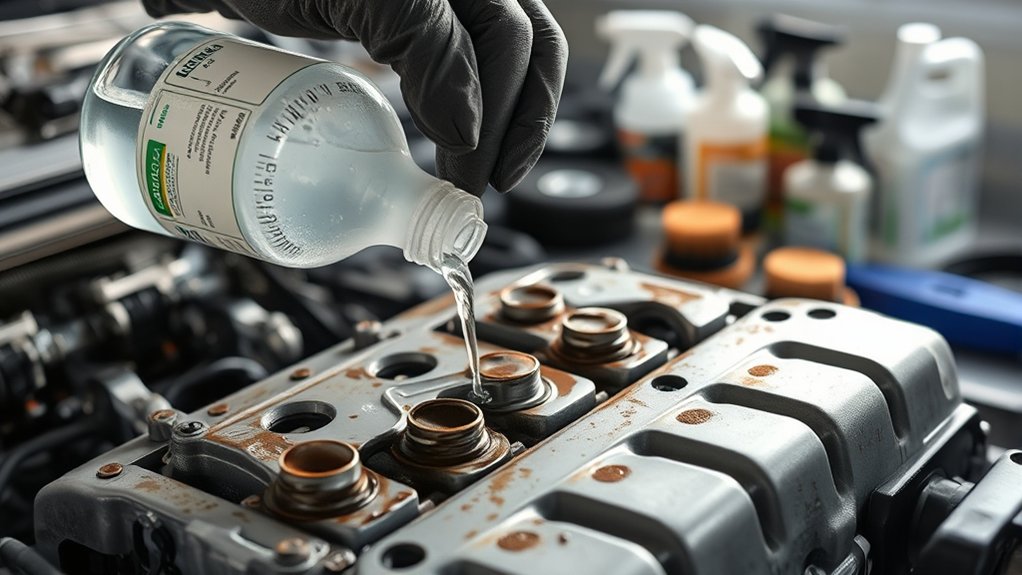
After preparing your engine and safely removing surface oil, selecting the appropriate cleaning solution becomes the next step. You’ll want to choose from the best solvents designed specifically for breaking down heavy oil deposits without damaging engine components.
Solvents containing petroleum distillates or citrus-based formulas work effectively, but be cautious with harsh chemicals that may degrade rubber or plastic parts. If you prefer eco-friendly options, look for biodegradable degreasers made from natural ingredients; they offer strong cleaning power while minimizing environmental impact.
Always verify compatibility with your engine materials and follow manufacturer instructions closely. By choosing the right solution, you guarantee efficient oil removal and protect your engine’s integrity during cleaning.
Rinsing and Drying Your Engine After Cleaning Oil
Once you’ve applied your cleaning solution and loosened the oil, you’ll need to thoroughly rinse the engine to remove residual solvents and oil residues. Follow these engine maintenance tips for effective rinsing and drying:
- Use low-pressure water to avoid forcing moisture into sensitive electrical components.
- Rinse from top to bottom ensuring all cleaning agents wash away completely.
- After rinsing, remove excess water with compressed air or a leaf blower to accelerate drying.
- Apply drying techniques such as using microfiber towels on accessible surfaces and allowing the engine to air dry for at least 24 hours before starting.
Adhering to these steps prevents corrosion and electrical issues, ensuring your engine stays clean and functional.
Preventing Future Engine Oil Leaks and Build-Up
Proper rinsing and drying reduce the risk of corrosion, but preventing oil leaks and buildup requires ongoing attention to your engine’s condition. Focus on oil leak prevention by regularly inspecting seals, gaskets, and hoses for wear or damage. Replace any compromised components promptly to avoid leaks.
Implement routine maintenance by checking oil levels and changing oil according to the manufacturer’s schedule. Use the correct oil type and quality to guarantee proper engine lubrication, reducing residue accumulation. Keep the engine clean by wiping off minor oil spots immediately to prevent buildup.
Additionally, monitor engine temperature and pressure to detect early signs of issues contributing to leaks. Consistent, proactive care minimizes the risk of oil contamination and extends engine life effectively.
When to Call a Professional for Engine Oil Cleaning
If you notice persistent oil stains despite thorough cleaning or detect a strong oil smell near your engine, it’s time to contemplate professional assistance. Improper cleaning can affect engine performance and oil viscosity, potentially causing long-term damage.
Consider calling a professional when:
- Oil contamination penetrates hard-to-reach engine components.
- Engine performance deteriorates despite regular maintenance.
- You’re unable to identify or fix the oil leak source.
- Oil viscosity issues arise, indicating potential internal engine wear.
Professionals use specialized tools and solvents to remove embedded oil residues without compromising engine seals or components. They can also diagnose underlying causes of leaks that might otherwise be overlooked.
Prompt professional intervention guarantees your engine maintains peak performance and longevity.
Frequently Asked Questions
Can Engine Oil Spills Damage My Driveway or Garage Floor?
Yes, engine oil spills can damage your driveway or garage floor by staining and degrading surfaces.
You should prioritize oil spill prevention and regular driveway maintenance to protect and prolong the lifespan of your concrete or asphalt areas.
How Often Should I Check My Engine for Oil Leaks?
You shouldn’t let surprises sneak up. Perform oil leak detection every oil change or at least quarterly. Regular engine maintenance helps spot leaks early, ensuring your engine runs smoothly and avoiding costly repairs down the road.
Is It Safe to Drive Immediately After Cleaning Engine Oil?
You shouldn’t drive immediately after cleaning engine oil because cleaning methods often leave residue or moisture.
Wait until the engine’s dry and all cleaning agents evaporate to avoid damage or slipping hazards, ensuring safe operation.
Can Engine Oil Cause Health Issues if Inhaled During Cleaning?
Imagine breathing in shadows that linger. Engine oil inhalation risks can quietly harm your lungs.
You shouldn’t ignore cleaning safety tips: always ventilate well and wear a mask to protect yourself from harmful fumes during engine oil cleanup.
What Are the Environmental Impacts of Disposing Used Engine Oil?
You must follow environmental regulations when handling oil disposal to prevent contamination risks like soil and water pollution. Always use proper recycling options to minimize environmental harm and guarantee safe, compliant engine oil waste management.
Conclusion
Cleaning oil off your engine is like giving it a fresh breath—essential for peak performance. With the right tools and careful steps, you’ll strip away grime without damaging sensitive parts.
Remember, precision in rinsing and drying seals your work, while preventative measures keep future leaks at bay. If the task feels overwhelming, don’t hesitate to call a professional.
Keep your engine’s heart beating clean and strong for the long road ahead by regularly cleaning oil off your engine.