To crimp spark plug wires securely, start by stripping the wire insulation carefully to expose the correct conductor length without damage. This initial step is crucial for creating a reliable connection.
Use a high-quality crimping tool designed specifically for spark plug connectors, applying even pressure to guarantee a solid electrical and mechanical connection.
Match the wire gauge and connectors precisely to ensure compatibility. After crimping, verify continuity with a multimeter to confirm a good connection. Proper preparation prevents misfires and shorts, assuring reliable engine performance.
If you want to master the process, understanding common mistakes and tool choices will help you achieve the best results. Taking the time to learn these details will improve your crimping skills and engine reliability.
Key Takeaways
- Strip the spark plug wire insulation carefully to expose the correct conductor length without damaging the wire strands.
- Use a high-quality crimping tool designed specifically for spark plug wire terminals to apply even, consistent pressure.
- Ensure the wire insulation abuts the terminal’s insulation support for mechanical strength and electrical protection.
- Verify the crimped connection with a multimeter to confirm solid continuity and avoid loose or weak crimps.
- Avoid common mistakes like mismatched wire gauge, excess exposed conductor, and damaged insulation near the crimp area.
How to Crimp Spark Plug Wires Securely
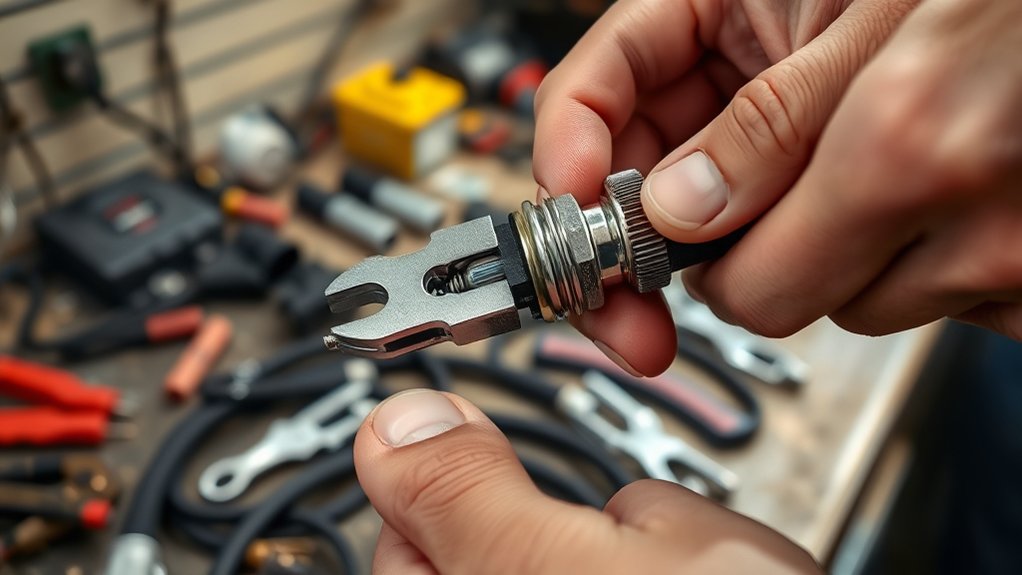
Start by stripping the spark plug wire to expose the correct length of conductor without damaging the core. Confirm you remove just enough wire insulation to allow a secure crimp while maintaining the integrity of the conductor. This step is essential for consistent spark performance and preventing electrical shorts.
Next, insert the exposed conductor into the crimp terminal, making sure the wire insulation abuts the terminal’s insulation support. This alignment strengthens the connection and protects against vibration and wear.
When crimping, apply even pressure using a proper crimping tool designed for spark plug wires. A secure crimp guarantees solid electrical contact and maintains the wire insulation’s protective function, both crucial for reliable spark delivery and engine efficiency.
Avoid loose crimps, as they degrade spark performance and may cause misfires.
Tools You’ll Need to Crimp Spark Plug Wires
Crimping spark plug wires requires specific tools to guarantee a secure, reliable connection. Using the right equipment ensures you match the wire gauge and insulation types precisely, preventing damage or weak contacts.
Proper tools are essential to ensure secure, precise connections when crimping spark plug wires.
Here are the essential tools you’ll need:
- Wire Stripper Choose one compatible with your wire gauge to strip insulation types cleanly without nicking the conductor.
- Crimping Tool Use a high-quality tool designed for spark plug connectors, allowing precise pressure to secure terminals without deforming the wire.
- Multimeter Verify continuity and proper connection strength after crimping to avoid electrical faults.
Having these tools on hand sets the stage for effective crimping and long-lasting spark plug wire performance.
Getting Spark Plug Wires and Connectors Ready to Crimp
Prepare your spark plug wires and connectors by carefully measuring and cutting the wire to the required length, guaranteeing clean, straight cuts to maintain conductor integrity. Use a quality wire cutter designed for automotive wires to avoid frayed ends.
When selecting wire types, choose those compatible with your engine’s specifications, typically silicone or EPDM insulated wires for durability and heat resistance. Match the wire gauge precisely to guarantee peak electrical flow.
For connector selection, pick terminals that correspond to the wire type and spark plug model. Use corrosion-resistant connectors for longevity. Strip the wire insulation carefully without damaging the conductor strands.
Proper preparation at this stage guarantees a secure crimp and reliable electrical connection, reducing the risk of misfires and performance issues.
Avoiding Common Crimping Mistakes
Although the crimping process may seem straightforward, overlooking key details can lead to weak connections and potential engine misfires. To avoid common mistakes, focus on these critical points:
- Match wire gauge and connector compatibility: Using mismatched sizes weakens connection strength and risks corrosion. Always verify that the wire gauge suits the connector specifications.
- Use proper crimping technique: Apply consistent pressure to guarantee a secure mechanical and electrical bond without damaging the wire strands or insulation quality.
- Maintain correct wire length and insulation: Strip the wire precisely to avoid excess exposed conductor or insufficient contact inside the connector. Confirm insulation remains intact near the crimp to prevent shorts.
Frequently Asked Questions
How Often Should Spark Plug Wires Be Replaced?
You should replace spark plug wires every 30,000 to 50,000 miles, depending on your vehicle. Monitor spark wire lifespan by checking for cracks or resistance.
Maintaining proper replacement frequency guarantees peak engine performance and prevents misfires.
Can Damaged Spark Plug Wires Cause Engine Misfires?
Yes, damaged spark plug wires can cause engine misfires by disrupting spark plug performance. You’ll notice weakened ignition system efficiency, leading to rough idling, poor fuel economy, and reduced engine power.
Replace faulty wires promptly.
What Are Signs of Faulty Spark Plug Wires?
You’ll notice spark plug wire symptoms like engine misfires, rough idling, and poor acceleration. Check for wire insulation damage, corrosion, or cracks, which can cause electrical leaks and reduce ignition efficiency, signaling faulty spark plug wires.
Are There Different Types of Spark Plug Wire Materials?
Yes, you’ll find spark plug wire insulation types like silicone or EPDM, and conductor materials such as copper, carbon core, or spiral-wound. Choosing the right combination guarantees maximum durability and electrical performance for your engine.
Can I Crimp Spark Plug Wires Without Special Tools?
You can crimp spark plug wires without special tools, but wire crimping techniques require precision.
65% of DIY spark repairs fail due to poor connections. Using proper crimpers guarantees reliable, durable results and prevents misfires effectively.
Conclusion
Now that you know how to crimp spark plug wires securely, you’re ready to give your engine the reliable connection it needs—no need to call in a blacksmith for this job.
With the right tools and careful prep, you’ll avoid common mistakes and guarantee a tight, lasting crimp every time.
Remember, precision and patience are key to keeping your ignition system firing strong and your ride running smoothly.
Mastering how to crimp spark plug wires properly ensures your vehicle performs at its best and maintains a dependable ignition system.