When it’s time to drain gas from your 4-wheeler Honda, you need a clear, step-by-step approach to avoid spills and damage. Draining gas properly is essential for maintenance and safety. Starting with safety and preparation, you’ll disconnect the battery and locate the fuel shutoff.
The process requires careful handling of fuel lines and proper containment to prevent hazards. Understanding these technical details ensures you maintain your vehicle’s performance and safety—yet there’s more to consider before you begin.
Key Takeaways
- Ensure the engine is cool and turned off before starting the gas draining process on your Honda 4 wheeler.
- Turn the petcock valve to “off” to stop fuel flow, then carefully detach the fuel line hose with a container underneath.
- Use a fuel siphon pump or vacuum pump for controlled gas removal without spills if manual draining is difficult.
- Reattach the fuel line securely and return the petcock valve to “on” if the tank is not completely drained.
- Dispose of old gasoline at approved hazardous waste facilities or gas stations following local environmental regulations.
Why You Should Drain Gas From Your 4 Wheeler Honda
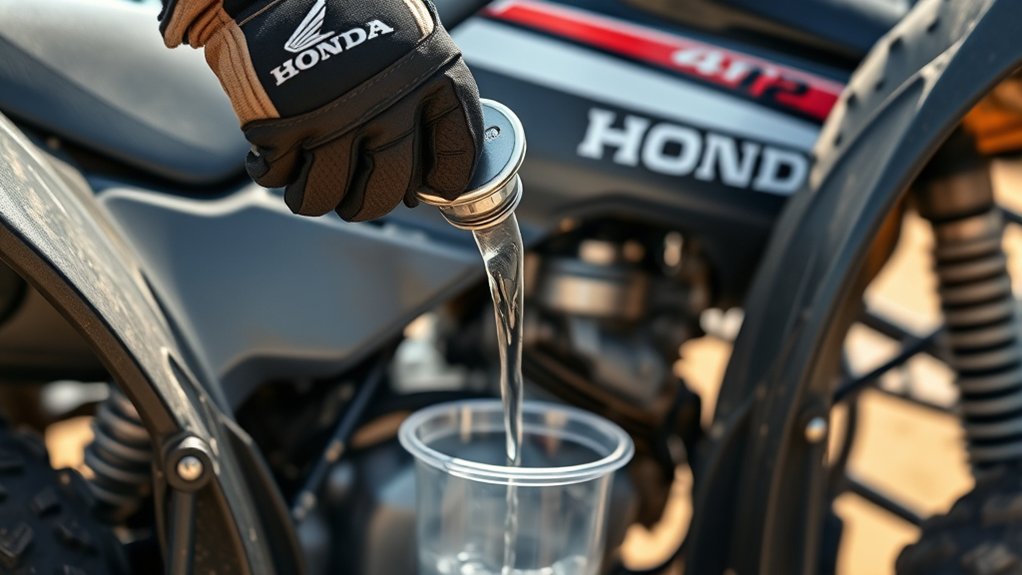
Why should you drain gas from your 4 Wheeler Honda? Performing this hands on maintenance is essential for preserving the engine’s performance and longevity. Old or contaminated fuel can cause starting issues, poor combustion, and damage to internal components.
Draining old fuel preserves engine performance and prevents damage from contaminated gas.
Draining gas prevents varnish buildup and fuel system clogging, which impair operation. Additionally, fuel safety is critical; stored gasoline degrades over time, increasing risks of leaks and fire hazards.
By methodically removing stale fuel, you reduce the chance of engine corrosion and maintain optimal fuel efficiency. This procedure is especially important before long storage periods or repair work.
Taking these precise steps ensures your 4 Wheeler Honda remains reliable and safe, minimizing costly repairs caused by neglected fuel maintenance.
Essential Tools and Materials for Draining Gas
Before you begin draining gas from your 4 Wheeler Honda, gather the proper tools and materials to ensure a safe and efficient process. Having everything ready prevents interruptions and limits exposure to fuel fumes, especially important given fluctuating fuel prices.
You’ll also want to minimize engine noise by working methodically and avoiding unnecessary engine operation.
Essential tools and materials include:
- Fuel siphon pump: Enables controlled removal of gas without spills.
- Approved fuel container: Safely stores drained fuel for reuse or disposal.
- Protective gloves and eyewear: Shields you from hazardous fuel contact.
Using these items ensures you manage fuel carefully, maintain safety, and reduce risk. Proper preparation streamlines the task while protecting your 4 Wheeler Honda’s engine and your environment.
Getting Your Honda Ready to Drain Gas
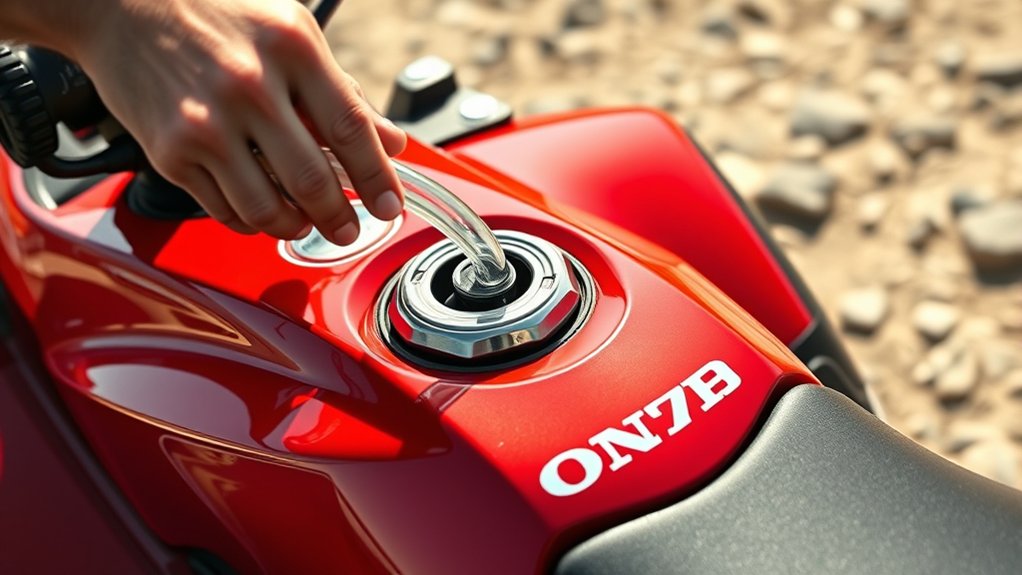
How do you guarantee your Honda 4 Wheeler is properly prepared for gas draining? First, consult your maintenance scheduling to determine the optimal time for fuel removal, avoiding unnecessary procedures that could affect engine performance. Ensure the engine is cool to prevent fuel vapor ignition.
Review your warranty considerations carefully; improper draining may void coverage. Disconnect the battery to eliminate electrical risks during the process. Position the 4 wheeler on a level surface to stabilize fuel flow and avoid spillage. Secure the vehicle with the parking brake engaged.
Use proper protective equipment and work in a well-ventilated area. Finally, locate and inspect the fuel tank and drain plug to confirm accessibility and integrity before starting. These steps prepare your Honda efficiently for safe gas draining.
How to Drain Gas From Your 4 Wheeler Honda
Before you start draining gas from your Honda 4 wheeler, ensure all safety precautions are in place to prevent fire hazards and spills. You’ll need to follow a clear, step-by-step process to remove the fuel efficiently.
Let’s walk through the exact method to safely drain the gas from your vehicle.
Safety Precautions First
Although draining gas from your 4-wheeler Honda is a straightforward task, you must prioritize safety to prevent accidents or damage. Begin by ensuring the engine temperature has cooled completely; working on a hot engine increases fire risk.
Proper fuel storage is essential. Use approved containers to avoid leaks or harmful fumes. Follow these precautions:
- Work in a well-ventilated, open area away from ignition sources.
- Wear protective gloves and eyewear to prevent contact with fuel.
- Keep a fire extinguisher nearby in case of emergency.
Adhering to these safety measures reduces hazards and ensures a controlled environment for draining fuel. Taking a methodical approach minimizes risks and protects both you and your 4-wheeler during the process.
Step-by-Step Gas Removal
When exactly should you start draining the gas from your 4-wheeler Honda? Begin when the fuel is old or you’re performing maintenance requiring an empty tank.
First, ensure the engine is off and cool. Next, locate the fuel petcock valve and turn it to the “off” position to stop fuel flow.
Place a clean container beneath the fuel line or petcock. Detach the fuel line carefully, allowing gas to drain into the container. Avoid squeezing or damaging hoses during this process.
Once drained, reattach the fuel line securely and return the petcock to the “on” position if necessary. It’s important to note that any unrelated topic or random speculation about fuel systems won’t help here. Stick strictly to these steps for safe, effective gas removal.
Alternatives When You Can’t Drain Gas Normally
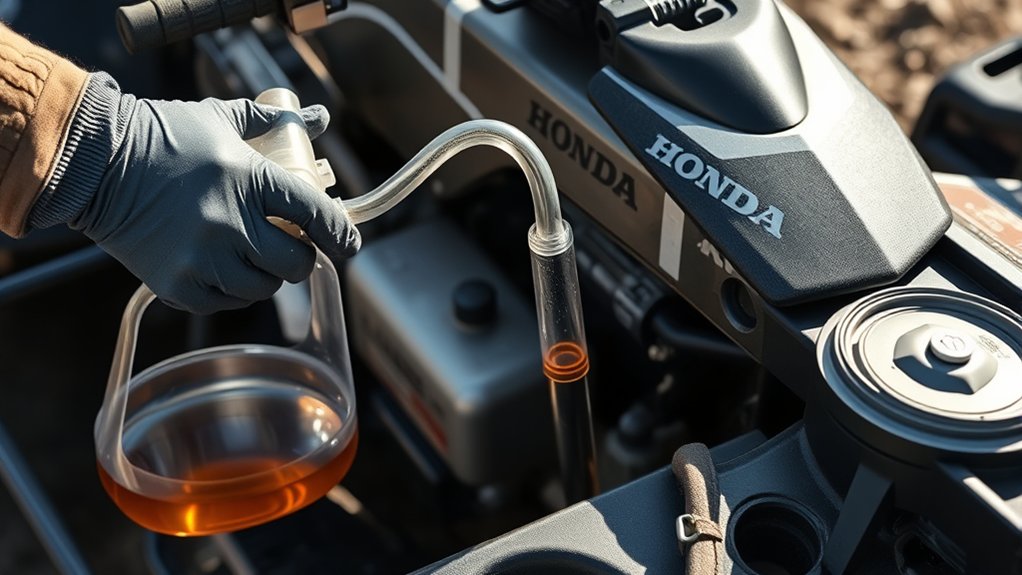
If you can’t drain gas using the standard method, consider alternatives like fuel additives that break down the fuel for easier removal. You can also use a vacuum pump to extract gas directly from the tank.
Another option is disconnecting the fuel line to allow controlled draining.
Using Fuel Additives
Why resort to fuel additives when you can’t drain gas normally? Fuel additives offer a controlled way to break down old gasoline without dismantling your 4 wheeler Honda’s fuel system. This method is especially useful if you’re avoiding tasks like replacing spark components or checking tires before maintenance, which might delay the process.
When using fuel additives, follow these key steps:
- Select a fuel stabilizer designed to neutralize stale gasoline.
- Add the recommended dose directly into the fuel tank.
- Run the engine briefly to circulate the additive throughout the system.
This approach helps dissolve varnish and deposits, improving engine performance and preventing clogging. While not a full replacement for proper draining, fuel additives provide a practical alternative when standard draining isn’t feasible.
Vacuum Pump Method
Fuel additives can help manage old gasoline without dismantling your 4 wheeler Honda, but sometimes you need a more direct method to remove fuel. The vacuum pump method offers an effective alternative when conventional draining isn’t feasible.
Using a manual or electric vacuum pump, you insert tubing into the fuel tank’s filler neck. The pump creates negative pressure, drawing fuel out efficiently without dismantling components.
This approach respects the principles of gasoline chemistry, avoiding contamination or fuel degradation during extraction. It’s especially useful if your 4 wheeler runs on alternative fuels, which may have different evaporation or volatility characteristics.
Ensure the tubing material is compatible with your fuel type to prevent chemical reactions or damage. This method provides a clean, controlled way to remove fuel safely and thoroughly.
Fuel Line Disconnection
One effective alternative when you can’t drain gas normally involves disconnecting the fuel line to release the gasoline directly from the system. This method helps bypass issues caused by insufficient maintenance or fuel impurities clogging the usual drainage points.
Before starting, ensure safety by working in a well-ventilated area and using proper tools.
Follow these steps:
- Locate the fuel line connecting the tank to the engine and clamp it off to prevent spills.
- Use a container to catch the draining gasoline after disconnecting the fuel line at the tank or carburetor end.
- Reconnect the fuel line securely after draining to avoid leaks and test the system for proper operation.
This approach offers a controlled method to remove old fuel when standard draining fails.
How to Dispose of Old Gasoline Safely
How should you handle old gasoline to prevent environmental damage and safety hazards? First, identify the fuel type, as some blends require special handling. Store the gasoline in an approved, sealed container to avoid leaks or evaporation.
Never pour old gasoline down drains, onto soil, or into water. Instead, locate a gas station or hazardous waste facility that accepts fuel types like yours for proper disposal. Many gas stations have collection programs for used gasoline, ensuring it’s recycled or disposed of according to environmental regulations.
Transport the gasoline carefully, keeping containers upright and secure. By following these steps, you minimize risks of contamination, fire, or explosion, and comply with local waste management laws, ensuring safe and responsible disposal of your old gasoline.
How to Clean Your Fuel System After Draining Gas
After safely draining the old gasoline, your next step involves thoroughly cleaning the fuel system to prevent clogs, corrosion, and poor engine performance. Residual fuel can degrade over time, affecting your 4 wheeler’s efficiency and raising engine noise due to improper combustion. Follow these steps:
- Flush the fuel tank with a fuel system cleaner or a mixture of water and mild detergent; ensure complete drainage afterward to avoid contamination.
- Clean or replace the fuel filter to remove debris and prevent blockages, which protect the fuel injectors and carburetor.
- Inspect fuel lines for cracks or buildup; use compressed air or specialized solvents to clear any residues.
Maintaining a clean fuel system helps optimize fuel price value by improving mileage and reducing unnecessary wear on engine components.
Signs Your Honda Runs Better After Draining Gas
What improvements should you expect once you’ve drained the old gasoline from your Honda 4 wheeler? You’ll notice smoother engine starts and more consistent idling, signaling cleaner fuel flow and combustion. Acceleration becomes more responsive, reflecting improved fuel delivery efficiency.
Pay attention to how your driving habits influence these changes; smoother throttle inputs will now yield better power transfer. Additionally, consistent performance during varied loads indicates effective fuel system restoration. Monitor tire pressure as well, since optimal pressure reduces rolling resistance, complementing your improved engine efficiency.
If you experience fewer stalls or hesitations, it confirms that residual contaminants or degraded fuel no longer impede combustion. These signs collectively demonstrate that draining old gasoline has restored your Honda’s operational integrity, providing a more reliable and efficient riding experience.
Tips to Prevent Fuel Issues Before Storage or Maintenance
When preparing your Honda 4 wheeler for storage or maintenance, which measures can you take to prevent fuel system complications? Proper steps help avoid clogged injectors, stale fuel, and hard starts.
Before you drain gas, ensure you use a fuel stabilizer if you won’t drain gas immediately, preventing degradation. Run the engine briefly after adding stabilizer to circulate treated fuel.
Completely drain gas from the tank and carburetor to eliminate residue that causes varnish buildup. These actions are essential during Honda maintenance to maintain fuel system integrity and performance.
Following this methodical approach reduces the risk of fuel-related issues when you restart your 4 wheeler after storage. Taking these precautions saves you time and costly repairs while ensuring reliable operation.
Frequently Asked Questions
How Often Should I Check the Fuel Filter on My 4 Wheeler?
You should check your 4 wheeler’s fuel filter every 6 months or 500 miles to prevent issues like an unreliable battery or noisy exhaust. Regular inspection ensures optimal fuel flow and engine performance, avoiding costly repairs.
Can Ethanol-Free Gas Improve My Honda’s Performance?
Yes, using ethanol-free gas can improve your Honda’s performance by addressing ethanol concerns like corrosion and phase separation.
Just ensure the fuel meets your engine’s octane guidelines for optimal combustion and efficiency.
What Are Common Causes of Engine Flooding in 4 Wheelers?
You might think flooding is rare, but it’s common due to a faulty fuel system or cold start issues. Excess fuel builds up, overwhelming combustion.
Check carburetor settings, choke operation, and fuel injectors to prevent flooding efficiently.
How Do I Winterize My 4 Wheeler’s Engine?
To winterize your 4 wheeler’s engine, follow winterization tips: drain or stabilize fuel, clean the carburetor, change oil, and inspect the fuel system.
This fuel system maintenance prevents corrosion and ensures reliable startup next season.
Is It Safe to Mix Old and New Gasoline in the Tank?
It’s not safe to create a volatile fuel mixture resembling a chemical bomb in your tank. Follow your maintenance schedule strictly, use fresh gasoline, and apply proper storage tips to avoid engine damage and ensure optimal performance.
Conclusion
By draining gas from your 4-wheeler Honda methodically, you’re giving your engine a fresh start, like clearing fog from a windshield. This process prevents clogs, maintains fuel system integrity, and enhances performance.
Always follow safety steps—cool engine, battery disconnected, and proper disposal—to avoid hazards. Regularly draining old fuel before storage or maintenance ensures your Honda runs smoothly, saving you time and costly repairs down the road.
Stay precise, stay safe, and keep your machine in peak condition by learning how to drain gas from your 4-wheeler Honda properly.