If you have a stripped spark plug hole, start by removing the plug and cleaning the area thoroughly. This is an important first step to ensure no debris interferes with the repair.
Use a thread chaser or tap to restore damaged threads, then drill out the hole if necessary.
Next, install a thread repair insert like a Helicoil, ensuring it sits flush and secure with adhesive if needed. This will provide a strong and durable thread for the spark plug to grip.
Finally, tighten the spark plug to the proper torque to avoid further damage.
For detailed steps on preparation, installation, and troubleshooting, explore more precise techniques and tips.
Key Takeaways
- Inspect the spark plug hole threads for damage and confirm the spark plug fits manufacturer specifications.
- Clean the stripped hole and use a thread chaser or tap to restore damaged threads precisely.
- Drill out the hole and install a Helicoil insert using a compatible thread repair kit for a secure fit.
- Apply high-temperature thread adhesive to the insert and allow curing time for durability.
- Reinstall the spark plug carefully, tightening to recommended torque to avoid cross-threading or overtightening.
How To Identify A Stripped Spark Plug Hole
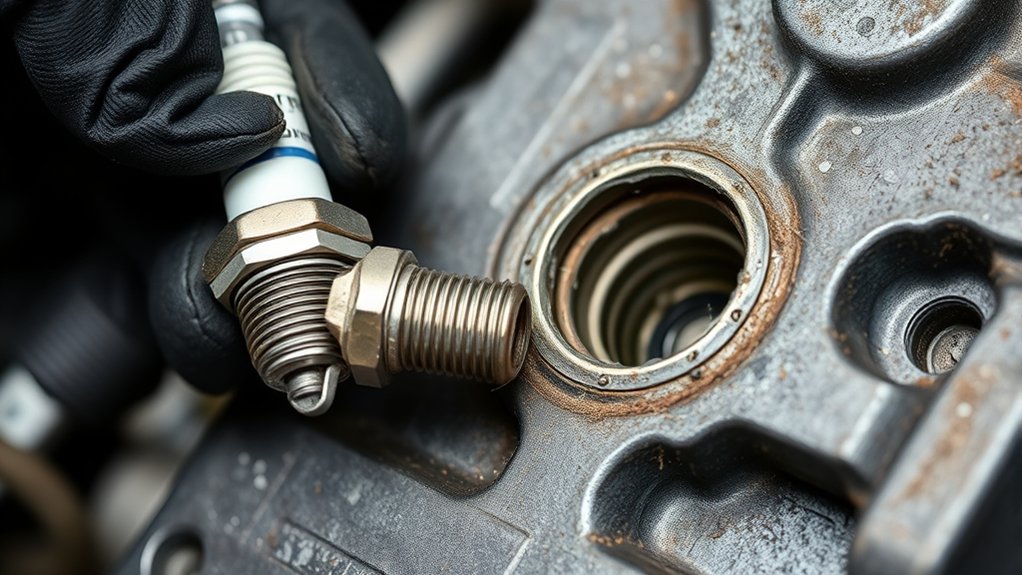
How can you tell if a spark plug hole is stripped? Begin with a thorough hole inspection, focusing on the threads inside the cylinder head. Remove the spark plug carefully, then visually examine the threads for signs of wear, damage, or rounded edges.
Spark plug identification plays a role here; verify the plug matches the manufacturer’s specifications, as using the wrong size can cause stripping. If you notice the spark plug spins freely without resistance when tightening or feels loose, that’s a clear indicator the threads are compromised.
Additionally, excess fuel or oil leakage around the hole may suggest a poor seal caused by thread damage. Confirm these signs during your hole inspection before proceeding to repair, making sure you accurately diagnose the stripped spark plug hole.
Tools And Materials Needed To Repair A Stripped Spark Plug Hole
To repair a stripped spark plug hole, you’ll need specific tools like a thread chaser, spark plug thread repair kit, and a torque wrench. You’ll also require replacement materials such as helicoil inserts or time-sert kits designed for your engine model. Having these items ready guarantees a proper and secure thread restoration.
Essential Repair Tools
Before you begin repairing a stripped spark plug hole, you’ll need a specific set of tools and materials to assure a proper fix. Confirming thread compatibility between your spark plug types and the repair method is essential.
Using the correct tools prevents further damage and supports precise thread restoration.
| Tool | Purpose |
|---|---|
| Thread Chaser | Cleans and reshapes damaged threads |
| Torque Wrench | Applies accurate tightening force |
| Spark Plug Socket | Removes and installs spark plugs |
Select tools compatible with your engine’s spark plug specifications. Proper preparation minimizes errors and guarantees a durable repair, maintaining peak engine performance.
Required Replacement Materials
Gathering the right replacement materials is vital for effectively repairing a stripped spark plug hole. You’ll need a thread repair kit specifically designed for spark plugs, which typically includes inserts, a tap, and an installation tool.
Select a thread insert that matches the spark plug’s thread size and pitch to guarantee proper fitment. Additionally, have high-temperature thread adhesive on hand to secure the insert and prevent loosening under engine heat.
It’s essential to use a quality replacement spark plug compatible with your engine specifications. Clean the repair area thoroughly with a wire brush and compressed air before starting.
Having anti-seize lubricant ready is also important to apply on the new spark plug threads during installation, promoting smooth threading and future removal.
Fixing A Stripped Hole With A Thread Repair Kit
Start by selecting a thread repair kit compatible with your spark plug size and engine specifications. Begin the repair by removing the spark plug and cleaning the stripped hole thoroughly to remove debris and oil.
Use the provided tap from the kit to rethread the hole carefully; verify you align it precisely to avoid further damage. After rethreading, clean the hole again to clear metal shavings.
Insert the thread repair insert carefully, following the kit’s instructions, confirming it seats properly for a secure fit. Once installed, test-fit the spark plug to confirm the threads engage smoothly without resistance.
This thread repair restores the spark plug hole’s integrity, allowing you to reinstall the spark plug safely and maintain engine performance.
Installing A Helicoil Insert To Repair The Hole
To install a Helicoil insert, you’ll need a drill, tap, installation tool, and the correct Helicoil kit for your spark plug. Start by drilling out the damaged threads, then use the tap to cut new threads for the insert.
Finally, screw in the Helicoil insert with the installation tool to restore the spark plug hole’s integrity.
Helicoil Installation Steps
Begin by carefully drilling out the damaged threads in the spark plug hole using the appropriate sized drill bit for the Helicoil insert. Next, use the provided tap to cut new threads into the hole. Then, screw the Helicoil insert onto the installation tool and thread it into the hole until it sits flush or slightly below the surface.
Finally, break off the tang at the bottom of the insert to clear the spark plug’s path.
| Step | Action | Purpose |
|---|---|---|
| 1 | Drill damaged threads | Remove stripped material |
| 2 | Tap new threads | Prepare hole for insert |
| 3 | Insert Helicoil | Restore thread integrity |
| 4 | Seat insert properly | Guarantee flush fit |
| 5 | Break off tang | Clear spark plug insertion |
Helicoil benefits include durability and maintaining factory thread size, unlike some helicoil alternatives.
Tools Required for Helicoil
You’ll need five essential tools to install a Helicoil insert correctly: a drill with the specified bit size, a Helicoil tap, the Helicoil installation tool, the insert itself, and a tang break-off tool.
Begin by selecting the correct helicoil type based on thread size and material compatibility. Use the drill to enlarge the stripped hole to the proper diameter. Next, employ the Helicoil tap to cut new threads precisely.
The installation tool will then drive the insert into the freshly tapped hole, guaranteeing it seats flush. Finally, use the tang break-off tool to remove the tang from the insert without damaging the threads. Follow manufacturer installation tips closely to avoid misalignment and guarantee a durable repair that restores the spark plug hole’s integrity.
When To Use A Spark Plug Thread Repair Bolt?
Although minor thread damage can sometimes be repaired with a tap and die set, you should use a spark plug thread repair bolt when the threads in the cylinder head are severely stripped or worn beyond simple restoration. This method guarantees a reliable spark plug repair by installing a durable thread insert that restores the original thread size and strength.
You’ll drill out the damaged threads, tap the hole to accommodate the repair bolt’s outer threads, then screw in the insert, which acts as a new, robust thread for the spark plug. Use a spark plug thread repair bolt when the stripped threads compromise sealing or torque specifications, making a standard tap ineffective.
This approach provides a long-lasting fix, maintaining engine performance and preventing further damage.
How To Prevent Stripped Spark Plug Holes In The Future
To prevent stripped spark plug holes in the future, consistently apply proper torque specifications when installing spark plugs. Over-tightening or under-tightening compromises the threads and can cause damage. Adhering to precise installation techniques safeguards the integrity of the spark plug holes and guarantees peak engine performance.
Incorporate these spark plug maintenance habits:
- Use a calibrated torque wrench to tighten spark plugs to manufacturer specifications.
- Clean spark plug threads and holes before installation to remove debris and oil.
- Replace worn or damaged spark plugs promptly to avoid excessive force during removal.
Troubleshooting Common Issues After Repair
When you finish repairing a stripped spark plug hole, monitoring the engine’s performance is essential to identify any lingering issues. Start by inspecting for spark plug misfires, which can indicate improper installation or incomplete thread repair. Use an OBD-II scanner to check for misfire codes and evaluate engine performance.
If you notice rough idling or reduced power, verify the spark plug torque to guarantee it’s neither too loose nor overtightened. Also, inspect the repaired threads for any signs of damage or poor seating. If misfires persist, consider reapplying thread repair or using a helicoil insert for a more secure fit.
Consistent troubleshooting helps confirm the repair’s integrity and prevents further engine complications.
Frequently Asked Questions
Can a Stripped Spark Plug Hole Cause Engine Misfires?
Yes, a stripped spark plug hole can cause engine misfires by compromising spark plug seating. This leads to poor engine performance and spark plug issues, disrupting combustion and causing inconsistent ignition within the cylinder. Fix it promptly.
How Much Does a Professional Repair of Spark Plug Holes Cost?
Imagine fixing a cracked phone screen. Professional spark plug hole repairs typically cost $150-$400.
Repair methods and cost factors like labor, parts, and engine type affect pricing, so get precise estimates before committing to the job.
Are There Any Alternative Methods Besides Helicoil for Repairing Holes?
Yes, you can use spark plug inserts like Time-Sert or Keensert as alternatives to Helicoil for thread repair. These provide a durable, solid metal insert, restoring original thread size and ensuring secure spark plug seating.
Can I Drive My Car With a Stripped Spark Plug Hole?
You can’t afford to let the grass grow under your feet with a stripped spark plug hole. It’ll hurt engine performance and spark plug maintenance.
Driving risks misfires and damage; fix it promptly to keep your engine running smoothly.
What Are the Risks of Ignoring a Stripped Spark Plug Hole?
Ignoring a stripped spark plug hole compromises spark plug durability and causes poor engine performance.
You’ll risk misfires, reduced fuel efficiency, and potential engine damage, so promptly repairing the hole is essential for reliable operation.
Conclusion
Now that you know how to fix a stripped spark plug hole using thread repair kits, Helicoil inserts, or thread repair bolts, you can restore proper engine function confidently.
While some believe simply overtightening causes stripping, the real culprit is often cross-threading or worn threads. By following precise repair steps and preventive measures, you’ll avoid recurring damage and maintain peak engine performance.
Stay vigilant—proper technique saves time and costly repairs. With these methods, fixing a stripped spark plug hole becomes a manageable task that keeps your engine running smoothly.