To flush your engine oil, start by warming up your engine to loosen sludge and contaminants.
Then, drain the old oil completely to prepare for the flush.
Next, add the recommended flush solution to your engine.
Run the engine at idle for 10-15 minutes to allow the solution to clean internal components effectively.
Afterward, drain the flush thoroughly before refilling with fresh oil.
Always use proper tools and safety gear throughout the process.
Follow your manufacturer’s schedule to protect engine components and improve performance.
If you want to optimize your engine’s health and avoid potential risks, there’s more to understand about timing, products, and communication with your mechanic.
Key Takeaways
- Warm up the engine for a few minutes to loosen sludge before starting the flush process.
- Drain all old engine oil completely using an oil drain pan and remove the oil filter.
- Add the recommended engine flush solution, then run the engine at idle for 10-15 minutes.
- Drain the flush solution fully before refilling the engine with fresh oil of proper viscosity.
- Follow manufacturer guidelines and consult a mechanic to ensure the flush suits your engine condition.
Benefits of Flushing Engine Oil
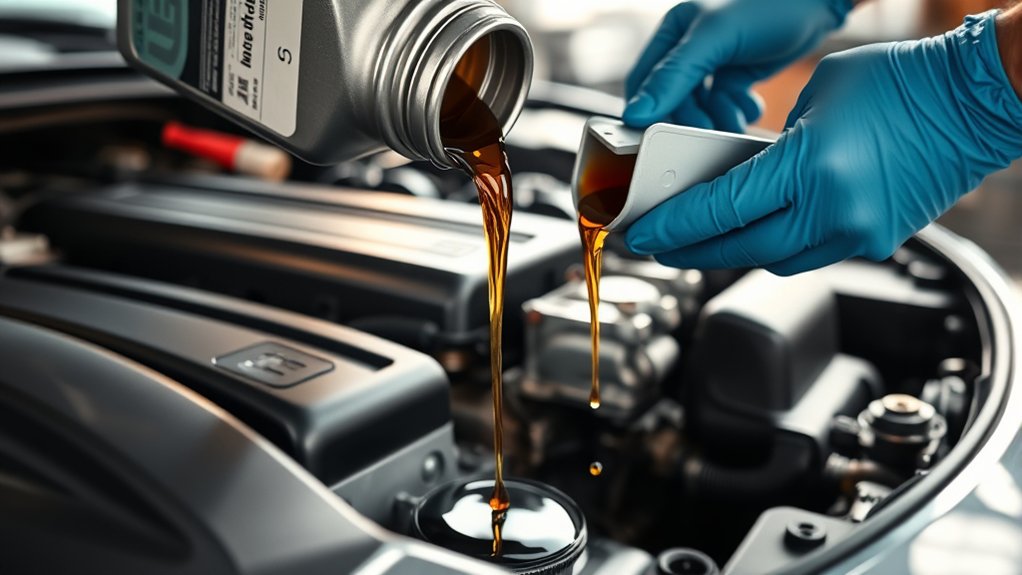
Although regular oil changes maintain engine health, flushing engine oil provides deeper cleaning by removing sludge, deposits, and contaminants that standard changes might miss. When you flush your engine oil, you eliminate buildup that degrades lubricant effectiveness, directly contributing to improved engine longevity.
This process restores ideal oil flow and reduces friction, which enhances overall engine performance. By targeting hidden residues and varnish, flushing prevents premature wear and maintains tight tolerances within engine components.
You’ll notice smoother operation and potentially better fuel efficiency as well. Flushing also supports the longevity of critical parts like bearings and pistons by ensuring clean lubrication reaches all surfaces.
In short, you achieve a more reliable, efficient engine that performs closer to its design specifications, extending its useful life and reducing the risk of costly repairs.
When Is the Right Time to Flush Your Engine Oil?
You should flush your engine oil when you notice sludge buildup, reduced oil pressure, or overheating issues. Typically, flushing is recommended every 30,000 to 50,000 miles, depending on your vehicle’s usage and oil type.
Monitoring these signs and intervals helps maintain peak engine performance.
Signs You Should Flush
Engine oil flushes become necessary when contaminants and sludge accumulate, impairing lubrication and engine performance. You should flush if you notice signs of oil contamination, such as dark, gritty oil or a burnt smell.
Engine overheating and unusual noises can also indicate sludge buildup, signaling the need for a flush. Avoid common flushing myths like flushing after every oil change or using harsh chemicals unnecessarily, as these can damage engine components.
Instead, focus on tangible indicators like decreased fuel efficiency or persistent oil pressure drops. If your engine has suffered neglect or extended oil change intervals, a flush helps restore oil flow and protects critical parts.
Recognizing these signs guarantees timely flushing, maintaining peak engine health and preventing costly repairs.
Recommended Time Intervals
Determining the right time to flush your engine oil depends on several factors, including mileage, driving conditions, and oil quality. To optimize engine performance and longevity, align your oil flush with your vehicle’s oil change frequency and follow manufacturer maintenance schedules closely. Consider these key points:
- Flush your engine oil every 30,000 to 50,000 miles if you drive under normal conditions, matching typical oil change frequency.
- Increase flush frequency to every 15,000 to 20,000 miles if you encounter severe driving conditions, like stop-and-go traffic, extreme temperatures, or dusty environments.
- Use oil flush additives during scheduled maintenance only when recommended by your vehicle’s service manual to avoid damaging engine components.
Tools and Materials Needed for an Engine Flush
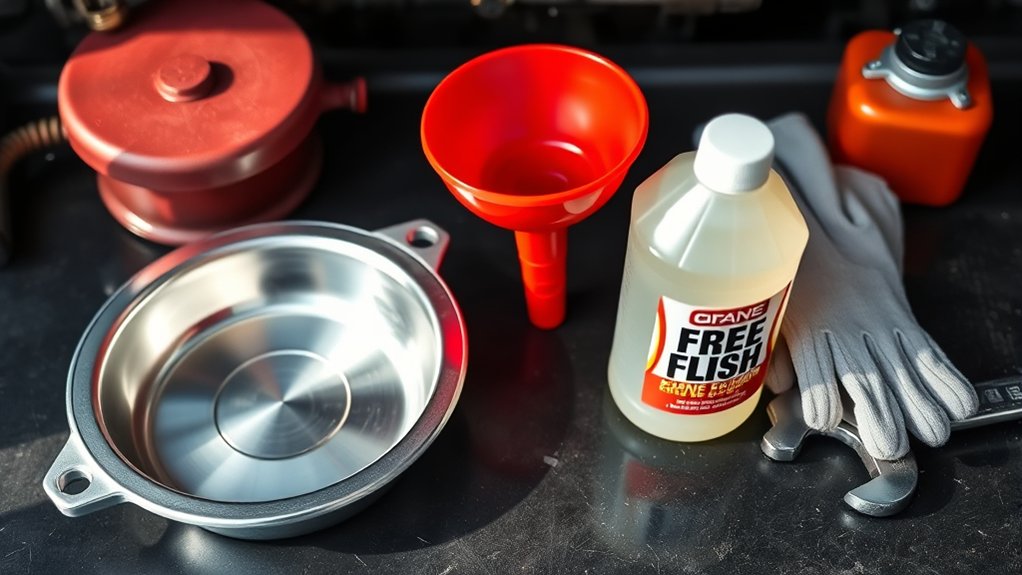
To flush your engine oil effectively, you’ll need specific tools like a wrench set, oil drain pan, and funnel. Using the right flushing fluids and additives guarantees thorough cleaning without damaging engine components.
Don’t forget essential safety gear, including gloves and eye protection, to prevent injury during the process.
Essential Tools Overview
Before you begin flushing your engine oil, gathering the right tools and materials is crucial for a smooth and effective process. Using improper tools can affect oil viscosity management and accelerate engine wear, so precision is key.
Equip yourself with these essentials:
- Oil Drain Pan Catches old oil efficiently, preventing spills and contamination.
- Socket Wrench Set Guarantees proper removal of drain plugs and oil filters without damage.
- Oil Funnel Helps pour new oil smoothly, maintaining the correct oil viscosity.
Having these tools ready allows you to focus on flushing out contaminants thoroughly and maintaining peak engine performance. Proper preparation minimizes risks and supports a cleaner, longer-lasting engine.
Recommended Fluids And Additives
With your tools in place, selecting the right fluids and additives completes the preparation for an effective engine flush. Choose fluid brands known for compatibility with your engine type and proven cleaning efficiency.
Common additive types include detergents, dispersants, and solvent-based cleaners designed to break down sludge and varnish. Opt for reputable fluid brands that specify their product’s suitability for engine flushing to guarantee chemical compatibility and peak performance.
Avoid generic or unverified additives as they may cause damage or insufficient cleaning. Pay attention to manufacturer recommendations regarding flush fluid viscosity and additive concentrations.
Using the correct combination of fluid brands and additive types guarantees contaminants are thoroughly removed, preparing your engine for fresh oil and extending its operational life.
Safety Gear And Precautions
Making sure proper safety gear and observing precautions are critical steps when performing an engine flush. You’ll protect yourself from harmful chemicals, hot engine parts, and unexpected spills by following essential precaution measures.
Before starting, wear the right safety gear to minimize risk:
- Chemical-resistant gloves: Prevent skin contact with toxic fluids and additives.
- Safety goggles: Shield your eyes from splashes and debris.
- Protective clothing: Use long sleeves and pants to guard against burns and irritants.
Additionally, work in a well-ventilated area and keep a fire extinguisher nearby. Always verify the engine is cool before you begin to avoid burns. These precaution measures will help you complete the engine flush safely and effectively.
How to Choose the Best Engine Flush Products
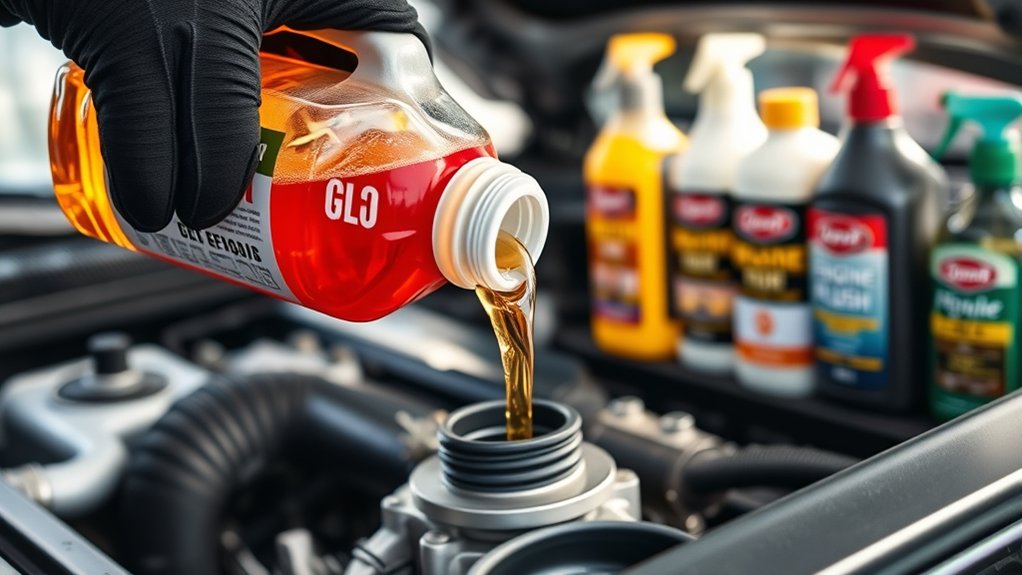
How do you determine which engine flush product suits your vehicle best? Start by understanding the different engine flush types: solvent-based, detergent-based, and enzyme-based formulas. Each targets specific contaminants and deposits.
Solvent-based flushes aggressively dissolve sludge but may be harsh on seals. Detergent-based options gently break down deposits and are safer for older engines. Enzyme-based products use biological agents to remove organic buildup without damaging components.
Next, conduct product comparisons focusing on compatibility with your engine type, ease of use, and manufacturer recommendations. Check for certifications and user reviews emphasizing effectiveness and potential side effects.
Avoid products with aggressive chemicals if your engine has high mileage or delicate seals. Prioritize flushes that balance cleaning power with engine safety to maintain peak performance during oil changes.
How to Flush Your Engine Oil at Home
Start by warming up your engine for a few minutes to loosen sludge and contaminants. Proper engine maintenance demands this step to guarantee the oil flush is effective. Once warmed, follow these steps precisely:
Begin by warming your engine to loosen sludge, ensuring an effective oil flush and optimal maintenance results.
- Drain the old oil completely, paying attention to the oil viscosity to match your next fill.
- Add the recommended engine flush solution and run the engine at idle for the specified time, usually 10-15 minutes.
- Drain the flush solution thoroughly, then refill with fresh oil of proper viscosity suited to your engine’s requirements.
This process removes harmful deposits and maintains peak lubrication. Neglecting oil viscosity or inadequate flushing risks engine wear. By performing this at home, you save costs while extending engine life with accurate, consistent maintenance.
Signs Your Engine Flush Worked
After completing the engine flush process, you’ll want to verify its effectiveness before moving forward. One clear sign your engine flush worked is improved engine performance. Your vehicle should run smoother, idle more steadily, and accelerate without hesitation.
Additionally, check the oil cleanliness; fresh oil should appear clearer and less contaminated with sludge or debris. Monitoring oil pressure gauges can also help. Stable, ideal readings indicate proper lubrication and reduced internal buildup.
If you notice reduced engine noise and lower exhaust emissions, these further confirm the flush removed deposits hindering function. Performing a post-flush oil analysis provides quantitative data on contaminant levels, offering precise confirmation.
Together, these indicators confirm the engine flush has successfully restored oil quality and enhanced overall engine performance.
How to Talk to Your Mechanic About Engine Flushes
When should you bring up the topic of an engine flush with your mechanic? Ideally, discuss it during routine maintenance or when noticing engine performance issues. Clear mechanic communication guarantees you understand the engine flush benefits and if it’s suitable for your vehicle.
Bring up engine flush during routine maintenance or if you notice engine performance issues for clear guidance.
Here are 3 points to guide your conversation:
- Ask about the specific engine flush method they recommend and why.
- Inquire how an engine flush can improve your engine’s lifespan and efficiency.
- Request details on any risks or precautions involved with the procedure.
Frequently Asked Questions
Can Engine Flushing Damage Older Engines?
Yes, engine flushing can damage older engines by dislodging oil sludge, increasing engine wear. If you don’t maintain proper maintenance frequency, flushing might reduce engine longevity.
Assess your engine’s condition before deciding to flush.
How Long Does an Engine Flush Take to Complete?
An engine flush typically takes 15 to 30 minutes to complete. You’ll enjoy engine flush benefits like improved lubrication and reduced deposits.
For ideal flushing frequency, perform it every 30,000 to 50,000 miles, depending on usage.
Is Engine Flushing Necessary for Electric Vehicles?
You don’t need engine flushing for electric vehicles because they lack traditional oil systems. Focus on electric vehicle maintenance tasks like battery health and cooling system checks instead, ensuring peak performance without worrying about oil system efficiency.
Can I Mix Engine Flush Products With Regular Oil?
Imagine you accidentally poured an engine flush type into your regular oil; you shouldn’t mix them. Engine flush products often contain solvents that aren’t oil compatible, risking engine damage and reduced lubrication efficiency. Always separate them.
What Happens if I Skip an Engine Flush?
If you skip an engine flush, oil sludge can accumulate, reducing lubrication efficiency. This buildup impairs engine performance, causing overheating, increased wear, and potential damage.
Regular flushing helps maintain peak engine function and longevity.
Conclusion
Flushing your engine oil is like giving your car’s heart a fresh, clean beat. By regularly clearing out sludge and deposits, you guarantee smoother performance and longer engine life. When you follow the right steps and use quality products, you’ll feel the difference under the hood.
Keep an eye on the signs of success, and don’t hesitate to discuss your engine’s health with your mechanic. Your engine will thank you with every mile. Properly flushing your engine oil is essential for maintaining optimal engine function and longevity.