To loosen a stuck spark plug, first verify your engine is cool to prevent burns or damage.
Then apply penetrating oil directly to the threads, letting it soak for 10–15 minutes to help break down rust and corrosion.
Use a quality spark plug socket with a ratchet or breaker bar for controlled leverage.
Turn slowly and steadily to avoid thread damage or breaking the plug.
If needed, carefully apply moderate heat to expand metal parts and ease removal.
Following these steps minimizes risk and makes loosening a stuck spark plug easier.
Continuing will reveal more tips to prevent future issues and handle stubborn cases safely.
Key Takeaways
- Ensure the engine is cool and disconnect the battery before attempting spark plug removal to avoid damage and electrical shorts.
- Apply penetrating oil on spark plug threads and let it soak for 10–15 minutes to loosen rust and corrosion.
- Use a quality spark plug socket with a ratchet wrench or breaker bar, applying steady, controlled force to avoid thread damage.
- If needed, apply moderate heat with a propane torch for 1-2 minutes to expand metal parts and ease removal.
- Turn the spark plug slowly and listen for grinding sounds; stop if resistance persists and consider professional help if stuck.
How to Confirm Your Spark Plug Is Stuck
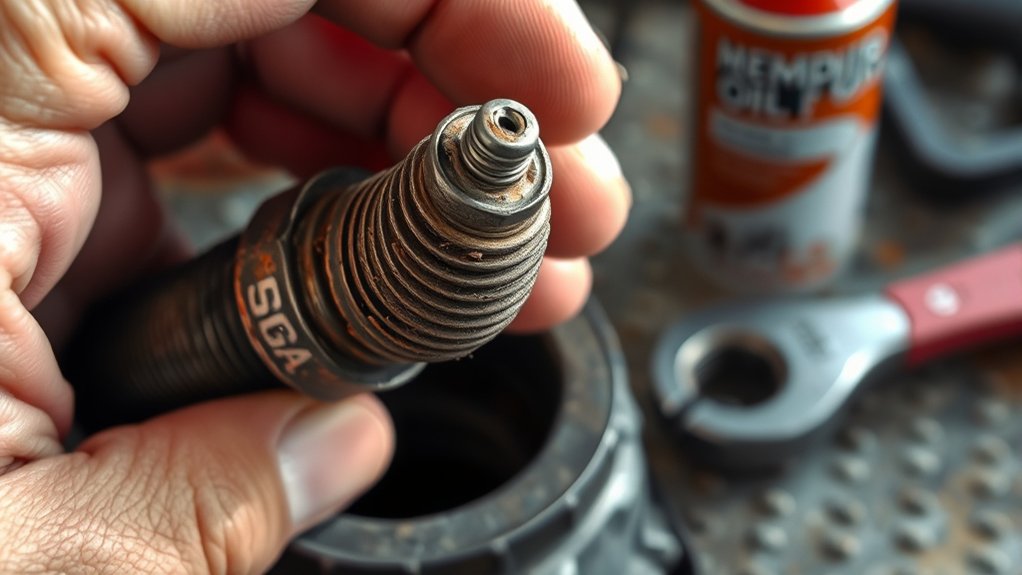
How can you tell if your spark plug is truly stuck? First, identify common spark plug symptoms such as difficulty removing the plug by hand or with a wrench, or resistance when turning counterclockwise.
Use diagnostic techniques like inspecting the plug for corrosion, damaged threads, or signs of overheating, which can cause it to seize. Apply steady, controlled force with a spark plug socket to test if it loosens smoothly; if it doesn’t budge after moderate effort, it’s likely stuck.
Additionally, listen for unusual resistance or grinding sounds during removal attempts, indicating thread damage. Confirming these symptoms and using methodical diagnostic techniques helps you avoid damaging the cylinder head when you proceed to loosen the spark plug.
Tools Needed to Loosen a Stuck Spark Plug
To loosen a stuck spark plug, you’ll need the right tools to avoid damage. Essential hand tools include a ratchet and a spark plug socket designed to fit snugly around the plug.
Additionally, applying a penetrating lubricant can help break corrosion and make removal easier.
Essential Hand Tools
Although removing a stuck spark plug can be challenging, having the right hand tools will make the task manageable and reduce the risk of damage. Start with a quality spark plug socket that matches the spark plug types you’re working on, usually 5/8” or 13/16”.
A socket with a rubber insert or magnet guarantees a secure grip. Use a ratchet wrench combined with an extension bar to reach deep-set plugs, maintaining steady torque control. A breaker bar can provide extra leverage for stubborn plugs but apply force cautiously to avoid thread damage.
Include a torque wrench to reinstall the plug correctly, adhering to manufacturer maintenance tips. Finally, a gap tool helps verify spark plug electrode spacing during maintenance. Proper tool selection is critical for safe, efficient spark plug removal and reinstallation.
Penetrating Lubricants
Once you’ve gathered the right hand tools, addressing the seized spark plug requires applying a penetrating lubricant to reduce corrosion and break down rust or carbon buildup within the threads. Selecting the correct penetrating oil type is essential. Look for formulas containing solvents and lubricants designed for automotive use.
Effective application techniques guarantee maximum penetration and loosening power.
Follow these steps:
- Clean the spark plug area to remove dirt and debris.
- Spray the penetrating lubricant directly onto the spark plug threads.
- Allow 10–15 minutes for the lubricant to seep into the threads.
- Reapply if necessary before attempting to loosen the plug.
Using proper penetrating lubricants and application techniques greatly improves your chances of freeing the stuck spark plug without damaging the threads.
Spark Plug Sockets
A spark plug socket is a specialized tool designed to fit snugly over the spark plug, providing the necessary grip and leverage to loosen it without causing damage. When selecting a socket, verify it matches the spark plug type and size, commonly 5/8-inch or 13/16-inch.
These sockets feature a rubber insert or magnetic core to securely hold the plug during removal, essential for effective spark plug maintenance. Using a regular socket risks slipping or breaking the plug.
Attach the spark plug socket to a ratchet wrench or breaker bar for controlled torque application. This setup allows you to apply steady force without rounding the plug’s hex.
Proper use of the correct spark plug socket minimizes damage to spark plug threads and verifies a safer, more efficient loosening process.
Prepare the Engine Before Removing a Stuck Spark Plug
Before you start, make certain the engine is completely cool to avoid burns and prevent damage to the spark plug threads.
Next, disconnect the battery to eliminate any risk of electrical shock or accidental engine start. These steps guarantee a safe and effective spark plug removal process.
Cool Engine Completely
Allow at least one to two hours for the engine to cool completely before attempting to remove a stuck spark plug. Proper engine cooling is critical to mitigate temperature effects that cause metal expansion, which can make the spark plug harder to loosen.
Follow these steps to guarantee safe and effective cooling:
- Turn off the engine and allow it to sit undisturbed.
- Avoid touching any components to prevent burns.
- Check the engine temperature gauge to confirm it has dropped to ambient levels.
- Use a fan or open the hood to facilitate faster heat dissipation if necessary.
Disconnect Battery Power
Disconnecting the battery power is an essential step to prevent electrical shorts and accidental engine starts while working on the spark plug. Begin by locating the vehicle’s battery, typically in the engine bay.
Using insulated tools, first disconnect the negative terminal to minimize the risk of sparks. This is a critical battery safety practice. After the negative terminal, disconnect the positive terminal if necessary.
Make certain both terminals are secured away from the battery posts to avoid accidental contact. This electrical disconnect isolates the vehicle’s electrical system, protecting you and the components during spark plug removal.
Never skip this step, as it reduces the risk of injury and damage. Always follow manufacturer guidelines for battery safety when handling electrical components.
Step-by-Step Guide to Loosen a Stuck Spark Plug Safely
To safely loosen a stuck spark plug, start by gathering the right tools: a spark plug socket, ratchet wrench, and a breaker bar for extra leverage. Before you begin, confirm the engine is cool to prevent damage. Follow these steps carefully:
- Attach the spark plug socket to the ratchet wrench.
- Place the socket firmly over the spark plug to avoid rounding the edges.
- Apply steady, controlled force using the breaker bar to break the plug free.
- Once loose, remove the spark plug by hand to avoid cross-threading.
Proper spark plug maintenance supports peak engine performance and prevents damage. Work methodically to protect the threads and engine components, confirming a smooth removal process without causing further issues.
Apply Penetrating Oil to Free a Stubborn Spark Plug
Spray a penetrating oil directly onto the base of the stuck spark plug to loosen rust and debris that cause it to bind. Choose penetrating oil types designed for automotive use, such as those containing acetone or mineral spirits, which effectively dissolve corrosion and lubricate threads.
Use a precision nozzle or straw attachment to target the oil accurately at the plug’s threads without oversaturating surrounding components. After application, allow the oil to penetrate for at least 10–15 minutes to maximize effectiveness.
Apply multiple light coats rather than a single heavy one to avoid runoff. Reapply if necessary before attempting to loosen the plug again. Proper application techniques guarantee the penetrating oil reaches the tightest areas, increasing your chances of freeing the stubborn spark plug without damage.
Use Heat to Help Loosen a Stuck Spark Plug
When rust and corrosion cause a spark plug to seize, applying controlled heat can expand the metal and break the bond holding it in place. Heat application induces spark plug expansion, loosening the threads within the cylinder head.
Here’s how to proceed safely and effectively:
- Use a propane torch or heat gun to apply moderate heat directly to the spark plug’s metal body.
- Heat the plug for 1-2 minutes, allowing the metal to expand without overheating surrounding components.
- After heating, immediately attempt to turn the spark plug with a proper socket wrench, applying consistent torque.
- Repeat the heating and loosening cycle if the plug remains stuck, ensuring gradual expansion to avoid damage.
This method leverages thermal expansion to facilitate removal without chemical additives.
Avoid Damage When Loosening Spark Plugs
Although spark plugs may seem straightforward to remove, you must take precautions to prevent thread damage or cylinder head warping. Proper spark plug maintenance safeguards engine care and guarantees longevity. Use the right tools and apply steady, controlled torque to avoid stripping threads. Avoid excessive force, which can cause costly damage.
| Action | Reason |
|---|---|
| Use a spark plug socket | Protects plug and socket |
| Apply penetrating oil | Loosens rust and debris |
| Use torque wrench | Prevents over-tightening |
| Turn slowly | Avoids thread damage |
Following these steps preserves engine components and guarantees safe spark plug removal, maintaining peak engine performance.
What to Do When a Spark Plug Still Won’t Budge
Struggling to loosen a stubborn spark plug calls for a methodical approach to prevent damage. When basic efforts fail, apply advanced troubleshooting techniques to maintain effective spark plug maintenance.
- Apply penetrating oil: Spray the spark plug base and let it soak for 15-20 minutes to break rust and corrosion bonds.
- Use heat cautiously: Apply moderate heat to the cylinder head area to expand metal parts, easing plug removal. Avoid overheating to prevent damage.
- Try a breaker bar: Use a breaker bar for increased leverage and controlled torque, reducing the risk of snapping the plug.
- Tap gently with a hammer: Lightly tap the spark plug socket to help break corrosion without damaging threads.
If the plug still won’t budge, consider professional assistance to avoid costly repairs.
Prevent Spark Plugs From Getting Stuck in the Future
To prevent spark plugs from getting stuck in the future, you need to implement regular maintenance practices and use proper installation techniques. Start by performing spark plug maintenance at recommended intervals, including regular inspections to check for corrosion, debris, or damage.
Clean the spark plug threads and cylinder head threads thoroughly before installation to guarantee a smooth fit. Apply a thin coat of anti-seize lubricant to the spark plug threads to reduce the risk of galling or seizing.
When installing, torque the spark plugs to the manufacturer’s specified value using a calibrated torque wrench to avoid over-tightening. Consistent adherence to these procedures helps maintain peak performance and prevents the spark plugs from becoming stuck, saving you time and avoiding potential engine damage.
Frequently Asked Questions
What Causes Spark Plugs to Get Stuck in the First Place?
You get stuck spark plugs mainly from spark plug corrosion and excessive heat. Corrosion fuses the threads, while heat expands metal, causing the plug to seize tightly in the cylinder head. This makes removal difficult.
Can Stuck Spark Plugs Affect Engine Performance?
Yes, stuck spark plugs can reduce engine efficiency and cause misfires. You’ll need regular spark plug maintenance to prevent damage and guarantee peak engine performance.
This helps avoid costly repairs and maintain smooth operation.
How Often Should Spark Plugs Be Replaced?
You shouldn’t wait until your engine’s a smoking wreck. Replace spark plugs every 30,000 to 50,000 miles.
Follow maintenance tips diligently to maximize spark plug lifespan and guarantee peak engine performance and fuel efficiency.
Are Certain Spark Plug Brands Less Likely to Stick?
Certain spark plug brands use superior spark plug materials like iridium or platinum, reducing sticking risk. You’ll want to follow maintenance tips like proper torque and anti-seize to prevent seizing and guarantee easy removal later.
What Are the Signs of a Damaged Spark Plug?
Imagine your car engine as a heartbeat; a damaged spark plug disrupts its rhythm. Look for misfires, rough idle, or poor fuel economy. These are key signs indicating you need spark plug maintenance and to assess your spark plug types immediately.
Conclusion
Loosening a stuck spark plug is like untangling a tightly knotted rope—patience and the right tools make all the difference. By following precise steps, applying penetrating oil, and using controlled heat, you can safely free the plug without damage.
Remember, prevention is your best defense against future stubborn plugs. With careful attention and methodical effort, you’ll keep your engine’s heartbeat smooth and strong.
When it comes time to deal with a difficult spark plug, these techniques will help you loosen a stuck spark plug effectively every time.