To make spark plug wires, start by measuring the exact length from the ignition coil to each spark plug using a flexible tape. This initial step ensures the wires fit perfectly without excess slack or tension.
Next, cut high-quality conductive wire, such as copper, to the measured size. Strip ¼ inch of insulation carefully, making sure not to damage the conductor underneath.
Crimp terminal connectors securely onto the wire ends and slide on heat-resistant silicone boots. These boots provide a snug fit that protects against moisture and heat exposure.
Route the wires away from heat sources and moving engine parts to prevent damage during operation.
Finally, test the continuity of each wire with a multimeter to confirm proper electrical flow.
Following these steps will help you achieve reliable spark plug wire performance and avoid common installation errors. More detailed guidance is provided ahead to assist you further.
Key Takeaways
- Measure wire length accurately from ignition coil to spark plug using a flexible tape for a precise fit.
- Use high-quality conductive wire with heat-resistant insulation like silicone or EPDM rubber.
- Strip ¼ inch of insulation, then securely crimp terminal connectors onto wire ends.
- Slide boots over wires before crimping terminals and ensure proper insulation coverage.
- Test assembled wires with a multimeter to verify continuity and correct resistance before installation.
Materials You’ll Need to Make Spark Plug Wires
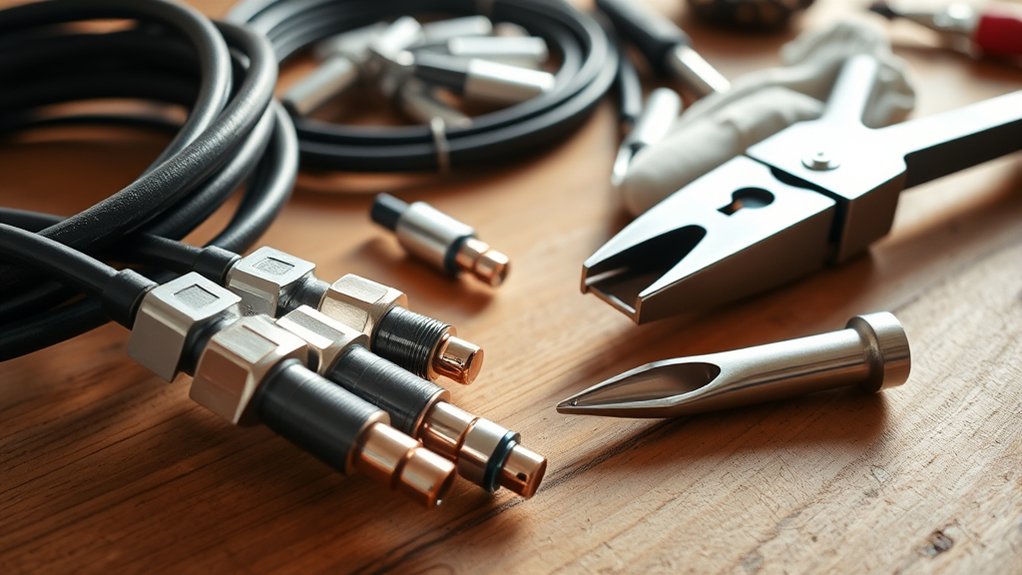
To make spark plug wires, you’ll need several essential materials to guarantee proper function and durability. Start with high-quality conductive wire, typically copper or stainless steel, for ideal electrical transmission.
Essential materials like copper or stainless steel wire ensure spark plug wires function reliably and last long.
Select wire insulation designed to withstand high temperatures and resist abrasion; silicone or EPDM rubber insulation is recommended for durability and heat resistance.
Next, choose appropriate connector types to secure reliable and corrosion-resistant connections at both ends, the spark plug and ignition coil. Common connector types include metal terminals with secure crimps or boot-style connectors with silicone seals.
Additionally, you’ll require heat shrink tubing to protect connections and prevent moisture ingress. Having these materials prepared assures you can fabricate spark plug wires that meet performance and longevity standards vital for engine reliability.
Measure and Cut Spark Plug Wires Accurately
Accurately measuring and cutting spark plug wires is vital for guaranteeing peak engine performance and preventing misfires. Begin by determining the correct wire length, following the original routing to avoid excess slack or tension. Use a flexible measuring tape to trace from the distributor or ignition coil to the spark plug terminal.
When selecting wire gauge, choose one that matches the engine’s electrical requirements, typically 7mm for standard vehicles, balancing conductivity and durability. Consider insulation types suited for your engine environment; silicone insulation offers superior heat resistance compared to PVC.
Cut the wire cleanly with a sharp wire cutter to prevent frayed ends, which can cause poor connections or electrical leakage. Precision in measurement and cutting guarantees ideal fit and reliable spark delivery, vital for maintaining engine efficiency and longevity.
Assemble Your Spark Plug Wires Step-by-Step
Begin by preparing all components: the cut spark plug wires, terminal connectors, boots, and any necessary tools like crimpers and wire strippers. First, strip about ¼ inch of insulation from the wire end, ensuring you don’t damage the conductor.
Select terminal connectors compatible with your wire types and insulation materials to maintain conductivity and durability. Crimp the terminals firmly onto the stripped wire ends. Next, slide the boots over the wires before fully securing terminals.
Finally, inspect each assembly for secure connections and proper insulation coverage.
| Step | Action | Tool Needed |
|---|---|---|
| Strip insulation | Remove ¼ inch jacket | Wire strippers |
| Attach terminals | Crimp connectors | Crimpers |
| Slide boots | Cover terminals | Hands |
Essential Tips for Installing Spark Plug Wires
Once your spark plug wires are assembled and inspected, focus on their proper installation to guarantee peak engine performance. Begin by matching each wire to the correct spark plug type and ignition system terminal to avoid misfires.
Route wires away from hot engine parts and moving components to prevent damage and interference. Secure wires using clips or separators to maintain organized spacing, reducing crossfire risks.
Keep wires clear of heat and movement, securing them to prevent damage and minimize crossfire risks.
Ascertain each boot seats firmly over the spark plug and ignition coil terminals, creating a tight seal that resists moisture and contaminants. Double-check wire lengths to prevent tension or slack, which can cause premature wear.
Follow the engine’s firing order precisely to maintain synchronized ignition timing. Proper installation preserves the integrity of your ignition system and maximizes engine efficiency.
Test Your Spark Plug Wires for Proper Function
Testing your spark plug wires guarantees they deliver consistent electrical current for peak engine performance. Start with spark plug testing by inspecting each wire’s integrity and continuity.
Measure wire resistance using a digital multimeter set to the ohms scale. Ensure resistance matches manufacturer specifications. High resistance indicates internal damage or poor conductivity.
Follow these steps for accurate testing:
- Disconnect wires and isolate them from the ignition system.
- Use the multimeter probes on each wire end to record resistance.
- Check for visible signs of wear, cracks, or corrosion.
- Compare results against acceptable resistance ranges.
Avoid Common Mistakes When Making Spark Plug Wires
When making spark plug wires, you must guarantee the wire lengths are exact to prevent misfires. Don’t overlook proper connector crimping, as loose connections cause resistance and signal loss.
Also, plan your wire routing carefully to avoid heat sources and sharp bends that can damage the insulation.
Incorrect Wire Lengths
One of the most frequent errors in making spark plug wires is cutting them to incorrect lengths. Getting the length wrong can cause tension or slack, leading to premature wear or signal interference. To avoid this, measure the path carefully before cutting, considering bends and routing obstacles.
Remember, the wire gauge and insulation type influence flexibility and how tightly you can route the wire.
Keep these guidelines in mind:
- Measure twice to guarantee precision before cutting.
- Account for the wire gauge’s stiffness; thicker wires need more slack.
- Choose insulation types that withstand heat and abrasion along the specific routing.
- Avoid excessive length; too long wires increase resistance and signal loss.
Correct length guarantees reliable spark delivery and wire longevity.
Poor Connector Crimping
Although selecting the right wire length is essential, poor connector crimping is another common mistake that can compromise spark plug wire performance. You must use the correct crimping tools designed for the specific connector types you’re working with.
Each connector type requires a precise crimp force to guarantee a secure mechanical and electrical connection. Avoid using general-purpose pliers or improper tools, as this can deform the connector or fail to compress the wire adequately.
Position the wire and connector properly in the crimping tool’s jaws, then apply steady pressure for a uniform crimp. After crimping, inspect for loose strands or gaps that might cause arcing or resistance.
Proper crimping ensures reliable conductivity and durability, which are critical for peak spark plug wire function.
Ignoring Wire Routing
Proper connector crimping guarantees a secure electrical connection, but neglecting wire routing can still cause performance issues. When making spark plug wires, you must route wires carefully to prevent damage to the wire insulation and avoid interference within ignition systems.
Incorrect routing can expose wires to heat, sharp edges, or moving parts, leading to premature failure or electrical noise.
To maintain ideal wire routing, follow these guidelines:
- Keep wires away from exhaust manifolds and other heat sources
- Avoid sharp bends or kinks that compromise wire insulation
- Separate spark plug wires from ignition coils and other high-voltage components
- Secure wires using appropriate clips or ties to prevent movement and abrasion
Frequently Asked Questions
What Is the Lifespan of Homemade Spark Plug Wires?
You can expect homemade spark plug wires to last around 1-2 years, depending on spark plug wire materials and wire resistance factors like insulation quality and heat exposure.
Regularly check for wear to guarantee ideal performance.
Can Spark Plug Wires Affect Fuel Efficiency?
Yes, spark plug wires affect fuel efficiency because poor spark plug wire materials increase wire resistance effects, reducing ignition energy.
You must choose low-resistance, high-quality materials to guarantee ideal combustion and maintain efficient fuel consumption.
How Do Spark Plug Wires Impact Engine Performance?
You’ll improve engine performance by selecting spark plug materials with proper conductivity and heat resistance. Also, choosing the right wire gauge guarantees ideal current flow, reducing voltage loss and preventing misfires for efficient combustion.
Are There Safety Risks When Handling Spark Plug Wires?
You face electrical hazards because spark plugs carry up to 45,000 volts; proper handling and checking insulation materials prevent shocks.
Always wear gloves and disconnect the battery to guarantee safety when working with spark plug wires.
What Are the Differences Between OEM and Custom Spark Plug Wires?
OEM materials guarantee exact fit and durability, while custom designs offer tailored performance benefits like improved conductivity.
When installing, you’ll want to follow precise installation tips to maximize efficiency and avoid damage.
Conclusion
By following these precise steps, you’ll craft spark plug wires that perform reliably under pressure. While it might be tempting to take shortcuts, remember that skipping careful measurement or assembly can lead to less-than-satisfactory results.
Investing time in accuracy and proper installation guarantees your wires deliver peak electrical flow, enhancing engine efficiency. Keep this process in mind to avoid “unexpected challenges” and maintain your vehicle’s smooth operation with confidence.
By mastering these guidelines, you ensure that your spark plug wires meet high standards and function optimally for the long term.