To read a spark plug, first remove it safely when the engine is cool.
Then examine its color, deposits, and electrode wear to determine engine condition.
Look for light tan or gray deposits, which indicate normal combustion.
Black soot suggests a rich fuel mixture, while white deposits can signal overheating.
Oily deposits may point to leaks.
Check the electrode shape as well—rounded means healthy, but pitted or uneven electrodes suggest issues.
Also, inspect the insulator for cracks or buildup.
Understanding these signs helps you diagnose engine health and maintain performance.
Keep exploring to uncover detailed spark plug troubleshooting and care.
Key Takeaways
- Check spark plug color to assess combustion health: light tan/gray is normal, black indicates rich fuel, white suggests overheating, and oily deposits show leaks.
- Inspect electrode wear patterns; rounded electrodes are normal, while pitted or uneven wear signals engine issues.
- Examine the insulator for cracks or heavy buildup, which can indicate mechanical damage or fouling.
- Identify fouling by oily or carbon deposits, often caused by oil leaks or incorrect spark plug types.
- Use consistent electrode wear and clean insulators as indicators of a healthy spark plug and proper engine function.
How To Remove And Inspect Spark Plugs Safely
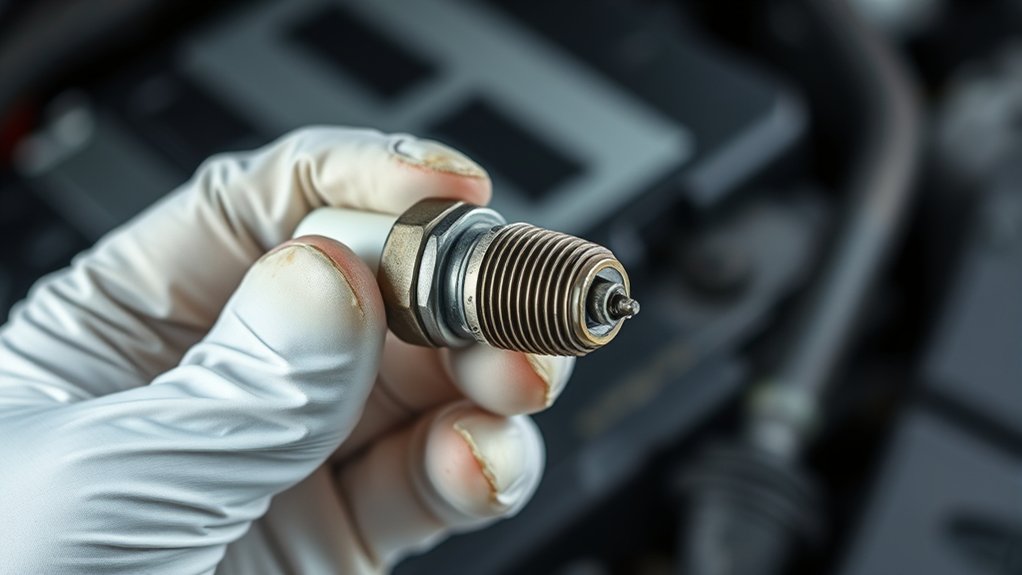
Begin by verifying the engine is completely cool to prevent burns and damage. Next, gather the appropriate spark plug tools, such as a spark plug socket, ratchet, and extension, to avoid stripping or damaging the plug.
Disconnect the spark plug wire by firmly gripping the boot, not the wire, to guarantee safe handling and prevent damage to the ignition system. Use the spark plug socket and ratchet to carefully loosen and remove the plug, turning counterclockwise with steady pressure.
Always grip the spark plug boot firmly, not the wire, to safely remove the plug without causing damage.
Inspect the plug visually for wear, fouling, or damage. Handle the spark plug gently, avoiding dropping or contaminating it, as this can affect performance.
Store the removed plugs in a clean, dry area to maintain their condition until further inspection or replacement.
How To Read Spark Plug Conditions To Diagnose Engine Health
You’ll want to examine the spark plug’s color to identify combustion efficiency and potential issues like overheating or carbon buildup.
Pay close attention to electrode wear patterns, as they reveal abnormal combustion or improper fuel mixtures. These indicators help you accurately assess engine health and performance.
Spark Plug Color Indicators
Although spark plugs may appear simple, their color provides essential insights into your engine’s condition. When inspecting different spark plug types, you’ll notice that a light tan or grayish color on the insulator indicates normal combustion and proper spark plug maintenance.
A black, sooty deposit signals a rich fuel mixture or weak ignition, requiring immediate attention. Conversely, a white or blistered appearance suggests overheating or lean fuel conditions.
If you see oily deposits, it often points to oil leakage within the combustion chamber. By understanding these color indicators, you can quickly diagnose issues related to fuel mixture, ignition timing, or engine wear.
Regularly checking spark plug color helps guarantee peak engine performance and prolongs the lifespan of your spark plug types through timely maintenance.
Electrode Wear Patterns
Electrode wear patterns reveal critical information about your engine’s combustion process and mechanical condition. By examining electrode shapes and wear types, you can diagnose specific issues affecting performance.
- Rounded Electrodes: Normal wear causes gradual rounding of the electrode edges, indicating typical combustion and proper heat range. Excessive rounding suggests prolonged operation or incorrect spark plug heat rating.
- Eroded or Pitted Electrodes: Corrosion or pitting points to pre-ignition or detonation, which can damage the engine. It often results from abnormal combustion pressures or fuel mixture problems.
- Uneven Wear: Asymmetrical electrode wear may indicate misfiring, improper gap, or mechanical issues like valve problems, affecting ignition efficiency.
Understanding these wear patterns helps you maintain peak engine health and prevent costly repairs.
Spotting Normal Vs. Problem Spark Plug Wear
You can tell a lot about your engine’s condition by examining the spark plug’s wear patterns. Healthy plugs have a light tan or grayish coating with minimal electrode erosion.
If you spot excessive deposits, cracks, or heavy wear, these signs indicate potential engine problems that need attention.
Identifying Healthy Spark Plugs
When inspecting spark plugs, recognizing the difference between normal wear and signs of potential issues is essential for accurate diagnosis. Healthy spark plugs reflect peak engine performance and align with the expected spark plug lifespan based on the spark plug types used.
To identify a healthy spark plug, check for:
- Consistent Electrode Wear: The center and ground electrodes should show uniform, slight rounding without heavy deposits or erosion.
- Light Tan or Grayish Deposits: A thin, light-colored layer indicates proper combustion and fuel mixture.
- Clean Insulator Surface: The ceramic insulator must remain largely free of cracks, heavy carbon buildup, or blistering.
Recognizing Common Wear Issues
Understanding what a healthy spark plug looks like sets the foundation for spotting wear patterns that indicate normal use versus potential problems. Normal wear manifests as light tan or gray deposits on the electrode, reflecting proper combustion and ideal spark plug longevity.
However, if you notice heavy carbon buildup, oily deposits, or blistered electrodes, these signs point to issues like fuel mixture imbalance, oil leaks, or overheating. Cracked insulators or eroded electrodes also indicate spark plug failure requiring immediate replacement.
Paying attention to these wear patterns helps you implement effective maintenance tips that prevent engine misfires and performance loss. Regular inspection and timely spark plug replacement maximize spark plug longevity and guarantee your engine runs efficiently and reliably.
What Spark Plug Deposits And Colors Can Tell You
Although spark plugs may seem like simple components, the deposits and colors on their surfaces reveal critical information about your engine’s condition and performance. By analyzing these characteristics, you can assess combustion efficiency and the state of your spark plug materials.
- Light tan or gray deposits indicate normal combustion, showing your spark plug materials are functioning as designed and combustion efficiency is ideal.
- Black, dry soot suggests a rich fuel mixture or weak ignition, which may reduce combustion efficiency and cause carbon buildup on the spark plug.
- Oily or wet deposits point to oil leakage or worn piston rings, contaminating the spark plug materials and impairing combustion efficiency.
Interpreting these signs helps you maintain engine health and enhance performance.
Common Spark Plug Problems And What They Mean
Since spark plugs play an essential role in engine performance, recognizing common problems early can prevent serious damage. You might encounter fouling, where deposits coat the electrode, caused by oil leaks or improper spark plug types for your engine.
Overheating appears as blistered or melted electrodes, often due to incorrect spark plug heat range or poor fuel quality. Carbon buildup indicates a rich fuel mixture or weak ignition, which you can address by choosing the right spark plug brands known for durability.
Cracked insulators signal mechanical damage or improper installation torque. If you notice electrode wear or erosion, it means your spark plugs have reached the end of their service life. Familiarize yourself with these issues to interpret spark plug conditions accurately and maintain peak engine function.
When To Replace Or Clean Your Spark Plugs
A spark plug’s condition directly affects your engine’s efficiency and reliability, so knowing when to replace or clean it is vital. Understanding the spark plug lifespan helps you schedule maintenance and avoid engine issues. Use these maintenance tips to decide the best action:
- Inspect electrode wear: If the electrode is rounded or eroded, replace the spark plug to maintain peak performance.
- Check for deposits: Light carbon buildup can be cleaned, but heavy deposits or oil fouling require replacement.
- Evaluate performance symptoms: Misfires, rough idling, or difficulty starting indicate spark plug degradation and the need for replacement.
Regularly monitoring these factors guarantees your engine runs efficiently and prolongs the overall lifespan of your spark plugs.
Frequently Asked Questions
What Type of Spark Plug Is Best for My Vehicle?
You should choose spark plug types based on your vehicle’s specifications and engine design. Consider performance differences like heat range and electrode material to optimize efficiency, power, and longevity, ensuring the best match for your engine’s needs.
How Often Should I Check My Spark Plugs?
You should check your spark plugs every 30,000 miles or sooner if you notice signs of misfire, rough idling, or poor fuel economy.
Monitoring spark plug lifespan guarantees peak engine performance and prevents costly repairs.
Can Faulty Spark Plugs Affect Fuel Efficiency?
Yes, faulty spark plugs with excessive spark plug wear reduce ignition performance, causing incomplete combustion. This inefficiency lowers fuel efficiency, so you should inspect and replace plugs regularly to maintain peak engine performance and fuel economy.
Are Spark Plugs the Same for All Engine Types?
No, spark plug types vary based on engine compatibility. You’ll need to select plugs designed for your specific engine’s size, fuel type, and ignition system to guarantee peak performance and avoid damage or inefficiency.
What Tools Do I Need to Replace Spark Plugs?
You won’t need a magic wand, just essential spark plug replacement tools: a spark plug socket, ratchet wrench, extension bar, and a gap gauge. These precise tools guarantee safe, effective removal and installation every time.
Conclusion
By learning to read your spark plugs, you gain a powerful diagnostic tool—did you know that faulty spark plugs can reduce fuel efficiency by up to 30%? Regular inspection helps you spot issues early, saving time and money.
Understanding the colors and deposits on plugs lets you assess engine health precisely. This knowledge allows you to identify problems before they become serious.
Keep your engine running smoothly by knowing when to clean or replace your spark plugs, ensuring peak performance and longevity. Mastering how to read a spark plug is essential for maintaining your vehicle’s efficiency and reliability.