To read a spark plug gap tool, first identify the correct gap size from your engine’s specs. This is essential to ensure proper engine performance.
Gently insert the calibrated blades between the center and ground electrodes without forcing the tool.
Align the tool’s markings precisely with the gap and check for a snug fit with slight resistance. This indicates the gap is accurate. Compare the measurement to manufacturer tolerances to confirm it meets specifications.
If the gap is incorrect, adjust it carefully and always recheck the measurement. Proper use of the spark plug gap tool helps maintain engine efficiency.
Keep following for detailed techniques on proper use and adjustments.
Key Takeaways
- Identify the required spark plug gap size from the engine’s specifications before measuring.
- Insert the gap tool gently between the electrodes without forcing it for an accurate reading.
- Align the tool’s measurement markings precisely with the electrode gap to determine the correct distance.
- Ensure the tool fits snugly with a slight resistance to confirm the gap size is accurate.
- Compare the measurement against manufacturer tolerances and adjust if necessary for optimal engine performance.
What a Spark Plug Gap Tool Is and Why It’s Essential
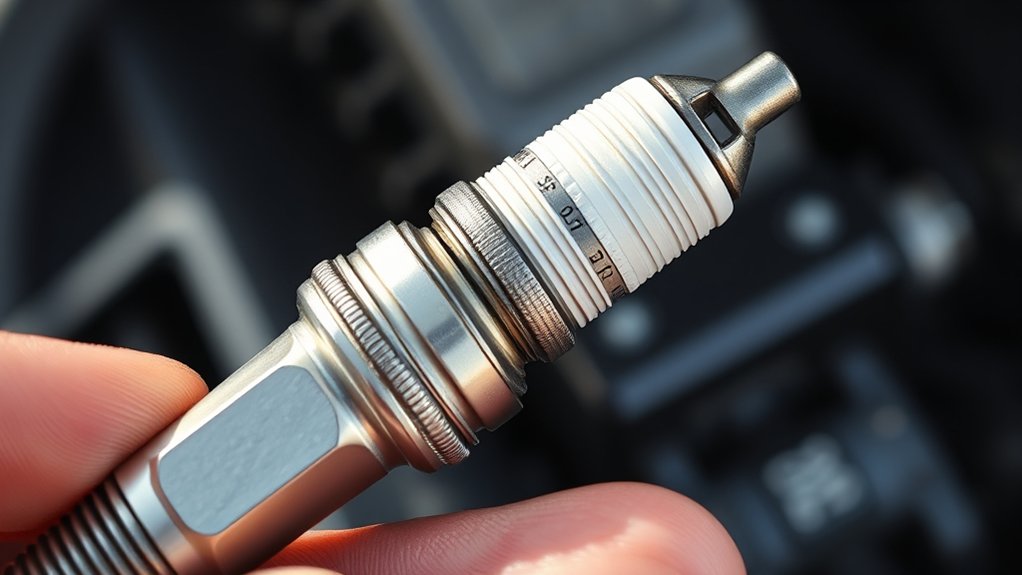
A spark plug gap tool measures the distance between the center and ground electrodes of a spark plug, guaranteeing the gap aligns with your engine’s specifications. Proper gap adjustment enhances spark plug benefits, such as efficient combustion, improved fuel economy, and reduced emissions.
Without the correct gap, your engine may misfire or run inefficiently. The gap tool importance lies in its ability to provide precise, repeatable measurements, essential for maintaining engine performance and longevity.
How to Read Spark Plug Gap Measurements
You’ll start by identifying the required gap size specified for your engine. Use the gap tool’s calibrated measurements to check the distance between the spark plug’s electrodes.
Make certain to measure with precision to guarantee peak engine performance and avoid misfires.
Understanding Gap Sizes
Anyone working with spark plugs must accurately interpret gap measurements to guarantee peak engine performance. The gap importance lies in ensuring the spark ignites the air-fuel mixture efficiently.
If the gap is too narrow, the spark weakens, causing misfires. Too wide, and the ignition voltage may not jump the gap, leading to incomplete combustion.
To understand gap sizes, always refer to the manufacturer’s gap specifications, which define the ideal distance between the center and ground electrodes. These specifications vary by engine type and fuel system.
Using your spark plug gap tool, match the tool’s measurement indicator precisely with the specified gap size. This understanding of gap sizes helps you maintain consistent ignition performance and prevents engine damage caused by improper gaps.
Measuring With Precision
Accurately reading spark plug gap measurements demands careful alignment between the tool and the electrodes. To guarantee precision techniques are applied, follow these steps:
- Insert the gap tool gently between the center and ground electrodes without forcing it. The tool should slide in with slight resistance, indicating correct sizing.
- Align the tool’s measurement markings precisely with the gap space. Misalignment can lead to incorrect readings and improper gap adjustments.
- Compare your reading against the manufacturer’s recommended gap tolerances. Staying within these tolerances is critical for ideal engine performance and avoiding misfires.
How to Use a Spark Plug Gap Tool Correctly
Before adjusting the spark plug gap, verify the tool you’re using matches the specifications for your engine. Proper spark plug maintenance depends on gap tool accuracy to guarantee peak engine performance.
Insert the correct gauge thickness into the spark plug gap without forcing it; it should slide in with slight resistance. Avoid bending the electrode.
Use the table below to identify common gap sizes and corresponding tool measurements:
| Gap Size (mm) | Tool Thickness (mm) |
|---|---|
| 0.6 | 0.6 |
| 0.7 | 0.7 |
| 0.8 | 0.8 |
| 0.9 | 0.9 |
| 1.0 | 1.0 |
How to Adjust Your Spark Plug Gap
First, measure the existing gap on your spark plug using the gap tool’s calibrated blades. If the gap isn’t within the manufacturer’s specifications, carefully adjust it by bending the ground electrode with the tool’s built-in gauge or a suitable gapper.
Confirm you re-measure after each adjustment to achieve the precise spacing required.
Measuring Spark Plug Gap
To measure the spark plug gap, you’ll need a gap tool that matches the specified distance for your engine. Different spark plug types require unique gap specifications, so always consult your engine manual before proceeding.
Follow these steps:
- Select the gap tool size corresponding to the recommended gap specification.
- Insert the tool between the center and ground electrode of the spark plug.
- Check for a snug fit; the tool should slide in with slight resistance but not force.
If the gap is too narrow or wide, adjust it carefully by bending the ground electrode. Accurate measurement guarantees peak combustion efficiency and engine performance.
Using a Gap Tool
A gap tool lets you accurately adjust the distance between the spark plug’s center and ground electrodes to the manufacturer’s specifications. Begin by selecting the correct gap tool based on your vehicle’s manual. Confirm your gap tool calibration is accurate to avoid improper settings.
Insert the gap tool blade or wire into the spark plug gap gently. If the tool doesn’t fit snugly, use the tool’s adjusting mechanism to bend the ground electrode carefully. Avoid excessive force to prevent damage.
After adjustment, re-measure the gap with the tool to confirm it matches the specified value precisely. Regular spark plug maintenance includes checking and adjusting the gap to sustain peak engine performance.
Proper use of the gap tool confirms reliable ignition and extends spark plug life.
Avoid These Common Spark Plug Gap Mistakes
Although adjusting the spark plug gap seems straightforward, many technicians make errors that compromise engine performance. To guarantee your gap adjustment is accurate and effective, avoid these common mistakes:
- Incorrect Gap Size Measurement Don’t rely on guesswork; always measure the gap size with a calibrated tool to match manufacturer specifications precisely.
- Forcing the Electrode Avoid bending the electrode excessively during gap adjustment, as this can damage the plug or alter the gap unevenly, affecting combustion.
- Neglecting Recheck After Adjustment After setting the gap, always re-measure to confirm accuracy. Thermal expansion or tool pressure can slightly change the gap size.
Different Types of Spark Plug Gap Tools Explained
When you need to measure and adjust spark plug gaps accurately, selecting the right gap tool is essential. Digital gap tools provide precise readings through electronic measurement, ideal for critical spark plug types requiring exact specifications.
Adjustable gap tools let you manually set and fine-tune the gap, accommodating various spark plug types and ensuring proper fit. For consistent measurement accuracy, regularly perform gap tool maintenance by cleaning and calibrating the device.
Basic wire gauges or feeler blades offer simplicity but may lack precision compared to digital options. Understanding the advantages of each tool type helps you match the tool to your spark plug’s specific requirements, optimizing engine performance.
Prioritize tools that maintain accuracy over time to avoid misfires caused by improper gap settings.
How to Know When to Replace Your Spark Plug or Gap Tool
How do you determine the right time to replace your spark plug or gap tool? Regularly evaluating both tools is essential for accurate spark plug gap measurements and peak engine performance. Consider these key indicators:
Regularly assess your spark plug and gap tools to ensure accurate measurements and optimal engine performance.
- Wear and Damage: Inspect your gap tool for worn edges or bent parts that compromise measurement accuracy. Replace it if you notice significant wear, as proper gap tool maintenance guarantees consistent readings.
- Decreased Accuracy: If you observe inconsistent gap settings despite proper technique, your tool may have lost calibration. Confirm with a precision gauge and replace if necessary.
- Spark Plug Lifespan: When replacing spark plugs (typically every 30,000 to 50,000 miles), evaluate your gap tool’s condition. Using a compromised tool can misalign new plugs, affecting engine efficiency.
Prioritize timely replacement to maintain precise spark plug gaps and engine health.
Frequently Asked Questions
Can Spark Plug Gaps Affect Fuel Efficiency?
Yes, spark plug gaps directly affect spark plug performance and fuel combustion. If your gap’s too wide or narrow, it disrupts ignition efficiency, reducing fuel combustion quality and lowering your engine’s overall fuel efficiency and power output.
How Often Should Spark Plug Gaps Be Checked?
You should check spark plug gaps at least every 30,000 miles to prevent your engine from coughing like a dragon. Regular spark plug maintenance guarantees peak engine performance and fuel efficiency by maintaining precise gap measurements.
Do All Vehicles Require the Same Spark Plug Gap?
No, you shouldn’t use the same spark plug gap for all vehicles. Always consult your vehicle’s spark plug specifications and apply precise gap measurement techniques to guarantee peak performance.
This helps prevent misfires or engine damage.
Can a Worn Gap Tool Give Inaccurate Readings?
If your gap tool’s edges blur like worn metal, it can mislead your spark plug maintenance efforts. Always check tool calibration to guarantee precise measurements, preventing engine misfires and maintaining peak performance in your vehicle’s ignition system.
Is Professional Help Needed to Adjust Spark Plug Gaps?
You don’t always need professional help for spark plug maintenance if you master gap measurement techniques. With the right tools and careful handling, you can accurately adjust gaps yourself, ensuring ideal engine performance and longevity.
Conclusion
Now that you know what a spark plug gap tool is, how to read it accurately, and how to adjust your spark plug gap, you’re ready to maintain peak engine performance. Use the right tool, measure precisely, and adjust carefully.
Avoid common mistakes, recognize when your tools or plugs need replacement, and choose the correct gap tool type. Master these steps, and you’ll guarantee reliable ignition, efficient fuel combustion, and smooth engine operation every time.
By following these guidelines and understanding how to read a spark plug gap tool, you ensure your engine runs efficiently and reliably for the long haul.