To replace a spark plug, first verify your engine is cool and disconnect the battery.
Use a spark plug socket and ratchet to carefully remove the old plug by turning counterclockwise.
Inspect and select the correct new plug per manufacturer specs, checking the gap with a gauge.
Apply anti-seize on the threads, hand-thread the plug to avoid cross-threading, then torque it to spec.
Reconnect the ignition wire securely.
Following these steps boosts engine efficiency—explore further for detailed tips and common mistakes.
Key Takeaways
- Ensure the engine is cool and disconnect the battery before starting spark plug replacement.
- Remove spark plug wire by pulling the boot, then use a spark plug socket and ratchet to gently unscrew the old plug.
- Inspect and clean the spark plug hole threads before installing new plugs to prevent damage.
- Check and adjust the spark plug gap according to manufacturer specs before inserting the new plug by hand.
- Tighten the new plug with a torque wrench to the specified torque, apply anti-seize on threads, and reconnect the ignition wire securely.
Signs Your Spark Plugs Need Replacing
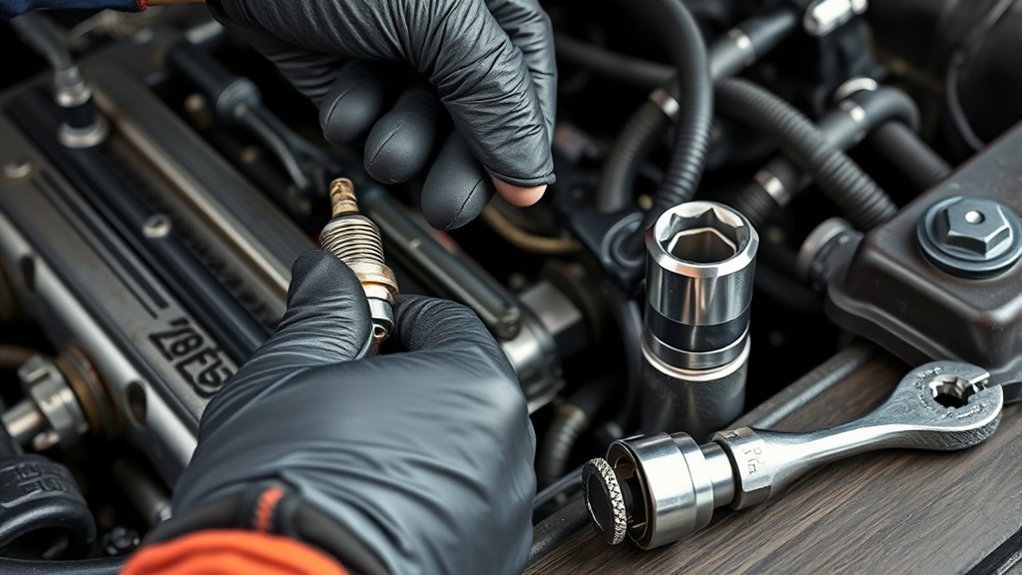
Although spark plugs are small components, they play a critical role in your engine’s performance, and recognizing when they need replacing is vital. Typically, the average spark plug lifespan ranges between 30,000 to 100,000 miles, depending on the type and engine specifications.
You’ll notice a decline in engine performance if the spark plugs are worn out. Symptoms include rough idling, difficulty starting, engine misfires, and decreased fuel efficiency. Inspecting the plugs reveals signs like carbon deposits, erosion of the electrode, or a worn insulator tip.
Addressing these issues promptly guarantees peak combustion and prevents long-term engine damage. Monitoring the spark plug lifespan and performance indicators helps you maintain consistent engine power and efficiency. Replace spark plugs immediately upon detecting these signs to sustain engine reliability.
Tools Needed for Spark Plug Replacement
Before you begin replacing your spark plugs, gather the essential tools to guarantee a smooth and efficient process. You’ll need a spark plug socket compatible with the specific spark plug types installed in your engine, commonly 5/8-inch or 13/16-inch sizes.
A ratchet wrench and an extension bar will help you reach recessed spark plugs. Additionally, a torque wrench is vital to apply the correct tightening torque, avoiding damage and making sure of peak performance.
Use a spark plug gap gauge to verify the gap matches manufacturer specifications, as improper gaps affect ignition. Finally, gloves and safety glasses protect you during maintenance.
Verify spark plug gaps with a gauge and always wear gloves and safety glasses during maintenance.
Following these maintenance tips and using the right tools assures you replace spark plugs precisely, preserving engine efficiency and longevity.
How to Safely Remove Old Spark Plugs
Once you have gathered the proper tools, you can begin removing the old spark plugs safely. Different spark plug types may require specific removal techniques, so it’s important to proceed carefully to avoid damage.
Follow these steps:
- Verify the engine is cool to prevent burns and avoid thread damage.
- Disconnect the spark plug wire by pulling the boot, not the wire itself.
- Use a spark plug socket with a rubber insert to grip the plug securely.
- Turn the socket counterclockwise gently; avoid applying excessive force to prevent stripping threads.
- Remove the plug and inspect the threads for damage or debris before discarding.
Choosing the Right Spark Plugs Before Installation
When selecting spark plugs for your engine, you need to match the specifications outlined by the manufacturer to guarantee peak performance and longevity. Consider spark plug types such as copper, platinum, and iridium, each offering distinct benefits based on spark plug materials. Copper plugs conduct well but wear faster; platinum and iridium last longer and improve ignition efficiency.
| Spark Plug Type | Common Spark Plug Materials |
|---|---|
| Standard | Copper |
| Premium | Platinum |
| High Performance | Iridium |
| Racing | Iridium/Platinum Hybrid |
Choose the plug type compatible with your engine’s design, heat range, and driving conditions. Using the correct spark plug guarantees ideal combustion, fuel efficiency, and engine durability. Always cross-reference the vehicle manual or parts guide before purchase.
How to Install New Spark Plugs Correctly
Begin by confirming your engine is cool and disconnected from the battery to prevent accidental shocks or damage. When installing new spark plugs, consider the specific spark plug types compatible with your engine.
Follow these installation tips for a precise fit:
- Check the spark plug gap with a gauge and adjust if necessary.
- Apply a small amount of anti-seize compound on the threads to prevent corrosion.
- Insert the spark plug by hand to avoid cross-threading.
- Use a torque wrench to tighten the plug to the manufacturer’s specified torque.
- Reconnect the ignition wire securely to guarantee proper electrical contact.
These steps guarantee peak performance and longevity of your spark plugs, preventing damage and engine misfires.
How to Inspect Your Spark Plug Installation
After installing your spark plugs with the correct gap, proper torque, and secure ignition wire connection, you’ll need to inspect the installation to verify everything functions as intended. Begin by checking for any visible damage or improper seating.
Confirm that the spark plug type matches your engine specifications, as using the wrong type affects spark plug life and engine performance. Finally, verify the ignition wires are firmly connected without corrosion.
| Inspection Area | What to Check | Action if Issue Found |
|---|---|---|
| Spark Plug Seating | Fully seated, no gaps | Reseat and retorque |
| Spark Plug Type | Matches manufacturer specs | Replace with correct type |
| Ignition Wire | Secure, no corrosion or wear | Clean or replace wire |
Thorough inspection guarantees longevity and ideal function.
Avoid These Common Spark Plug Replacement Mistakes
Make certain you set the spark plug gap to the manufacturer’s specifications before installation. Avoid over-tightening the spark plugs, as this can damage the threads or the plug itself.
Correct torque and gap guarantee peak performance and prevent costly repairs.
Incorrect Spark Plug Gap
Although it might seem minor, an incorrect spark plug gap can greatly affect engine performance and fuel efficiency. Ensuring accurate gap measurement is critical to ideal spark plug performance. Use a feeler gauge to verify the gap matches your vehicle’s specifications before installation. An improper gap leads to misfires, rough idling, and increased fuel consumption.
To avoid mistakes, follow these guidelines:
- Check the manufacturer’s recommended gap size.
- Use a precise feeler gauge for measurement.
- Adjust the gap carefully without damaging the electrode.
- Re-measure after adjustment to confirm accuracy.
- Replace plugs if the electrode is worn or damaged.
Over-Tightening Spark Plugs
When you tighten spark plugs too much, you risk damaging the threads in the cylinder head or cracking the plug itself. Each spark plug requires a specific spark plug torque, which depends on the engine design and the spark plug materials, such as copper, iridium, or platinum.
Over-tightening can strip the threads, leading to costly repairs or poor engine performance. Always consult your vehicle’s manual for the correct torque specification and use a calibrated torque wrench to apply it precisely.
Remember, spark plug materials affect the torque values; for example, iridium plugs often require less torque than copper plugs. Avoid using excessive force, and never rely on hand-tightening alone.
Proper torque guarantees ideal sealing, heat dissipation, and longevity of the spark plugs.
Frequently Asked Questions
How Often Should Spark Plugs Be Replaced for Different Car Models?
You should replace spark plugs based on your vehicle maintenance schedule; spark plug lifespan varies from 30,000 to 100,000 miles, depending on your car model and plug type. Always consult the manufacturer’s guidelines precisely.
Can Bad Spark Plugs Affect Fuel Efficiency?
Think of your engine like a campfire; bad spark plug symptoms are like damp wood. Fuel consumption spikes as energy wastes.
You’ll notice rough idling and misfires, signaling you need to check and replace spark plugs promptly.
What Are the Consequences of Using the Wrong Spark Plug Gap?
Using the wrong spark plug gap disrupts spark plug performance, causing misfires and poor combustion. You’ll reduce engine efficiency and increase emissions.
Always check gap measurement with a feeler gauge to maintain ideal spark plug function.
Are Iridium Spark Plugs Better Than Platinum Ones?
You’d think iridium spark plugs last forever. They offer superior iridium benefits like better ignition and efficiency. However, platinum durability means they resist wear well.
Choose iridium for performance; pick platinum for long-lasting reliability.
Can Spark Plug Issues Cause Engine Misfires?
Yes, spark plug issues can cause engine misfires. You’ll notice misfire symptoms like rough idling and reduced engine performance.
Inspect and replace faulty plugs promptly to restore ideal combustion and prevent further engine damage.
Conclusion
Replacing your spark plugs might seem intimidating, but with the right tools and steps, you can do it efficiently and safely. Don’t worry about damaging your engine—following proper removal and installation techniques guarantees a perfect fit and peak performance.
Regularly inspecting your work prevents issues and extends engine life. By mastering this skill, you save time and money, keeping your vehicle running smoothly without relying on costly mechanic visits.
Learning how to replace spark plugs is a valuable skill that ensures your engine remains in top condition and helps you avoid unnecessary expenses.