To rethread a spark plug hole, first gather a thread chaser or tap matching your engine’s specs.
Safely remove the plug using the proper socket and a breaker bar, then clean the hole thoroughly with compressed air and a wire brush.
Carefully rethread with the tap, install a helicoil insert if needed, and hand-thread the plug to avoid cross-threading.
Tighten using a torque wrench to the correct specification.
Following these steps guarantees durable repair and engine reliability; detailed guidance can further optimize your process.
Key Takeaways
- Use a thread chaser or tap matching the spark plug size to carefully clean and realign damaged threads in the spark plug hole.
- Thoroughly clean the spark plug hole with compressed air and a wire brush before rethreading to remove debris and prevent contamination.
- Install a thread repair insert (Helicoil) if threads are severely damaged, ensuring it seats flush and aligns correctly with the hole.
- Thread the spark plug in by hand first to avoid cross-threading, then tighten with a torque wrench to the manufacturer’s specified torque.
- Replace the crush washer if applicable and avoid over-tightening to maintain a proper seal and prevent further thread damage.
Gather Tools for Rethreading Spark Plug Holes
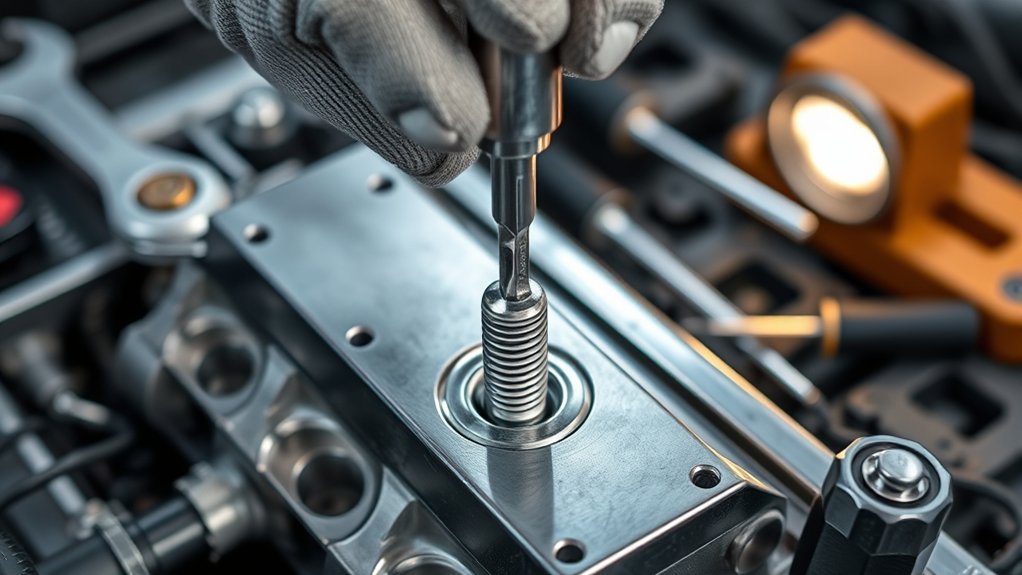
Before you begin rethreading a spark plug hole, gather the essential tools to guarantee a smooth process. Start with a thread chaser or a specialized tap and die set compatible with your spark plug types, facilitating precise thread alignment.
Include a thread repair kit if the damage is extensive; these kits often contain helicoils or coil inserts to restore thread integrity. You’ll also need a torque wrench for accurate tightening, a spark plug socket, and a ratchet.
Cleaners like compressed air and a wire brush help remove debris from the hole before repair. Selecting the right thread repair method depends on the thread condition and spark plug specifications.
Proper preparation with these tools minimizes damage and guarantees reliable spark plug installation and engine performance.
Identify When Spark Plug Hole Threads Need Repair
Having the right tools on hand sets the stage for effective spark plug hole thread repair, but knowing when to repair is equally important. You should inspect the threads closely for any signs of thread wear, including stripped, flattened, or cross-threaded areas that compromise the spark plug’s seating.
Repair indicators also include difficulty in tightening or loosening the spark plug, unusual looseness, or visible damage in the threaded hole. If you notice any metal shavings, uneven thread depth, or corrosion affecting thread integrity, it’s a clear sign repair is necessary.
Addressing these indicators promptly prevents further damage, guarantees proper spark plug torque, and maintains engine performance. Don’t ignore subtle thread wear; early detection saves time and cost in the long run.
Safely Remove a Damaged Spark Plug Before Rethreading
Before rethreading, carefully assess the spark plug for damage to determine the best removal method. Use the correct tools, like a spark plug socket and breaker bar, to avoid worsening the hole’s condition.
Taking these steps guarantees you remove the plug without causing further thread damage.
Assessing Spark Plug Damage
Although spark plugs are designed to last, damage can occur that compromises their function and the integrity of the spark plug hole. When evaluating spark plug damage, first inspect the electrode for wear, fouling, or melting, which indicates poor spark plug maintenance or engine issues.
Next, examine the threads on both the plug and within the hole for stripping, cross-threading, or metal debris. Damaged threads can lead to poor sealing and affect engine performance.
Identifying these issues early helps you determine if thread repair is necessary before installing a new spark plug. Proper evaluation prevents further damage during removal and guarantees that rethreading will restore the hole’s integrity, maintaining engine efficiency and safety.
Accurate assessment is essential for effective spark plug maintenance and repair.
Using Proper Removal Tools
Choose the right tools to safely remove a damaged spark plug without worsening thread damage. Start with a high-quality spark plug socket and a breaker bar to apply steady, controlled torque.
Avoid using pliers or makeshift tools that can deform the plug or threads. If the plug is seized, consider specialized removal techniques like using a penetrating lubricant or an extractor designed for spark plugs.
Always inspect and maintain your tools. Clean sockets and verify the breaker bar’s joint moves smoothly to prevent slippage and rounding of the plug hex. Proper tool maintenance extends tool life and improves safety during removal.
Clean Spark Plug Hole Threads Thoroughly
Scrape away any debris and carbon buildup inside the spark plug hole threads using a specialized thread chaser or a wire brush. These thread cleaning methods restore thread integrity and guarantee an accurate fit for the spark plug.
After cleaning, employ thread inspection techniques such as visual examination and feeler gauges to detect any damage, cross-threading, or remaining contaminants. Proper cleaning prevents misalignment and potential engine issues.
Use compressed air to blow out loosened particles thoroughly. Avoid harsh abrasives that could weaken the threads. Consistent thread cleaning and inspection help maintain the spark plug hole’s structural soundness, preparing it for rethreading or installation.
This step is critical before proceeding to thread repair kits or inserts, assuring you address only clean, clearly defined threads.
How to Repair Spark Plug Threads Using Kits and Inserts
You’ll need to select a repair kit that matches your spark plug’s thread size and engine specifications. Follow the installation steps carefully to guarantee the insert seats properly and restores thread integrity.
Avoid common errors like cross-threading or insufficient cleaning to prevent further damage.
Choosing The Right Kit
Although repairing spark plug threads may seem straightforward, selecting the right repair kit is essential to guarantee a durable and secure fit. You need a kit designed specifically for the spark plug types used in your engine, whether copper, platinum, or iridium.
The kit must match the thread materials of the cylinder head, commonly aluminum or cast iron, to ascertain compatibility and prevent galvanic corrosion. Look for kits that include high-quality inserts or helicoils engineered to withstand the thermal and mechanical stresses in the combustion chamber.
Verify the thread pitch and diameter precisely; using an incorrect size risks damaging the hole further. Choosing a kit with clear specifications and durable materials guarantees a reliable repair, avoids future failures, and maintains engine performance.
Step-by-Step Installation Guide
Begin by thoroughly cleaning the spark plug hole to remove debris, oil, and carbon deposits that could interfere with the repair. Next, select the appropriate thread repair kit based on your engine’s spark plug types.
Use the provided tap to carefully rethread the hole, following the tap’s pitch and size to match the original threads. Then, install the insert, usually a helicoil or threaded sleeve, ensuring it seats flush and aligns precisely with the hole.
After the insert is in place, break off any tangs if required. Finally, install the correct spark plug type, threading it by hand initially to verify smooth engagement with the repaired threads. This thread repair technique restores thread integrity, allowing safe spark plug installation and maximum engine performance.
Common Mistakes To Avoid
When repairing spark plug threads using kits and inserts, avoiding common mistakes is essential to guarantee a secure fit and prevent further damage. First, make sure you select the correct insert size to avoid thread compatibility issues that can lead to improper seating or cross-threading.
Avoid rushing the drilling and tapping steps; precise alignment is critical to maintain thread integrity. Don’t neglect cleaning the hole thoroughly before installation, as debris can compromise the repair.
Use thread repair techniques recommended by the kit manufacturer, and avoid improvising with incompatible tools or materials. Finally, never overtighten the spark plug after installation, as this can damage the new threads.
Install Thread Inserts (Helicoils) for Durable Repairs
Since damaged spark plug threads compromise engine performance, installing thread inserts like Helicoils offers a reliable, long-lasting repair. Begin by selecting the proper insert type compatible with your spark plug materials and thread size to confirm thread compatibility.
Use the correct installation tools: a tap to clean and reshape the hole, an insertion tool to install the coil, and a tang break-off tool. Follow precise installation techniques: clean the damaged threads, tap the hole carefully, insert the coil evenly, and break off the tang.
This process restores thread durability and enhances repair longevity, preventing future stripping. For maintenance, periodically inspect the insert for corrosion or wear, especially in aluminum heads.
Proper tool selection and adherence to installation steps assure a durable, factory-quality thread repair.
Reinstall Spark Plugs Correctly After Thread Repair
Carefully thread the spark plug into the repaired hole by hand to avoid cross-threading, guaranteeing it aligns smoothly with the newly installed insert. Once hand-tightened, use a torque wrench to tighten the spark plug to the manufacturer’s specified torque.
This step is vital for proper spark plug maintenance and prevents damage to the thread repair. Avoid over-tightening, which can strip the insert or cause gasket failure. If your spark plug uses a crush washer, replace it with a new one to secure a proper seal.
Following precise thread repair techniques, inspect the spark plug gap before installation to guarantee peak engine performance. Reinstalling spark plugs correctly after thread repair maintains engine efficiency and prevents costly repairs down the line.
Avoid Common Mistakes When Rethreading Spark Plug Holes
Properly reinstalling spark plugs after thread repair sets the foundation, but steering clear of common mistakes during the rethreading process is equally important. First, avoid applying excessive force when using thread repair techniques; overtightening can damage the newly formed threads or the spark plug itself.
Proper spark plug reinstallation starts with careful thread repair and avoiding excessive force to prevent damage.
Always use the correct thread chaser or tap size to prevent thread distortion. Skipping thorough cleaning before rethreading risks debris contamination, which compromises spark plug maintenance and engine performance.
Don’t neglect to apply anti-seize lubricant sparingly; too much can alter torque readings. Finally, verify you torque the spark plug to manufacturer specifications. Under or overtightening leads to thread failure or poor sealing.
Following these precise steps guarantees durability and peak function post rethreading.
Frequently Asked Questions
Can Damaged Spark Plug Threads Cause Engine Misfires?
Yes, damaged spark plug threads can cause engine misfires by preventing proper spark plug seating. You’ll need thread repair techniques to fix the hole, avoiding spark plug failure and ensuring reliable ignition and engine performance.
How Often Should Spark Plug Holes Be Inspected for Thread Damage?
You should perform spark plug inspection and check for thread wear every 30,000 miles or during routine tune-ups. Early detection prevents engine issues and costly repairs, ensuring peak engine performance and spark plug seating integrity.
Are There Alternative Methods to Repair Spark Plug Threads Besides Helicoils?
Like choosing between the tortoise and the hare, you can use thread inserts, chemical repair kits, or oversized spark plugs. These cost-effective solutions avoid time-consuming repairs while restoring thread integrity efficiently, letting you fix threads without costly Helicoil replacements.
What Are the Risks of Using Incorrect Spark Plug Thread Repair Tools?
Using incorrect spark plug thread repair tools can damage the spark plug hole, cause improper fit, lead to thread stripping, and compromise engine sealing.
You’ll risk costly repairs and potential engine misfires. Always use precise, compatible tools.
Can Professional Mechanics Guarantee a Permanent Spark Plug Thread Repair?
You can’t always expect a permanent fix, but skilled mechanics’ expertise with advanced thread repair techniques considerably improves durability.
While no guarantee exists, their precision and experience greatly reduce the risk of recurring thread damage or failure.
Conclusion
Now that you’ve rethreaded the spark plug hole, you’re back in the driver’s seat for reliable engine performance. Taking care during each step—from cleaning to installing inserts—ensures a long-lasting repair.
Remember, cutting corners here will cost you more down the road, so do it right the first time. With the right tools and technique, you’ll avoid common pitfalls and keep your engine running smoothly without skipping a beat.
Properly rethreading the spark plug hole is key to maintaining engine health and preventing future issues.