To test a spark plug, first verify the engine is cool. Then safely remove the plug using a spark plug socket wrench.
Visually inspect it for cracks, deposits, or wear.
Use a multimeter set to ohms to measure resistance across its terminals; compare the reading to specs.
Next, connect a spark tester between the ignition wire and plug, then crank the engine to check for a bright, steady spark.
Understanding these steps helps you diagnose spark plug health effectively and prepares you to take further action if needed.
Key Takeaways
- Remove the spark plug safely using a proper socket wrench and ensure the engine is cool before inspection.
- Visually inspect the spark plug for cracks, deposits, and electrode wear that indicate problems.
- Use a multimeter to measure spark plug resistance and compare it with manufacturer specifications.
- Connect a spark tester between the ignition wire and spark plug to check for a bright, steady spark.
- Replace spark plugs showing high resistance, damage, or weak spark to maintain engine performance.
Tools You’ll Need to Test a Spark Plug at Home
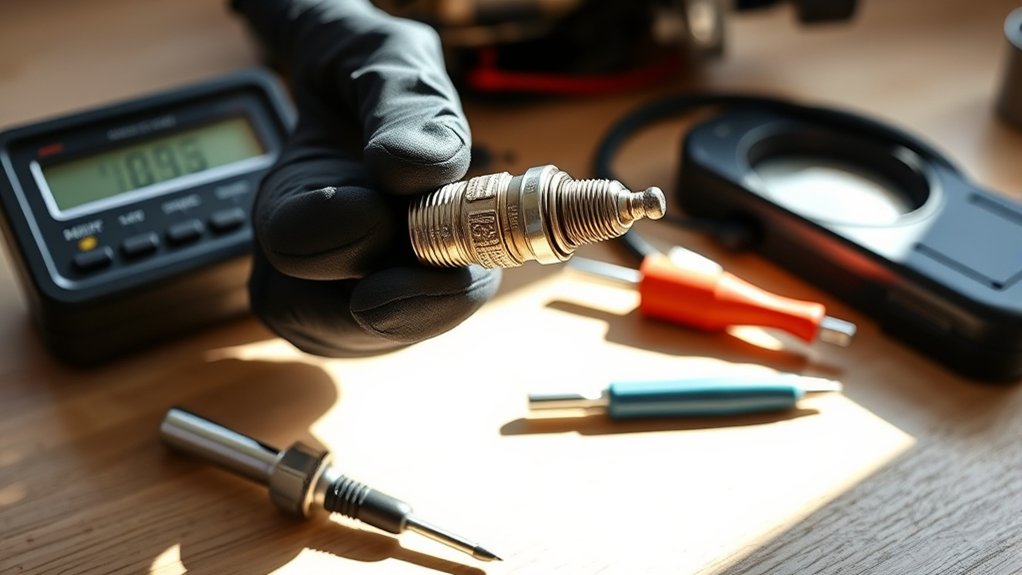
To accurately test a spark plug at home, you’ll need a few essential tools that guarantee precise diagnostics. First, a spark plug socket wrench guarantees you fit the specific spark plug types in your vehicle without damage.
Next, a multimeter lets you measure resistance and continuity for effective testing. A gap gauge is necessary to verify and adjust the electrode gap according to manufacturer specifications.
You’ll also require a spark plug tester to confirm spark presence under operating conditions. Keep in mind that testing frequency depends on your vehicle’s usage and manufacturer recommendations; typically, testing every 30,000 miles or during routine maintenance is advised.
Having these tools ready will let you perform accurate, efficient spark plug evaluations and maintain peak engine performance.
How to Remove the Spark Plug Safely
Before testing a spark plug, you need to remove it carefully to avoid damage to the threads or the electrode. Prioritize spark plug safety by verifying the engine is cool; hot components can cause burns or strip threads.
Always ensure the engine is cool before carefully removing the spark plug to protect threads and electrode.
Disconnect the ignition wire by pulling the boot, not the cable, to prevent wire damage. Use a properly sized spark plug socket with a rubber insert or magnetic feature for secure grip.
Apply steady counterclockwise force, avoiding sudden jerks that can damage the spark plug or cylinder head. If the plug resists, apply penetrating oil and allow it to sit before retrying.
Once loosened, remove the spark plug by hand to prevent cross-threading. Following these removal techniques guarantees the spark plug and engine remain intact for accurate testing.
Visual Inspection: Signs of a Faulty Spark Plug
You’ll want to carefully examine the spark plug for cracks or any physical damage on the porcelain insulator and metal parts. Check the electrode for uneven wear patterns that could indicate improper combustion.
Also, look for deposits or contamination, such as oil, carbon buildup, or ash, which can impair performance.
Cracks and Physical Damage
Several visible signs can indicate cracks or physical damage on a spark plug that compromise its functionality. When inspecting, closely examine the ceramic insulator and metal shell for fractures or chips. Damage often results from improper installation or extreme engine conditions.
Since spark plug materials vary, ceramic insulators are more prone to cracking. You should inspect plugs regularly according to the recommended testing frequency. Immediate replacement is necessary if cracks appear, as they can cause misfires or poor engine performance.
| Damage Type | Impact on Performance |
|---|---|
| Ceramic Cracks | Misfires, weak spark |
| Metal Shell Damage | Poor grounding, misfires |
| Insulator Chips | Electrical leakage |
| Thread Damage | Poor fit, potential leaks |
| Electrode Breaks | Inconsistent spark generation |
Always replace damaged spark plugs promptly to maintain engine efficiency.
Electrode Wear Patterns
Electrode wear provides critical insight into a spark plug’s condition and overall engine health. When inspecting electrode types, focus on both the center and ground electrodes. Look for rounded edges, thinning, or uneven wear, which serve as key wear indicators.
These signs suggest prolonged use or improper combustion. For example, a severely eroded center electrode reduces spark efficiency, leading to misfires. Different electrode materials, such as copper, platinum, or iridium, wear at varying rates, so compare your plug’s wear to manufacturer specifications.
Measure electrode gaps with a feeler gauge; an increased gap often accompanies wear and impairs performance. By identifying specific wear patterns, you can determine if the spark plug requires replacement or if engine tuning is necessary to prevent further damage.
Deposits and Contamination
When inspecting a spark plug, deposits and contamination reveal much about combustion quality and engine conditions. You should carefully evaluate the plug for these common issues:
- Excessive carbon buildup appears as dry, black soot, indicating a rich fuel mixture or weak ignition.
- Oil contamination shows as wet, oily deposits on the insulator or electrode, signaling worn piston rings or valve guides.
- Ash deposits look light gray or tan and stem from oil additives or fuel additives. Excessive amounts can cause misfires.
- Fuel fouling results in a damp, black coating, often due to flooding or prolonged idling.
How to Know When Your Spark Plug Needs Testing
You need to test your spark plug if you notice signs of poor engine performance or experience misfire symptoms. Start by performing a visual inspection to check for deposits, wear, or damage on the spark plug. These indicators suggest that the spark plug’s condition may be compromising engine efficiency.
Signs of Poor Performance
Although spark plugs often go unnoticed, their condition directly affects engine performance. Recognizing signs of poor spark plug function is essential.
Identifying performance issues early allows you to apply effective troubleshooting techniques before more severe damage occurs. Here are four key signs indicating your spark plug may need testing:
- Engine misfires or rough idling, indicating inconsistent ignition.
- Difficulty starting the engine, suggesting weak or no spark.
- Decreased fuel efficiency, pointing to incomplete combustion.
- Noticeable loss of power or acceleration during operation.
If you observe any of these symptoms, prioritize testing your spark plugs to maintain peak engine performance and avoid costly repairs.
Visual Spark Plug Inspection
Noticing symptoms like engine misfires or reduced fuel efficiency signals the need for a direct examination of your spark plug’s condition. Begin by removing the spark plug and inspecting the key components of spark plug anatomy: the electrode, insulator, and metal shell.
Check for deposits, corrosion, or damage on the electrode, as these impair spark generation. Identify the common spark plug types: copper, platinum, or iridium, since each wears differently.
Copper plugs often show more rapid electrode wear, while platinum and iridium resist erosion but can accumulate deposits. Look for signs like black soot (carbon fouling), white deposits (overheating), or oil residue, which indicate specific engine issues.
This visual inspection helps you determine whether the spark plug requires cleaning, regapping, or replacement before proceeding with electrical testing.
Engine Misfire Symptoms
Engine misfires often signal underlying spark plug issues that demand prompt attention. When you notice a drop in engine performance, it’s essential to test the spark plug for faults affecting ignition timing.
Here are four key symptoms indicating that your spark plug needs testing:
1. Rough Idling
The engine runs unevenly or vibrates excessively at idle, suggesting inconsistent spark delivery.
2. Poor Acceleration
Hesitation or stumbling during acceleration can result from misfiring cylinders due to faulty spark plugs.
3. Increased Fuel Consumption
Reduced combustion efficiency caused by spark plug failure leads to higher fuel usage.
4. Check Engine Light
Diagnostic trouble codes related to ignition timing errors or misfires often trigger this warning.
Addressing these symptoms promptly helps maintain peak engine performance and prevents further damage.
How to Test Spark Plug Resistance With a Multimeter
Before measuring spark plug resistance, confirm your multimeter is set to the ohms (Ω) scale to accurately gauge electrical continuity. Different spark plug types, such as copper, platinum, or iridium, may have varying resistance values, so consult the manufacturer’s specifications before testing.
Remove the spark plug from the engine and verify it’s clean and dry. Place one multimeter probe on the terminal at the top of the spark plug and the other on the center electrode at the firing end.
A normal resistance reading typically ranges from 4,000 to 8,000 ohms for standard spark plugs, but this varies by type. If the reading is infinite or zero ohms, the spark plug is faulty and should be replaced. Use the correct multimeter settings to avoid inaccurate readings.
How to Check Spark Plug Spark With a Spark Tester
Connect a spark tester to your ignition system to accurately assess the spark plug’s ability to generate a consistent spark. Different spark tester types, such as inline testers or spark gap testers, help you evaluate the plug’s firing performance.
Follow these testing techniques:
- Attach the spark tester between the ignition wire and spark plug.
- Crank the engine or activate the ignition to initiate sparking.
- Observe the spark inside the tester; it should be bright blue and steady.
- If the spark is weak, intermittent, or absent, the plug or ignition system may need attention.
Using proper spark tester types and testing techniques guarantees precise diagnosis of spark plug functionality before further troubleshooting.
What Your Spark Plug Test Results Tell You
After testing the spark plug with a spark tester, interpreting the results accurately helps determine the next steps for maintenance or repair. A strong, consistent spark indicates the plug is functioning within its expected spark plug lifespan, requiring no immediate action.
A weak or intermittent spark signals potential fouling, electrode wear, or ignition issues, suggesting further inspection. No spark confirms an electrical failure, necessitating prompt attention.
A weak or no spark indicates fouling, wear, or electrical failure, requiring immediate inspection and action.
Consider testing frequency based on your vehicle’s usage and manufacturer recommendations; regular checks help identify degradation before it affects performance. Keep in mind that even if the spark appears adequate, accumulated wear over time can still reduce efficiency.
Use test outcomes to guide whether to clean, adjust, or keep monitoring the spark plug’s condition within its operational lifespan.
When and How to Replace Your Spark Plug
Although spark plugs can last thousands of miles, you should replace them when signs of wear, fouling, or damage appear during inspection or testing. Adhering to your vehicle’s maintenance schedule guarantees peak spark plug lifespan and engine performance.
Follow these steps to replace your spark plug correctly:
- Gather tools: spark plug socket, ratchet, gap gauge, and torque wrench.
- Remove ignition wires or coil packs carefully to avoid damage.
- Unscrew the old spark plug using the spark plug socket and inspect the condition.
- Install the new spark plug by first checking and adjusting the gap, then threading it by hand before tightening with a torque wrench to the manufacturer’s specified torque.
Replacing spark plugs timely maintains engine efficiency and prevents misfires.
Frequently Asked Questions
How Often Should Spark Plugs Be Replaced in Different Vehicles?
You should replace spark plugs every 30,000 to 100,000 miles, depending on your vehicle’s make and model. Regular vehicle maintenance guarantees you monitor spark plug lifespan, preventing engine misfires and maintaining peak performance.
Can Using the Wrong Spark Plug Damage My Engine?
Using the wrong spark plug is like forcing the wrong key into a lock; it disrupts spark plug compatibility, risking engine performance. You’ll cause misfires, poor fuel efficiency, and potential engine damage if you don’t match specs precisely.
What Causes Spark Plugs to Foul or Wear Out Prematurely?
You’ll cause spark plugs to foul or wear out prematurely by neglecting spark plug maintenance, running a rich fuel mixture, or ignoring engine misfire symptoms. These issues increase carbon deposits and electrode erosion, reducing spark efficiency.
Are Iridium or Platinum Spark Plugs Better Than Standard Ones?
Iridium and platinum spark plug materials offer superior spark plug longevity due to higher melting points and wear resistance. You’ll get more consistent performance and fewer replacements compared to standard plugs, making them technically better for most engines.
How Do Spark Plugs Affect Fuel Efficiency and Engine Performance?
You’ll improve fuel efficiency up to 4% by selecting ideal spark plug types and precise engine tuning. Proper spark plugs guarantee complete combustion, boosting engine performance and reducing emissions, so always match plugs to your specific engine requirements.
Conclusion
Testing your spark plug is straightforward but essential for engine health. For example, when Jake noticed rough idling, he used a multimeter to check resistance and a spark tester to confirm ignition strength. Both revealed a weak spark, prompting a timely replacement that restored smooth performance.
By following these steps, you can accurately diagnose spark plug issues, prevent engine problems, and maintain peak vehicle function with confidence and precision. Proper testing of a spark plug ensures your engine runs efficiently and reliably.