To use a spark plug gapper tool, first check your engine’s specified gap in the manual. The spark plug gapper tool helps you measure and adjust the gap between the electrodes accurately.
Insert the correct wire or tapered gauge between the spark plug electrodes to measure the gap. If the gap is off, gently bend the ground electrode using the tool until the measurement matches the specification.
Recheck the gap after adjustments for accuracy. Regularly maintaining proper gaps guarantees efficient ignition and performance.
Keep following for detailed steps on measurement, adjustment, and maintenance techniques.
Key Takeaways
- Select the correct spark plug gapper tool matching your vehicle’s specified gap range for accurate measurement.
- Insert the feeler gauge or tapered tool gently between the spark plug electrodes to measure the gap.
- Compare the measured gap to the manufacturer’s specification found in the engine manual.
- Adjust the gap by gently bending the ground electrode with the tool to increase or decrease the distance.
- Recheck the gap after each adjustment until it matches the recommended specification for optimal engine performance.
What Is a Spark Plug Gapper and Why Use It
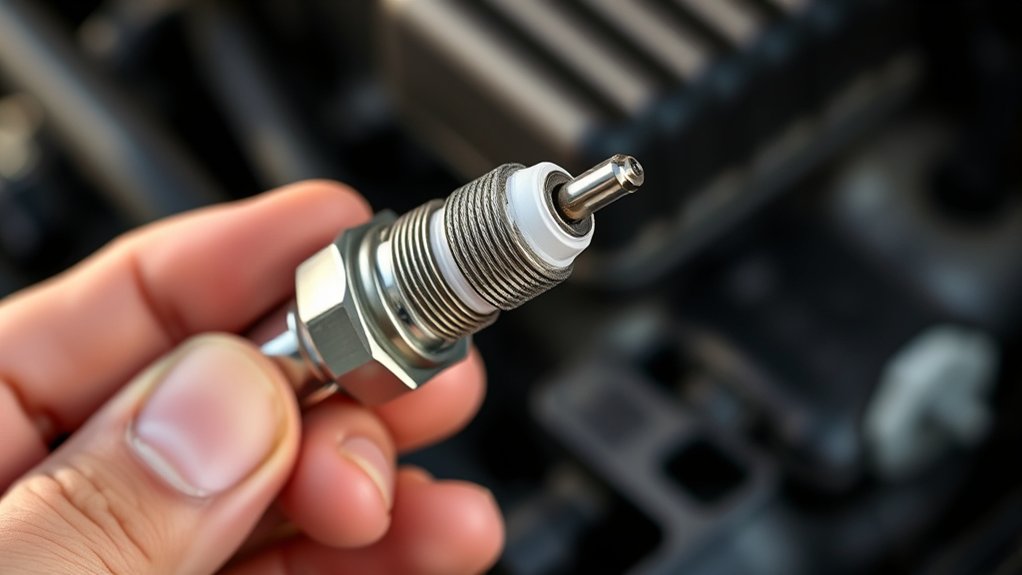
A spark plug gapper is a specialized tool designed to measure and adjust the distance between the center and ground electrodes of a spark plug. You need to use it because proper gap specifications vary across spark plug types, affecting ignition performance and engine efficiency.
Different engines require specific electrode gaps to guarantee peak spark intensity and combustion. Using the gapper, you can precisely check if the gap matches the manufacturer’s recommended specifications for your particular spark plug type.
If the gap is incorrect, you adjust it carefully with the tool to avoid damaging the electrodes. This process helps maintain consistent ignition timing, reduces misfires, and improves fuel economy.
How to Measure the Correct Spark Plug Gap
To measure the correct spark plug gap, you first need to understand the manufacturer’s specified gap for your engine. Select the appropriate gapper tool, such as a wire gauge or feeler gauge, based on accuracy and ease of use.
Then, carefully check the gap by inserting the tool between the electrodes, ensuring it matches the recommended measurement precisely.
Understanding Spark Plug Gap
Although spark plug gap specifications vary by engine type, measuring the correct gap is crucial for peak ignition performance. The gap, the distance between the center and ground electrodes, directly affects ignition efficiency, influencing combustion quality and fuel economy.
Different spark plug types, such as copper, platinum, or iridium, require precise gaps tailored to their materials and engine demands. To measure the gap accurately, use a feeler gauge or gapper tool, inserting it between electrodes without forcing.
If the gap is too narrow, the spark may be weak; too wide, and the spark might not jump consistently. Always consult your engine’s manual for the exact gap specification. Properly understanding and setting this gap guarantees reliable starts, smooth operation, and maximum engine power output.
Selecting The Right Tool
When measuring the spark plug gap, choosing the right tool guarantees accuracy and prevents damage to the electrodes. You’ll find several tool types designed for this task: wire-type feeler gauges, tapered gauge tools, and coin-style gap tools. Each offers distinct precision levels and usability.
Pay close attention to tool materials; stainless steel tools resist corrosion, assuring consistent measurements, while plastic or composite tools reduce the risk of scratching electrodes. Avoid cheap, flexible materials that can produce inaccurate readings.
Select a tool that matches your vehicle’s specified gap range and allows for fine adjustment. Using quality materials and the appropriate tool type assures you measure the spark plug gap precisely, safeguarding engine performance and extending spark plug life.
Checking Gap Measurement
Three key steps guarantee you accurately check the spark plug gap using your selected tool. First, clean the spark plug’s electrode to confirm no debris affects your readings.
Second, insert your gap tool, whether a feeler gauge or wire gauge, between the center and ground electrodes. Use steady pressure to avoid bending the electrodes.
Third, read the measurement precisely, comparing it against the manufacturer’s specifications. Adhering to proper gapping techniques confirms your gap measurements are reliable and consistent.
If the gap deviates, adjust it carefully by bending the ground electrode. Avoid over-bending, which can damage the plug. Regularly verifying gap measurements prevents ignition issues and optimizes engine performance.
Following these technical steps guarantees you maintain accurate spark plug gap settings for efficient combustion.
How to Adjust Spark Plug Gaps With a Gapper Tool
Before adjusting the spark plug gap, verify you know the exact specification required for your engine. Use precise gapper techniques to avoid damaging the electrode.
Start by gently inserting the tapered feeler of the gapper tool into the spark plug gap. If the gap is too narrow, carefully bend the ground electrode outward. If it’s too wide, bend it inward. Make small gap adjustments, then recheck the gap with the tool.
| Step | Action |
|---|---|
| Insert tool | Slide tapered feeler into gap |
| Adjust gap | Bend electrode gently |
| Verify gap | Re-measure with gapper tool |
Repeat until the gap matches the specification. Proper gap adjustments guarantee peak engine performance and efficient combustion.
How to Check and Maintain Spark Plug Gaps Regularly
Regularly checking and maintaining your spark plug gaps guarantees consistent engine performance and prevents misfires. Begin your spark plug maintenance by removing each plug carefully to avoid electrode damage.
Use a reliable feeler gauge or spark plug gapper tool to measure the gap between the center and ground electrodes accurately. Compare the measurement to your vehicle’s manufacturer specifications.
Measure spark plug gaps precisely with a feeler gauge, matching your vehicle’s specifications for optimal performance.
If the gap deviates, adjust it gently using the gapper tool without applying excessive force. Inspect the electrodes for wear or deposits, cleaning or replacing plugs as needed.
Perform this gap measurement and maintenance procedure every 10,000 to 15,000 miles, or as recommended. Maintaining precise spark plug gaps guarantees peak ignition, fuel efficiency, and engine longevity.
Consistency in these checks is essential for reliable performance.
Avoiding Common Spark Plug Gapper Mistakes
When you adjust spark plug gaps, taking care to avoid common mistakes guarantees accurate settings and prevents damage. Master precise gapping techniques by steering clear of these common errors:
Don’t force the gapper tool; excessive pressure can deform the electrode, altering the gap.
Avoid measuring gaps only once; always double-check with the tool for consistency.
Never use a worn or dirty tool. It can give inaccurate readings and lead to improper gaps.
Don’t neglect the manufacturer’s specified gap; guessing or approximating often results in poor engine performance.
When to Replace Spark Plugs Instead of Gapping Them
You should replace spark plugs if you notice signs of wear such as erosion, deposits, or damaged electrodes. Excessive gap size can cause misfires and poor engine performance that gapping alone won’t fix.
Always inspect the plug condition before deciding to adjust the gap or replace the spark plug entirely.
Signs of Spark Plug Wear
Although adjusting the gap on spark plugs can improve engine performance, certain signs indicate that replacement is necessary instead of gapping. Spark plug deterioration leads to decreased efficiency and can cause engine misfires. Recognizing signs of malfunction helps you avoid damage and maintain peak engine function.
Replace spark plugs if you notice:
- Excessive electrode wear or erosion
- Heavy carbon or oil deposits on the insulator
- Cracked or damaged ceramic insulator
- Corroded or burnt electrodes
These conditions indicate irreversible damage that gapping won’t fix. Regular inspection allows you to detect these signs of spark plug wear early, ensuring you replace rather than gap when necessary. This prevents performance loss and potential engine damage caused by worn or faulty spark plugs.
Impact of Excessive Gap
If the spark plug gap exceeds the manufacturer’s specifications greatly, simply adjusting it won’t restore proper function. Excessive gap widens beyond recommended gap tolerances, disrupting spark performance by requiring higher voltage to bridge the gap, leading to misfires or weak combustion.
When you notice a gap noticeably larger than specified, even after attempts to re-gap, you should replace the spark plug rather than continue adjusting. Over time, electrode wear and erosion permanently alter the gap, compromising spark intensity and engine efficiency.
Re-gapping worn plugs can cause inconsistent ignition and reduced fuel economy. Always measure the gap accurately with your spark plug gapper tool and compare it to the vehicle’s manual. If the gap falls outside acceptable tolerances, prioritize replacement to maintain ideal spark performance and engine reliability.
Frequently Asked Questions
Can I Use a Spark Plug Gapper Tool on All Vehicle Types?
You can use a spark plug gapper tool on most vehicles, but always check your specific engine’s requirements first. Proper gap measurement guarantees ideal spark plug maintenance and engine performance, preventing misfires and improving fuel efficiency.
What Materials Are Spark Plug Gapper Tools Made From?
Spark plug gapper tools are typically made from durable steel or plastic to guarantee precision and longevity. Different gapper tool types incorporate these materials to accurately measure and adjust spark plug materials without damaging electrodes.
How Often Should I Calibrate My Spark Plug Gapper Tool?
You’ll want to give your tool a little “attention check” every few months. Maintaining a regular calibration frequency guarantees your gapping accuracy stays reliable, preventing engine misfires and optimizing performance consistently.
Are Spark Plug Gapper Tools Compatible With Iridium Spark Plugs?
Yes, you can use spark plug gapper tools with iridium spark plugs to guarantee accurate gap measurement. Just handle the delicate electrode carefully to avoid damage while adjusting the gap to manufacturer specifications.
Can Improper Gapping Cause Engine Damage Beyond Misfires?
Yes, improper gap measurement can harm engine performance beyond misfires, causing rough idling, increased fuel consumption, and even damage to ignition coils or catalytic converters.
You must guarantee precise gaps for peak engine efficiency and longevity.
Conclusion
Mastering the spark plug gapper assures great gasoline gains. By measuring meticulously and adjusting accurately, you secure ideal engine efficiency and enduring performance.
Regularly reviewing and refining your spark plug gaps reduces rough runs and risky repairs. Avoid common errors by handling the tool with care and knowing when replacement is the right route.
Stay sharp, stay steady, and spark superior starts every time you use your spark plug gapper tool.