Is a Jeep Wrangler safe? You face increased rollover risks in a Jeep Wrangler due to its high center of gravity and rugged, boxy design focused on off-road performance.
While it performs well in frontal crash tests thanks to its rigid frame, it scores lower in side-impact and rollover resistance compared to other SUVs.
Standard safety features like stability control and multiple airbags help, but the Wrangler lacks some advanced driver-assist systems.
Understanding how these factors affect real-world safety can provide deeper insights.
Key Takeaways
- Jeep Wrangler has a higher rollover risk due to its boxy design and high center of gravity.
- It performs well in frontal crashes but has weaker side-impact crash test ratings.
- Standard safety features include multiple airbags, stability control, and roll mitigation systems.
- Off-road conditions and vehicle maintenance critically influence Wrangler’s real-world safety.
- Wrangler lacks some modern driver-assist technologies found in other SUVs, impacting urban safety.
Is the Jeep Wrangler Safe?
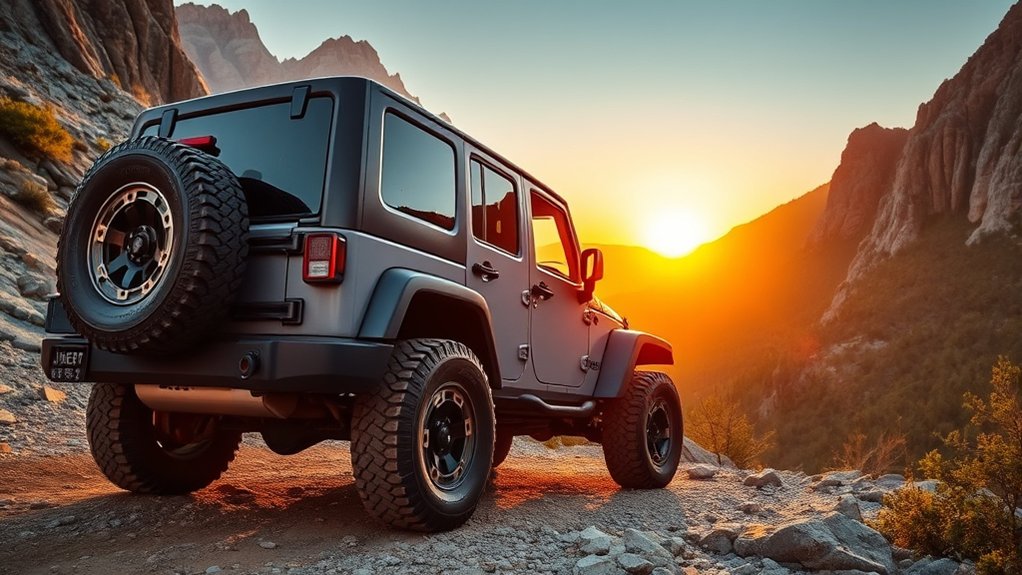
How safe is the Jeep Wrangler in real-world conditions? You need to take into account several factors, including structural integrity, rollover risk, and crashworthiness. The Wrangler’s boxy design and high center of gravity can increase rollover probability, impacting overall safety.
However, Jeep reliability plays a critical role, as well-maintained vehicles tend to perform better in emergencies. You’ll also want to factor in Wrangler insurance costs, which reflect the vehicle’s safety profile and repair expenses.
Insurance premiums can be higher due to the Wrangler’s off-road capabilities and potential for damage. When evaluating safety, analyze the vehicle’s mechanical condition and how it handles dynamic loads during driving. Balancing these aspects helps you make an informed decision regarding the Wrangler’s real-world safety performance.
Jeep Wrangler Official Safety Ratings
You’ll want to examine the Jeep Wrangler’s official crash test results to understand its structural performance under impact. Pay close attention to ratings from agencies like the NHTSA and IIHS for a thorough safety assessment.
Additionally, review the standard and available safety features that contribute to occupant protection and accident prevention.
Crash Test Results
The Jeep Wrangler has undergone multiple crash tests conducted by recognized safety organizations to evaluate its structural integrity and occupant protection. In crash test comparisons, the Wrangler shows mixed results: it performs well in frontal crash scenarios but exhibits vulnerabilities in side-impact tests.
Its rigid frame contributes to effective energy dissipation during frontal collisions, yet the high center of gravity poses rollover risks. Safety innovation in the Wrangler includes reinforced door beams and advanced airbag systems, which enhance occupant safety despite its off-road design priorities.
However, its open-air configuration and removable roof options slightly compromise crash performance metrics. When reviewing crash test results, you’ll notice the Wrangler balances rugged capability with evolving safety standards, but it still trails some competitors in thorough crash protection measures.
Safety Feature Overview
While crash tests highlight the Wrangler’s structural strengths and weaknesses, understanding its safety features provides a clearer picture of occupant protection in real-world conditions. The Jeep Wrangler incorporates advanced safety technology such as electronic stability control, traction control, and multiple airbags strategically positioned to enhance occupant protection.
You’ll also find hill start assist and roll mitigation systems that actively reduce rollover risk, a critical factor given the Wrangler’s higher center of gravity. The vehicle’s frame integrates reinforced side-impact beams to absorb collision forces effectively.
Additionally, available driver-assistance features like blind-spot monitoring and rear cross-traffic alert contribute to situational awareness and accident avoidance. These safety technologies collectively elevate the Wrangler’s ability to safeguard occupants, complementing crash test performance with proactive and reactive occupant protection mechanisms.
What Safety Features Are Standard on the Jeep Wrangler?
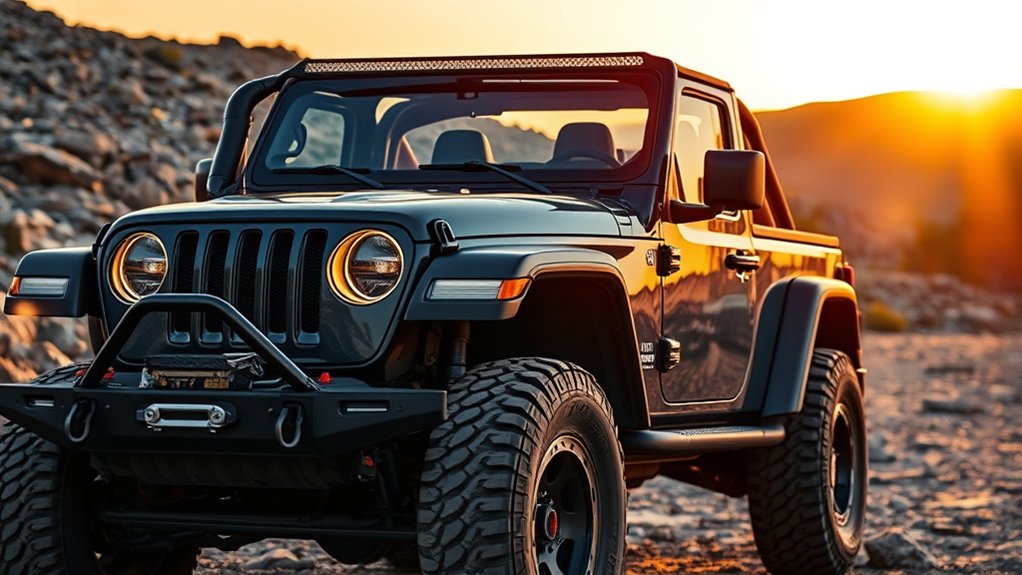
You’ll find that the Jeep Wrangler comes equipped with a solid set of standard safety equipment, including multiple airbags and electronic stability control. It also integrates essential driver assistance technologies like blind-spot monitoring and rear cross-path detection.
Understanding these features helps you assess its baseline safety performance accurately.
Standard Safety Equipment
Although Jeep Wranglers prioritize rugged off-road capability, they don’t compromise on essential safety features. You’ll find that standard features include multiple airbags strategically placed to protect occupants during collisions.
The reinforced frame and crumple zones work together to absorb and dissipate impact forces efficiently. Stability control systems come standard, helping you maintain control on variable terrains.
Anti-lock brakes provide consistent stopping power, minimizing wheel lockup during abrupt braking. Additionally, tire pressure monitoring systems alert you when inflation falls below safe levels, a vital safety upgrade for off-road excursions.
These standard features form a foundational safety network, ensuring you’re protected without sacrificing the Wrangler’s adventurous spirit. Understanding these safety upgrades helps you evaluate the Wrangler’s overall safety profile with informed precision.
Driver Assistance Technologies
Building on the Wrangler’s foundational safety features, its driver assistance technologies enhance situational awareness and reduce the likelihood of accidents. You’ll find standard driver alerts such as blind-spot monitoring and rear cross-path detection, which provide timely warnings about vehicles in adjacent lanes or approaching from behind.
Additionally, forward collision warning with active braking helps you avoid or mitigate frontal impacts by alerting you and applying brakes automatically when necessary. Jeep continuously integrates technology updates to refine these systems, improving responsiveness and accuracy.
While these features don’t replace attentive driving, they serve as critical support tools, especially in off-road or urban environments where hazards can emerge quickly. Understanding and relying on these driver assistance technologies can greatly elevate your safety behind the wheel of a Jeep Wrangler.
Jeep Wrangler Design and Occupant Safety
While the Jeep Wrangler’s iconic design prioritizes off-road capability, it also integrates key safety features to protect occupants in various driving conditions. You’ll find that design innovations enhance structural integrity, such as the reinforced frame and high-strength steel components.
These elements work together to maintain cabin rigidity during impacts. Additionally, the Wrangler’s removable doors and roof don’t compromise occupant protection, thanks to advanced engineering solutions.
| Feature | Safety Benefit |
|---|---|
| Reinforced frame | Improved crash energy absorption |
| High-strength steel | Enhanced structural rigidity |
| Removable doors/roof | Maintains occupant protection |
How Does the Jeep Wrangler Perform in Crash Tests?
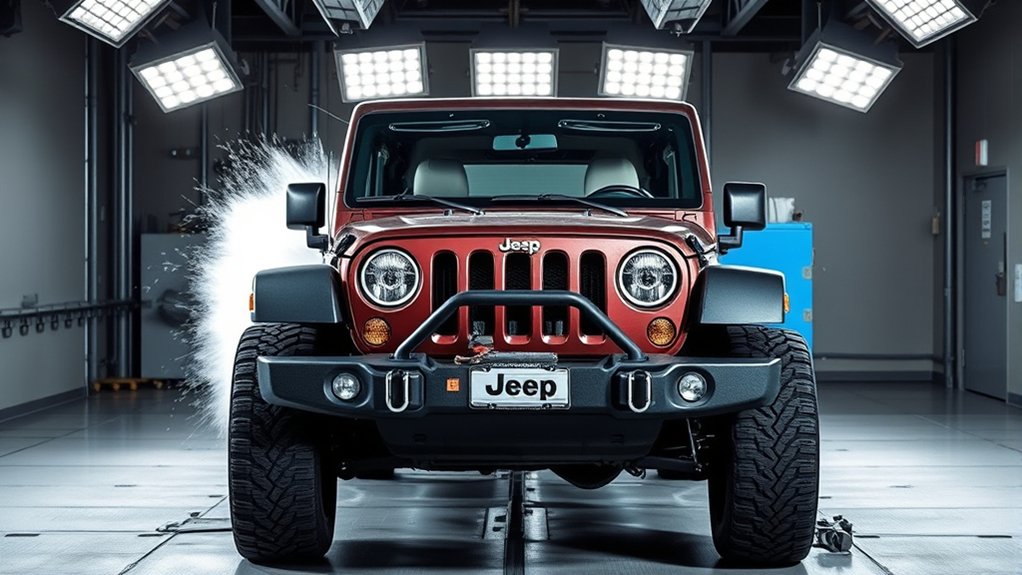
Since crash test performance provides critical insight into a vehicle’s real-world safety, evaluating the Jeep Wrangler’s results from agencies like the IIHS and NHTSA is essential. In crash test comparisons, the Wrangler demonstrates mixed outcomes: it performs adequately in frontal crash tests but scores lower in side-impact protection due to its design and structural limitations.
The NHTSA awarded it an overall four-star rating, reflecting these strengths and weaknesses. However, recent safety technology advancements, including improved airbag systems and reinforced frame components, have enhanced occupant protection. You’ll notice these upgrades aim to address prior deficiencies revealed in crash testing.
While the Wrangler’s rugged build offers some inherent safety benefits, these crash test results highlight areas where it still lags behind many modern SUVs in occupant safety performance.
How Off-Road Conditions Impact Jeep Wrangler Safety
Crash test ratings offer a controlled measure of the Jeep Wrangler’s safety, but off-road conditions introduce a different set of challenges that directly affect its protective capabilities. When you drive on rugged trails, you encounter off road hazards like uneven surfaces, rocks, and sudden drops that increase rollover risk and impact severity.
The Wrangler’s high center of gravity and short wheelbase amplify sensitivity to terrain challenges, requiring precise handling to avoid loss of control. Although its reinforced frame and skid plates provide structural resilience, the unpredictable nature of off-road environments demands constant driver vigilance.
Understanding how these terrain challenges influence stability and impact dynamics helps you better anticipate risks, ensuring you leverage the Wrangler’s design strengths without compromising your safety on rough terrain.
What Safety Concerns Do Wrangler Owners Have?
What specific safety concerns do Jeep Wrangler owners frequently report? A primary issue involves managing tire pressure, as improper inflation can severely impact handling and braking performance both on- and off-road. Owners often highlight the importance of regular tire pressure monitoring to prevent uneven wear and maintain ideal traction.
Another critical concern is the Wrangler’s increased rollover risk due to its higher center of gravity and shorter wheelbase compared to conventional SUVs. This design characteristic demands more cautious driving, especially during sharp turns or sudden maneuvers.
Additionally, some owners express apprehension about the vehicle’s structural rigidity in rollovers, emphasizing the need for reinforced safety cages and advanced electronic stability controls. Addressing these concerns requires vigilant maintenance and adherence to recommended safety practices.
How Does Jeep Wrangler Safety Compare to Other SUVs?
How does the Jeep Wrangler measure up against other SUVs regarding safety? When examining Jeep comparisons, the Wrangler often trails behind in crash test ratings and advanced safety features. Here’s what you need to take into account:
- Crash Test Performance: The Wrangler typically scores lower in frontal and side-impact tests compared to mainstream SUVs, reflecting its off-road design priorities rather than urban safety.
- Safety Technology: Unlike many competitors, the Wrangler lacks some standard driver-assist systems, such as automatic emergency braking and lane departure warnings, impacting overall SUV safety ratings.
- Structural Integrity: Its body-on-frame construction offers durability off-road but can compromise crash energy absorption relative to unibody SUVs.
Tips for Safer Driving in a Jeep Wrangler
Although the Jeep Wrangler is designed primarily for off-road performance, you can enhance your safety by adopting specific driving habits tailored to its unique handling characteristics. Prioritize off-road precautions such as reducing speed on uneven terrain and using low-range gears to maintain control.
Always engage four-wheel drive when conditions demand it to optimize traction. Tire maintenance is critical. Regularly inspect for wear, maintain correct pressure, and verify tread depth meets off-road requirements to prevent blowouts or loss of grip.
Additionally, avoid abrupt maneuvers that may destabilize the vehicle’s high center of gravity. When driving on paved roads, adjust your speed to accommodate the Wrangler’s less aerodynamic design and stiffer suspension. By integrating these practices, you’ll considerably improve your safety and control in diverse driving environments.
Frequently Asked Questions
What Is the Fuel Efficiency of the Jeep Wrangler?
You’ll find the Jeep Wrangler’s fuel economy averages around 17-25 MPG, depending on the engine and model. This results in a moderate driving range, typically between 250 and 370 miles per tank, balancing performance and efficiency.
How Much Does a Jeep Wrangler Cost on Average?
Jeep prices for a Wrangler typically start around $30,000, varying with trim and Wrangler features like engine options, technology, and off-road capabilities.
You’ll find higher costs for advanced safety and luxury packages.
What Are Common Maintenance Issues for Jeep Wranglers?
Like a rugged trail with hidden roots, Jeep Wranglers often face issues with suspension, electrical systems, and oil leaks. You’ll want to monitor these to maintain Jeep reliability and optimize your off-road performance consistently.
Can the Jeep Wrangler Be Easily Customized?
You can easily customize your Jeep Wrangler using numerous Jeep modifications and aftermarket parts.
Customization trends allow you to tailor upgrades precisely to your personal preferences, enhancing performance, aesthetics, or off-road capabilities with technical precision.
How Does the Jeep Wrangler Handle in Snow Conditions?
You’ll find the Jeep Wrangler’s snow traction impressive due to its 4WD system and aggressive tires, boosting winter performance. However, its high center of gravity demands careful handling to maintain stability on icy or snowy roads.
Conclusion
When you slide behind the wheel of a Jeep Wrangler, you’re steering a rugged fortress designed for adventure, but not without its trade-offs. While its off-road prowess shines, safety ratings and features reveal areas needing caution.
Think of it as a double-edged sword—built tough yet demanding mindful driving. By understanding its strengths and limitations, you can navigate both city streets and wild trails with confidence.
Ultimately, knowing these factors helps you determine if a Jeep Wrangler is safe for your specific needs.