Engine oil is the fluid that lubricates your engine’s moving parts, reducing friction and wear. It plays a crucial role in keeping your engine running smoothly.
However, engine oil is not the same as an oil change.
An oil change is the maintenance process where you drain the old oil and replace it with fresh oil of the correct viscosity. This guarantees your engine runs efficiently and lasts longer.
During an oil change, you’ll also replace the oil filter to trap contaminants and protect your engine.
If you want to understand how this impacts your engine’s health and when to do it, keep exploring the details ahead.
Regular oil changes are essential for maintaining optimal engine performance.
Key Takeaways
- Engine oil is the lubricant used inside the engine to reduce friction between moving parts.
- An oil change is the maintenance process of removing old engine oil and replacing it with fresh oil.
- Engine oil refers to the fluid itself, while oil change is the service involving oil replacement.
- Regular oil changes ensure the engine oil remains effective and protects engine components.
- Engine oil type and viscosity must be chosen correctly during an oil change for optimal engine performance.
What Is Engine Oil and Why It Matters
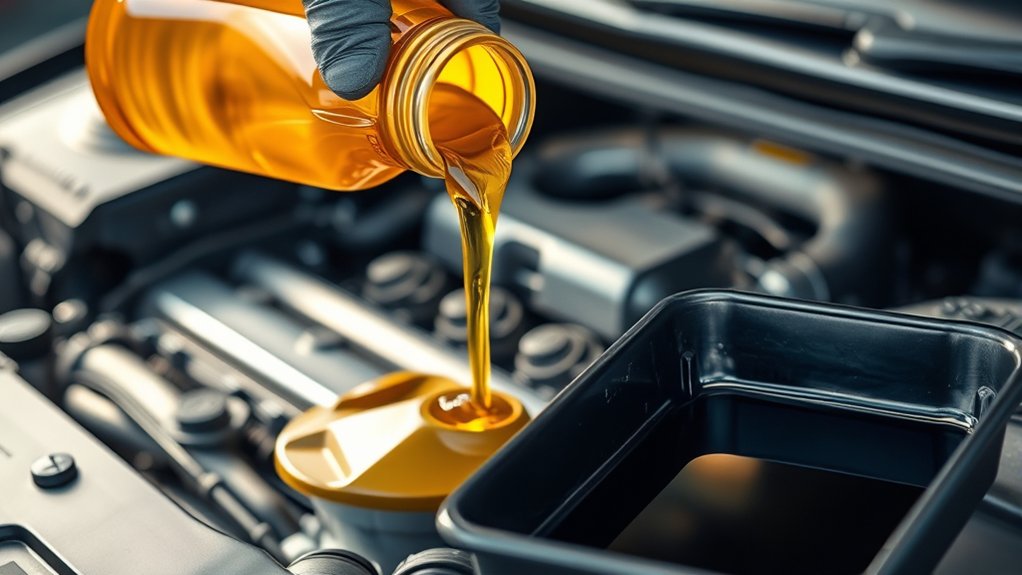
Engine oil serves as the lifeblood of your vehicle’s engine, providing essential lubrication to reduce friction between moving parts. You need to understand that engine oil types vary, primarily categorized into conventional, synthetic, and synthetic blend oils. Each type offers different performance characteristics and protection levels.
Oil viscosity, indicated by numbers like 5W-30, represents the oil’s thickness and flow behavior at various temperatures. Choosing the correct oil viscosity is critical for peak engine performance and longevity. If the viscosity is too high or low, it can impair lubrication, causing increased wear or inefficient operation.
Signs You Need an Oil Change
How can you tell when it’s time for an oil change? Monitoring oil color and oil thickness provides critical clues. Fresh engine oil is amber and transparent, while old oil darkens and thickens, losing lubricating efficiency.
You might also notice engine noise or decreased fuel efficiency, signaling degraded oil performance. Checking the dipstick regularly helps you assess these signs accurately.
| Sign | Description | Impact on Engine |
|---|---|---|
| Dark, thick oil | Oil color turns dark, consistency thickens | Reduces lubrication, increases wear |
| Engine noise | Unusual sounds during operation | Indicates poor oil protection |
| Warning light | Oil change or low oil light on dashboard | Immediate oil change required |
Recognizing these indicators lets you maintain engine health proactively.
What Happens During an Oil Change?
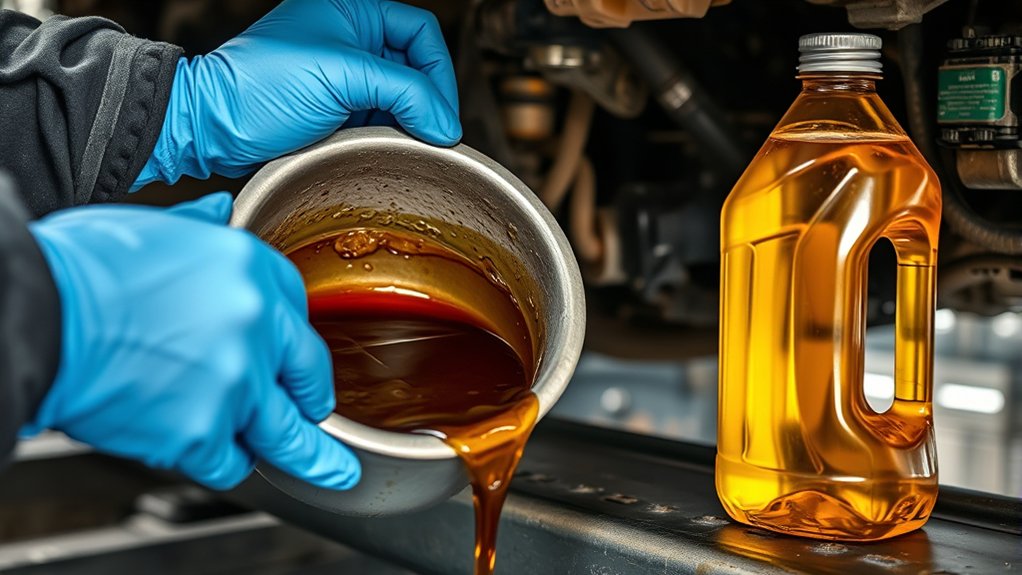
Performing an oil change involves draining the old, degraded oil from your vehicle and replacing it with fresh oil that restores proper lubrication. First, you’ll locate and remove the drain plug to let the used oil flow out completely.
Next, you replace the oil filter, which traps contaminants and prevents engine damage. Choosing the correct oil viscosity is vital, as it guarantees ideal flow and protection under varying temperatures and operating conditions.
After installing a new oil filter, you refill the engine with the recommended amount and type of oil. Finally, you check for leaks and verify the oil level using the dipstick. This process maintains engine efficiency by removing sludge and replenishing essential lubrication properties.
Why Oil Changes Matter for Your Engine Oil
Regular oil changes directly impact the quality and performance of your engine oil. Over time, contaminants and breakdown reduce oil longevity, causing friction and wear that degrade engine performance.
By changing oil at recommended intervals, you maintain peak lubrication, prevent sludge buildup, and extend engine life.
| Benefit | Effect on Engine | Your Experience |
|---|---|---|
| Increased Oil Longevity | Cleaner oil for longer | Fewer maintenance worries |
| Enhanced Engine Performance | Smoother running, better power | Reliable, responsive driving |
| Reduced Wear & Tear | Less friction, lower risk of damage | Peace of mind on the road |
Regular oil changes guarantee your engine oil consistently protects essential components, supporting peak engine performance and long-term durability.
Tips for Choosing Engine Oil and Change Timing
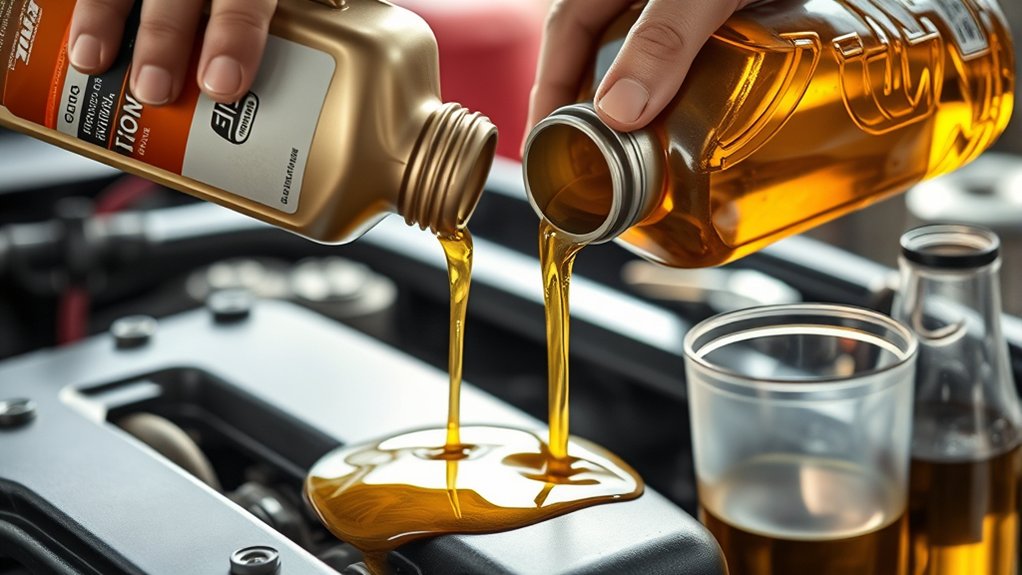
Selecting the right engine oil and determining the best change interval involve understanding your vehicle’s specifications, driving conditions, and oil types. First, consult your owner’s manual to identify the recommended oil viscosity, which guarantees proper lubrication under various temperatures.
Next, consider synthetic options; they offer superior performance, resistance to breakdown, and extended change intervals compared to conventional oils. If you drive in severe conditions, such as extreme temperatures, frequent short trips, or heavy loads, you may need to change oil more often.
Monitor oil quality through regular checks for color and consistency, and rely on oil life monitoring systems if available. Ultimately, stick to manufacturer guidelines but adjust intervals based on driving habits and oil type to maintain peak engine protection and performance.
Frequently Asked Questions
Can Synthetic Oil Damage Older Engines?
You won’t damage older engines using synthetic oil; its benefits include better lubrication and stability. However, verify compatibility by checking seals and manufacturer recommendations to avoid leaks or issues in older engine designs.
How Do Oil Additives Affect Engine Performance?
Oil additives improve engine lubrication by reducing friction and wear. They also help maintain oil viscosity under varying temperatures, ensuring consistent performance.
Additionally, they protect engine components from corrosion and deposits, enhancing overall engine efficiency and longevity.
Is There a Difference Between Oil Filters and Fuel Filters?
Think of your car like a coffee machine: oil filter types clean engine oil, removing debris; fuel filter functions purify gasoline, preventing clogs.
Both guarantee smooth operation, but they target different fluids and contaminants inside your vehicle.
Can Using the Wrong Oil Void My Vehicle Warranty?
Yes, using the wrong oil can void your warranty. Manufacturers require strict adherence to oil specifications to avoid warranty implications.
Always check your owner’s manual to confirm the oil meets the recommended standards and protects your coverage.
How Is Engine Oil Recycled After an Oil Change?
You’ll find that over 90% of used engine oil undergoes proper oil disposal through a recycling process, where contaminants are removed. The oil is then re-refined into base lubricants, ensuring environmental safety and resource efficiency.
Conclusion
Understanding the difference between engine oil and an oil change is essential for your vehicle’s health. Did you know that skipping timely oil changes can reduce engine efficiency by up to 40%? Regular oil changes guarantee your engine oil stays clean and effective, protecting critical components from wear.
By choosing the right oil and sticking to recommended intervals, you’ll maintain peak performance and extend your engine’s lifespan. Stay proactive—your engine depends on it. Remember, engine oil is the fluid that lubricates your engine, while an oil change is the process of replacing that oil to keep your engine running smoothly.