When you think about whether Honda is a foreign car, you might focus on its Japanese roots and global reputation. Honda is widely recognized as a Japanese automaker, which often leads to the assumption that all its vehicles are foreign.
Yet, you also need to contemplate where these vehicles are actually built—especially the many models assembled in the U.S. This blend of origin and production challenges simple labels.
Understanding Honda’s manufacturing footprint and how it fits into the U.S. auto industry can shift your perspective on what defines a foreign car today.
Key Takeaways
- Honda is originally a Japanese brand, founded and headquartered in Japan, which defines it as a foreign car in the U.S. market.
- Many Honda models are manufactured in the U.S., complicating the traditional foreign vs. domestic classification.
- U.S. assembly plants support local jobs and economy, strengthening Honda’s domestic production perception.
- Despite U.S. manufacturing, brand origin and global headquarters in Japan maintain Honda’s foreign identity.
- Honda’s global footprint and integrated supply chains blur the lines between foreign and domestic labels.
What Defines a Foreign Car in the U.S. Market?
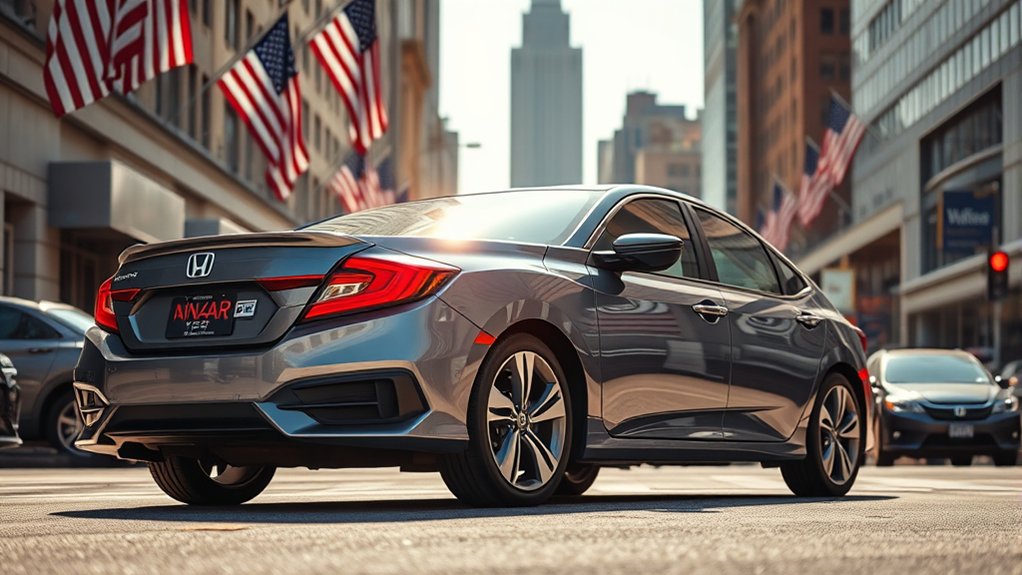
How do you determine whether a car is foreign in the U.S. market? Generally, it depends on the car’s origin, where the company is headquartered and where the vehicle is manufactured.
Foreign perception often hinges on the brand’s country of origin rather than the assembly location. For example, even if a car is built in the U.S., it might still be perceived as foreign if the parent company is based overseas. This perception influences consumer attitudes and sales dynamics.
However, the domestic impact is significant when foreign-branded cars are manufactured locally, boosting employment and the economy. So, defining a foreign car involves balancing the brand’s origin with manufacturing sites, affecting both market perception and the domestic economic landscape.
Where Is Honda Headquartered and Founded?
You should know that Honda was founded in Hamamatsu, Japan, where it started as a small motorcycle company. Its global headquarters remains in Tokyo, Japan, serving as the central hub for its operations.
Understanding these geographic details helps clarify Honda’s origins and its identity in the automotive market.
Honda’s Founding Location
Where did Honda begin its journey to becoming a global automotive leader? Honda was founded in Hamamatsu, Japan, in 1946 by Soichiro Honda and Takeo Fujisawa. This location played a pivotal role in shaping the company’s identity, especially as Japan’s foreign policy evolved post-World War II, emphasizing industrial growth and international cooperation.
Honda’s founding reflects a commitment to manufacturing ethics, focusing on innovation, quality, and efficiency from the start. Understanding where Honda originated helps you grasp how its cultural and economic environment influenced its global expansion.
You’ll see that the company’s roots in Japan impact how it navigates international markets, balancing respect for its heritage with adapting to diverse regulatory frameworks and consumer expectations worldwide. This foundation grounds Honda’s status beyond just being a “foreign” car brand.
Headquarters Geographic Details
Building on Honda’s origins in Hamamatsu, Japan, it’s important to pinpoint the company’s current headquarters to understand its operational base. Honda’s global headquarters remain in Tokyo, Japan, anchoring its identity firmly within its home country.
This geographic detail plays a key role in shaping both foreign perception and domestic branding. While many consumers abroad may see Honda as a foreign car brand due to its Japanese headquarters, the company leverages this location to emphasize authenticity and heritage in its domestic market.
Historical Company Origins
How did Honda’s journey begin, and what role do its origins play in its identity today? Honda was founded in 1946 by Soichiro Honda in Hamamatsu, Japan, where its headquarters remain. This domestic manufacturing base deeply influences Honda’s corporate culture and engineering philosophy.
Despite its Japanese roots, foreign perception often labels Honda as a foreign car brand, especially outside Japan, due to its global presence and production facilities worldwide. However, understanding Honda’s historical origins clarifies that its core identity is firmly tied to its Japanese heritage.
This foundation underpins the company’s commitment to innovation and quality. So, while Honda operates internationally, its origins in Japan continue to shape how you perceive the brand and its vehicles.
Honda’s Global Manufacturing Footprint: Production Outside Japan
Honda operates numerous manufacturing facilities across multiple continents, reflecting its status as a truly global automaker. You’ll find Honda plants in North America, Europe, and Asia, producing vehicles tailored to regional markets.
This widespread production challenges the foreign perception that Honda cars are exclusively Japanese imports. Instead, Honda strategically leverages domestic branding by manufacturing locally to meet specific consumer demands and comply with regional regulations.
When you buy a Honda in your country, there’s a good chance it was assembled nearby, which helps Honda connect with local customers and economies. Understanding Honda’s global footprint clarifies that while the brand’s roots are Japanese, its manufacturing presence is international, blending foreign heritage with domestic production to appeal to diverse markets worldwide.
Which Honda Models Are Made in the U.S.?

You’ll find several popular Honda models are actually built right here in the U.S., reflecting the company’s strong domestic production presence. Models like the Accord, CR-V, and Pilot come from American plants, showing Honda’s commitment to local manufacturing.
Understanding which vehicles are made in the U.S. helps clarify how Honda blends global roots with regional assembly.
U.S. Honda Production
Which Honda models are actually assembled in the U.S.? You might be surprised to learn that Honda invests heavily in U.S. production facilities, reflecting its commitment to local markets and branding ethics. This approach goes beyond non automotive sectors, influencing consumer trust and perceptions of authenticity.
By producing vehicles domestically, Honda reinforces its image while supporting American jobs and the economy.
You can find these models assembled in the U.S.:
- Honda Accord, a staple of American roads
- Honda CR-V, popular for families and adventure seekers
- Honda Pilot, spacious SUV with strong appeal
- Honda Odyssey, a favorite among minivan buyers
Understanding where these cars are built helps clarify Honda’s hybrid identity as both a foreign and domestic automaker.
Popular Models Manufactured
Several popular models are assembled in the U.S., showcasing the company’s dedication to local manufacturing. You’ll find that Honda produces vehicles like the Accord, CR-V, and Odyssey in American plants.
This approach reflects careful consideration of production economics, as local assembly reduces shipping costs and import tariffs. It also allows Honda to respond swiftly to market demand shifts.
Moreover, labor union dynamics play a critical role in these facilities. By engaging with unions, Honda maintains stable labor relations, which helps ensure consistent production quality and workforce satisfaction.
Understanding these factors clarifies why Honda’s U.S.-made models aren’t just about assembling cars locally; they’re part of a broader strategy balancing cost-efficiency and workforce collaboration.
Honda’s Manufacturing in Countries Beyond Japan and the U.S
How extensive is Honda’s manufacturing footprint outside of Japan and the U.S.? You’ll find Honda operates numerous plants across Asia, Europe, and Latin America, solidifying its presence in key foreign markets. This global network supports a diversified supply chain, reducing dependence on any single region.
By manufacturing locally, Honda adapts to market demands and regulatory environments efficiently, enhancing competitiveness worldwide.
Consider the emotional impact of Honda’s global reach:
- Creating thousands of jobs in developing economies
- Fostering local innovation and skill development
- Strengthening communities through economic contributions
- Bridging cultural gaps via shared automotive technology
This international manufacturing strategy highlights Honda’s commitment to being more than just a Japanese or American brand, reflecting a truly global enterprise.
Does Making Hondas in the U.S. Make Them “Domestic”?
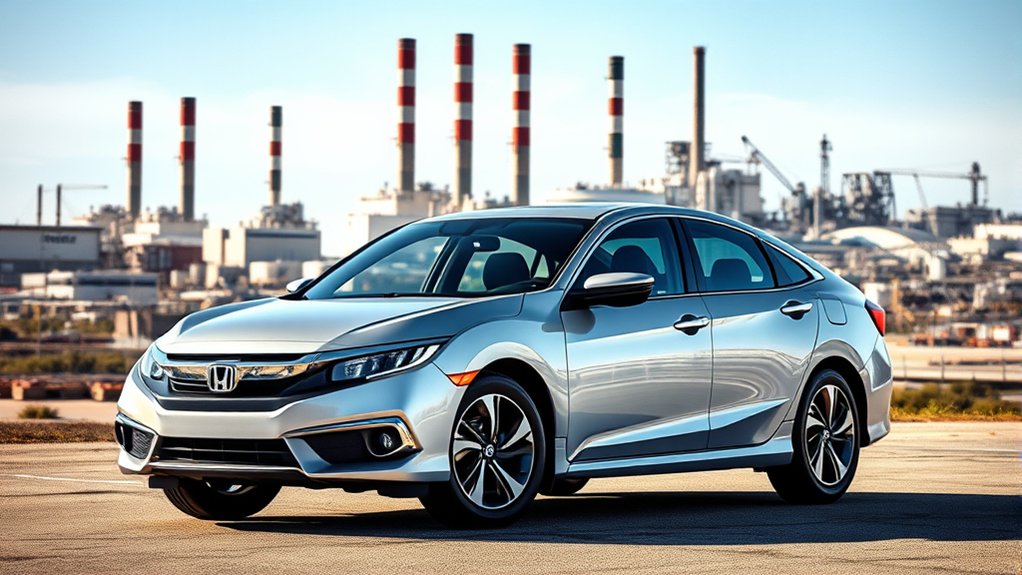
Does manufacturing Hondas in the U.S. automatically classify them as domestic vehicles? Not necessarily. While producing cars on American soil reduces exposure to import tariffs and supports local economies, the use of foreign labor and components complicates this classification.
You might see Hondas assembled in U.S. plants, but many parts still come from abroad, and some labor involved in the supply chain operates outside the U.S. This global integration means the line between foreign and domestic blurs.
For regulatory and marketing purposes, vehicles made in the U.S. often gain “domestic” status, but from a broader economic perspective, the reliance on foreign labor and imported materials challenges that label. So, making Hondas here doesn’t fully make them “domestic” in the traditional sense.
Honda’s Role in the U.S. Auto Industry: Foreign or Domestic?
Where does Honda truly stand within the U.S. auto industry, as a foreign entity or a domestic contributor? You’ll find Honda occupies a complex position. Despite its Japanese origins, Honda operates numerous plants in the U.S., employs thousands of American workers, and sources many parts domestically.
This involvement builds strong domestic loyalty among workers and communities. Yet, the brand often faces a foreign perception because its headquarters and design roots remain in Japan. This dual identity influences how you might view its role. Consider these points:
- Honda’s significant U.S. manufacturing footprint supports local economies
- The company integrates American labor and materials extensively
- Brand identity is still tied to Japanese engineering and leadership
- Domestic loyalty grows alongside persistent foreign perception
This balance shapes Honda’s unique role in the U.S. auto industry.
Do Buyers See Honda as Foreign or Domestic?
When you consider Honda’s origin in Japan, you might label it as a foreign brand, but manufacturing many models in the U.S. complicates that view. Your perception can also be shaped by how strongly you identify with the brand’s values and your loyalty over time.
Understanding these factors helps clarify whether buyers see Honda as foreign or domestic.
Perception Based On Origin
How do buyers typically perceive Honda regarding its national identity? You’ll find that opinions vary, influenced heavily by cultural perception and import bias. Many see Honda as a foreign brand because it originated in Japan. However, others recognize its deep integration into the domestic market, especially with manufacturing plants in the U.S.
This dual identity can confuse you as a buyer when deciding if Honda feels foreign or domestic.
Consider these points to understand your perspective better:
- Honda’s Japanese heritage strongly shapes cultural perception
- Local production blurs lines between foreign and domestic
- Import bias may lead you to undervalue Honda’s American ties
- Brand loyalty often transcends national origin for you
Understanding these influences helps clarify how you view Honda’s identity.
Impact Of Manufacturing Location
Cultural perception and brand heritage certainly influence how you see Honda, but manufacturing location plays a significant role in shaping whether you consider it foreign or domestic. When you know Honda vehicles are often built in local plants, such as those in the U.S., your perception may shift toward seeing them as domestic products.
However, foreign bias and import bias can still affect your viewpoint, causing you to label Honda as foreign simply because the company’s headquarters are in Japan. This bias overlooks the fact that many Hondas on American roads are assembled domestically, employing local workers and contributing to the economy.
Ultimately, manufacturing location complicates the foreign-versus-domestic classification, meaning your perception depends on whether you prioritize brand origin or production site.
Brand Identity And Loyalty
Why do some buyers still see Honda as a foreign brand despite its widespread domestic manufacturing? The answer lies in brand identity and customer perception. Honda’s new branding efforts focus on emphasizing its American manufacturing footprint, yet many consumers continue to associate Honda with its Japanese origins.
This split in perception shapes loyalty and influences purchasing decisions.
You might feel a strong emotional connection to Honda because of:
- Its reputation for reliability and innovation
- The pride in supporting a brand with international roots
- Attachment to Honda’s heritage and design philosophy
- Confidence in the consistent quality regardless of assembly location
Understanding this dynamic helps clarify why Honda occupies a unique space both foreign and domestic in buyers’ minds.
Benefits of Buying a Honda Made in the U.S
What advantages do you gain by choosing a Honda made in the U.S.? First, this choice aligns with Honda’s branding strategy that emphasizes quality and local engagement, enhancing your confidence in the product.
Manufacturing economics play a key role, as U.S.-based production often reduces shipping costs and supports faster delivery times, benefiting you directly. Additionally, buying American-made Hondas can influence foreignness perception, potentially increasing your sense of national pride and trust in the vehicle.
This also factors into the ongoing domestic status debate, where U.S. manufacturing adds weight to the argument that Honda vehicles hold a partial domestic identity. Overall, selecting a Honda made in the U.S. offers practical and perceptual benefits tied closely to economics, branding, and consumer perception.
Deciding If Honda Is Foreign or Domestic
How do you determine whether Honda is a foreign or domestic brand? You need to analyze factors beyond just the logo or origin of the company’s headquarters. Honda’s driving stance often reflects Japanese engineering, but many models are assembled in the U.S., blurring lines. Your perception depends heavily on market perception shaped by advertising and manufacturing transparency.
Determining if Honda is foreign or domestic requires looking past logos to engineering roots and assembly locations.
Consider these points:
- Honda’s American plants employ thousands, contributing to local economies.
- Design and engineering remain rooted in Japan’s innovation culture.
- Vehicles often use globally sourced parts, complicating clear classification.
- Consumer loyalty may hinge on emotional ties to either origin.
Frequently Asked Questions
What Is the Origin of Honda’s Logo and Brand Name?
You’ll find Honda logo origin tied to a stylized “H,” representing founder Soichiro Honda’s name. The brand name meaning reflects his vision for innovation, reliability, and engineering excellence, shaping Honda’s global identity.
How Does Honda’s Environmental Impact Compare Globally?
You’ll find Honda’s global environmental impact shapes positive world perception, reflecting strong branding ethics. They actively reduce emissions and invest in green technology, showing commitment to sustainability that resonates with consumers and stakeholders worldwide.
What Innovations Has Honda Introduced in Motorcycle Technology?
You’ll find Honda motorcycle innovations include advanced fuel injection, dual-clutch transmissions, and ABS. They’re also leading electric propulsion evolution, developing electric motorcycles that blend performance with sustainability.
Honda is pushing boundaries in efficient, eco-friendly riding technology.
How Does Honda’s Market Share Compare to Other Foreign Brands in the U.S.?
You’ll find Honda holds a strong market share among foreign brands in the U.S., benefiting from positive brand perception.
In market competition, Honda consistently ranks high due to reliability, innovation, and customer loyalty.
Does Honda Sponsor Any Major Sports or Cultural Events?
You’ll find Honda sponsorships prominently in major sports and cultural events, like the Honda Classic golf tournament and the Honda Stage music series.
These partnerships boost Honda’s visibility while supporting diverse cultural experiences nationwide.
Conclusion
When you ask if Honda is foreign or domestic, the answer isn’t black and white—it’s a blend, like a well-crafted hybrid. Founded in Japan but built extensively in the U.S., Honda straddles both worlds. You benefit from Japanese engineering and American manufacturing, making it neither solely foreign nor purely domestic.
So, instead of choosing sides, appreciate Honda’s global roots and local presence that deliver quality wherever you drive. In conclusion, Honda is a foreign car with a strong domestic footprint, embodying the best of both worlds.