The Jeep Wrangler isn’t known for great gas mileage, so is the Jeep Wrangler good on gas?
How well it performs depends on your engine choice and driving habits. The 2.0-liter turbocharged engine offers better fuel efficiency than the 3.6-liter V6, and lighter two-door models generally use less gas.
Keeping tires properly inflated, maintaining your vehicle, and avoiding aggressive driving all help improve fuel economy.
If you want to balance Wrangler’s rugged performance with fuel savings, understanding these factors can guide your decision-making.
Key Takeaways
- Jeep Wrangler’s fuel economy varies by engine, with the 2.0L turbo four-cylinder more efficient than the standard 3.6L V6.
- Two-door models typically offer better fuel efficiency than heavier four-door Unlimited versions.
- Off-road design and larger tires reduce gas mileage compared to more aerodynamic vehicles.
- Fuel efficiency improves with steady highway driving and smooth acceleration habits.
- Regular maintenance and proper tire inflation are essential for optimizing Wrangler’s gas mileage.
Jeep Wrangler Fuel Economy: What to Expect
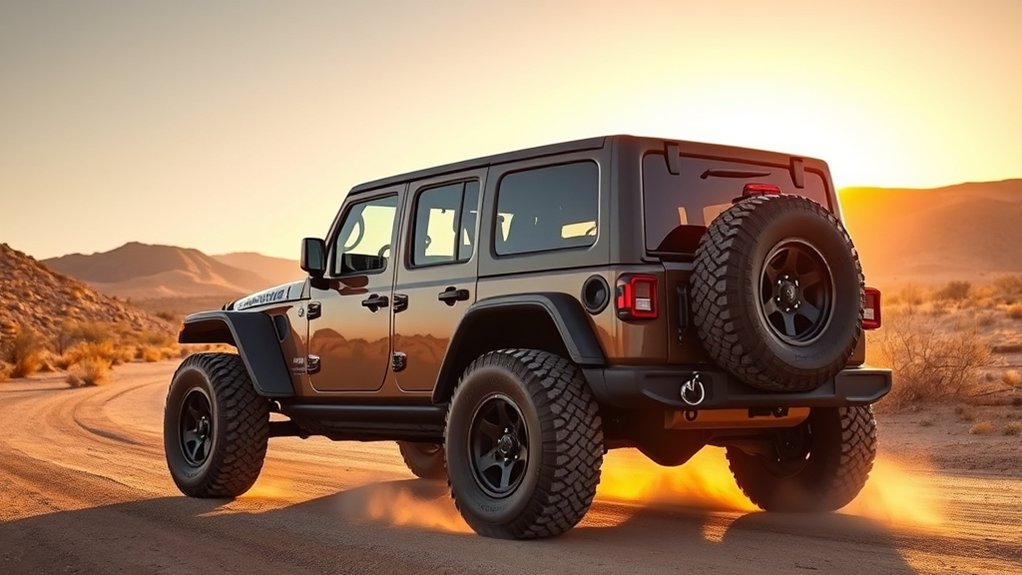
While the Jeep Wrangler is renowned for its off-road capabilities and rugged design, its fuel economy often raises questions for potential buyers. You’ll find that fuel efficiency varies considerably depending on the engine options available.
The base V6 engine, while powerful, generally delivers lower miles per gallon compared to the turbocharged four-cylinder variants designed for better gas mileage. Your driving habits also play an essential role; aggressive acceleration, frequent idling, and off-road use can reduce fuel efficiency further.
Conversely, steady highway driving and mindful throttle control can help optimize fuel consumption. Understanding these factors allows you to set realistic expectations for the Wrangler’s gas mileage, balancing its performance strengths with your everyday fuel costs.
How Different Wrangler Models Affect Gas Mileage
Because each Jeep Wrangler model features distinct engine types, drivetrain configurations, and weight variations, your gas mileage will differ depending on the specific version you choose. For instance, models with the standard 2.0-liter turbocharged four-cylinder engine generally offer better fuel economy than those equipped with the more powerful 3.6-liter V6.
Additionally, the availability of a mild hybrid system in some trims further improves efficiency. Your choice also affects tire sizes; larger, off-road-oriented tires increase rolling resistance and reduce miles per gallon. Two-door Wranglers tend to weigh less and fit smaller tires, helping gas mileage compared to four-door Unlimited models, which are heavier and often have bigger tires.
Understanding these differences helps you pick the Wrangler model that balances performance and fuel economy according to your priorities.
Key Factors That Impact Jeep Wrangler Fuel Efficiency
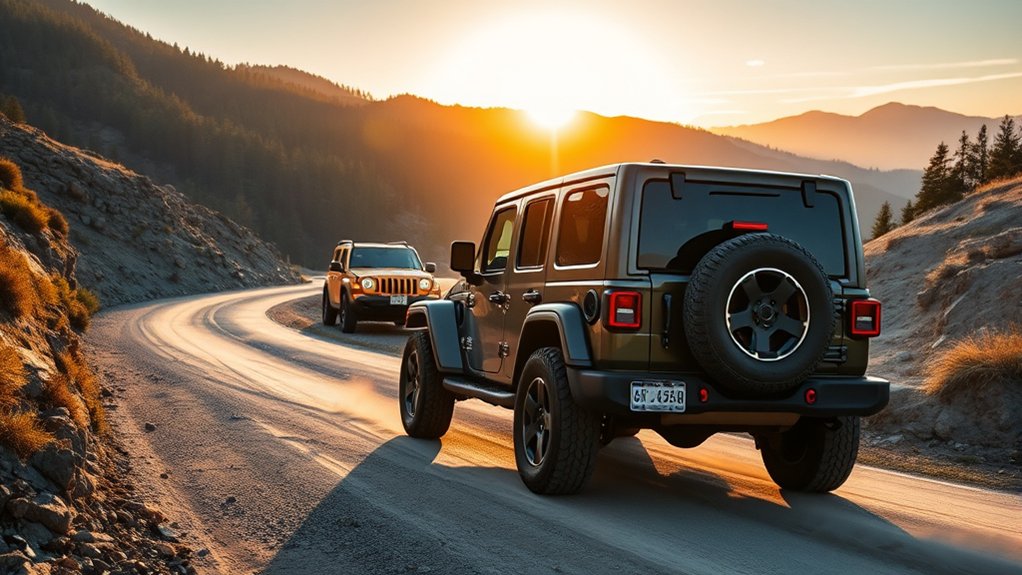
When you’re evaluating the fuel efficiency of a Jeep Wrangler, several key factors come into play that directly influence how far you can go on a tank of gas. Engine performance greatly affects fuel consumption; a more powerful engine typically uses more fuel, especially under heavy acceleration or towing.
Additionally, the condition of your engine, including maintenance such as spark plugs and air filters, plays an essential role in optimizing fuel efficiency. Tire pressure also impacts gas mileage. Underinflated tires increase rolling resistance, forcing the engine to work harder and consume more fuel.
Aerodynamics matter too; driving with the top down or adding roof racks can increase drag, reducing efficiency. Finally, your driving habits, like frequent stops or aggressive acceleration, can amplify fuel consumption beyond the vehicle’s baseline efficiency.
Easy Tips to Improve Your Jeep Wrangler’s Gas Mileage
Improving your Jeep Wrangler’s gas mileage requires a combination of mindful driving habits and regular vehicle maintenance. Start by adopting smoother acceleration and braking to reduce fuel consumption. Avoid rapid starts and unnecessary idling, as aggressive driving lowers efficiency.
Next, consider fuel-efficient upgrades like low rolling resistance tires and aerodynamic modifications to reduce drag. Keeping your tires properly inflated also plays an essential role in optimizing mileage.
Regularly change your air filters and use the recommended grade of motor oil to guarantee the engine runs efficiently. Additionally, removing excess weight and rooftop cargo can improve aerodynamics.
Frequently Asked Questions
How Does Jeep Wrangler Fuel Economy Compare to Other SUVS?
You’ll find Jeep Wrangler’s fuel efficiency ratings lower compared to many SUVs, especially crossovers.
When analyzing SUV comparisons, its off-road capabilities trade off with fuel economy, so expect less efficiency but more rugged performance.
What Type of Fuel Does the Jeep Wrangler Require?
Fuel type is the backbone of your Jeep Wrangler’s performance; it requires regular unleaded gasoline. Using the right fuel type guarantees peak engine efficiency, preventing any negative performance impact and keeping your off-road adventures smooth and powerful.
Are There Any Hybrid or Electric Jeep Wrangler Models?
Yes, Jeep offers Wrangler hybrids, like the 4xe plug-in hybrid, combining electric motors with gasoline engines for better efficiency.
While fully electric Jeep models are emerging, the Wrangler primarily features hybrid options currently available.
How Often Should I Check My Jeep Wrangler’s Tire Pressure?
Like checking the air in a balloon before a party, you should perform tire maintenance and pressure monitoring on your Jeep Wrangler at least once a month. Do this also before long trips to guarantee safety, efficiency, and peak tire performance.
Does Adding Accessories Affect the Jeep Wrangler’s Gas Mileage?
Yes, adding accessories affects your Jeep Wrangler’s gas mileage. Extra accessory weight increases fuel consumption, while poor aerodynamic impact from roof racks or bumpers reduces efficiency.
You’ll want to balance functionality with minimal added drag and weight.
Conclusion
While the Jeep Wrangler isn’t known for exceptional gas mileage, its fuel economy varies considerably across models and driving conditions. You might expect lower efficiency compared to smaller SUVs, but newer engines and eco-friendly tech have narrowed the gap.
To truly improve your Wrangler’s gas mileage, focus on driving habits, maintenance, and reducing extra weight. These steps can help you get the most out of each tank without compromising performance.
So, although it’s not a fuel-sipping vehicle, you can still optimize efficiency without sacrificing its rugged appeal. In summary, the Jeep Wrangler is good on gas when you take the right measures to enhance its fuel economy.