Spark plug fouling happens when deposits like carbon, oil, or ash build up on the electrodes, disrupting ignition. This fouling occurs due to incomplete combustion caused by a poor air-fuel mix, bad ignition timing, low-quality fuel, or engine issues such as oil leaks.
Driving habits like frequent idling or taking short trips can worsen spark plug fouling by preventing the engine from reaching proper operating temperature.
These deposits insulate the spark plug, reducing spark strength and overall engine efficiency.
Understanding the root causes of spark plug fouling can help you pinpoint and address the problem effectively, ensuring better engine performance and longevity.
Key Takeaways
- Incomplete combustion due to poor air-fuel mixture or ignition timing causes carbon deposits on spark plugs.
- Oil leaks into the combustion chamber from engine wear, coating electrodes with oil deposits.
- Using low-quality or contaminated fuel leads to deposit buildup on spark plugs.
- Excessive moisture causes corrosion and increases electrical resistance on spark plug electrodes.
- Frequent idling and short trips prevent optimal engine temperature, promoting fouling from carbon residue.
How Spark Plug Fouling Affects Your Engine
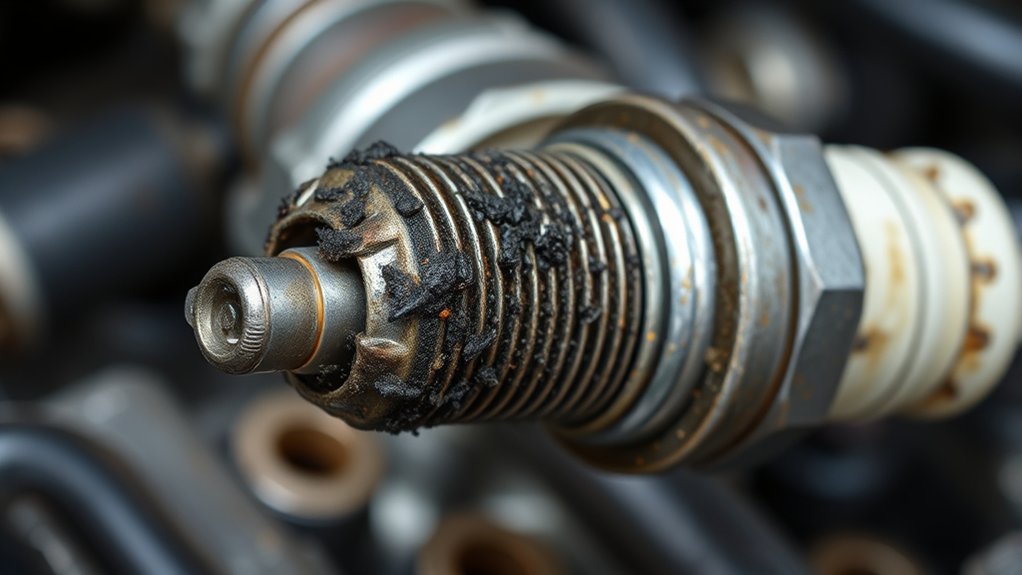
Although spark plugs are small components, their condition directly impacts your engine’s performance. When fouling occurs, deposits build up on the electrodes, disrupting the spark plug’s ability to generate a consistent, strong spark.
Small spark plugs play a big role; fouling hinders their spark and harms engine performance.
This degradation lowers ignition efficiency, causing incomplete combustion and misfires. As a result, your engine struggles to maintain maximum power output and fuel economy. You’ll notice rough idling, reduced acceleration, and increased emissions.
Fouled plugs also force your ignition system to work harder, potentially damaging coils or wires over time. Ensuring your spark plugs remain clean and properly gapped preserves ignition efficiency and maintains peak engine performance.
Regular inspections and timely replacements prevent fouling from impairing your engine’s reliability and responsiveness, keeping your vehicle running smoothly.
How Oil Leaks Cause Spark Plug Fouling
When oil leaks enter the combustion chamber, they coat the spark plug electrodes with a slick, conductive film that disrupts the electrical spark needed for ignition. Different oil types, especially those with higher viscosity or detergent additives, can exacerbate fouling by leaving more resilient residues.
You need to perform thorough leak detection to identify sources such as worn valve guides, damaged piston rings, or faulty seals that allow oil intrusion. Once oil contaminates the spark plug, its fouling reduces combustion efficiency, causing misfires and increased emissions.
Timely leak detection using methods like visual inspection, compression tests, or UV dye tracing helps prevent progressive fouling. Addressing oil leaks promptly guarantees the spark plug maintains proper insulation and consistent spark generation, preserving engine performance and longevity.
How Fuel Additives Cause Spark Plug Deposits
You’ll find that different types of fuel additives, such as detergents, oxygenates, and metallic compounds, can leave varying residue levels on spark plugs. These additives can alter combustion characteristics, sometimes causing deposits that interfere with the spark’s consistency and intensity.
Understanding how each additive impacts spark formation helps pinpoint the cause of fouling in specific engine conditions.
Types Of Fuel Additives
Because fuel additives play an essential role in enhancing engine performance, understanding their chemical composition is important to grasp how they contribute to spark plug deposits. You’ll encounter several types of additives, including octane boosters, detergents, and corrosion inhibitors.
Octane rating enhancers improve fuel quality by preventing premature ignition, directly impacting combustion efficiency. Detergent additives act as cleaning agents, reducing deposit buildup on intake valves and fuel injectors, which supports consistent engine performance.
However, incomplete combustion of certain additives can leave behind carbonaceous or metallic residues on spark plugs. Additionally, anti-knock agents and stabilizers, while enhancing additive effectiveness, may introduce compounds that alter deposit characteristics.
Additive Impact On Spark
Although fuel additives enhance engine performance, their chemical residues can directly affect spark plug condition. Different additive types, such as detergents, octane boosters, and anti-knock agents, contain compounds that don’t fully combust, leaving deposits on the spark plug’s electrodes.
These deposits alter the spark gap, reducing ignition reliability and combustion efficiency. For example, metallic additives can form metallic oxide layers, while detergent additives might leave carbonaceous residues. Over time, these buildup layers hinder the spark’s ability to jump the gap, causing misfires or incomplete combustion.
When you rely heavily on certain additive types, you increase the risk of fouling, which diminishes engine performance. Regular inspection and selecting additives with cleaner-burning formulations can help maintain peak spark plug function and sustain combustion efficiency.
Why Incomplete Combustion Causes Spark Plug Fouling
When your engine fails to burn fuel completely, it leaves behind unburned hydrocarbons and carbon deposits that accumulate on the spark plug’s electrode. This incomplete combustion reduces combustion efficiency and directly impacts spark plug performance.
Poor fuel quality exacerbates this problem by increasing residue formation. You’ll notice fouling because:
- Unburned fuel creates carbon layers, insulating the electrode.
- Excessive deposits lower the spark plug’s ability to generate a strong spark.
- Carbon buildup disrupts the correct air-fuel mixture, causing misfires.
- Deposits increase electrical resistance, leading to weak ignition sparks.
Maintaining ideal combustion efficiency and using high-quality fuel help minimize these deposits, ensuring your spark plugs remain clean and functional.
How Driving Habits Influence Spark Plug Fouling
You’ll notice that frequent idling increases carbon buildup on your spark plugs because the engine doesn’t reach ideal temperature.
Short trips also contribute by preventing complete combustion, which leaves deposits on the plugs. Understanding how these driving patterns affect spark plug performance helps you identify fouling risks early.
Impact Of Frequent Idling
Since frequent idling prevents the engine from reaching ideal operating temperature, it promotes incomplete combustion that leads to carbon deposits on the spark plugs. When you let your engine idle for extended periods, the idle duration keeps the engine temperature below optimal levels, reducing combustion efficiency.
This results in unburned fuel and carbon buildup on the spark plug electrodes, causing fouling.
Key impacts of frequent idling on spark plug fouling include:
- Prolonged low engine temperature hinders fuel vaporization.
- Excess fuel mixture leads to carbon residue accumulation.
- Reduced spark plug self-cleaning due to insufficient heat.
- Increased risk of misfires and rough idling from fouled plugs.
To prevent fouling, minimize idle duration and allow your engine to reach ideal temperature promptly.
Effects Of Short Trips
Although short trips may seem harmless, they greatly contribute to spark plug fouling by preventing the engine from reaching and maintaining ideal operating temperatures. When you frequently drive short distances, the engine temperature remains below optimal levels, causing incomplete fuel combustion.
This leads to carbon deposits accumulating on spark plugs, impairing their performance and reducing fuel efficiency. Understanding the emotional impact of this can motivate you to adjust your driving habits.
| Feeling | Cause | Result |
|---|---|---|
| Frustration | Repeated short trips | Fouled spark plugs |
| Concern | Low engine temperature | Poor combustion |
| Regret | Neglected driving habits | Increased maintenance cost |
How to Prevent and Fix Spark Plug Fouling
When preventing and fixing spark plug fouling, it’s vital to address the root causes such as improper air-fuel mixture, oil leakage, and combustion inefficiencies. Proper spark plug maintenance directly impacts engine performance and longevity.
To maintain ideal conditions:
- Regularly inspect and clean spark plugs to remove deposits and check electrode wear.
- Verify the air-fuel mixture is correctly calibrated to avoid excessive fuel or lean conditions.
- Repair oil leaks promptly, especially valve cover gaskets or piston rings, to prevent oil fouling.
- Use quality fuels and engine additives that promote complete combustion and reduce carbon buildup.
Frequently Asked Questions
What Types of Spark Plugs Are Least Prone to Fouling?
You’ll find iridium plugs least prone to fouling due to their fine electrodes and high melting point, unlike copper plugs, which wear faster and foul more easily because of lower durability and poorer heat resistance under combustion conditions.
How Often Should Spark Plugs Be Replaced to Avoid Fouling?
Think of your spark plugs like clockwork, needing replacement every 30,000 to 50,000 miles to maintain peak performance. Follow maintenance tips closely to extend spark plug lifespan and prevent fouling, ensuring efficient engine operation.
Can Spark Plug Fouling Affect Fuel Efficiency?
Yes, spark plug fouling disrupts ignition timing and alters the fuel mixture, causing incomplete combustion.
You’ll notice decreased fuel efficiency because your engine burns more fuel to compensate for misfires and reduced power output.
Are Certain Car Models More Susceptible to Spark Plug Fouling?
Oh, your car’s definitely *unique*. Some models are practically begging for spark plug fouling! Engine design and fuel quality play huge roles, so if you’re unlucky, expect more frequent fouling and maintenance headaches.
Does Altitude or Climate Impact Spark Plug Fouling Rates?
Yes, altitude effects reduce oxygen density, altering combustion and increasing spark plug fouling risks. Climate variations, like humidity or temperature, also impact fuel mixture and deposits.
You must adjust engine tuning to minimize fouling effectively.
Conclusion
Now that you know how oil leaks, fuel additives, incomplete combustion, and driving habits cause spark plug fouling, the real question is: will you catch the warning signs before your engine suffers?
Ignoring fouling can lead to misfires, reduced efficiency, and costly repairs. Stay vigilant, maintain your spark plugs meticulously, and prevent damage.
Your engine’s performance depends on the choices you make right now—don’t let spark plug fouling silently ruin your ride.