You’ll recognize a bad spark plug by spotting carbon fouling, oily deposits, or worn-down electrodes. A white, blistered insulator often signals overheating, while corrosion suggests poor maintenance.
These issues cause misfires, rough idling, and poor fuel efficiency.
Measuring the electrode gap and testing spark consistency confirms trouble. Identifying these signs early helps maintain engine performance and prevents costly repairs.
Keep exploring to understand how these problems impact your vehicle and when replacement is essential.
Key Takeaways
- Bad spark plugs show carbon fouling as black, dry soot on the electrode and insulator.
- Oily deposits on spark plugs indicate oil leakage into the combustion chamber.
- White, blistered insulators reveal spark plug overheating and excessive combustion heat.
- Worn or eroded electrodes reduce spark efficiency and appear rounded or thin.
- Corrosion or rust on spark plugs suggests poor maintenance or exposure to harsh conditions.
How to Identify Bad Spark Plugs
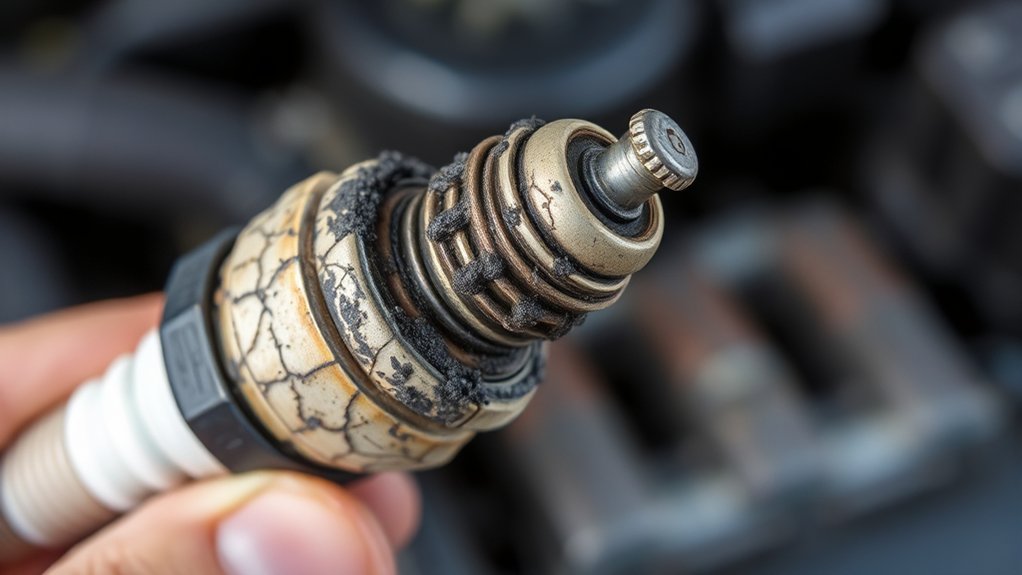
How can you tell if a spark plug is failing? Begin by understanding the spark plug types in your engine, as different designs may show varied wear patterns.
Conduct a symptoms checklist focusing on engine misfires, poor acceleration, rough idling, and reduced fuel efficiency. Visually inspect the spark plug for signs like carbon fouling, oil deposits, or worn electrodes.
Check for engine misfires, sluggish acceleration, rough idling, and visually inspect for fouling or electrode wear.
Measure the electrode gap to verify it matches the manufacturer’s specifications. If the plug exhibits excessive wear or damage, it’s likely failing.
Using a proper spark plug tester can confirm weak or inconsistent sparks. By systematically combining your symptoms checklist with a detailed inspection of spark plug types and their condition, you can accurately identify bad spark plugs before they cause severe engine issues.
Common Spark Plug Damage and What It Means
Although spark plugs may look similar, the damage they sustain can tell you a lot about your engine’s condition and performance issues. For example, oily deposits on the electrode often indicate oil leakage, while a white, blistered insulator suggests overheating.
Different spark plug types, such as copper, platinum, or iridium, respond uniquely to wear and damage. Corrosion on the metal parts usually signals poor spark plug maintenance or exposure to harsh conditions.
Fouling, caused by carbon buildup, points to incomplete combustion. You should inspect these signs regularly to diagnose engine problems early. Understanding how damage correlates with specific issues helps you select the right spark plug types for your vehicle and maintain peak engine efficiency through timely spark plug maintenance.
How Bad Spark Plugs Affect Engine Performance
Recognizing the effects of bad spark plugs on your engine’s performance is essential for maintaining efficiency and reliability. When spark plugs degrade past their spark plug lifespan, they cause incomplete combustion, leading to engine misfire causes such as rough idling and reduced power.
You might notice increased fuel consumption and difficulty starting your engine.
| Symptom | Cause |
|---|---|
| Rough idle | Weak or inconsistent spark |
| Engine misfire | Carbon buildup or electrode wear |
| Reduced power | Poor combustion efficiency |
| Increased emissions | Incomplete fuel burn |
| Hard starts | Insufficient spark energy |
These issues stem directly from spark plugs failing to ignite the air-fuel mixture properly, disrupting your engine’s overall performance. Addressing spark plug health is vital to avoid these negative impacts.
When to Replace Spark Plugs and Why It Matters
Spark plugs wear out over time due to constant exposure to high voltage and combustion heat. You should replace them according to the manufacturer’s recommended spark plug lifespan, typically between 30,000 and 100,000 miles, depending on the type and engine.
Ignoring this can lead to misfires, reduced fuel efficiency, and engine damage. To maintain peak performance, follow maintenance tips such as inspecting spark plugs for wear, carbon deposits, or erosion during routine service.
If you notice symptoms like rough idling or difficulty starting, check the plugs promptly. Timely replacement guarantees efficient combustion, preserves engine health, and prevents costly repairs.
Staying proactive with spark plug maintenance protects your vehicle’s reliability and keeps it running smoothly.
Frequently Asked Questions
Can Bad Spark Plugs Cause Poor Fuel Economy?
Yes, bad spark plugs cause spark plug symptoms like misfires that reduce fuel efficiency. When your plugs misfire, your engine burns more fuel, directly lowering fuel economy and forcing you to refill more often than usual.
Are Certain Spark Plugs Better for Cold Weather?
Yes, you’ll find spark plug materials like iridium or platinum improve cold weather performance by providing better ignition and durability. These materials resist fouling and guarantee consistent combustion in low temperatures, enhancing engine reliability.
How Do Spark Plugs Differ Between Gasoline and Diesel Engines?
Think of spark plug types as keys: gasoline engines need spark plugs for ignition systems to create sparks, while diesel engines rely on compression. They don’t use spark plugs but glow plugs instead to aid ignition precisely.
Can Using the Wrong Spark Plug Damage My Engine?
Yes, using the wrong spark plug types can damage your engine by causing misfires, poor combustion, and fouling. This reduces engine performance, increases wear, and may lead to costly repairs if not corrected promptly.
What Tools Are Needed to Replace Spark Plugs Safely?
Like a surgeon’s scalpel, a spark plug socket guarantees precise removal. You’ll need a torque wrench for correct installation techniques, a gap gauge to check spark plug types, and insulated gloves to safely handle hot engine parts.
Conclusion
Now that you know how to spot bad spark plugs—like cracked insulators or heavy carbon buildup—you can keep your engine running smoothly. Did you know that worn spark plugs can reduce fuel efficiency by up to 30%? Ignoring them not only harms performance but also wastes money.
Replace your spark plugs regularly to maintain peak engine function and avoid costly repairs. Staying proactive guarantees your vehicle runs efficiently and reliably. Understanding what does a bad spark plug look like helps you take timely action and protect your engine’s health.