You’ll know a good spark plug by its clean, light tan or grayish insulator tip, which shows proper combustion. The electrodes should have the correct gap size specified by your engine’s manufacturer with no excessive wear or deposits.
The insulator needs to be intact, free from cracks or chips. Maintaining this condition guarantees efficient performance and fuel economy.
Understanding these details helps you recognize when replacement or maintenance is necessary for peak engine health.
Key Takeaways
- A good spark plug has a clean, light tan or grayish insulator tip indicating proper combustion.
- Electrodes should have minimal wear and be free of deposits or damage.
- The spark plug gap must match the manufacturer’s specifications for optimal performance.
- The insulator should be intact without cracks or chips.
- A smooth texture and consistent color on the plug indicate efficient engine operation.
How to Identify a Healthy Spark Plug by Appearance
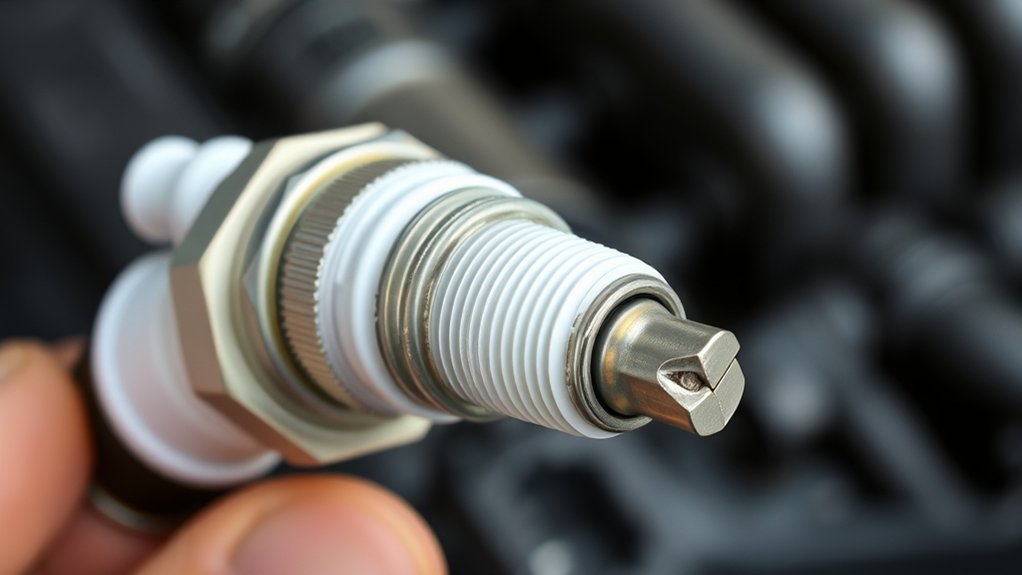
How can you tell if a spark plug is healthy just by looking at it? Begin by examining the spark plug anatomy: focus on the center electrode, ground electrode, insulator, and metal shell.
A healthy spark plug will have a clean, light tan or grayish color on the insulator tip, indicating proper combustion. Check the ideal gap between the center and ground electrode; it should match your engine manufacturer’s specifications, as an incorrect gap can affect ignition efficiency.
The electrodes should be free of excessive wear, deposits, or damage. Additionally, the insulator must be intact without cracks or chips.
What Spark Plug Color and Texture Reveal About Condition
Although spark plug performance depends on several factors, the color and texture of its insulator and electrodes provide immediate clues about engine health and combustion quality. During spark plug inspection, a light tan or grayish color with a smooth texture indicates ideal combustion efficiency.
Dark, sooty deposits suggest incomplete combustion or a rich fuel mixture. Conversely, white, blistered surfaces point to overheating or lean conditions.
| Color/Texture | Condition Indicated |
|---|---|
| Light tan/gray, smooth | Healthy combustion, efficient engine |
| Black, sooty | Rich fuel mixture, poor combustion |
| White, blistered | Overheating, lean fuel condition |
Signs Your Spark Plug Needs Replacement
Recognizing the color and texture clues on your spark plug helps you assess engine performance, but knowing when to replace the spark plug is equally important. Typically, the spark plug lifespan ranges between 30,000 to 100,000 miles, depending on the type and engine conditions.
You should monitor replacement frequency closely to maintain peak combustion efficiency. Signs indicating replacement include excessive electrode wear, visible deposits, cracks in the insulator, and gap erosion beyond specifications.
If your engine misfires, struggles to start, or exhibits reduced fuel economy, it’s a clear signal the spark plug’s performance has degraded. Regular inspection aligned with manufacturer recommendations guarantees you replace plugs before they cause engine damage or performance loss, preserving reliability and efficiency.
Don’t wait for failure; proactive replacement is key.
Why Spark Plug Design Matters for Performance
Because spark plugs play an essential role in igniting the air-fuel mixture, their design directly impacts engine performance and efficiency. You need to understand how advanced spark plug materials, like iridium or platinum, enhance durability and provide consistent sparks under extreme conditions.
These materials resist wear and corrosion better than traditional copper, guaranteeing reliable ignition. Additionally, modern spark plug technology focuses on optimizing electrode shape and gap size, which improves spark energy and combustion efficiency.
This precision reduces misfires, enhances fuel economy, and lowers emissions. When you select a spark plug, consider how its design aligns with your engine’s requirements. Proper design guarantees stable ignition timing and maximizes power output, proving that spark plug technology and materials are critical for peak engine performance.
Tips for Maintaining Spark Plugs to Keep Engines Running Smoothly
To keep your engine running smoothly, you need to maintain your spark plugs regularly. Start by performing routine inspections every 30,000 miles or as recommended by your vehicle manufacturer.
Check for signs of wear, such as electrode erosion, deposits, or cracks, which can shorten the spark plug lifespan. Clean or replace plugs showing excessive buildup or damage. Use the correct gap size specified for your engine to guarantee maximum spark performance.
When replacing, always use quality spark plugs compatible with your vehicle. Proper torque application during installation prevents damage and guarantees reliable contact.
Regular maintenance not only extends your spark plug lifespan but also improves fuel efficiency and reduces misfires. Staying proactive with these tips keeps your engine operating at peak performance.
Frequently Asked Questions
How Often Should Spark Plugs Be Checked or Replaced?
You should check spark plugs every 30,000 miles and replace them according to their lifespan, typically 60,000 to 100,000 miles.
Regular inspections and maintenance tips guarantee peak engine performance and prevent misfires or fuel inefficiency.
Can Bad Spark Plugs Affect Fuel Efficiency?
Yes, bad spark plugs can drastically reduce fuel efficiency. Neglecting spark plug wear disrupts combustion, causing misfires and wasted fuel.
Regular spark plug maintenance guarantees ideal ignition, improving mileage and engine performance consistently.
Are Spark Plugs Universal for All Car Models?
You can’t use universal spark plugs since spark plug compatibility depends on your car’s engine specifications. Different spark plug types, like copper, platinum, and iridium, suit varying ignition requirements and performance needs precisely.
What Tools Are Needed to Replace Spark Plugs?
You’ll need a spark plug socket, ratchet, extension, and gap gauge to replace spark plugs. Knowing spark plug types helps guarantee proper fit.
Regular spark plug maintenance prevents misfires and improves engine performance efficiently.
Can Spark Plugs Cause Engine Misfires?
Like a weak link in a chain, faulty spark plugs, regardless of type, can cause engine misfires, disrupting combustion and reducing engine performance.
Regularly check and replace them to maintain peak power and efficiency.
Conclusion
You want your spark plug to look like a clean, light tan island amidst a sea of metal—no heavy deposits, cracks, or oily residue. This subtle hue signals efficient combustion and engine health.
When you spot dark carbon buildup or glazing, it’s time for a swap. Keeping your spark plugs crisp guarantees smooth ignitions and peak performance, like a finely tuned conductor leading a flawless symphony under your hood.
Regular checks keep your engine firing sharp and strong. A good spark plug looks just right to ensure your vehicle runs at its best.