It’s no coincidence that many Honda Civic drivers wonder about the D3 setting right when they encounter hills or heavy traffic. Understanding what D3 means in a Honda Civic can clarify its purpose and help you use it effectively. You might assume it’s just another gear, but D3 actually restricts your automatic transmission to the first three gears, offering specific advantages in control and engine braking.
Using D3 can improve your driving experience, especially in situations where you need better handling or more power at lower speeds. However, there are important details you’ll want to consider before engaging it. Knowing when and how to use D3 will ensure you get the most benefit without causing unnecessary wear to your vehicle.
Key Takeaways
- D3 in a Honda Civic refers to the third gear position in the automatic transmission, limiting shifts to the first three gears.
- It enhances engine braking and control, especially useful for driving on hills or towing.
- D3 prevents frequent upshifts, improving power delivery during uphill driving and stop-and-go traffic.
- Shifting to D3 requires slowing down or stopping to ensure smooth transmission adjustment.
- Prolonged use may reduce fuel efficiency but improves driving control in hilly or city traffic conditions.
What Does D3 Mean in a Honda Civic Transmission?
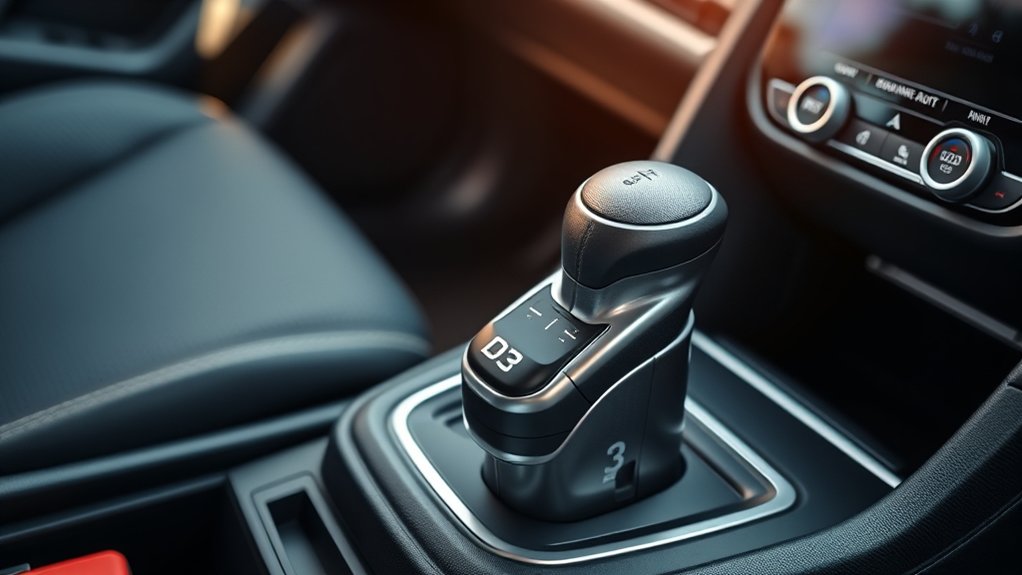
What exactly does D3 signify in a Honda Civic transmission? D3 refers to the third gear position within the automatic transmission, limiting the gear range to the first three gears. This setting is useful when you need more control over shifts, such as during city driving or on steep inclines.
By engaging D3, the transmission avoids shifting into higher gears, providing better engine braking and responsive acceleration. Techniques for hybrid shifts often incorporate D3 to optimize power delivery and fuel efficiency in specific driving conditions.
Additionally, manual override methods allow you to switch to D3 to prevent excessive gear hunting or to maintain consistent engine performance. Understanding D3 helps you utilize your Honda Civic’s transmission more effectively in varied driving scenarios.
How D3 Affects Your Honda Civic’s Gear Shifting and Performance
When you use D3 in your Honda Civic, the transmission limits itself to the first three gears, affecting how the car shifts under different conditions. This restriction can enhance engine performance by preventing unnecessary shifting and providing better control on hilly terrain or during towing.
However, it may also impact fuel efficiency, as the engine runs at higher RPMs compared to normal Drive mode.
Gear Shifting Mechanics
How does selecting D3 influence your Honda Civic’s gear shifting and overall driving performance? When you engage D3, the transmission limits itself to the first three gears, preventing unnecessary upshifts to higher gears. This adjustment enhances control during city driving or hilly terrain by providing more immediate power and engine braking.
In a specs comparison, D3 optimizes gear ratios for moderate speed ranges, contrasting with D or D4, which use all available gears for fuel efficiency on highways. To maintain smooth gear transitions in D3, follow maintenance tips such as regular transmission fluid checks and timely filter replacements.
Proper upkeep ensures the transmission adapts seamlessly to the altered shifting pattern, preserving both performance and longevity.
Impact on Engine Performance
Why does selecting D3 make a noticeable difference in your Honda Civic’s engine performance? When you choose D3, the transmission limits itself to the first three gears, preventing shifts into higher gears. This restriction affects how your engine delivers power and torque, especially during acceleration or when driving on hilly terrain.
By staying in lower gears longer, your engine operates at higher RPMs, which can enhance responsiveness but may increase engine wear over time if used excessively. Additionally, this gear limitation helps maintain better control during conditions requiring frequent gear changes.
While it impacts engine performance by altering shift points and torque delivery, it’s crucial to use D3 appropriately to avoid unnecessary strain and maintain optimal fuel economy in the long run.
Fuel Efficiency Considerations
In what ways does selecting D3 influence your Honda Civic’s fuel efficiency? When you engage D3, the transmission limits gear shifting to the first three gears, optimizing engine RPM for moderate speeds. This control enhances fuel optimization by preventing unnecessary shifts into higher gears that might increase fuel consumption during stop-and-go or urban driving.
Additionally, D3 can help maintain smoother acceleration, which complements your Civic’s aerodynamic design by reducing abrupt speed changes that increase drag. However, at higher speeds or highway driving, staying in D3 might reduce efficiency since the engine operates at higher RPMs than in Drive mode.
Therefore, using D3 strategically in city traffic maximizes fuel savings, while switching back to Drive supports optimal performance and fuel economy on open roads.
Benefits of Using D3 in City Traffic and Hilly Areas
When you use D3 in city traffic and on hilly roads, you gain better engine braking control, which helps manage speed without overusing the brakes. It also enhances your Civic’s hill climbing ability by maintaining optimal power delivery.
Additionally, D3 optimizes low-speed maneuvering, making stop-and-go driving smoother and more efficient.
Enhanced Engine Braking Control
How does the D3 mode enhance your driving experience in city traffic and hilly terrain? By enabling enhanced engine braking control, D3 mode optimizes engine tuning to provide smoother deceleration without relying heavily on the brakes. This modulation reduces brake wear and improves vehicle control on declines or stop-and-go traffic.
Additionally, the engine operates within a specific RPM range that minimizes noise, contributing to effective noise reduction inside the cabin. This refined tuning balances power delivery and braking force, ensuring responsive yet controlled handling.
As a result, you maintain stability and safety, especially in variable driving conditions, without sacrificing comfort. Using D3 mode strategically allows your Honda Civic to adapt its mechanical response, enhancing both efficiency and the overall driving experience in challenging urban and hilly environments.
Improved Hill Climbing Ability
Why does D3 mode improve your Honda Civic’s hill climbing performance? D3 adjusts the transmission’s threshold calibration to hold lower gears longer, providing increased torque and power when ascending inclines. This calibration prevents premature upshifting, ensuring your engine operates within its optimal power band for smoother and more controlled hill climbs.
Using D3 in city traffic and hilly areas helps maintain consistent acceleration without overworking the engine or transmission. Additionally, this mode supports better maintenance planning by reducing strain on drivetrain components during frequent stops and starts on slopes.
Optimized Low-Speed Maneuvering
Building on the enhanced hill climbing capabilities, D3 also improves your Honda Civic’s performance during low-speed maneuvering, especially in city traffic and hilly areas. By limiting the transmission to the first three gears, D3 provides smoother acceleration and better control, reducing gear hunting and unnecessary shifts.
This optimizes power delivery and traction, allowing you to navigate stop-and-go traffic or steep inclines with greater confidence. Unlike non automotive systems or unrelated technology that complicate vehicle control, D3’s mechanical approach simplifies operation without electronic intervention.
This results in improved fuel efficiency and reduced wear on transmission components during frequent low-speed adjustments. Using D3 in these conditions helps you maintain steady engine RPMs, enhancing responsiveness and safety while driving in complex urban and terrain environments.
When Should You Use D3 Mode While Driving?
When should you engage D3 mode in your Honda Civic? Use D3 when driving in conditions requiring enhanced engine braking and controlled acceleration, such as hilly terrain or stop-and-go traffic. It helps maintain lower gears, preventing frequent shifting and improving responsiveness.
Consider driving etiquette and weather conditions; for example, use D3 in rain or snow for better traction and control.
| Situation | Advantage | Reason |
|---|---|---|
| Uphill driving | Maintains power | Prevents gear hunting |
| Downhill driving | Engine braking | Reduces brake wear |
| Stop-and-go traffic | Smooth control | Avoids frequent shifting |
| Slippery roads | Enhanced traction | Better throttle response |
Use D3 thoughtfully to optimize performance and safety.
Shifting to D3 Safely in a Honda Civic
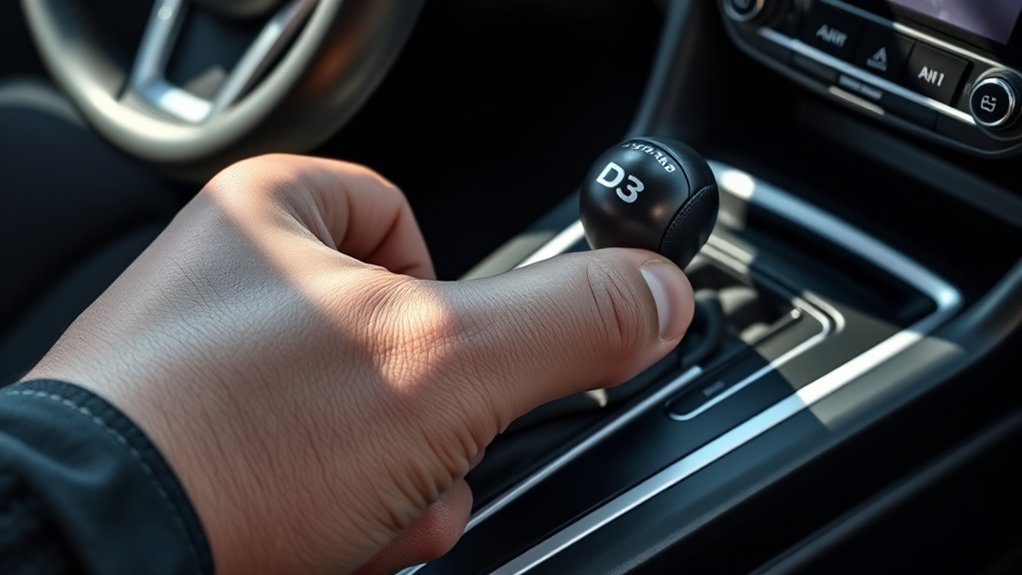
How do you shift to D3 safely in your Honda Civic to ensure optimal performance? First, understand the d3 meaning: it limits your transmission to the first three gears, which can improve control on hilly terrain or during towing.
When switching to D3, bring your vehicle to a complete stop or slow down significantly to avoid stressing the transmission. Shift smoothly from D to D3, allowing the transmission control module to adjust the transmission shift points accordingly.
Abrupt shifts can cause excessive wear or unexpected gear changes. Always monitor engine RPM and road conditions to maintain efficient gear selection.
Common Driving Mistakes to Avoid When Using D3 in a Honda Civic
Properly shifting to D3 helps protect your Honda Civic’s transmission, but certain driving habits can still cause issues. Avoid common mistakes to maintain optimal performance and safety:
Shifting to D3 protects your Honda Civic’s transmission, but mindful driving habits are essential for lasting performance.
- Abrupt braking without engaging anti lock braking systems can strain the transmission and reduce control.
- Ignoring tire pressure leads to uneven wear and affects shifting smoothness in D3 mode.
- Using D3 in high-speed highway driving forces unnecessary engine strain and wear.
- Frequent unnecessary shifting between D and D3 confuses transmission logic and accelerates wear.
Troubleshooting D3 Mode Issues in Your Honda Civic
Why might your Honda Civic’s D3 mode behave unexpectedly or exhibit performance issues? Common causes include improper brake calibration and degraded drivetrain lubricants. If brake calibration is off, the vehicle may not shift smoothly in D3, leading to hesitation or slipping.
Additionally, old or contaminated drivetrain lubricants can impair transmission response and cause overheating. To troubleshoot, first check your brake system to ensure proper calibration, especially after brake service or replacement.
Next, inspect the transmission fluid and other drivetrain lubricants for correct levels and condition, replacing them if necessary. If the problem persists, a diagnostic scan can identify transmission or sensor faults affecting D3 mode.
Addressing these technical factors promptly helps maintain optimal performance and prolongs your Civic’s drivetrain longevity.
Frequently Asked Questions
Can Using D3 Improve Fuel Efficiency in a Honda Civic?
Using D3 in your Honda Civic won’t improve fuel efficiency; it’s not relevant for that purpose.
Discussing fuel savings with D3 is an unintended topic and unrelated discussion, as it mainly controls gear shifting under certain conditions.
Does D3 Mode Affect Engine Wear Over Time?
You should know that studies show using D3 mode can reduce fuel efficiency by up to 15%, but it doesn’t significantly increase engine wear if you avoid aggressive driving and maintain regular servicing for optimal engine health.
Is D3 Mode Suitable for Highway Driving?
You shouldn’t use D3 mode for highway driving because drivetrain behavior limits gear selection to lower ranges, reducing transmission responsiveness.
This restricts acceleration and fuel efficiency, making it better suited for city or hilly terrain rather than sustained high speeds.
How Does D3 Compare to Other Drive Modes in a Honda Civic?
Wondering how d3 stacks up against eco mode? D3 limits your transmission to lower gears for better power and control, while eco prioritizes fuel efficiency with smoother transmission behavior.
You’ll notice sharper shifts in d3 versus eco.
Can D3 Mode Be Used in All Honda Civic Models?
You can use D3 mode in many Honda Civic models, but be aware of D3 mode limitations and transmission wear considerations. It’s best suited for specific conditions, so avoid prolonged use to prevent unnecessary transmission stress.
Conclusion
Using D3 in your Honda Civic can improve control, especially on hilly roads or in stop-and-go traffic.
Did you know that locking the transmission within the first three gears can reduce frequent upshifts by up to 40%? This enhances engine braking and stability, making your drive smoother and safer.
Just remember to shift smoothly from a stop or after slowing down to avoid transmission strain. Proper use of D3 helps maintain performance and prolongs your vehicle’s transmission life.
In conclusion, understanding what D3 means in a Honda Civic is key to optimizing your driving experience and preserving your car’s transmission.