When you see DRL on your Honda Accord, it refers to the Daytime Running Lights designed to enhance visibility during daylight hours.
These lights activate automatically to increase your vehicle’s presence on the road, helping to improve safety.
The DRLs use LED technology connected directly to the vehicle’s body control module for efficient and reliable operation.
This ensures they function consistently whenever your car is running.
Understanding how DRL functions and its role in safety can help you recognize its importance.
It also helps you identify what it means if those lights behave differently than expected.
Key Takeaways
- DRL stands for Daytime Running Lights, a safety feature on Honda Accord for improved daytime visibility.
- DRLs automatically activate when the engine starts to enhance vehicle detection by others.
- They increase brightness without manual input, helping reduce collision risks and improve pedestrian awareness.
- Newer Accords use LED DRLs with variable brightness and energy efficiency controlled by the body control module.
- DRLs operate mainly during daylight and poor weather, optimizing safety while maintaining energy use.
What Does DRL Mean on a Honda Accord
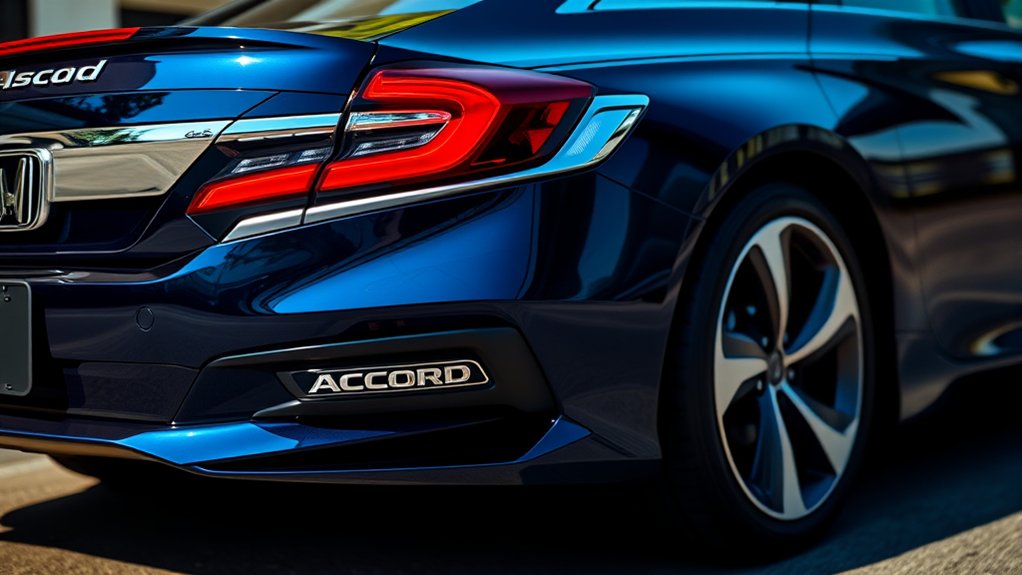
What does DRL mean on a Honda Accord, and why does it matter? DRL stands for Daytime Running Lights, a safety feature designed to enhance your vehicle’s visibility during daylight hours. These lights automatically activate when the engine runs, improving lighting brightness without manual input.
Understanding DRL helps you appreciate how Honda engineers maximize your Accord’s safety systems. The DRL system relies on sensor calibration to adjust lighting brightness based on ambient light conditions. This calibration ensures the lights are neither too dim to be ineffective nor too bright to cause glare.
Proper sensor calibration maintains peak performance and complies with safety regulations. Knowing how DRL functions empowers you to monitor your Accord’s lighting system and detect any malfunctions that could compromise your safety on the road.
How DRL Works Across Honda Accord Models
How do Daytime Running Lights operate differently across various Honda Accord models? The DRL system adapts based on the model year and trim level.
Daytime Running Lights vary in operation depending on the Honda Accord’s model year and trim level.
In older models, DRLs typically use traditional halogen bulbs activated by a simple two wire idea connecting the ignition and lighting circuits. Newer Accords employ LED technology with a more complex two wire idea involving the vehicle’s body control module, allowing for variable brightness and energy efficiency.
You’ll notice that some models integrate DRLs with the adaptive lighting system, which adjusts intensity based on ambient light conditions detected by sensors. This technical evolution enhances visibility while maintaining power efficiency.
Understanding these differences helps you appreciate how Honda balances safety regulations with innovative lighting solutions across its Accord lineup.
When and Why Your Honda Accord Turns On Its DRL
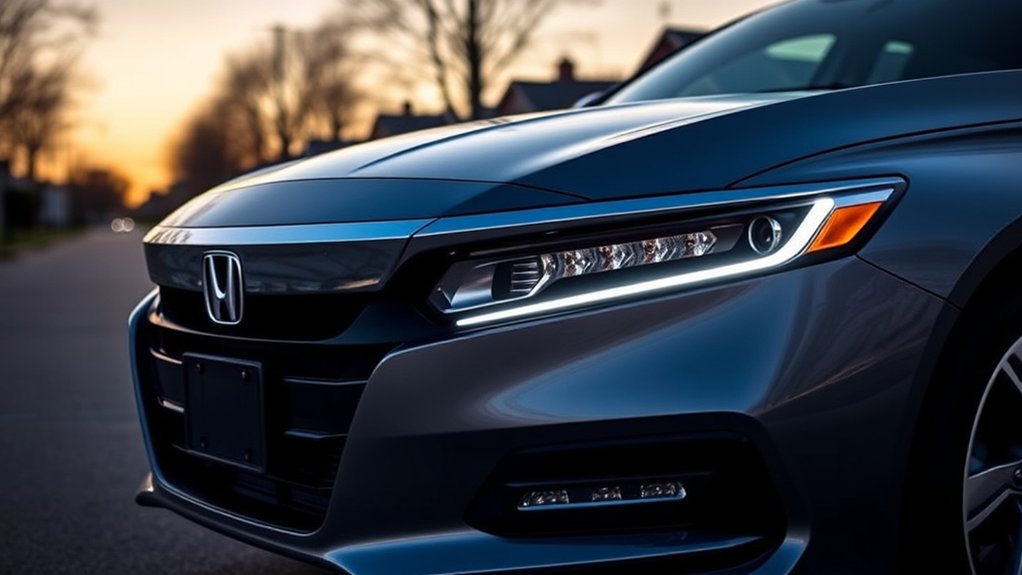
Why does your Honda Accord activate its Daytime Running Lights (DRL) automatically? The system engages DRL to enhance visibility during specific conditions, aligning with safe driving etiquette and weather considerations. Here’s when and why it happens:
- Engine Start: DRLs turn on immediately after you start your vehicle, ensuring your car is visible to others from the moment you hit the road.
- Daylight Conditions: They activate during daylight hours, especially in overcast, rainy, or foggy weather, improving your Accord’s presence without manual input.
- Speed Threshold: Some models enable DRLs only when the vehicle exceeds a certain speed, optimizing energy use while maintaining visibility.
How DRL Improves Safety in Your Honda Accord
You’ll notice that DRL greatly enhances your Honda Accord’s visibility during the day, making it easier for other drivers to see you. This increased visibility reduces the risk of collisions by improving reaction times in various traffic conditions.
Additionally, DRL helps pedestrians spot your vehicle sooner, contributing to overall safety on the road.
Enhanced Daytime Visibility
When does your Honda Accord’s DRL system make the biggest difference? It enhances your vehicle’s visibility during daytime driving, ensuring other motorists spot you quickly. The DRL aesthetics and the specific lighting color, usually a bright white or amber, play a crucial role in this improvement.
Here’s how DRL boosts daytime visibility:
- Contrast Enhancement: The lighting color increases contrast against various backgrounds, making your Accord stand out.
- Peripheral Recognition: DRLs improve side visibility, alerting pedestrians and drivers to your presence from angles.
- Consistent Illumination: The system maintains a steady light output, preventing flickers that could reduce attention.
Reduced Accident Risks
Accident prevention relies heavily on early detection, and your Honda Accord’s DRL system actively contributes to this by making your vehicle more noticeable to others on the road. By consistently illuminating your headlights during daytime, the DRLs enhance your car’s presence against complex urban signage and dynamic backgrounds, reducing the risk of collisions.
This system optimizes driving aesthetics without compromising visibility, ensuring your Accord stands out clearly in diverse lighting conditions. The continuous, subtle glow of the DRLs allows other drivers to quickly recognize your vehicle’s position and movement, especially in congested city environments.
Consequently, you experience fewer near-misses and improved reaction times from surrounding traffic, directly lowering accident risks. The integration of DRLs is a technical safety feature that complements your Accord’s overall urban driving performance.
Increased Pedestrian Awareness
How exactly do Daytime Running Lights (DRL) enhance pedestrian safety around your Honda Accord? DRLs improve visibility, directly influencing pedestrian behavior and reducing accidents, especially in city driving. Here’s how they help:
- Enhanced Vehicle Detection: DRLs make your Accord more noticeable to pedestrians, allowing them to better judge your distance and speed.
- Improved Reaction Time: With increased visibility, pedestrians can make safer decisions, like when to cross streets or avoid stepping into traffic.
- Consistent Awareness: In busy urban environments, DRLs maintain constant illumination, reducing surprises caused by shadows or changing light conditions.
How to Tell If Your DRL Is Functioning Properly
Why should you regularly check your Honda Accord’s Daytime Running Lights (DRL)? Ensuring your DRLs function properly enhances visibility and safety during daytime driving. Here’s a quick guide with practical tips to verify their operation.
Regularly checking your Honda Accord’s DRLs boosts visibility and safety during daytime driving.
Start by turning on your vehicle and ensuring the headlights are off; DRLs should activate automatically. Step outside and visually confirm that both front lights are illuminated with consistent brightness.
If your Accord has LED DRLs, they’ll emit a steady, bright glow without flickering. If you notice dimming, flickering, or no light, the DRL system may require inspection.
Additionally, check your vehicle’s fuse and bulb condition as these components often affect DRL performance. Regular checks prevent unnoticed failures, keeping your Accord compliant with safety standards and helping you drive confidently.
Common DRL Dashboard Warnings and Their Meanings
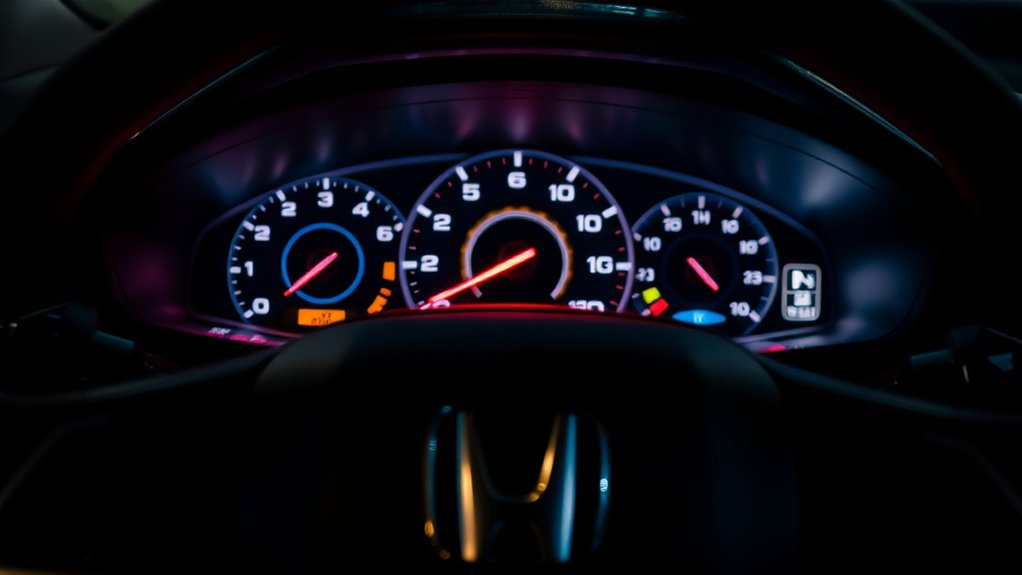
When your Honda Accord’s dashboard displays a DRL warning, it signals a potential issue with the Daytime Running Lights system that needs prompt attention. Understanding common DRL dashboard warnings helps you prioritize drl maintenance effectively. Here are three frequent warnings and their meanings:
1. DRL System Fault
Indicates a malfunction in the DRL circuit, requiring immediate diagnostic to prevent reduced visibility.
2. Bulb Failure Warning
Signals a burnt-out or disconnected DRL bulb; replacing the bulb is essential to maintain safety compliance.
3. Headlight Calibration Alert
Shows that the headlights may be misaligned, affecting light distribution. Recalibration ensures optimal illumination and avoids glare.
Addressing these warnings promptly preserves your Accord’s lighting performance and safety standards.
DRL Troubleshooting for Your Honda Accord
If your Honda Accord’s DRL isn’t working properly, you’ll want to identify common issues like burned-out bulbs or faulty wiring. Start by diagnosing the problem with a systematic check of the DRL components and related fuses.
Once you pinpoint the malfunction, you can apply targeted fixes to restore proper DRL function.
Common DRL Issues
How can you identify and resolve common issues with the Daytime Running Lights (DRL) on your Honda Accord? Addressing DRL problems promptly ensures optimal driving ergonomics and maintains fuel efficiency by preventing electrical system strain.
Here are three common DRL issues to watch for:
1. Dim or Flickering Lights
Often caused by a failing bulb or loose wiring connections; check and replace bulbs or secure wiring.
2. DRL Not Activating
Could stem from a blown fuse or faulty DRL relay; inspect and replace these components as needed.
3. Error Indicator on Dashboard
Signals a sensor or module malfunction; consult a diagnostic tool to pinpoint the exact fault.
Diagnosing DRL Problems
Addressing common DRL issues is the first step, but pinpointing the exact cause requires a systematic approach to diagnosing your Honda Accord’s Daytime Running Lights. Start by checking the fuse box for blown fuses linked to the DRL circuit.
Next, inspect the DRL relay and wiring harness for signs of damage or corrosion. Use a multimeter to verify voltage at the DRL socket to ensure proper electrical flow.
Since DRLs are integrated with engine systems, poor engine maintenance can indirectly affect their operation. For example, inconsistent fuel efficiency might indicate broader electrical or sensor issues impacting DRLs.
Lastly, consult the onboard diagnostic system for any fault codes related to lighting or engine control modules. This methodical troubleshooting helps isolate the problem before you move on to repairs.
Fixing DRL Malfunctions
What steps can you take to effectively fix DRL malfunctions on your Honda Accord? Start by running thorough headlight diagnostics to identify any electrical faults or bulb failures. Next, ensure proper DRL calibration, which aligns the daytime running lights for optimal function and compliance with safety standards.
Finally, inspect the DRL relay and fuses for damage or corrosion, replacing any faulty components promptly.
- Perform headlight diagnostics using a scan tool or multimeter to detect wiring or sensor issues.
- Calibrate DRLs by following the manufacturer’s procedure to maintain correct light intensity and positioning.
- Check and replace DRL relays and fuses to restore electrical flow and prevent intermittent malfunctions.
These targeted steps will help restore your Honda Accord’s DRL system efficiently.
Can You Turn Off DRL on a Honda Accord?
Why might you want to turn off the Daytime Running Lights (DRL) on your Honda Accord? You could consider it for reasons like DRL aesthetics or specific warranty implications.
Although most Honda Accords don’t include a dedicated switch for DRLs, you can disable them through the vehicle’s settings or by consulting your dealer. Be cautious, as altering DRL functionality might affect your warranty.
| Reason | Method to Disable | Notes |
|---|---|---|
| DRL Aesthetics | Vehicle Settings Menu | Limited options in some models |
| Warranty Implications | Dealer Assistance | Must confirm impact first |
| Battery Concerns | Aftermarket Devices | May void warranty |
| Personal Preference | Manual Fuse Removal | Not recommended by Honda |
| Legal Compliance | Not advised | DRL required in many states |
Always check local laws before disabling DRLs.
How DRL Impacts Your Accord’s Battery and Lights
Disabling your Honda Accord’s DRL may seem straightforward, but it can influence both your vehicle’s battery life and lighting system performance. Here’s how:
- Battery Drain: DRLs use low power, but turning them off may cause irregular power draws elsewhere, potentially stressing the battery over time.
- Lighting Wear: DRLs reduce the load on main headlights by providing consistent illumination during daytime, enhancing their lifespan and maintaining optimal brightness.
- Driving Comfort and Fuel Efficiency: DRLs improve visibility without significantly impacting fuel efficiency, contributing to safer, more comfortable driving conditions.
Understanding these factors helps you balance safety and maintenance. Keeping DRLs operational preserves battery health and prevents premature wear on your headlights, while also supporting efficient fuel use and driving comfort.
Upgrading DRL on Your Honda Accord
Upgrading the DRL on your Honda Accord can enhance visibility and improve energy efficiency. You can choose from popular options like LED or HID lights, each offering different brightness and power consumption benefits.
Before installation, make certain you have the right tools and follow precise steps to ensure a secure and effective upgrade.
Benefits of Upgrading DRL
How can enhancing the Daytime Running Lights (DRL) on your Honda Accord improve both safety and aesthetics? Upgrading your DRL offers tangible benefits that extend beyond simple illumination. Here’s how:
- Increased Visibility: Brighter, more efficient DRLs help other drivers spot your vehicle sooner, reducing collision risks in varied lighting conditions.
- Modernized Appearance: Upgraded DRLs give your Accord a sleek, contemporary look, distinguishing it from non automotive standard models.
- Energy Efficiency: Advanced DRLs consume less power, minimizing strain on your car’s electrical system, similar to how optimizing language learning methods enhances efficiency.
Popular DRL Upgrade Options
What options do you have when enhancing the Daytime Running Lights on your Honda Accord? You can choose from LED retrofit kits, projector DRL assemblies, or custom DRL strips that improve brightness and energy efficiency.
LED kits offer superior luminosity and longevity compared to traditional bulbs, making them ideal for city driving or when capturing precise angles in drone photography. Projector DRLs provide focused light beams, increasing visibility and aesthetic appeal.
Additionally, flexible DRL strips allow for tailored installation, perfect for integrating subtle lighting effects inspired by urban gardening’s clean, modern aesthetics. These upgrades not only enhance safety but also elevate your vehicle’s style with minimal power consumption. Selecting the right option depends on your preferences for brightness, design, and compatibility with your Accord’s electrical system.
Installation Tips and Tools
Where should you begin when installing new Daytime Running Lights on your Honda Accord? Start by preparing the right tools and understanding key considerations for drl aesthetics and aftermarket legality. Follow these steps:
- Gather tools: You’ll need wire strippers, a multimeter, electrical tape, and connectors to ensure clean, safe wiring.
- Check compatibility: Verify the DRL kit matches your Accord’s electrical system to avoid errors or damage.
- Follow legal guidelines: Confirm the aftermarket lights comply with local regulations to maintain aftermarket legality and avoid fines.
Pay attention to the wiring harness and mounting points to preserve factory aesthetics while upgrading. Taking these technical steps ensures a professional install that enhances your vehicle’s appearance and functionality without compromising safety or legality.
Frequently Asked Questions
Are DRLS Required by Law in All States?
You won’t find DRLs required by law in all states, as driving legality depends on specific headlight regulations varying regionally. Make sure you check your state’s rules to stay compliant with DRL requirements while driving.
Do DRLS Affect Fuel Efficiency in a Honda Accord?
You won’t notice a significant impact on fuel efficiency with DRLs in your Honda Accord, as modern headlight technology minimizes power use while enhancing driving safety by improving vehicle visibility during daylight hours.
Can DRLS Be Customized With Different Light Colors?
You can’t customize DRLs on a Honda Accord with different color varieties, as factory settings limit them to white for safety compliance.
Customization options typically require aftermarket modifications, which may affect warranty or legal standards.
How Do DRLS Differ From Daytime Running Fog Lights?
Think of DRLs as your car’s steady heartbeat, enhancing visibility automatically, while daytime running fog lights cut through foggy conditions.
DRL installation is standard, but fog light legality varies, so check local laws before modifying.
Are DRLS Covered Under Honda’s Vehicle Warranty?
Yes, your Honda Accord’s DRL warranty covers daytime running lights since they meet legal requirements. If DRLs malfunction within the warranty period, Honda will repair or replace them, ensuring compliance and safety without extra cost to you.
Conclusion
DRL on your Honda Accord might seem like a simple light feature, but it contrasts essential safety with subtle technology. While it automatically boosts visibility during the day, you might not even notice it working—until it doesn’t.
Understanding its function, troubleshooting issues, and knowing when you can disable it helps you maintain both safety and efficiency. Don’t overlook these small lights; they play a big role in protecting you and others on the road.
In conclusion, knowing what DRL means on a Honda Accord is key to ensuring your vehicle’s daytime visibility and overall safety.