Low engine oil pressure means your engine isn’t receiving enough lubrication, risking damage to essential parts like bearings, camshafts, and pistons due to increased friction and wear.
This condition can lead to poor engine performance, inefficient combustion, and overheating.
Common causes of low engine oil pressure include worn bearings, a failing oil pump, incorrect oil viscosity, or leaks.
You should check oil levels and pressure promptly to avoid further damage.
Prolonged low oil pressure can severely harm your engine.
Understanding how to diagnose and address this issue is vital for protecting your vehicle.
Key Takeaways
- Low engine oil pressure indicates insufficient lubrication of engine components, risking increased friction and wear.
- It often signals worn bearings, a failing oil pump, or incorrect oil viscosity affecting oil flow.
- Insufficient oil pressure can lead to engine overheating and reduced performance.
- Immediate attention to low oil pressure warnings is crucial to prevent severe engine damage.
- Accurate diagnosis requires checking oil levels, pressure gauges, and possibly consulting a professional mechanic.
Why Low Engine Oil Pressure Is Dangerous for Your Car
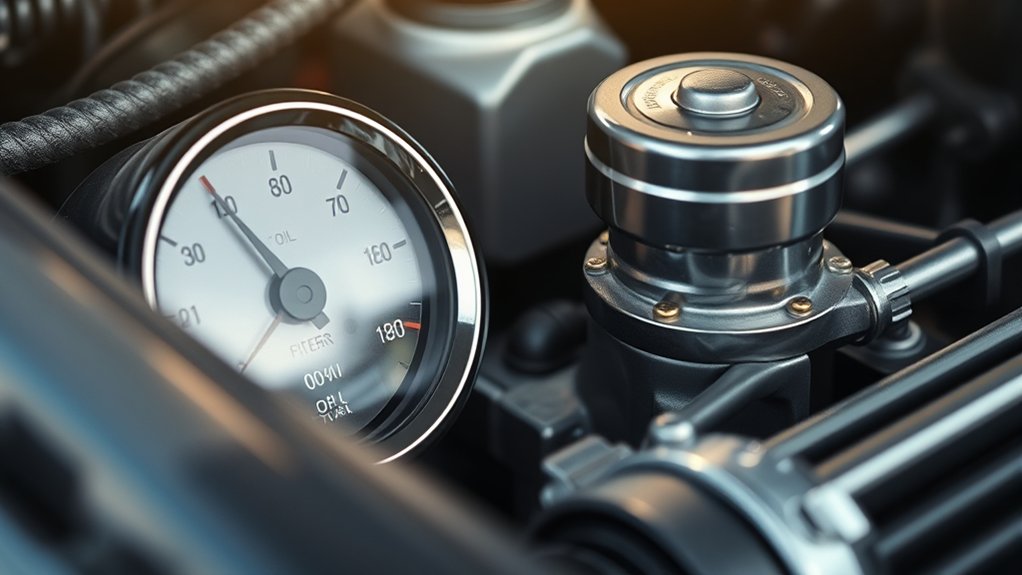
Although you might not notice it immediately, low engine oil pressure poses a serious threat to your car’s engine health. When oil pressure drops, it means engine oil isn’t circulating properly, reducing lubrication to critical components.
Without sufficient lubrication, friction increases, causing accelerated wear and potential damage to bearings, camshafts, and pistons. This deterioration directly impairs engine performance, leading to inefficient combustion and possible overheating.
Insufficient lubrication raises friction, accelerating wear on engine parts and harming performance through poor combustion and overheating.
You might also experience oil leaks, which further lower oil levels and pressure, exacerbating the problem. Ignoring low oil pressure can result in severe engine damage or complete failure, requiring costly repairs.
As a result, you should address any low oil pressure warning immediately to maintain peak engine performance and prevent irreversible damage caused by insufficient oil flow.
Common Causes of Low Engine Oil Pressure
When your engine oil pressure drops, it usually stems from specific mechanical or maintenance issues that disrupt proper oil flow. Common causes include worn engine bearings, a failing oil pump, and incorrect oil viscosity. Each of these directly impacts the oil’s ability to lubricate and protect engine components effectively.
| Cause | Effect on Oil Pressure |
|---|---|
| Worn Engine Bearings | Increases oil clearance, lowering pressure |
| Oil Pump Failure | Reduces oil circulation |
| Incorrect Oil Viscosity | Oil too thin or thick affects flow rate |
| Oil Leaks | Decreases overall oil volume |
Identifying these causes early helps prevent severe engine damage and guarantees you maintain ideal oil pressure.
How to Check Engine Oil Pressure and Diagnose Problems
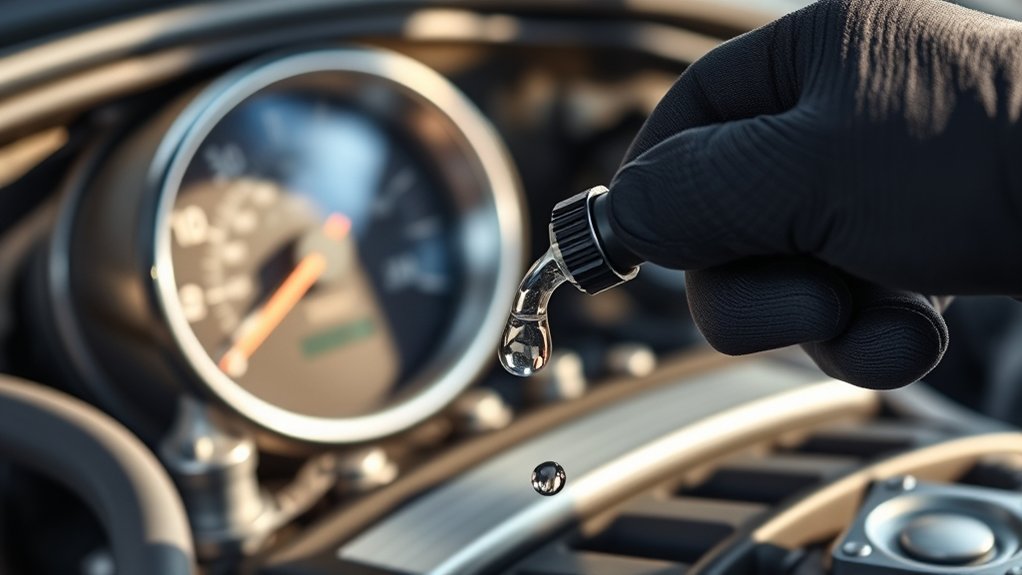
Understanding the common causes of low engine oil pressure sets the stage for accurately checking and diagnosing the issue. Start by monitoring your vehicle’s oil pressure gauges to identify abnormal readings.
Then, use a mechanical oil pressure gauge for precise measurement, as electrical gauges may sometimes be faulty. Finally, assess the engine oil types you’ve used; incorrect viscosity or degraded oil can affect pressure.
- Connect a mechanical oil pressure gauge to the engine’s oil gallery for accurate readings.
- Compare the readings against manufacturer specifications to detect deviations.
- Inspect the engine oil type and condition for compatibility and contamination.
Safe Ways to Fix Low Engine Oil Pressure and When to Seek Help
If your engine shows signs of low oil pressure, you should first confirm the oil level and quality meet specifications before proceeding with any repairs. Check oil pressure indicators carefully, as false readings can result from sensor or gauge malfunctions.
Use engine maintenance tips such as replacing the oil filter and using the correct oil viscosity to maintain proper pressure. If these steps don’t restore normal pressure, inspect the oil pump and engine bearings for wear or damage.
Avoid driving with persistently low oil pressure to prevent severe engine damage. Seek professional help if you’re unsure about diagnosing or fixing the issue yourself. Certified mechanics can perform detailed pressure tests and repair internal components safely, ensuring your engine operates reliably and efficiently.
Frequently Asked Questions
How Does Engine Oil Pressure Affect Fuel Efficiency?
You’ll notice fuel efficiency drops if oil viscosity is off, causing low oil pressure on your gauge; this increases engine friction, forcing your engine to work harder and burn more fuel than necessary.
Can Synthetic Oil Prevent Low Engine Oil Pressure?
You might think synthetic oil prevents low engine oil pressure, but its synthetic advantages mainly improve flow and stability. While synthetic oil types reduce wear, they don’t guarantee pressure issues won’t occur. Proper maintenance remains essential.
Does Low Oil Pressure Impact Engine Performance?
Yes, low oil pressure directly reduces engine performance by causing insufficient lubrication, increasing friction, and risking component damage.
You’ll notice overheating, reduced efficiency, and potential engine failure if you don’t address low oil pressure promptly.
How Often Should Oil Pressure Be Checked During Regular Maintenance?
You might think checking oil pressure gauges is occasional, but you should monitor them every oil change, typically every 3,000 to 5,000 miles. This aligns with your maintenance schedule to guarantee precise engine health and performance.
Are There Specific Car Models Prone to Low Oil Pressure?
Yes, certain models with aging oil pumps or high engine wear are prone to low oil pressure. You should monitor these components closely, as deteriorating oil pumps can reduce pressure and accelerate engine wear.
Conclusion
If your engine oil pressure drops, don’t ignore it—low oil pressure and engine damage often show up simultaneously, and by then, the fix is costlier. You can quickly check oil levels and pressure using a gauge, but persistent issues usually mean worn parts or leaks.
Addressing low oil pressure promptly prevents severe engine failure. So, if you notice warning signs, act immediately or consult a professional before coincidence turns into costly repairs.
Understanding what low engine oil pressure means can save you from extensive damage and expensive fixes.