Oil on your spark plug means oil is leaking into the combustion chamber, often due to worn piston rings, valve seals, or damaged gaskets.
This condition disrupts ignition, causing misfires, rough idling, and reduced engine performance.
Additionally, oil on spark plugs can increase emissions and harm fuel efficiency.
If you spot oily deposits on your spark plugs, it’s essential to diagnose the root cause promptly to avoid further engine damage.
Understanding the causes and solutions can help maintain your engine’s health and ensure it runs smoothly.
Key Takeaways
- Oil on a spark plug indicates oil leakage into the combustion chamber, often from worn piston rings or valve seals.
- This contamination causes misfires, rough idling, and reduced engine performance.
- Oil fouling on spark plugs can lead to inefficient combustion and increased emissions.
- Common causes include degraded gaskets, worn engine components, or incorrect oil viscosity.
- Persistent oil on plugs requires inspection and repair to prevent further engine damage.
What Causes Oil on Spark Plugs?
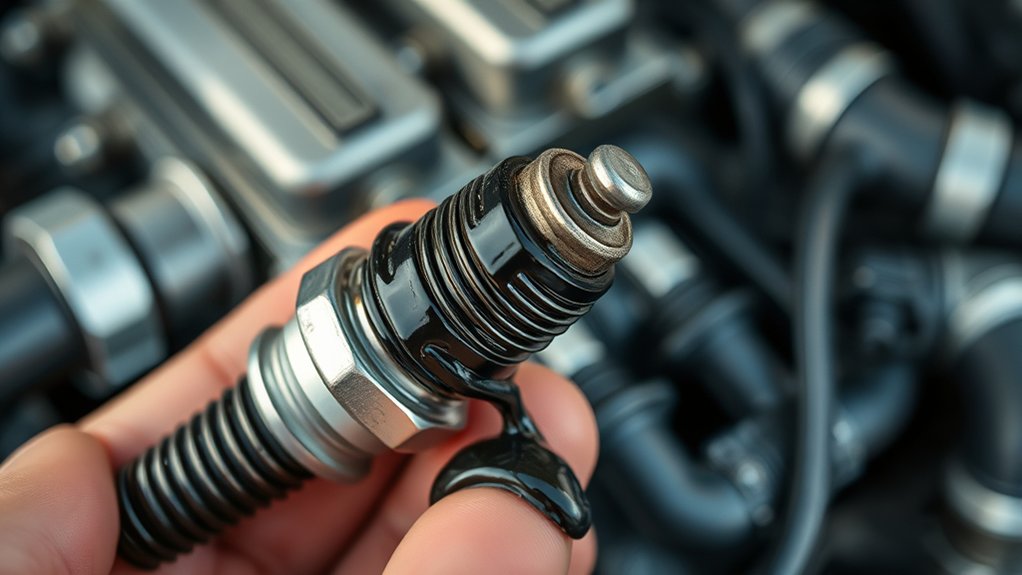
When you spot oil on your spark plugs, it usually means oil is leaking into the combustion chamber, which can disrupt ignition and engine performance. This leakage often results from engine wear, particularly in components like piston rings, valve seals, or cylinder walls, which normally prevent oil from entering the combustion area.
As these parts degrade over time, their ability to seal diminishes, allowing oil to seep past. Additionally, incorrect oil viscosity can exacerbate the issue. If the oil is too thin, it may flow more readily into areas where it shouldn’t be, increasing the likelihood of contamination on spark plugs.
Monitoring engine wear and using the proper oil viscosity are essential to preventing oil intrusion and maintaining spark plug integrity.
What Oil on Your Spark Plugs Means for Engine Performance
Although oil on your spark plugs might seem minor, it directly impairs engine performance by disrupting the combustion process. When oil coats the plugs, it prevents proper ignition, causing misfires and reduced power. Maintaining spark plug cleanliness is essential for peak engine health and efficient fuel combustion.
| Effect on Engine | Symptom | Impact on Performance |
|---|---|---|
| Misfiring | Rough idling | Decreased acceleration |
| Fouled plugs | Hard starts | Poor fuel economy |
| Incomplete burn | Increased emissions | Engine knocking |
Regular spark plug maintenance helps you avoid these issues, ensuring reliable ignition and maintaining engine health. Addressing oil contamination promptly preserves engine efficiency and extends component lifespan.
Engine Problems Caused by Oil on Spark Plugs
When oil coats your spark plugs, you’ll likely experience misfiring that reduces engine efficiency and performance. This contamination also increases emissions, contributing to pollution and potential regulatory issues.
Additionally, oil on spark plugs can cause your engine to overheat, risking serious mechanical damage.
Misfiring And Poor Performance
If oil contaminates your spark plugs, it disrupts the electrical spark necessary for effective combustion. This contamination impairs different spark plug types, especially those designed for high-performance ignition systems, leading to misfires and reduced engine efficiency.
When oil coats the electrodes, it inhibits the spark’s ability to jump the gap, causing incomplete combustion cycles. As a result, you’ll notice:
- Rough idling and engine hesitation
- Decreased acceleration and power output
- Increased fuel consumption due to inefficient burning
- Difficulty starting the engine, particularly in cold conditions
Understanding how oil affects the ignition systems and spark plug types helps you diagnose why your engine misfires and performs poorly. Addressing oil contamination promptly guarantees your engine maintains peak combustion and performance.
Increased Emissions And Pollution
Oil contamination on your spark plugs doesn’t just hinder engine performance; it also directly contributes to increased emissions and pollution. When oil fouls the spark plug, it disrupts proper combustion, causing incomplete fuel burning.
This inefficiency leads to elevated levels of hydrocarbons (HC), carbon monoxide (CO), and nitrogen oxides (NOx) in your exhaust gases. These pollutants directly violate emission regulations designed to limit environmental impact.
If you continue operating with oil-contaminated spark plugs, your vehicle will emit higher levels of harmful gases, accelerating air quality degradation and contributing to smog formation. Additionally, the catalytic converter may become overloaded or damaged, further compromising your vehicle’s ability to meet emission standards.
Addressing oil fouling promptly helps maintain compliance and reduces your car’s negative effect on the environment.
Engine Overheating Risks
Although spark plugs play a critical role in engine combustion, contamination by oil can impair their function and lead to engine overheating. When oil coats the spark plug, combustion efficiency drops, causing incomplete burns and excessive heat buildup.
This disrupts your engine cooling and thermal management systems, increasing overheating risk. You should be aware of the following consequences:
- Reduced spark intensity leads to misfires, elevating engine temperature.
- Oil deposits insulate the plug, impairing heat dissipation.
- Overheating stresses cooling components, risking failure.
- Prolonged thermal imbalance accelerates engine wear and potential damage.
Addressing oil contamination promptly helps maintain peak engine cooling and thermal management, preventing costly repairs and preserving engine longevity.
Diagnosing Oil on Spark Plugs: Signs and Tests
When diagnosing oil contamination on spark plugs, you’ll want to carefully inspect their appearance and performance indicators. Different spark plug types, such as copper, platinum, or iridium, may show oil deposits differently.
Look for wet, oily residue on the insulator tip or electrode, which signals oil intrusion. High oil viscosity can exacerbate buildup, leading to fouling that impairs ignition.
Perform a compression test to check for worn piston rings or valve seals causing oil leakage. You can also conduct a cylinder leak-down test to pinpoint the source.
Additionally, observe engine misfires or rough idling, as these symptoms often accompany oil-fouled plugs. By combining visual inspection with these diagnostic tests, you’ll accurately determine oil contamination’s extent and underlying causes.
When to Clean Spark Plugs and When to Replace Them
Since spark plugs play a critical role in engine performance, knowing whether to clean or replace them is essential for maintaining peak function. You should consider cleaning spark plugs if oil deposits are light and surface-level, using precise cleaning techniques like a wire brush or specialized spark plug cleaner.
However, if deposits are heavy, or if the plug shows wear such as electrode erosion or cracks, replacement is necessary. Follow manufacturer-recommended replacement intervals to avoid engine misfires and efficiency loss.
Key factors to guide your decision include:
Key factors to guide your decision include oil fouling, electrode condition, mileage, and engine performance symptoms.
- Degree of oil fouling and deposit hardness
- Electrode condition and gap measurements
- Vehicle mileage and adherence to replacement intervals
- Performance symptoms like rough idling or difficulty starting
Adhering to these criteria guarantees maximum engine reliability and longevity.
How to Fix Oil Leaks That Cause Oil on Spark Plugs
To fix oil leaks causing oil on your spark plugs, start by identifying common leak sources like valve cover gaskets and spark plug tube seals. You’ll need to replace worn gaskets and seals, ensuring proper torque and surface cleanliness during installation.
Following precise repair techniques will prevent further contamination and maintain engine performance.
Common Oil Leak Sources
Although oil on spark plugs can stem from various causes, pinpointing the most common leak sources is essential for effective repair. You need to inspect components where oil contamination often originates, considering factors like oil viscosity and increased oil consumption.
Common oil leak sources include:
- Worn valve cover gaskets or cylinder head gaskets allowing oil seepage.
- Damaged piston rings causing oil to enter combustion chambers.
- Faulty turbocharger seals leading to oil intrusion in the intake system.
- Malfunctioning crankcase ventilation or clogged oil filters disrupting proper oil flow.
Additionally, degraded engine seals can contribute to leaks, affecting overall engine performance. Understanding these sources helps you target the issue accurately before proceeding with repairs.
Repair Techniques and Tips
Identifying the source of oil contamination on spark plugs sets the foundation for targeted repairs. Begin by inspecting valve cover gaskets and seals for leaks, as these are common culprits. Replace any damaged gaskets promptly to prevent oil from seeping into the combustion chamber.
After addressing leaks, perform thorough spark plug cleaning using a specialized cleaner to remove residual oil and carbon deposits, ensuring peak ignition performance. Additionally, check piston rings and cylinder walls during engine maintenance, since worn components can allow oil blow-by, contaminating spark plugs.
Regularly scheduled engine maintenance, including oil changes and gasket inspections, helps prevent future leaks. By systematically diagnosing and repairing these issues, you restore engine efficiency and prevent misfires caused by oil-fouled spark plugs.
How to Prevent Oil Buildup on Spark Plugs
When you keep your engine properly maintained, you greatly reduce the risk of oil seeping onto your spark plugs. Effective oil leak prevention and regular spark plug maintenance are essential to avoid buildup that can impair engine performance.
To prevent oil contamination, focus on these key actions:
- Regularly inspect and replace valve cover gaskets to stop oil leaks.
- Perform routine spark plug checks and clean or replace plugs as needed.
- Maintain proper oil levels and change oil at manufacturer-recommended intervals.
- Confirm piston rings and cylinder walls are in good condition to prevent oil blow-by.
When to Get a Professional Check for Oil on Spark Plugs
If you notice persistent engine misfires, rough idling, or decreased fuel efficiency despite your maintenance efforts, it’s time to get a professional check for oil on your spark plugs. These symptoms often indicate oil contamination beyond routine spark plug maintenance and require a thorough professional inspection.
A technician can accurately diagnose whether oil leakage stems from worn valve seals, damaged piston rings, or gasket failures. They’ll also assess the spark plug condition, ignition system, and engine compression to pinpoint the root cause.
Prompt professional inspection prevents further engine damage and guarantees peak performance. Don’t delay if routine cleaning and replacement haven’t resolved the issue. Early expert intervention is essential to avoid costly repairs and maintain your vehicle’s reliability.
Frequently Asked Questions
Can Oil on Spark Plugs Affect Fuel Efficiency?
Yes, oil on spark plugs can reduce your fuel efficiency by causing incomplete combustion.
Increased oil consumption indicates engine wear, which disrupts performance and burns more fuel, so you should address this issue promptly to maintain peak efficiency.
Does Oil on Spark Plugs Cause Engine Misfires?
Yes, oil on spark plugs can cause engine misfires by disrupting combustion, which harms engine performance. You’ll need spark plug cleaning or replacement to restore proper ignition and maintain peak engine function.
How Often Should Spark Plugs Be Inspected for Oil?
You should perform spark plug maintenance every 30,000 miles, as 25% of engine failures stem from neglected oil leak detection.
Regular inspections help spot oil contamination early, preventing misfires and costly repairs. Stay proactive!
Are Certain Vehicles More Prone to Oil on Spark Plugs?
Yes, certain vehicles are more prone due to engine design, vehicle age, and maintenance practices. Poor oil quality, harsh driving conditions, and specific spark plug types also increase oil contamination risks on spark plugs in your engine.
Can Synthetic Oil Lead to More Spark Plug Oil Buildup?
Don’t jump the gun. Synthetic oil benefits often reduce oil consumption, but if your engine has worn seals, it might still lead to spark plug oil buildup. You’ll want to monitor oil levels and engine condition closely.
Conclusion
Oil on your spark plugs is like a warning light flashing on your dashboard—it signals underlying engine issues that need prompt attention. Ignoring this can lead to poor performance and costly damage.
By diagnosing early, cleaning or replacing plugs as needed, and addressing oil leaks, you keep your engine running smoothly. Stay proactive, and don’t hesitate to seek professional help when the problem persists.
Ensuring your vehicle’s reliability and longevity depends on understanding what oil on a spark plug means and taking the necessary steps to fix it promptly.