A spark plug is a crucial component that ignites the air-fuel mixture in your engine by creating an electric spark between its electrodes. This spark starts the combustion process that powers your vehicle.
Spark plugs are designed to withstand extreme heat and pressure while ensuring reliable ignition. Different types of spark plugs use materials like copper, iridium, or platinum to match various performance needs and engine conditions.
Choosing and maintaining the right spark plug optimizes engine efficiency, prevents potential issues, and extends the longevity of your vehicle.
Exploring how these factors impact your engine’s performance and care is essential for keeping your vehicle running smoothly.
Key Takeaways
- A spark plug ignites the air-fuel mixture in internal combustion engines via an electric spark between electrodes.
- It initiates combustion, powering the engine while withstanding extreme heat and pressure.
- Spark plugs have electrodes made from materials like copper, iridium, or platinum for durability and performance.
- Proper spark plug function is essential for engine efficiency, fuel economy, and reduced emissions.
- Regular maintenance and timely replacement prevent misfires and engine performance issues.
What Is a Spark Plug and What Does It Do?
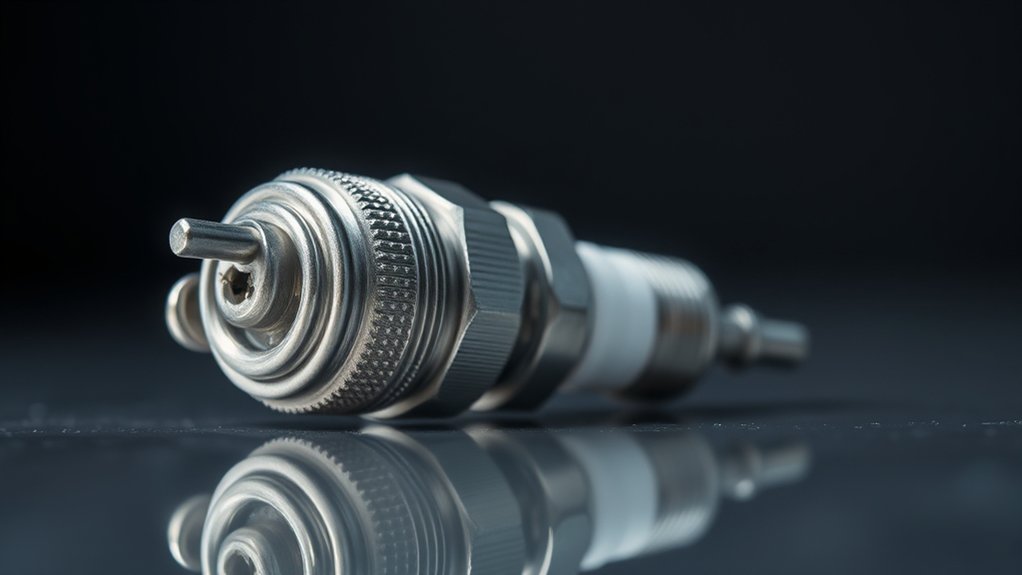
A spark plug is a crucial component in an internal combustion engine that ignites the air-fuel mixture. When you start your engine, the spark plug functions by producing an electric spark between its central and ground electrodes. This spark initiates combustion, powering the engine.
Understanding spark plug components helps you appreciate its role: the insulator isolates high voltage, the shell provides structural support, and the electrodes facilitate the spark. The spark plug must withstand extreme temperatures and pressures while maintaining electrical conductivity.
Its precise timing and reliable firing are essential for efficient engine performance, ideal fuel consumption, and emissions control. Without properly functioning spark plugs, your engine would misfire or fail to start, emphasizing the importance of this small yet crucial part.
The Different Spark Plug Types You Should Know
You’ll encounter spark plugs made from various materials like copper, platinum, and iridium, each affecting performance and longevity. Understanding heat range variations is essential for matching spark plugs to your engine’s operating conditions.
Additionally, specialty spark plugs are designed for specific applications, offering tailored ignition solutions.
Common Spark Plug Materials
Although spark plugs may look similar at a glance, their performance and durability depend heavily on the materials used in their construction. Key components include ceramic insulators, which provide electrical insulation and heat resistance, and electrode materials, which influence spark efficiency and longevity.
Choosing the right combination affects ignition quality and service life.
| Material Type | Application | Benefits |
|---|---|---|
| Alumina Ceramic | Insulator | High heat resistance, durability |
| Copper Electrode | General use | Excellent conductivity |
| Iridium Electrode | High-performance engines | Superior wear resistance |
| Platinum Electrode | Extended service intervals | Corrosion resistance |
Understanding these materials helps you select spark plugs tailored to your engine’s demands.
Heat Range Variations
When selecting spark plugs, understanding heat range variations is crucial because they directly affect engine performance and longevity. Heat range refers to a spark plug’s ability to dissipate heat from the combustion chamber.
A plug with a colder heat range dissipates heat quickly, preventing overheating in high-performance or high-RPM engines. Conversely, a hotter heat range retains more heat to guarantee proper temperature control in low-speed or cold-weather conditions, preventing fouling.
Choosing the correct heat range balances heat dissipation and temperature control, avoiding pre-ignition or carbon buildup. If the plug runs too hot, it risks causing engine knock; too cold, and deposits accumulate, reducing efficiency.
Always consult your engine’s specifications to match the spark plug’s heat range for peak combustion and durability.
Specialty Spark Plug Types
Spark plugs come in various specialty types designed to meet specific engine requirements and performance goals. You’ll find iridium spark plugs and platinum spark plugs offering superior durability and efficient ignition due to their advanced electrode materials.
Racing spark plugs are engineered for high-performance engines, providing maximum spark consistency under extreme conditions. Marine spark plugs, built to resist corrosion and moisture, are ideal for boat engines.
You should also consider cold spark plugs, which dissipate heat quickly to prevent pre-ignition, and hot spark plugs, which retain heat to reduce fouling in low-temperature engines. Additionally, engine specific spark plugs guarantee compatibility and peak functionality for particular models.
Selecting the right performance spark plugs tailored to your engine enhances efficiency, power output, and longevity.
How Spark Plugs Create the Spark to Power Your Engine
Because your engine relies on controlled combustion, the spark plug must generate a precise electrical spark at the right moment. When the ignition coil sends a high-voltage current to the spark plug, it causes spark generation across the gap between the center and ground electrodes.
This electrical discharge ignites the compressed air-fuel mixture inside the combustion chamber. The timing of this spark, known as ignition timing, is critical; it guarantees efficient combustion and maximum engine performance.
If the spark occurs too early or too late, it can lead to incomplete combustion or engine knocking. Spark plugs are engineered to withstand extreme temperatures and pressures, maintaining consistent spark generation throughout the engine’s operation.
This precise spark initiation enables your engine to convert fuel into mechanical power effectively.
How Spark Plugs Affect Your Car’s Performance
Your car’s performance hinges greatly on the condition and type of spark plugs installed. These components directly influence combustion efficiency, impacting power output and fuel economy. When you select the right spark plug, you optimize ignition timing, critical for precise performance tuning and engine responsiveness.
Here’s how spark plugs affect your car’s performance:
- Guarantee consistent spark delivery for smooth engine operation
- Influence ignition timing, altering combustion dynamics
- Affect fuel atomization and burn rate, improving efficiency
- Minimize misfires that degrade power and emissions
- Support higher compression ratios in performance engines
Signs Your Spark Plug Needs Replacing
You’ll notice engine misfires or rough idling when your spark plugs start failing. Poor fuel efficiency is another clear indicator that your spark plugs aren’t firing properly.
Recognizing these signs early helps maintain peak engine performance.
Engine Misfire Symptoms
How can you tell when a spark plug is failing? Engine misfire symptoms often reveal issues with your spark plug’s ability to maintain proper ignition timing, directly affecting engine performance.
When a spark plug malfunctions, the combustion process becomes irregular, causing noticeable signs such as:
- Rough idling or engine vibrations
- Hesitation or stalling during acceleration
- Loss of power or uneven engine response
- Increased exhaust emissions with a sulfur smell
- Illumination of the check engine light
These symptoms indicate that your spark plug isn’t delivering consistent sparks, disrupting ignition timing and combustion efficiency.
Addressing these signs promptly helps restore peak engine performance and prevents further damage. Monitoring these indicators lets you know when it’s time to replace your spark plugs for smooth, reliable operation.
Poor Fuel Efficiency
When spark plugs fail to ignite the air-fuel mixture efficiently, fuel consumption rises noticeably. You’ll observe that your vehicle requires more frequent refueling, indicating a drop in engine efficiency.
This inefficiency occurs because incomplete combustion forces the engine to burn extra fuel to maintain power output. Worn or fouled spark plugs create weak or inconsistent sparks, disrupting ideal ignition timing and combustion quality.
As a result, the engine struggles to convert fuel into mechanical energy effectively, directly impacting fuel economy. Monitoring poor fuel efficiency alongside other signs like rough idling can help you identify when your spark plugs need replacing.
Addressing this promptly restores proper combustion, enhances engine efficiency, and reduces unnecessary fuel consumption, ultimately saving you money and prolonging engine life.
Choosing the Right Spark Plug for Your Car
Selecting the right spark plug involves matching its specifications to your vehicle’s engine requirements, driving conditions, and manufacturer recommendations. You need to take into account factors like heat range, thread size, and electrode material to guarantee peak performance.
Choosing the right spark plug means matching its specs to your engine, driving conditions, and manufacturer guidelines.
Different spark plug brands offer various designs and technologies, so comparing them based on quality and compatibility is essential. Follow precise installation tips to avoid issues such as improper gap or torque, which can cause misfires or damage.
Key points to take into account:
- Confirm spark plug heat range matches your engine
- Check thread size and reach for proper fit
- Choose electrode material suited for durability (iridium, platinum)
- Research reputable spark plug brands for reliability
- Use correct torque and gap settings during installation
This approach guarantees efficient combustion and engine longevity.
Tips to Maintain Spark Plugs and Extend Engine Life
After choosing the right spark plug for your vehicle, maintaining it properly guarantees consistent engine performance and longevity. Start by scheduling regular spark plug inspections to detect wear, carbon buildup, or electrode erosion early.
During inspection, check the gap using a feeler gauge to verify it matches manufacturer specifications. If fouling or deposits appear, perform spark plug cleaning using a wire brush or specialized cleaner to restore peak spark gap and conductivity. Avoid harsh abrasives that may damage the electrode.
Additionally, monitor engine performance indicators like misfires or rough idling, which signal spark plug issues. Replacing plugs at recommended intervals prevents combustion inefficiency and engine strain. Following these maintenance tips minimizes ignition failure risk, helping you extend your engine’s life effectively.
Frequently Asked Questions
How Often Should Spark Plugs Be Checked or Replaced?
You should check your spark plug lifespan every 30,000 to 50,000 miles and replace them if you notice spark plug symptoms like misfires, poor fuel economy, or rough idling. This helps maintain peak engine performance.
Can Bad Spark Plugs Cause Poor Fuel Economy?
You might think one bad spark plug won’t affect fuel economy, but it can. Spark plug symptoms like misfires reduce efficiency, so following fuel economy tips means replacing worn plugs promptly to maintain peak performance.
Are Spark Plugs the Same for All Car Brands?
No, spark plug types vary across car brands to optimize ignition efficiency. You need to choose the correct type specified by your vehicle manufacturer to guarantee proper combustion, performance, and fuel economy, avoiding misfires or engine issues.
What Tools Are Needed to Replace Spark Plugs?
Like a surgeon’s scalpel, you’ll need a spark plug socket, ratchet, and extension to handle various spark plug types. Master installation techniques by using a torque wrench for precise tightening, ensuring ideal engine performance and longevity.
Can Spark Plugs Be Cleaned and Reused?
Yes, you can perform spark plug cleaning to extend their use, but it’s limited. Regularly evaluating spark plug lifespan helps decide when replacement’s better since cleaning won’t restore full efficiency or prevent misfires effectively.
Conclusion
Think of your spark plug as the tiny match that lights a powerful fire within your engine. Without that precise spark, your car’s heart won’t beat efficiently. By choosing the right spark plug and maintaining it well, you guarantee your engine runs smoothly, like a well-tuned orchestra.
Keep an eye on signs of wear, and replace plugs promptly to avoid performance dips. Your car relies on this small but essential component—don’t let its spark fade.
In conclusion, understanding what is a spark plug and taking care of it ensures your engine delivers optimal power and reliability.