A spark plug non fouler prevents electrode fouling by extending the gap or insulating it from combustion deposits, ensuring consistent spark generation and ignition timing.
This device helps reduce misfires, carbon buildup, and oil contamination while stabilizing electrical performance for better engine efficiency and longer spark plug life.
They’re essential if your engine struggles with fouling, especially under rich fuel conditions or heavy loads.
Understanding their types, installation, and maintenance will help you optimize engine reliability and power output.
Using a spark plug non fouler can significantly improve your engine’s overall performance and durability.
Key Takeaways
- A spark plug non fouler is a device designed to prevent spark plug fouling by extending the electrode gap or insulating it from deposits. It maintains a clean spark gap to ensure effective spark generation and consistent ignition timing.
- Non foulers help reduce carbon buildup, oil contamination, and other combustion deposits on spark plugs.
- They improve engine efficiency, power output, and reduce the frequency of spark plug replacements.
- Spark plug non foulers are especially useful in high-performance, vintage, or rich-fuel mixture engines prone to fouling.
What Is a Spark Plug Non Fouler and Why You Need One
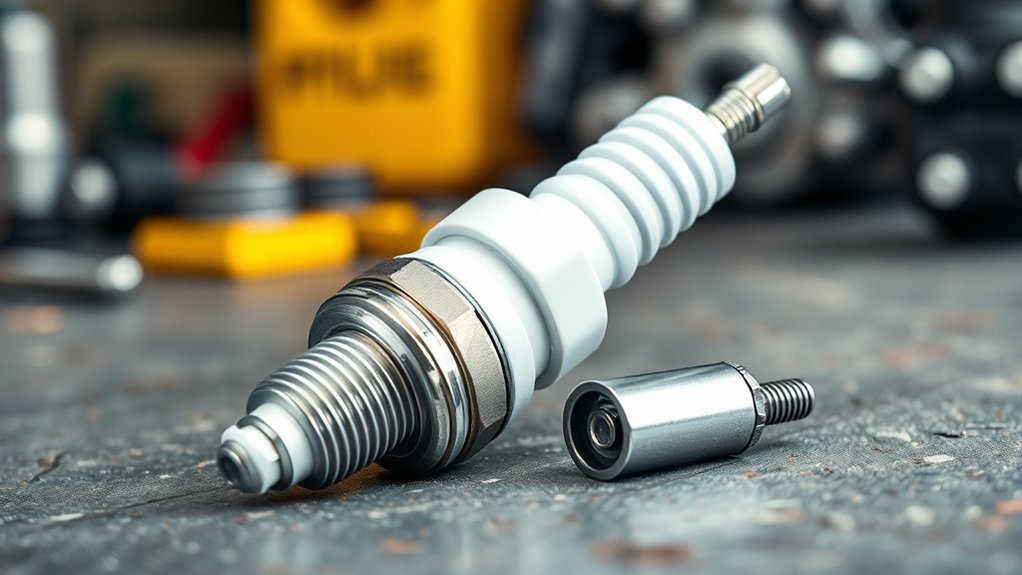
A spark plug non fouler is a specialized device designed to prevent fouling of spark plugs by extending the electrode gap or insulating the plug from combustion deposits. You’ll find it essential because the spark plug function relies on a clean gap to generate the spark that ignites the air-fuel mixture.
When fouling occurs, deposits accumulate, disrupting the spark and lowering engine efficiency. By maintaining a cleaner electrode environment, the non fouler guarantees consistent ignition timing and combustion quality. This directly impacts how efficiently your engine converts fuel into power.
Without a non fouler, fouled plugs can cause misfires and increased emissions, reducing overall performance. Using this device helps sustain peak spark plug operation, preserving engine efficiency over time.
Spark Plug Non Foulers and Engine Misfire Prevention
Maintaining a clean spark plug gap with a non fouler directly reduces the likelihood of engine misfires by ensuring reliable spark generation. When you install a non fouler, it acts as a barrier against carbon deposits and oil contamination that can inhibit the spark’s effectiveness.
This consistent sparking optimizes combustion, which is essential for sustaining efficient engine performance. By preventing fouling, you also extend the spark plug lifespan, reducing the frequency of replacements and maintenance.
In practical terms, a non fouler stabilizes the electrical environment around the electrode, minimizing voltage leakage and misfire triggers. Ultimately, incorporating a spark plug non fouler helps you maintain precise ignition timing and combustion stability, both critical for preventing misfires and preserving engine efficiency over time.
Common Spark Plug Non Fouling Problems Non Foulers Fix
Although spark plug non foulers are designed to prevent fouling, they can encounter issues that compromise their effectiveness. Common problems include improper fitment, material degradation, and contamination. These can negatively impact fuel efficiency and emission control. You’ll need to diagnose these problems promptly to maintain peak engine performance.
| Problem | Cause | Fix |
|---|---|---|
| Improper Fitment | Incorrect size or thread | Use manufacturer-specified non fouler |
| Material Degradation | Heat cycles, wear | Replace non fouler regularly |
| Contamination | Oil, carbon deposits | Clean spark plug and check seals |
Addressing these issues guarantees your non fouler supports fuel efficiency and emission control effectively.
When Should You Use a Spark Plug Non Fouler?
When do you need to use a spark plug non fouler? You should consider it whenever spark plug fouling consistently disrupts engine performance, particularly in high-performance or vintage engines prone to carbon buildup. Non fouler applications are essential in scenarios where fuel mixtures run rich, causing deposits that inhibit spark transmission.
Additionally, if you operate engines under variable loads or with aftermarket modifications that alter combustion conditions, non foulers help maintain ideal ignition. They act as insulators, preventing fouling by extending the spark plug’s ground electrode away from the combustion chamber.
This adjustment reduces misfires and prolongs service intervals. To conclude, use a spark plug non fouler when persistent fouling degrades ignition efficiency, ensuring reliable combustion and improved engine responsiveness in demanding operational environments.
Types of Spark Plug Non Foulers and Their Benefits
You’ll encounter several common types of spark plug non foulers, each designed with specific materials like ceramic or metal alloys. Understanding these material differences helps you choose the best option for your engine’s operating conditions.
Each type offers distinct performance benefits, from improved insulation to enhanced heat resistance.
Common Non Fouler Types
Spark plug non foulers come in several common types, each designed to address specific fouling issues in combustion engines. Flame tip non foulers extend the insulator nose, preventing carbon buildup by increasing the spark gap’s exposure to combustion gases.
Resistor-type non foulers reduce electromagnetic interference while maintaining non fouler compatibility with ignition systems. Another type includes ceramic sleeve non foulers, which provide thermal insulation to keep the spark plug tip hotter, minimizing fouling.
Each non fouler application targets particular fouling causes, such as oil deposits or carbon accumulation, guaranteeing peak engine performance. When selecting a non fouler, you must consider compatibility with your engine’s operating conditions and ignition system to guarantee effective fouling prevention without compromising spark efficiency or durability.
Material Differences Explained
Material composition greatly influences the effectiveness of non foulers in preventing spark plug fouling. Different material types offer varied thermal conductivity and durability, directly affecting their performance impact.
For example, copper non foulers dissipate heat quickly but may wear faster, while ceramic variants provide superior insulation and longevity. When selecting a non fouler, understanding these material distinctions helps optimize spark plug function under specific engine conditions.
| Material Type | Performance Impact |
|---|---|
| Copper | High heat dissipation, shorter lifespan |
| Ceramic | Excellent insulation, durable |
| Stainless Steel | Balanced heat control, corrosion-resistant |
Performance Benefits Overview
Understanding the distinct types of non foulers and their specific benefits can greatly enhance your engine’s reliability and efficiency. You’ll find that metallic non foulers, typically made from steel or copper, improve spark plug longevity by resisting deposits and heat-induced wear.
Ceramic non foulers offer superior insulation, which supports enhanced combustion by maintaining ideal spark temperature. Additionally, graphite-coated non foulers reduce electrode fouling, ensuring consistent ignition performance.
By selecting the appropriate type based on your engine’s operating conditions, you can minimize misfires and combustion inefficiencies. This targeted approach not only extends your spark plug’s service life but also maximizes fuel burn, reducing emissions and boosting power output.
In short, understanding and applying the right non foulers type directly correlates with improved engine performance and durability.
Installing Spark Plug Non Foulers Correctly
Begin by verifying the engine is cool and the ignition system is disconnected to prevent accidental firing. Proper installation of spark plug non-foulers is critical for effective spark plug maintenance and fouler troubleshooting. Follow these steps:
Clean the spark plug threads and apply anti-seize compound to guarantee proper torque and prevent galling. Position the non-fouler between the spark plug and the ignition wire boot, confirming a snug fit to avoid misfires.
Tighten the spark plug to the manufacturer’s specified torque using a calibrated torque wrench for consistent compression. Inspect the boot connection to validate electrical continuity and prevent fouling caused by poor contact.
Adhering to these technical steps guarantees reliable performance and minimizes fouler-related issues in your ignition system.
Tips for Maintaining Spark Plug Non Fouler Performance
You should establish a regular inspection schedule to monitor wear and guarantee ideal performance of your spark plug non fouler. Applying proper installation techniques prevents damage and maintains effective sealing.
Additionally, keep the non fouler clean and store it in a dry environment to avoid contamination and corrosion.
Regular Inspection Schedule
Establishing a consistent inspection schedule is essential for maintaining the ideal performance of a spark plug non fouler. Proper spark plug maintenance hinges on your ability to monitor wear and fouling indicators before they compromise engine efficiency. Set your inspection frequency based on manufacturer guidelines and operating conditions, typically every 10,000 to 15,000 miles.
During each inspection, focus on:
- Visual examination for carbon buildup or electrode erosion
- Measurement of non fouler sleeve integrity and fit
- Verification of proper gap settings despite non fouler presence
- Assessment of insulation resistance to prevent misfires
Adhering to this inspection schedule prevents premature failure, maintains combustion quality, and optimizes engine responsiveness. By systematically tracking these parameters, you guarantee the spark plug non fouler functions reliably under varying thermal and mechanical stresses.
Proper Installation Techniques
Maintaining the integrity of a spark plug non fouler starts with correct installation practices that confirm ideal fit and function. Begin by selecting the appropriate installation tools, such as a torque wrench calibrated for the specific torque specifications recommended by the manufacturer.
Applying the correct torque is critical to prevent overtightening, which can deform the non fouler, or undertightening, which may cause poor sealing and misfires. Before installation, verify that the non fouler’s dimensions match the spark plug and cylinder head.
During assembly, ascertain the non fouler seats evenly without cross-threading. Using precise torque specifications guarantees consistent compression and heat dissipation, preserving performance. Following these technical steps minimizes fouling risks and extends the operational lifespan of the spark plug non fouler.
Cleanliness and Storage Tips
When handling spark plug non foulers, keeping them free from contaminants is essential to sustaining their performance and longevity. You should prioritize clean storage environments to prevent dust, oil, or moisture buildup, which can degrade the non fouler’s effectiveness.
Implement organization tips such as compartmentalizing components to avoid physical damage and cross-contamination. Consider these best practices:
- Store non foulers in sealed, labeled containers to maintain cleanliness
- Use anti-static foam inserts to minimize movement and abrasion
- Maintain a climate-controlled area to reduce humidity exposure
- Regularly inspect stored non foulers for signs of corrosion or dirt
Frequently Asked Questions
Can Spark Plug Non Foulers Affect Fuel Efficiency?
Yes, incorrect fouler installation can disrupt spark plug function, causing incomplete combustion and reducing fuel efficiency.
You should guarantee proper installation to maintain peak spark performance and avoid negatively impacting your engine’s fuel consumption.
Are Spark Plug Non Foulers Compatible With All Engine Types?
You can’t paint with a broad brush. Spark plug non foulers aren’t universally compatible. Different spark plug types and engine modifications affect fit and function, so you must analyze your engine’s specs before choosing these tools for peak performance.
Do Non Foulers Require Special Cleaning Methods?
Non foulers don’t require special cleaning techniques beyond standard spark plug maintenance. You should use precise cleaning methods like gentle brushing and solvent soaking, following maintenance tips to guarantee peak performance without damaging the non fouler coating.
How Do Non Foulers Impact Engine Emissions?
You’ll find that spark plug non foulers reduce carbon buildup, helping maintain peak engine performance and lowering unburned fuel emissions.
This improves combustion efficiency, directly impacting engine emissions by minimizing pollutants and enhancing overall exhaust quality.
Can Non Foulers Be Reused After Removal?
You can reuse non foulers after removal if they’re undamaged and clean. For ideal performance benefits, follow installation tips carefully, ensuring proper fit and insulation to maintain engine efficiency and prevent misfires or fouling issues.
Conclusion
Using a spark plug non fouler can reduce engine misfires by up to 30%, enhancing overall performance and efficiency. You’ll prevent fouling caused by oil or carbon buildup, ensuring consistent ignition and smoother engine operation.
By understanding when and how to install non foulers correctly, you’ll extend spark plug life and maintain peak combustion. Regular maintenance keeps your engine running precisely, avoiding costly repairs and improving fuel economy over time.
Incorporating a spark plug non fouler into your engine setup is a smart way to enhance reliability and performance while minimizing fouling issues.