A spark plug socket is a specialized hand tool designed specifically for working with spark plugs. It features a deep-well design along with a rubber insert or magnetic core to securely grip spark plugs during removal or installation. This ensures that the spark plug is held firmly without slipping.
The socket matches the hex sizes of spark plugs, allowing for precise torque application. This helps avoid thread damage or over-tightening, which can be harmful to the spark plug and engine components. Its design is especially useful for tight engine bays, where access is limited.
Using the right spark plug socket prevents cross-threading and protects against heat damage. Employing the correct tool not only enhances the lifespan of your spark plugs but also improves overall engine efficiency.
Discover the different types of spark plug sockets and selection tips to optimize your spark plug maintenance.
Key Takeaways
- A spark plug socket is a specialized tool designed for installing and removing spark plugs safely and efficiently.
- It has a deep-well design with rubber inserts or magnets to hold the spark plug securely during use.
- The socket’s hexagonal shape matches spark plug sizes, allowing proper torque application without damaging threads.
- Spark plug sockets are essential for working in tight engine spaces where standard sockets may not fit.
- They come in various types, including standard, deep well, and magnetic, to suit different engine configurations.
What Is a Spark Plug Socket? Key Features Explained
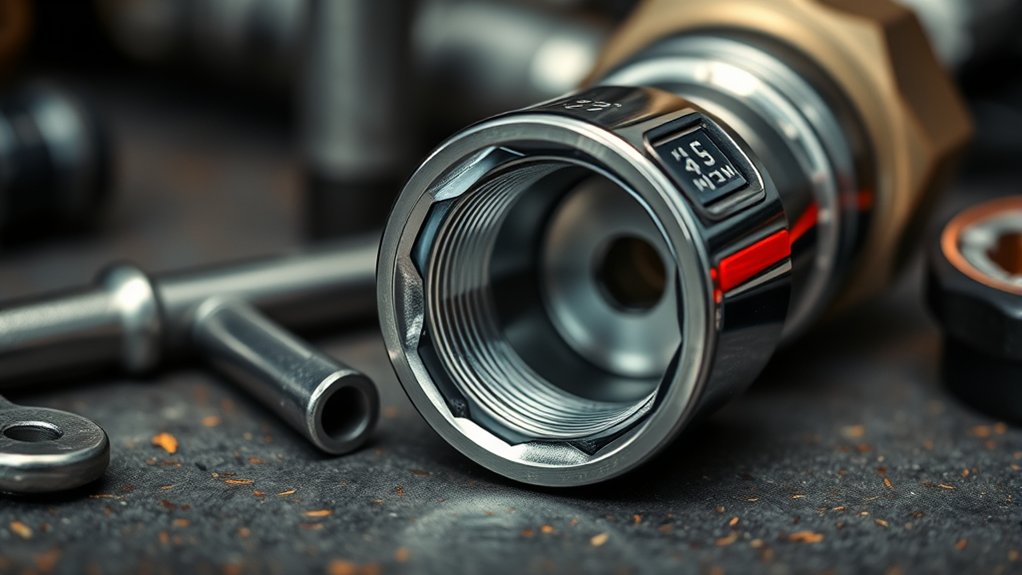
A spark plug socket is a specialized hand tool designed explicitly for installing and removing spark plugs in internal combustion engines. You’ll find it features a deep-well design with a rubber insert or magnetic core that secures the spark plug, preventing damage during extraction or installation.
This socket’s hexagonal shape precisely matches spark plug hex sizes, guaranteeing ideal torque application essential for spark plug maintenance. When you handle socket care, focus on keeping the rubber insert intact and inspect for wear or contamination that can compromise grip.
Additionally, verify the socket’s chrome-vanadium steel construction remains corrosion-free to maintain durability and torque accuracy. Using the correct spark plug socket streamlines spark plug maintenance, minimizes cross-threading risk, and prolongs tool lifespan through proper socket care.
When to Use a Spark Plug Socket and Why It Matters
Knowing when to use a spark plug socket is essential for ensuring proper torque application and avoiding damage to the spark plug or cylinder head threads. During spark plug maintenance, using the correct socket prevents over-tightening or stripping, which can compromise sealing integrity and engine performance.
You should use a spark plug socket whenever you remove or install spark plugs, especially in confined engine bays where standard sockets lack the necessary depth or rubber inserts to grip ceramic insulators securely. This specialized tool facilitates precise torque application, critical for maintaining ideal combustion chamber sealing and preventing misfires.
Neglecting to use a spark plug socket increases the risk of cross-threading and heat damage, both detrimental to engine reliability and efficiency. Proper tool usage directly impacts spark plug longevity and consistent engine output.
Types of Spark Plug Sockets You Should Know
You’ll encounter three primary spark plug socket types: standard, deep well, and magnetic. Each offers distinct advantages for accessing plugs in various engine configurations and ensuring secure engagement.
Understanding their specific applications helps you select the right tool for torque accuracy and plug protection.
Standard Spark Plug Sockets
Standard spark plug sockets come in a variety of sizes and configurations designed to accommodate specific spark plug dimensions and engine layouts. You’ll find these sockets typically feature a hexagonal outer profile with an internal rubber insert or magnet to securely grip different spark plug types, preventing electrode damage during removal or installation.
Proper socket maintenance, including cleaning and inspection for wear, guarantees ideal torque application and avoids rounded edges. Below is a summary of common standard spark plug socket specifications:
| Socket Size (mm) | Recommended Spark Plug Types |
|---|---|
| 16 | Small engines, lawnmowers |
| 21 | Standard automotive spark plugs |
| 18 | Motorcycle and ATV spark plugs |
| 5/8 inch | Older American car spark plugs |
Selecting the correct socket mitigates cross-threading and preserves spark plug integrity.
Deep Well Spark Sockets
While standard spark plug sockets accommodate a wide range of plugs, deep well spark sockets provide extended reach for spark plugs recessed within cylinder heads or surrounded by obstructions. These sockets feature an elongated tubular design, allowing you to access plugs positioned deeper within the engine block without interference from nearby components.
Deep well spark sockets typically measure 3 to 4 inches in length, considerably longer than standard sockets, ensuring you can engage the plug securely. Their interiors often incorporate a rubber or foam insert to grip the spark plug’s ceramic insulator firmly, preventing damage during removal or installation.
When selecting deep well spark sockets, consider drive size compatibility, commonly 3/8-inch or 1/2-inch, and hex size matching the plug’s dimensions to guarantee precise torque application and avoid stripping.
Magnetic Spark Plug Sockets
Magnetic spark plug sockets utilize embedded neodymium or ceramic magnets to securely hold spark plugs during removal and installation, minimizing the risk of dropping or cross-threading. These sockets leverage magnetic retention to stabilize the spark plug, enhancing alignment accuracy and preventing costly thread damage.
When selecting magnetic sockets, verify compatibility with standard socket sizes, typically 5/8-inch or 13/16-inch, to match the specific spark plug dimensions. The magnetic field strength must balance sufficient retention force without impeding torque application or causing interference with ignition components.
Additionally, magnetic sockets often incorporate rubber inserts or sleeves to cushion the spark plug’s porcelain insulator, further mitigating the risk of breakage. By using magnetic spark plug sockets, you improve operational efficiency and safety, especially in tight engine bays where manual handling is challenged, guaranteeing precise spark plug engagement every time.
How to Choose the Right Spark Plug Socket for Your Car
You’ll need to verify socket size compatibility with your vehicle’s spark plug dimensions to guarantee a secure fit. Prioritize material durability, such as chrome vanadium or impact-grade steel, since they resist wear and torque stress during installation.
Also, consider design features like rubber inserts or knurled exteriors for enhanced grip and plug protection.
Socket Size Compatibility
Selecting the correct spark plug socket size hinges on matching the socket’s internal diameter to your vehicle’s specific spark plug hex size, typically measured in millimeters. To guarantee precise engagement, consult compatibility charts that correlate common spark plug sizes, such as 16mm, 18mm, or 21mm, to their corresponding socket dimensions.
Using an undersized or oversized socket risks rounding the hex or insufficient torque application. When selecting, verify both the internal diameter and socket depth to accommodate spark plug insulator lengths.
Additionally, check if the socket includes a rubber insert or magnetic feature for secure plug retention during removal or installation. Rely on manufacturer-specific compatibility charts to confirm exact socket dimension requirements, ensuring ideal fitment and preventing damage to spark plug components or cylinder head threads.
Material Durability Options
Durability plays a critical role when choosing a spark plug socket, as the material composition directly affects torque transmission, wear resistance, and overall tool longevity. You want a socket forged from high-grade chrome vanadium steel or S2 tool steel, known for exceptional material strength and fatigue resistance.
These alloys endure repetitive high-torque applications without deformation. Additionally, corrosion resistance is essential to prevent rusting from exposure to engine fluids and moisture, which can compromise socket integrity and fit. Look for sockets featuring black oxide or nickel-chrome plating, which enhance corrosion protection and surface hardness.
Avoid lower-grade steel or uncoated sockets, as they tend to gall and corrode quickly, reducing lifespan. Prioritizing these material durability options guarantees consistent performance and safeguards your investment in automotive maintenance tools.
Design Features Benefits
Design intricacies such as socket depth, internal rubber inserts, and drive size critically influence the efficiency and safety of spark plug removal and installation. When selecting your socket, prioritize design benefits that align with your engine’s spark plug specifications.
Deep sockets accommodate longer plugs, while internal rubber inserts prevent electrode damage by securely gripping the plug during extraction. Drive size compatibility guarantees torque transmission without rounding fasteners, enhancing performance and tool longevity.
| Socket Feature | Design Benefit |
|---|---|
| Deep Socket Depth | Accesses recessed plugs efficiently |
| Internal Rubber Insert | Protects electrodes, reduces slippage |
| Drive Size (3/8” or 1/2”) | Provides ideal torque transfer |
Choosing sockets with these precise features streamlines maintenance and safeguards components, maximizing procedural safety and mechanical integrity.
Step-by-Step Guide to Using a Spark Plug Socket
To efficiently remove or install spark plugs, you’ll need a spark plug socket specifically designed to accommodate the plug’s hex size and insulator length. Begin by selecting the correct socket dimension, ensuring a snug fit to prevent rounding off the plug’s hex. Attach the socket to a ratchet or extension bar for adequate leverage.
Before removal, verify engine cool-down to avoid thermal damage. Insert the socket over the spark plug, applying steady torque counterclockwise to loosen. During spark plug maintenance, inspect the plug and socket for wear or debris.
For installation, reverse the process, threading by hand initially to prevent cross-threading, then torque to manufacturer specifications. After use, clean and store the socket properly in dedicated socket storage to maintain tool integrity and readiness for future maintenance cycles.
How Spark Plug Sockets Protect Your Spark Plugs
Although spark plugs are engineered to withstand high temperatures and pressures, using a dedicated spark plug socket minimizes mechanical stress and prevents damage to the porcelain insulator and hex nut during removal or installation. The socket’s internal rubber or foam insert provides shock absorption and grip, ensuring spark plug protection by preventing slippage and chipping.
Its precise fit applies torque evenly across the hexagonal surface, reducing the risk of rounding off corners or cracking the insulator. By maintaining your socket—cleaning debris and inspecting the insert’s integrity—you preserve ideal grip and torque transmission, which are critical for spark plug protection.
Proper socket maintenance also prevents contamination that can compromise fitment and torque accuracy, ensuring consistent, safe handling that extends the lifespan of both your spark plugs and tools.
Common Mistakes to Avoid When Using Spark Plug Sockets
When you overlook proper alignment or apply excessive torque during spark plug socket use, you risk damaging the spark plug’s hexagonal profile or fracturing the porcelain insulator. Always guarantee the socket seats flush to the spark plug’s hex to prevent rounding off edges, compromising spark plug maintenance.
Avoid using standard sockets lacking the integrated rubber insert designed to grip and protect the porcelain tip. Misusing impact tools with spark plug sockets can cause catastrophic failure; stick to manual ratchets with calibrated torque settings.
Additionally, improper socket storage leads to contamination and corrosion on the socket’s interior surface, degrading fit precision. Store sockets in clean, dry, organized racks to maintain dimensional integrity and guarantee peak performance during spark plug maintenance, extending both tool and spark plug service life.
Frequently Asked Questions
Can a Spark Plug Socket Be Used on Other Engine Components?
You can’t rely on a spark plug socket for other engine components due to its specialized design. Its socket versatility is limited to spark plug applications, ensuring precise torque and grip without damaging fragile porcelain insulators.
How Do I Clean and Maintain a Spark Plug Socket?
Like tuning an engine’s heartbeat, you clean your spark plug socket by removing debris with a wire brush. Apply dielectric grease for spark plug maintenance, and perform socket care through regular inspections to prevent corrosion and guarantee precision fitment.
Are Spark Plug Sockets Compatible With All Ratchet Sizes?
You’ll find spark plug sockets come in specific drives, typically 3/8” or 1/2”, so ratchet compatibility depends on matching these. Verify your spark plug sizes and choose a socket with the correct drive for proper torque application.
What Materials Are Spark Plug Sockets Typically Made From?
You’ll find spark plug socket types mainly crafted from chrome vanadium or chrome molybdenum steel for durability, precisely matching spark plug socket sizes to guarantee torque accuracy and corrosion resistance during high-torque ignition system maintenance.
Can I Use a Spark Plug Socket for DIY Car Repairs Safely?
You can safely use a spark plug socket for DIY car repairs if you follow safety precautions, like ensuring proper torque application and using insulated gloves. Always integrate appropriate DIY tools to avoid damage or injury during installation or removal.
Conclusion
When it comes to spark plug maintenance, remember: “Measure twice, cut once.” Using the correct spark plug socket guarantees precise torque application and prevents electrode damage. Don’t risk stripping threads or misaligning plugs by using the wrong tool.
By selecting the right socket size and design—whether six-point or swivel—you’ll maintain peak ignition performance and extend component lifespan. Follow proper technique to avoid common pitfalls and keep your engine firing flawlessly every time.
In conclusion, choosing the appropriate spark plug socket is essential for effective maintenance and ensuring your engine runs smoothly.