You might think ignoring the B1 maintenance code on your Honda will cause instant engine failure, but its true importance is more nuanced.
The B1 maintenance Honda code signals a combination of essential services—like an oil and filter change, tire rotation, and brake inspection—that protect your vehicle’s performance and safety.
Understanding what this code entails and why it appears can help you avoid costly repairs and keep your Honda running efficiently for miles to come.
Regularly addressing the B1 maintenance Honda requirements ensures your car remains reliable and safe on the road.
Key Takeaways
- B1 Maintenance in Honda includes an oil and filter change plus tire rotation and brake system inspection.
- It supports engine performance, fuel efficiency, and driving safety by timely replacing oil and inspecting brakes.
- The Honda Maintenance Minder triggers B1 roughly every 7,500 miles or 12 months based on driving conditions.
- B1 service also checks air filters, exhaust, and undercarriage for potential issues during routine upkeep.
- Professional B1 service ensures proper tool use, warranty protection, and comprehensive system inspections.
What the B1 Maintenance Code Means

What exactly does the B1 maintenance code mean on your Honda? The B1 code signals that it’s time for an oil and filter change (B) and a tire rotation plus brake inspection (1).
This maintenance ensures your engine maintains optimal torque output by using fresh oil and a clean filter, which support efficient combustion and reliable fuel delivery. Ignoring this code can reduce engine performance and increase wear.
Tire rotation balances tread wear, preserving traction and handling, while brake inspection confirms safety and responsiveness.
Addressing the B1 code promptly helps maintain your Honda’s mechanical integrity, fuel efficiency, and driving stability. By following these specific tasks, you’re proactively supporting your vehicle’s performance and longevity with precision and care.
Why Honda Has a Maintenance Minder
Honda designed the Maintenance Minder system to provide you with timely, accurate alerts based on your vehicle’s operating conditions. This system helps you address necessary services before they escalate into costly repairs or performance issues.
Purpose Of Maintenance Minder
Why does your vehicle need a Maintenance Minder system? It continuously monitors your car’s condition using real-time engine diagnostics and other sensor inputs to determine when maintenance is necessary. This system helps you avoid guesswork and guarantees timely care, optimizing performance and longevity.
The Maintenance Minder system tracks key service items such as:
- Engine oil life and quality through diagnostics
- Scheduled tire rotation intervals
- Brake system inspections based on wear data
- Transmission fluid condition analysis
- Air filter replacement timing
Benefits Of Timely Alerts
How can timely alerts improve your vehicle’s maintenance routine? Honda’s Maintenance Minder system, including the b1 maintenance code, provides precise, real-time notifications tailored to your driving conditions. These timely alerts help you address oil changes and filter replacements before wear escalates, preventing engine damage and costly repairs.
By monitoring engine operating time, temperature, and driving habits, the system calculates optimal service intervals, ensuring maintenance occurs neither too early nor too late. This precision enhances engine efficiency, prolongs component lifespan, and maintains vehicle safety.
When you respond promptly to b1 maintenance alerts, you optimize performance and reduce downtime. Ultimately, Honda’s timely alerts streamline your maintenance schedule, saving you time and money while supporting your vehicle’s reliability and longevity.
What Services the B1 Maintenance Includes
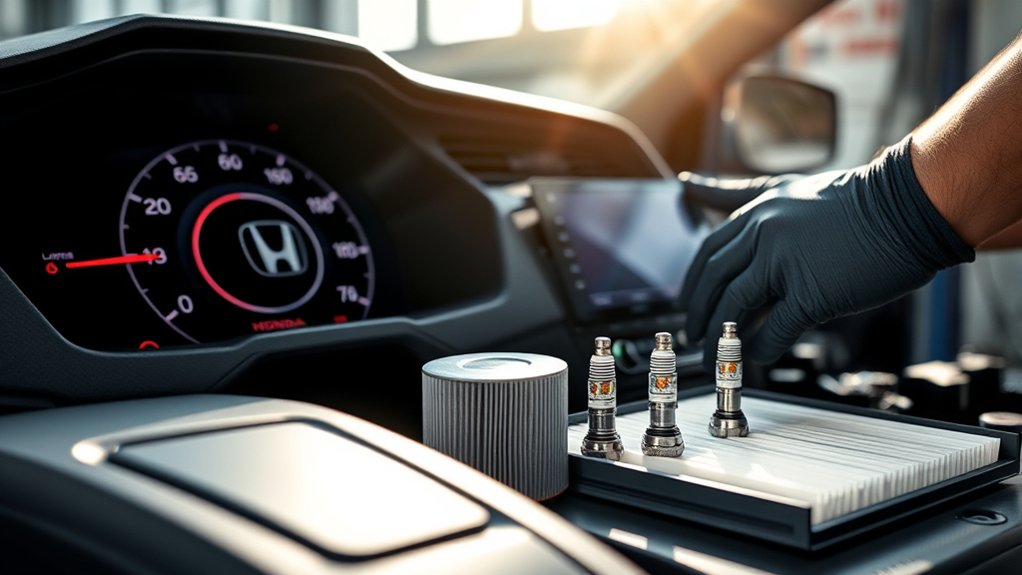
What exactly does the B1 maintenance service include? When your Honda’s maintenance minder signals a B1 code, it indicates a specific set of required services aimed at preserving optimal vehicle performance and safety. The B1 maintenance involves a combination of fluid replacements and system inspections tailored to your vehicle’s needs.
Here’s what the B1 maintenance covers:
- Engine oil and oil filter replacement
- Tire rotation to ensure even wear
- Brake system inspection for pad wear and fluid levels
- Checking and replacing air filter if necessary
- Inspecting the exhaust system and undercarriage for leaks or damage
How Often Does the B1 Maintenance Code Appear?
When does the B1 maintenance code typically appear on your Honda’s dashboard? Generally, this code shows up every 3,750 miles or roughly every six months, whichever comes first. It’s a reminder to perform essential maintenance tasks, including oil and filter changes.
Understanding this interval is key for keeping your vehicle in optimal condition.
| Mileage Interval | Time Interval | Common Services |
|---|---|---|
| 3,750 miles | 6 months | Oil Change, Tire Rotation |
| 7,500 miles | 12 months | Brake Inspection, Fluid Check |
| 11,250 miles | 18 months | Engine Air Filter Replacement |
| 15,000 miles | 24 months | Spark Plug Inspection |
This code trivia helps you anticipate maintenance needs, avoiding surprises. No need for maintenance humor. Just stay on schedule for peak performance.
What Happens If You Ignore the B1 Maintenance Warning?

Ignoring the B1 maintenance warning can lead to accelerated engine wear and decreased fuel efficiency. Skipping essential maintenance scheduling disrupts the timely replacement of engine oil and filter, causing contaminants to degrade performance.
Your vehicle’s battery check might also be overlooked, increasing the risk of unexpected failure. Neglecting the B1 warning compromises overall vehicle reliability and safety.
- Increased engine friction due to old oil
- Reduced fuel economy from inefficient combustion
- Premature battery deterioration without proper checks
- Potential damage to catalytic converter from engine sludge
- Voided warranty coverage for missed scheduled services
How Do You Reset the B1 Maintenance Light?
Failing to address the B1 maintenance warning can cause various mechanical issues, so it’s important to know how to reset the maintenance light once the necessary service is complete.
To reset the B1 maintenance light on your Honda, start by turning the ignition to the ON position without starting the engine. Press and hold the trip meter reset button until the indicator starts blinking. Then, release the button and press it again for about 10 seconds until the light resets.
This process recalibrates the system to monitor engine torque and optimize fuel efficiency. Resetting the light ensures the onboard computer accurately tracks maintenance intervals, maintaining engine performance and preventing unnecessary warnings.
Following this procedure after servicing helps preserve your vehicle’s operational integrity and prevents premature alerts.
Can You Perform B1 Maintenance Yourself or Should You See a Mechanic?
You need to evaluate your mechanical skills and confirm you have the correct tools, like an oil filter wrench and torque wrench, before attempting B1 maintenance yourself. The procedure requires precise oil changes, filter replacements, and system resets to avoid potential engine damage.
If you lack experience or equipment, a professional mechanic ensures thorough service with diagnostic accuracy and warranty protection.
Assessing Your Mechanical Skills
How confident are you in handling routine vehicle maintenance tasks with accuracy and safety? Evaluating your mechanical skills is essential before deciding to perform B1 maintenance yourself.
Avoid getting sidetracked by unrelated topics or outdated discussions that don’t reflect the latest Honda specifications. Consider these factors to evaluate your readiness:
- Experience with oil and filter changes
- Ability to diagnose warning indicators precisely
- Familiarity with Honda’s B1 maintenance checklist
- Skill in safely handling automotive fluids and components
- Understanding of torque specifications and proper tool use
If you hesitate on any of these, consulting a professional mechanic ensures the job meets Honda’s standards and maintains your vehicle’s performance and warranty.
Required Tools And Equipment
Evaluating your mechanical skills lays the groundwork for deciding whether to tackle B1 maintenance yourself or hire a professional. To perform B1 maintenance, you’ll need specific tools: a socket wrench set for removing the drain plug during the engine oil change, an oil catch pan to collect used oil, and a funnel to refill with fresh engine oil.
For tire rotation, you’ll require a reliable jack and jack stands to safely lift the vehicle, along with a torque wrench to tighten lug nuts to manufacturer specifications. Additionally, a vehicle owner’s manual is essential for referencing torque values and maintenance intervals.
Without these tools and equipment, attempting B1 maintenance can lead to incomplete work or safety hazards, so ensure you’re fully prepared before starting.
Benefits Of Professional Service
Why consider professional service for your Honda’s B1 maintenance? Performing B1 maintenance yourself involves precise steps that, if mishandled, can impact vehicle performance. Professionals have specialized tools and training, ensuring accuracy and compliance with Honda’s standards. This avoids off topic discussion about improper procedures and two word ideas like “guess work” that compromise results.
Here are key benefits of professional service:
- Accurate diagnostics with OEM-grade equipment
- Proper oil and filter replacement using manufacturer specs
- Comprehensive inspection of related systems (brakes, fluids)
- Warranty protection and service record documentation
- Efficient handling of software resets and maintenance reminders
Choosing a mechanic reduces risks, saves time, and guarantees your Honda performs optimally after B1 maintenance.
How Much Does B1 Maintenance Cost at a Dealer?
What factors influence the cost of B1 maintenance at a Honda dealer? The maintenance schedule, dealer pricing policies, and parts or labor rates all affect the final cost. Dealers often follow strict maintenance schedules dictated by Honda, ensuring all necessary services, like oil changes and inspections, are performed. Pricing varies based on location, dealer reputation, and included services.
| Service Item | Estimated Cost Range | Notes |
|---|---|---|
| Oil Change | $40 – $70 | Synthetic oil usually preferred |
| Cabin Air Filter | $20 – $50 | Replaced per schedule |
| Multi-Point Inspection | $0 – $40 | Often complimentary |
| Labor Charges | $70 – $120 | Varies by dealer |
| Total Estimated Cost | $130 – $280 | Dependent on dealer pricing |
Understanding these factors helps you anticipate expenses accurately.
Differences Between B1 and Other Honda Maintenance Codes Explained
How do B1 maintenance codes differ from other Honda service codes? The B1 maintenance specifically signals an oil change combined with a multi-point inspection and brake fluid replacement. Unlike other Honda codes, B1 targets essential preventive care but excludes services like transmission or coolant replacement.
Here’s how B1 maintenance stands apart:
- B1 includes oil and filter change plus brake fluid replacement.
- Other codes like A focus mainly on oil changes without brake service.
- Honda codes C, D, etc., involve more extensive checks or part replacements.
- B1 is triggered approximately every 7,500 miles or 12 months.
- It balances routine upkeep with critical brake system maintenance.
Understanding these distinctions helps you prioritize necessary services without confusion over Honda codes.
Tips to Keep Your Honda Running Smoothly Between Services
When should you perform routine checks to guarantee your Honda operates at its best between scheduled services? Ideally, you should inspect critical components every 1,000 miles or monthly.
Regularly monitor tire pressure and tread depth, as underinflated tires reduce fuel efficiency and compromise handling. Check fluid levels, including engine oil, coolant, brake, and transmission fluids, to prevent mechanical wear.
Keep the Honda interior clean to avoid debris obstructing ventilation or electronic controls, which can affect climate control efficiency. Replace cabin air filters as recommended to maintain air quality and HVAC performance.
Additionally, listen for unusual engine noises or vibrations and address them promptly. By systematically performing these checks, you uphold your Honda’s performance, extend component lifespan, and sustain optimal fuel efficiency between scheduled B1 maintenance services.
Frequently Asked Questions
Is B1 Maintenance Covered Under Honda’s Warranty?
Yes, your b1 maintenance coverage is included under Honda’s warranty applicability. This ensures essential services like oil changes and inspections are covered during the warranty period, keeping your vehicle’s performance optimal without extra cost to you.
Can B1 Maintenance Be Done at Non-Honda Service Centers?
Yes, you can perform B1 maintenance at non-Honda centers, but ensure they follow Honda’s specific protocols and use genuine parts. Otherwise, improper service might affect your vehicle’s performance or warranty coverage.
Does B1 Maintenance Affect My Vehicle’s Resale Value?
B1 maintenance impacts your vehicle’s resale value positively by ensuring timely oil changes, filter replacements, and inspections.
Keeping detailed service records proves proper care, enhancing buyer confidence and supporting a higher resale price.
Are There Any Special Tools Needed for B1 Maintenance?
You don’t need special tools for B1 maintenance, but precise diagnostics require an OBD-II scanner.
Following Honda’s recommended maintenance intervals ensures accurate service, preventing premature wear and maintaining optimal engine performance.
How Does Weather Impact the Frequency of B1 Maintenance?
You’ll find weather impact directly affects maintenance frequency since extreme conditions like cold, heat, or humidity accelerate wear.
Harsh weather demands more frequent B1 maintenance to ensure optimal engine performance and prevent premature component failure.
Conclusion
Ignoring your B1 maintenance is like letting rust quietly eat away at your engine’s core—costly and avoidable. By promptly addressing the oil change, tire rotation, and brake inspection, you protect your Honda’s performance, fuel efficiency, and safety.
Whether you choose a mechanic or DIY, staying on schedule guarantees reliability and prevents major repairs. Treat B1 maintenance as your vehicle’s essential checkpoint, safeguarding its longevity and your peace of mind.
In conclusion, understanding and keeping up with B1 maintenance Honda is crucial to ensure your car runs smoothly and remains dependable for years to come.