Engine oil is the essential lubricant your engine needs to reduce friction and wear between moving parts.
Engine oil combines base oils with additives that protect against corrosion, oxidation, and sludge buildup.
The oil’s viscosity guarantees it flows properly across temperature changes, maintaining efficient lubrication and cooling.
Using the correct type and changing it regularly keeps your engine running smoothly and prevents costly damage.
Understanding these basics helps you keep your engine in peak condition.
Key Takeaways
- Engine oil is a lubricant that reduces friction and wear between engine components.
- It consists of base oils combined with additives to enhance performance and protection.
- Oil viscosity determines how well it flows at various temperatures, ensuring proper lubrication.
- Engine oil prevents corrosion, oxidation, and sludge buildup within the engine.
- Regular oil changes maintain oil effectiveness and prolong engine lifespan.
What Exactly Is Engine Oil And Why It Matters
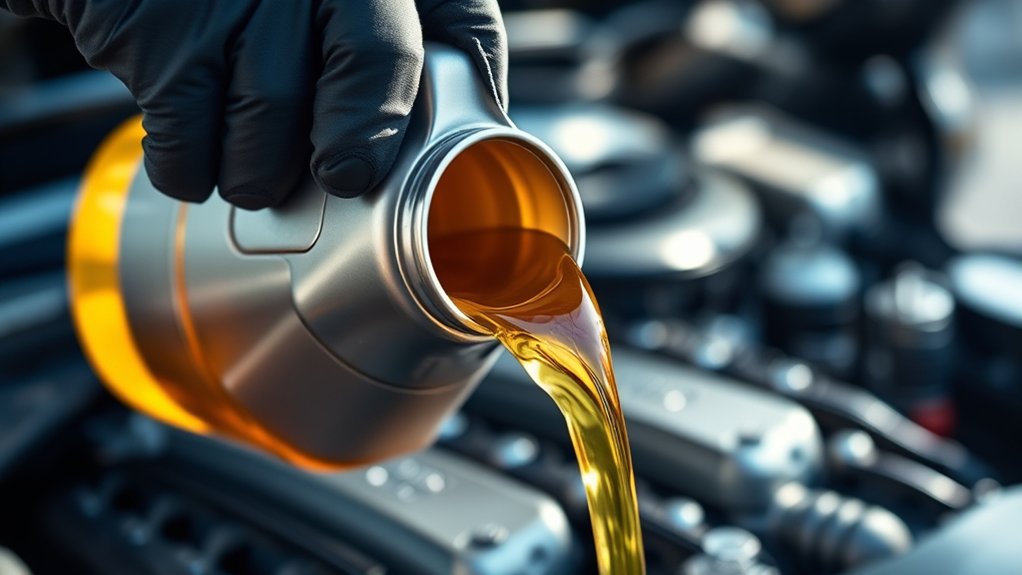
Engine oil is a specially formulated lubricant designed to reduce friction and wear between the moving parts inside your engine. Its composition typically includes base oils combined with additives that enhance performance under extreme conditions.
Understanding engine oil composition helps you select the right product for your vehicle’s needs. One critical factor you must consider is oil viscosity effects. The thickness of the oil directly influences how well it flows at various temperatures.
If the oil is too thick, it may not circulate properly during cold starts, increasing engine wear. Conversely, oil that’s too thin might fail to maintain a protective film under high heat.
Choosing an engine oil with the appropriate viscosity rating guarantees efficient lubrication and peak engine performance across different operating conditions.
How Engine Oil Protects And Keeps Your Engine Running
Lubrication plays an essential role in minimizing friction between the engine’s moving components, preventing excessive wear and heat buildup. When you use engine oil, its viscosity guarantees a consistent, protective film forms, adapting to temperature changes to maintain ideal thickness.
This film reduces metal-to-metal contact, safeguarding vital parts under varying operating conditions. Additionally, oil additives enhance performance by preventing corrosion, reducing oxidation, and inhibiting sludge formation.
The oil film minimizes metal contact while additives prevent corrosion, oxidation, and sludge buildup for engine protection.
These additives also improve the oil’s thermal stability and cleansing ability, ensuring contaminants don’t accumulate and impair engine function. By maintaining proper lubrication, cooling, and cleanliness, engine oil helps your engine run smoothly and efficiently, extending its lifespan and preventing costly repairs.
Understanding these protective mechanisms highlights why regular oil maintenance is essential for engine health.
Choosing The Right Engine Oil: Types And Uses
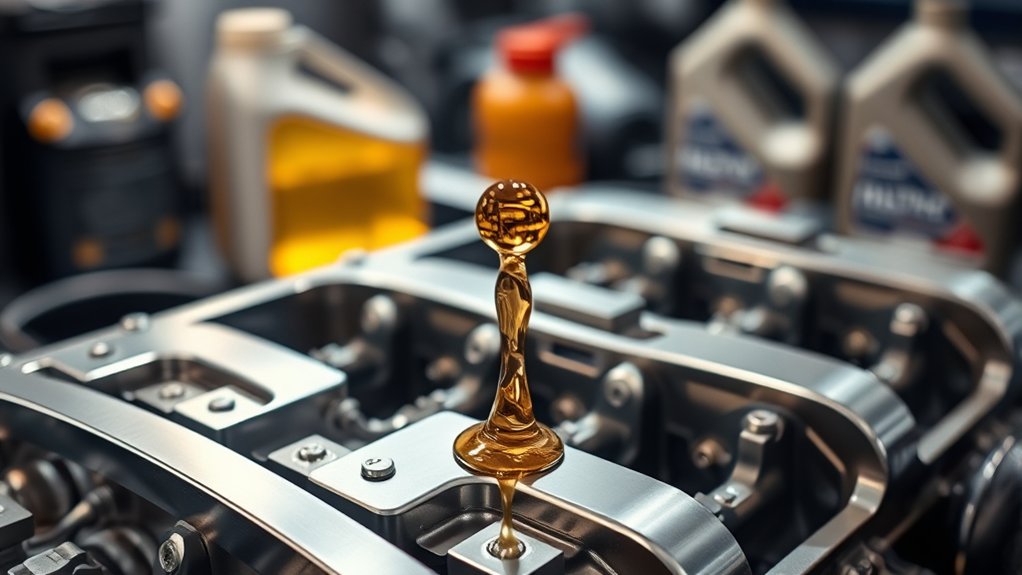
Maintaining proper lubrication and protection depends heavily on selecting the appropriate oil for your vehicle. You need to take into account oil classifications, which define performance standards and compatibility with your engine.
Synthetic oils offer superior thermal stability and longer service intervals compared to conventional oils, making them ideal for high-performance or extreme conditions. Viscosity ratings, such as 5W-30 or 10W-40, indicate the oil’s flow characteristics at varying temperatures; choosing the right viscosity guarantees peak lubrication and prevents wear.
Additionally, additive benefits enhance oil properties by reducing friction, preventing corrosion, and cleaning engine deposits. Always consult your vehicle’s manual to match the recommended oil classification, viscosity rating, and type. This assures your engine receives the precise protection and efficiency it requires for reliable operation.
Why You Should Never Skip Regular Engine Oil Changes
Even if your vehicle runs smoothly, skipping regular oil changes can lead to accelerated wear and reduced engine efficiency. Engine oil degrades over time due to heat and contaminants, losing its ability to lubricate effectively.
If you ignore the recommended oil change frequency, sludge and deposits can accumulate, increasing engine wear and risking costly damage. Fresh oil maintains ideal viscosity, reduces friction, and helps dissipate heat, preserving engine components.
By adhering to the manufacturer’s oil change schedule, you guarantee consistent engine protection and prolong its lifespan. Skipping oil changes compromises the oil’s performance, leading to increased metal-to-metal contact and eventual engine failure.
To avoid unnecessary repair costs, always prioritize timely oil changes based on your vehicle’s specific requirements.
Frequently Asked Questions
How Is Engine Oil Recycled or Disposed of Safely?
You should follow proper disposal methods by collecting used oil in sealed containers. Then take it to authorized recycling centers where the recycling process removes contaminants, re-refines the oil, and guarantees environmental safety.
Can Engine Oil Affect My Vehicle’s Fuel Efficiency?
You’ll find that choosing the right engine oil types can gently boost your vehicle’s fuel economy. Proper viscosity reduces friction, helping your engine run smoothly and efficiently, ultimately saving fuel and enhancing overall performance.
What Happens if I Mix Different Brands of Engine Oil?
If you mix different brands of engine oil without confirming oil compatibility, you risk altered lubrication quality and reduced engine performance. Brand differences in additives can cause mixing consequences like sludge buildup or decreased protection, so avoid it for ideal results.
Are Synthetic Oils Better for Cold Weather Conditions?
You’ll feel like your engine’s defying Arctic blasts with synthetic oils! Their synthetic advantages include superior cold performance, flowing quickly at low temperatures to reduce wear and guarantee smooth starts when it’s freezing outside.
How Do Additives in Engine Oil Improve Performance?
Additives like detergents, anti-wear agents, and viscosity modifiers improve your engine oil’s performance by maintaining ideal oil viscosity, reducing friction, preventing deposits, and protecting engine components under varying temperatures and pressures. This ensures efficient operation.
Conclusion
You might think skipping oil changes saves time and money, but it actually risks severe engine damage. Engine oil isn’t just a lubricant; it reduces friction, prevents wear, and keeps your engine cool and clean.
Choosing the right type and changing it regularly guarantees peak performance and longevity. By staying on top of oil maintenance, you protect your investment and avoid costly repairs down the road.
Making regular engine oil changes a smart, necessary routine ensures your vehicle runs smoothly and lasts longer.