You rely on your vehicle to keep you safe, and Honda Sensing is designed to do just that. Honda Sensing actively monitors your surroundings with a suite of cameras, radar, and ultrasonic sensors.
This integrated system processes real-time data to assist with braking, steering, and acceleration, aiming to reduce risks before they escalate.
Understanding how these technologies work together reveals why Honda Sensing stands out in driver-assistance systems.
Key Takeaways
- Honda Sensing is an integrated safety suite using cameras, radar, and sensors to monitor vehicle surroundings continuously.
- It proactively prevents accidents with features like Collision Mitigation Braking, Adaptive Cruise Control, and Lane Keeping Assist.
- The system reduces driver fatigue by automating safety and comfort functions during urban and highway driving.
- Advanced sensor fusion algorithms ensure accurate, real-time responses even in adverse weather conditions.
- Honda Sensing is available on models like Accord, CR-V, and Pilot, enhancing driving safety and confidence.
What Is Honda Sensing and How Does It Work?
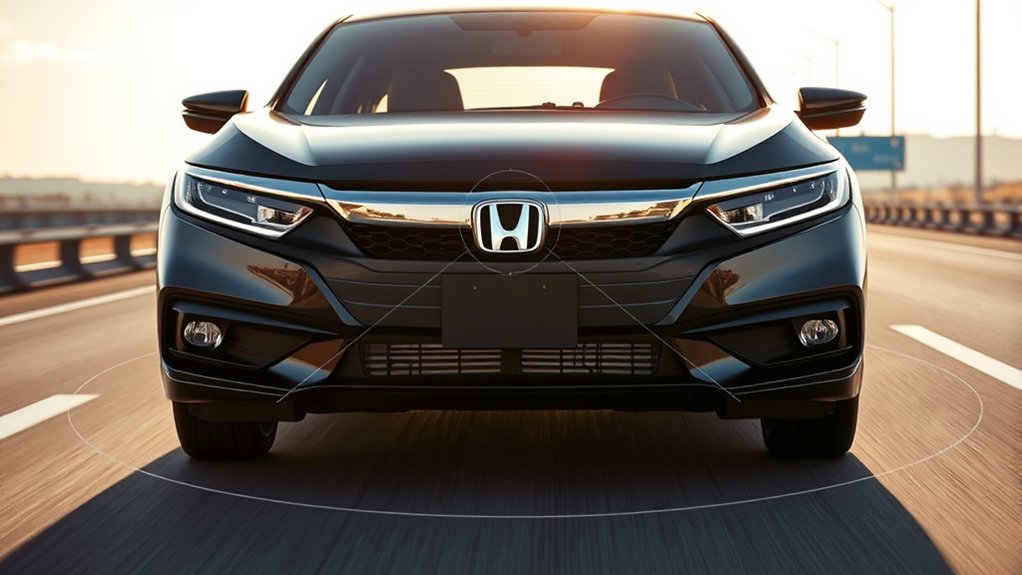
How does Honda Sensing enhance your driving experience? It integrates advanced sensors, cameras, and radar to monitor your surroundings continuously, enabling proactive responses to potential hazards. By automating key safety functions, it reduces the cognitive load on you, promoting safer and more efficient urban driving.
This efficiency positively impacts your personal finance by minimizing accident risks and lowering insurance premiums. Additionally, Honda Sensing contributes to urban planning initiatives by supporting smoother traffic flow and decreasing congestion through adaptive cruise control and lane-keeping assistance.
The system processes real-time data with precision, adjusting your vehicle’s speed and positioning seamlessly. You benefit from a driving experience optimized for safety and convenience, combining cutting-edge technology with practical applications that align with modern urban mobility demands.
Honda Sensing’s Key Safety Features Explained
Which specific technologies make Honda Sensing stand out in vehicle safety? You’ll find an integrated suite combining a monocular camera and radar sensor that precisely monitor your surroundings.
An advanced system featuring a monocular camera and radar sensor to accurately monitor your surroundings.
The system includes Collision Mitigation Braking System™ (CMBS™), which uses future technology to detect obstacles and engage braking proactively. Adaptive Cruise Control (ACC) maintains safe following distance by adjusting speed smoothly.
Lane Keeping Assist System (LKAS) ensures you stay centered in your lane by applying subtle steering corrections. Drawing from Honda’s racing history, these systems operate with split-second accuracy and reliability, mimicking the quick reflexes essential in motorsport.
Together, these features create a proactive, intelligent safety net that enhances your awareness and control, setting Honda Sensing apart in advanced vehicle safety technology.
How Honda Sensing Prevents Accidents
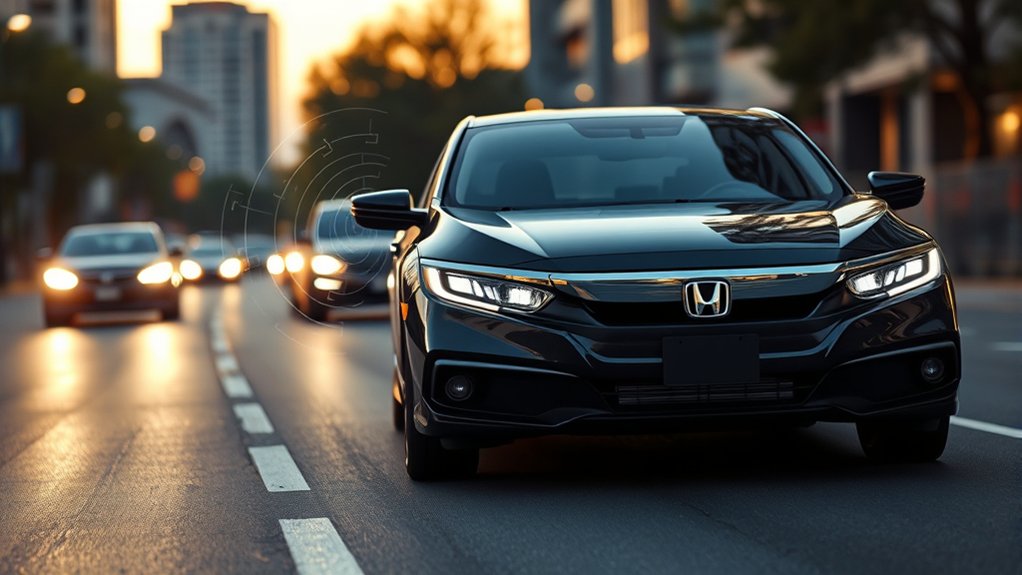
Why does Honda Sensing excel at accident prevention? It relies on a sophisticated integration of sensors and control algorithms that continuously monitor your environment. By detecting potential hazards, such as sudden stops or vehicles in blind spots, it actively assists you in maintaining safe distances and lane positions.
Honda Sensing’s systems intervene through automatic braking or steering adjustments before collisions occur. Understanding how sensors operate is crucial—they provide real-time data on speed, distance, and object movement, enabling predictive responses.
This precise coordination enhances your reaction time and reduces human error. In effect, Honda Sensing transforms passive safety into active accident prevention, giving you a robust technological shield that anticipates and mitigates risks on the road with consistent accuracy and reliability.
How Honda Sensing’s Cameras and Sensors Keep You Safe
Where do Honda Sensing’s advanced safety features get their real-time insights? They rely on a sophisticated network of cameras and sensors working together through sensor fusion.
This system continuously monitors your surroundings, enabling real-time braking, lane tracking, and adaptive cruise control to function seamlessly. Driver alerts promptly notify you of potential hazards, giving you critical seconds to react.
Below is a breakdown of how these components operate:
| Component | Function |
|---|---|
| Front Camera | Detects vehicles, pedestrians, lanes |
| Radar Sensor | Measures distance, speed of objects |
| Ultrasonic Sensors | Assist in low-speed maneuvering |
| Sensor Fusion System | Integrates data for accurate response |
| Driver Alerts | Provides warnings for immediate action |
Together, these technologies keep you safer by enhancing situational awareness and automating crucial safety responses.
Honda Models Equipped With Honda Sensing
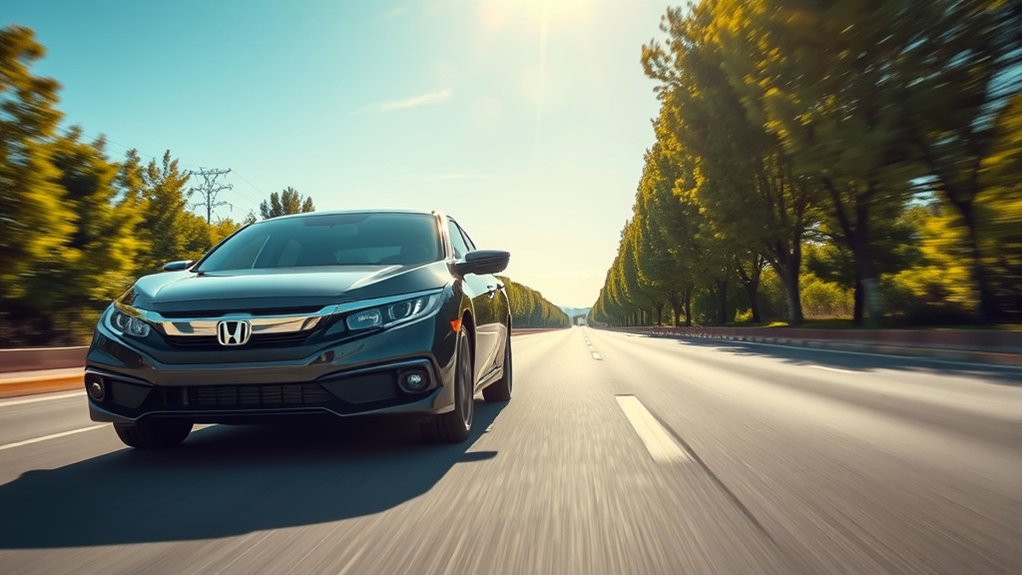
You’ll find Honda Sensing integrated into popular models like the Accord, CR-V, and Pilot, each equipped with advanced safety features such as collision mitigation braking and adaptive cruise control.
Availability varies by model year, typically starting from mid-2010s onward, ensuring up-to-date sensor technology. Understanding which models include these systems helps you make an informed decision when prioritizing safety.
Popular Honda Models
Which Honda models come equipped with Honda Sensing, and how does this suite enhance their safety and driver-assist capabilities? You’ll find Honda Sensing standard on popular models like the Accord, CR-V, and Odyssey.
These vehicles optimize driving ergonomics by integrating advanced sensors and cameras seamlessly, avoiding typical marketing hype that exaggerates features without functional benefit. The technology enhances situational awareness and driver response time across diverse conditions.
| Model | Honda Sensing Availability |
|---|---|
| Accord | Standard on all trims |
| CR-V | Standard on all trims |
| Odyssey | Standard on EX and above trims |
Safety Features Included
How do the safety features within Honda Sensing work to protect you on the road? This suite integrates advanced technologies like Collision Mitigation Braking System (CMBS), Road Departure Mitigation (RDM), Adaptive Cruise Control (ACC), and Lane Keeping Assist System (LKAS).
These systems use a combination of cameras and radar sensors to monitor your surroundings continuously, detecting potential hazards and intervening when necessary to prevent collisions. It’s important to focus on these integrated features rather than veering into an unrelated topic or off-topic discussion about general vehicle specs.
Honda Sensing’s precision enables real-time responses to dynamic driving conditions, enhancing your safety without distracting you. By understanding these specific components, you can appreciate how Honda Sensing actively supports your driving vigilance.
Model Year Availability
When did Honda start equipping its models with Honda Sensing technology? Honda introduced Honda Sensing widely starting with the 2015 model year, expanding availability across its lineup systematically. You’ll find compatibility varies by model year, with newer vehicles offering standard or optional packages.
Pricing depends on trim levels and packages, affecting overall cost. Reviewing model year availability helps you determine which vehicles fit your safety and budget needs precisely.
| Model | First Year with Honda Sensing | Availability | Pricing Impact |
|---|---|---|---|
| Accord | 2018 | Standard on most trims | Moderate increase |
| CR-V | 2017 | Standard on most trims | Slight increase |
| Civic | 2019 | Optional on base, standard on higher trims | Variable |
| Pilot | 2019 | Standard | Moderate increase |
This table clarifies model year availability, compatibility, and pricing considerations.
Honda Sensing vs. Other Safety Systems
When comparing Honda Sensing to other safety systems, you’ll notice distinct differences in sensor integration and algorithm responsiveness. Honda Sensing combines radar and camera technologies to enhance adaptive cruise control and collision mitigation with high accuracy.
Understanding these technical contrasts helps you evaluate which system aligns best with your safety priorities and driving conditions.
Key Features Comparison
What sets Honda Sensing apart from other safety systems lies in its all-encompassing integration of advanced driver-assist technologies. You’ll find features like Collision Mitigation Braking System, Adaptive Cruise Control, and Lane Keeping Assist work seamlessly to enhance driving comfort by reducing driver fatigue and stress.
Unlike some systems that focus solely on safety alerts, Honda Sensing actively intervenes to maintain vehicle stability and control. Additionally, it integrates smoothly with the vehicle’s sound systems, using auditory warnings that are clear but non-intrusive, helping you maintain focus without distraction.
When comparing key features, Honda Sensing’s holistic approach optimizes both safety and comfort, offering you a more intuitive, less intrusive driving experience than many competing systems designed primarily for alerting rather than intervention.
Technology and Performance Differences
How does Honda Sensing’s technology stack up against other safety systems regarding performance? Honda Sensing integrates a sophisticated suite of sensors, including radar and monocular cameras, that enhances driving ergonomics by delivering intuitive alerts and smoother vehicle responses.
Unlike some competitors relying solely on lidar or multiple cameras, Honda’s system balances detection accuracy with processing speed, minimizing latency in collision mitigation and adaptive cruise control. Furthermore, Honda Sensing maintains robust functionality under adverse weather impact, such as light rain or fog, due to advanced sensor fusion algorithms that filter noise and prioritize critical inputs.
While some systems falter in low-visibility conditions, Honda’s design optimizes sensor alignment and software calibration, ensuring consistent performance. This precision improves your situational awareness and safety without compromising comfort or control.
What Drivers Say About Honda Sensing
Drivers frequently report that Honda Sensing enhances their overall driving experience by providing advanced safety features that actively assist in maintaining lane position, managing adaptive cruise control, and mitigating collision risks. When you review what drivers say about Honda, you’ll notice consistent praise for the system’s reliability and responsiveness.
Honda Sensing opinions often highlight the seamless integration of collision mitigation braking, road departure mitigation, and traffic sign recognition, which work collectively to reduce driver fatigue and increase situational awareness. You’ll find that users appreciate how the system’s sensors and cameras provide timely alerts without overwhelming you, allowing for confident control in diverse driving conditions.
How Honda Sensing Enhances Your Everyday Drive
Building on the positive feedback from users, Honda Sensing actively enhances your everyday drive by continuously monitoring your surroundings and adjusting vehicle functions in real time. Understanding what is Honda Sensing reveals how sensing benefits your safety and convenience through features like adaptive cruise control, collision mitigation braking, and lane keeping assist.
These systems integrate radar and camera data, overcoming integration challenges such as sensor calibration and environmental interference to maintain precise operation. Honda’s engineering prioritizes long term reliability by implementing rigorous testing and software updates, ensuring consistent performance over time.
As a result, you experience a smoother, safer driving experience with reduced cognitive load, allowing you to focus more on the road while the system anticipates and mitigates potential hazards automatically.
Frequently Asked Questions
Can Honda Sensing Be Added to Older Honda Models?
You can’t easily add on Honda Sensing to older models because retrofit viability is low. The system relies on integrated sensors and software requiring factory calibration, making aftermarket installation technically complex. It is often not feasible without extensive modifications.
Does Honda Sensing Affect Fuel Efficiency?
Honda Sensing itself doesn’t directly impact fuel economy, but its sensors monitor driving behavior, which can influence your fuel efficiency.
Efficient driving encouraged by these sensors often helps improve overall fuel economy during vehicle operation.
How Much Does Honda Sensing Cost as an Option?
You’ll pay around $1,000 to $1,500 for Honda Sensing, reflecting advanced sensor integration that boosts driving safety by 20%. This investment enhances your vehicle’s ability to detect hazards and assist in critical driving moments.
Is Honda Sensing Compatible With Aftermarket Modifications?
Honda Sensing’s aftermarket compatibility is limited; modifications can interfere with sensor calibration, affecting system accuracy. You should carefully evaluate safety considerations and consult professionals to ensure any changes don’t compromise Honda Sensing’s performance or reliability.
Does Honda Sensing Require Special Maintenance or Calibration?
Yes, Honda Sensing requires periodic maintenance calibration to ensure sensor accuracy. Aftermarket compatibility can affect this, so you should have authorized technicians perform calibrations after modifications to maintain system reliability and optimal performance.
Conclusion
Think of Honda Sensing as your vigilant co-pilot, constantly scanning the road like a skilled navigator. It fuses data from cameras, radar, and sensors to anticipate hazards, brake when needed, and steer you safely within lanes.
By reducing your workload and enhancing reaction times, it transforms driving into a seamless partnership between human and machine.
With Honda Sensing, you’re not just driving—you’re confidently piloting a smart safety system designed to protect every mile with Honda Sensing.