You want the best engine oil filter that traps microscopic contaminants without restricting oil flow, matching your engine’s oil viscosity and OEM standards.
Filters from Mann, K&N, Mobil 1, Fram, and Bosch offer advanced synthetic media and durable construction to protect your engine under various conditions.
Regular replacement aligned with oil changes prevents bypass valve activation and wear.
Proper maintenance guarantees consistent filtration performance.
Understanding these factors helps you select the best filter tailored to your vehicle’s needs.
Key Takeaways
- The best engine oil filter efficiently traps microscopic contaminants without restricting oil flow, protecting engine components from wear.
- Filters from top brands like Mann, K&N, Mobil 1, Fram ToughGuard, and Bosch deliver superior filtration and durability.
- Choose filters matching your engine type and oil viscosity to ensure optimal filtration performance and compatibility.
- Replace filters regularly according to manufacturer intervals to prevent clogging and bypass valve activation.
- High-quality filters feature reinforced construction and OEM standard materials for reliable sealing and longevity.
What Makes a Great Engine Oil Filter
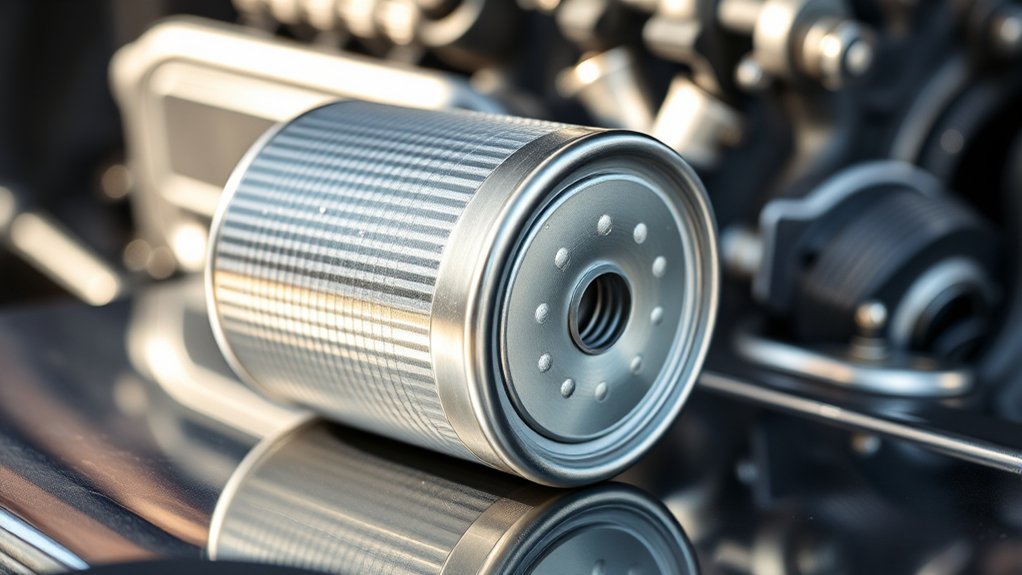
Although you might overlook it, a great engine oil filter plays an essential role in maintaining engine health by efficiently trapping contaminants and preventing abrasive particles from circulating within the lubrication system.
You need to focus on filter efficiency, which measures the filter’s ability to capture microscopic particles without impeding oil flow. A high-efficiency filter guarantees that harmful debris doesn’t reach sensitive engine components, reducing wear and extending engine life.
Additionally, oil compatibility is vital; the filter media and seals must withstand the chemical properties and temperature range of the specific engine oil used. If the filter materials degrade or swell due to incompatibility, filtration performance drops, risking engine damage.
How to Choose the Right Engine Oil Filter for Your Vehicle
Selecting the right engine oil filter requires careful consideration of your vehicle’s specifications and operating conditions. First, identify the correct filter type compatible with your engine, spin-on or cartridge, since each offers distinct installation and filtration characteristics.
Next, match the filter’s micron rating to your engine’s oil viscosity; thicker oil demands filters capable of handling larger particle loads without restricting flow. Verify that the filter meets OEM standards and fits your engine’s mounting system precisely to avoid leaks or pressure drops.
Additionally, consider your driving environment. Harsh conditions may require filters with enhanced media for improved contaminant retention. By analyzing these technical parameters—filter types, micron ratings, and oil viscosity compatibility—you guarantee peak filtration performance, prolonging engine life and maintaining efficient lubrication.
Top Engine Oil Filter Brands Compared
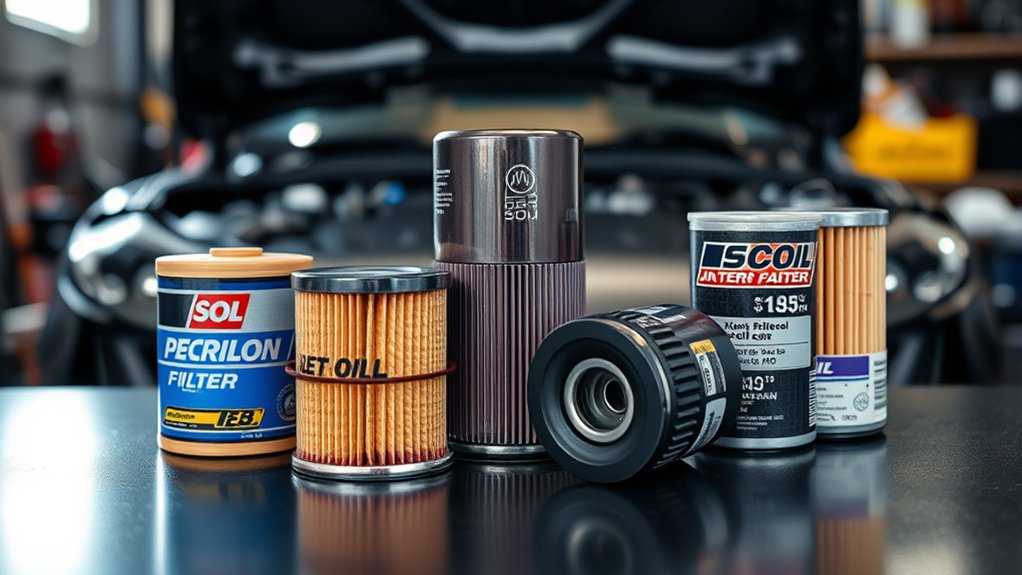
When comparing top engine oil filter brands, you’ll want to focus on factors such as filtration efficiency, build quality, and compatibility with your vehicle’s specifications. Mann Filters excel with high-efficiency cellulose and synthetic blends, guaranteeing excellent contaminant retention.
K&N Performance filters feature robust synthetic media, offering superior flow rates for enhanced engine protection. Mobil 1 filters combine a multi-layer synthetic media with a strong steel base plate, providing durability under extreme conditions.
Fram ToughGuard filters stand out with their dual-layer synthetic media and a reinforced steel construction, balancing filtration and longevity. Bosch Premium filters deliver precise engineering with advanced filtration materials, maintaining OEM standards.
Evaluating these brands based on your engine’s demands guarantees ideal oil cleanliness and mechanical reliability.
When and Why to Replace Your Engine Oil Filter
Since your engine oil filter traps contaminants that accumulate during operation, you need to replace it regularly to maintain peak engine performance. The filter lifespan typically aligns with your oil change interval, often between 3,000 to 7,500 miles, but this varies based on driving conditions and oil type.
Over time, a clogged filter restricts oil flow, increasing engine wear and reducing efficiency. Ignoring replacement can lead to bypass valve activation, allowing unfiltered oil to circulate, which risks internal damage.
To optimize engine longevity, adhere strictly to manufacturer-recommended intervals and consider your driving environment. Regular replacement is a critical maintenance tip ensuring consistent filtration and engine protection. By doing so, you preserve oil quality and prevent performance degradation caused by contaminated oil recirculation.
How to Maintain Your Engine Oil Filter for Best Performance
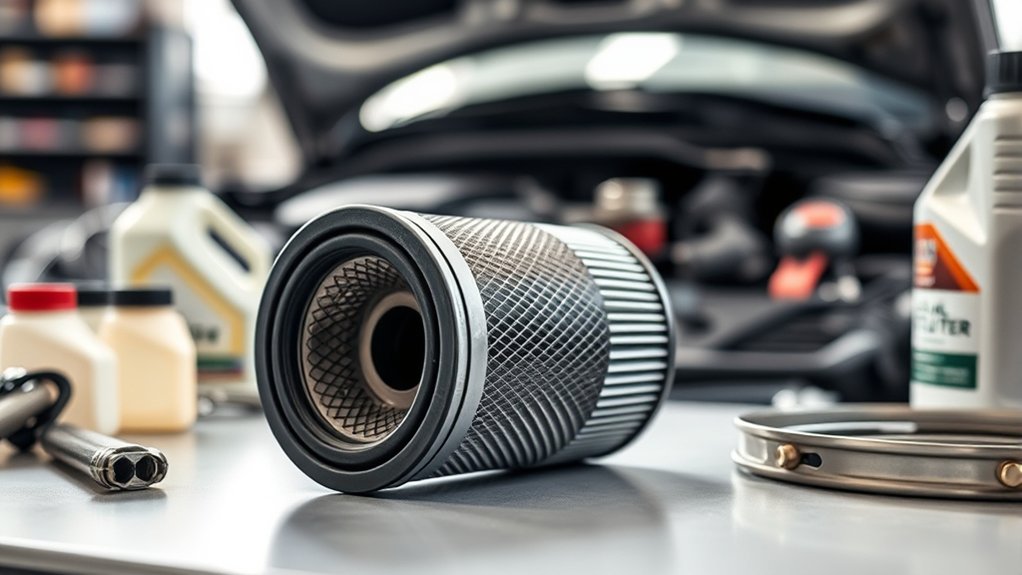
Maintaining your engine oil filter effectively involves a combination of timely inspections, proper installation, and adherence to recommended replacement intervals. Start by regularly checking for leaks or damage, ensuring the seal and housing remain intact.
While most modern filters are disposable, some high-performance variants allow for filter cleaning techniques such as backflushing or ultrasonic cleaning, which can extend oil filter longevity if performed correctly. Always use manufacturer-approved methods and tools to avoid compromising filter media integrity.
During installation, apply a thin oil layer to the gasket for an ideal seal and torque the filter to specifications to prevent leaks or deformation. Following these precise maintenance steps maximizes filtration efficiency, protects your engine, and enhances overall performance throughout the filter’s service life.
Frequently Asked Questions
Can I Use the Same Oil Filter for Different Car Models?
You can’t always use the same oil filter due to oil filter compatibility and car model variations. Always verify specifications and dimensions to guarantee proper fit and function, avoiding potential engine damage or reduced filtration efficiency.
How Does Oil Filter Size Affect Engine Performance?
You’ll find that oil filter size affects engine performance by influencing filter efficiency and size compatibility. A properly sized filter guarantees ideal contaminant removal and oil flow, preventing engine wear and maintaining consistent lubrication under varying conditions.
Are Reusable Oil Filters Worth the Investment?
Reusable oil filters can be worth the investment if you prioritize filter longevity and perform regular maintenance. Although their upfront cost is higher, cost comparison shows long-term savings by reducing recurring purchases of disposable filters.
What Environmental Impact Do Oil Filters Have?
You’ll reduce environmental impact by ensuring proper oil filter recycling, adhering to strict environmental regulations.
Filters contain hazardous residues; recycling prevents soil contamination and conserves resources, making compliance critical for minimizing pollution and promoting sustainable automotive maintenance practices.
Can a Clogged Oil Filter Cause Engine Damage?
Sure, let your oil filter clog and watch your engine throw a tantrum! You’ll notice clogged filter symptoms like low oil pressure.
Regular oil filter maintenance prevents damage, ensuring your engine runs smoothly and avoids catastrophic failure.
Conclusion
So, you want the “best” engine oil filter? Just grab the fanciest one with a glittery label—because engine performance definitely depends on sparkles, right?
In reality, choosing the right filter means analyzing flow rates, filtration efficiency, and compatibility with your engine specs. Don’t wait for sludge to stage a mutiny inside your motor.
Replace and maintain your filter regularly, or enjoy the thrilling sounds of wear and tear—your call. Ultimately, the best engine oil filter is one that protects your engine effectively and meets your vehicle’s specific needs.