The best spark plug balances durability, precise ignition timing, and a suitable heat range for your engine type. Choosing the right spark plug is crucial for optimal engine performance.
Iridium or platinum plugs excel, offering longer lifespans—up to 120,000 miles—and enhanced combustion efficiency.
Copper plugs wear faster, while double platinum and iridium alloys provide consistent spark strength, reducing misfires and improving fuel economy.
Selecting the right size and maintaining proper spark gap is essential for peak performance.
Keep exploring to optimize your spark plug choice and maintenance. Proper care ensures your engine runs smoothly and efficiently over time.
Key Takeaways
- Iridium spark plugs are generally the best for durability, lasting up to 120,000 miles with consistent performance.
- Platinum spark plugs offer a good balance of longevity and efficiency, lasting between 60,000 and 100,000 miles.
- Proper spark plug sizing and heat range are essential to avoid engine damage and ensure optimal combustion.
- High-quality brands with precision electrode design improve ignition timing, fuel economy, and reduce engine misfires.
- Regular maintenance, including gap adjustment and cleaning, maximizes spark plug lifespan and engine performance.
How Spark Plug Types Affect Engine Performance
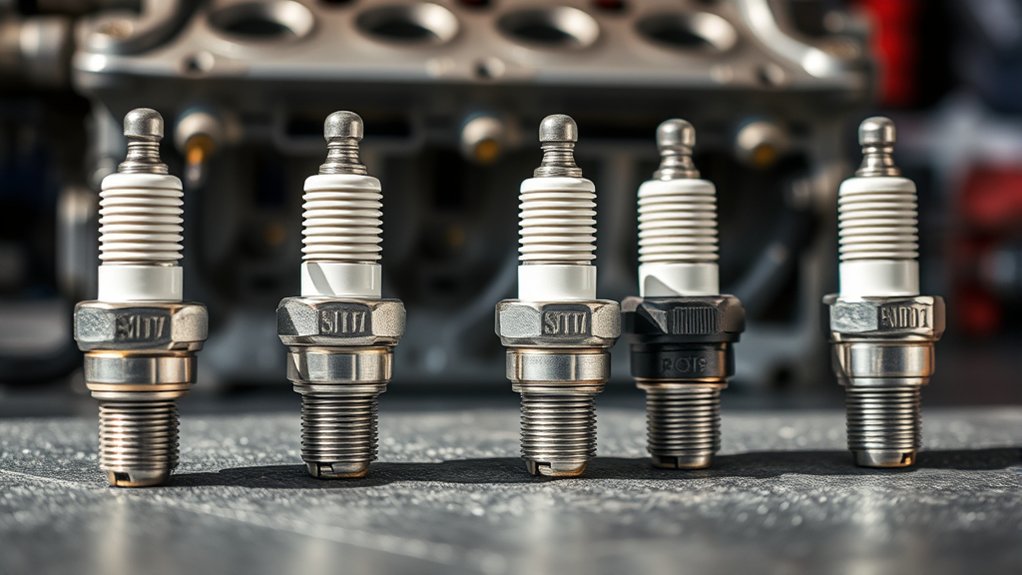
Although spark plugs may seem like simple components, the type you choose directly impacts your engine’s combustion efficiency, power output, and fuel economy. You need to take into account how different spark plug types influence ignition timing, as precise timing guarantees ideal combustion and prevents misfires.
The spark gap plays a critical role, too; a properly set gap produces a strong, consistent spark that ignites the air-fuel mixture efficiently. If the gap is too wide or narrow, ignition timing can be disrupted, leading to incomplete combustion and reduced engine performance.
Which Spark Plug Materials Last the Longest?
How do you determine which spark plug materials offer the greatest durability? You focus on material durability and spark plug lifespan. Iridium and platinum alloys excel here, resisting electrode erosion and maintaining consistent spark gaps longer than copper.
Copper plugs have shorter lifespans due to rapid wear despite excellent conductivity. Below is a comparison of common spark plug materials:
| Material | Typical Lifespan (miles) | Material Durability |
|---|---|---|
| Copper | 20,000 – 30,000 | Moderate |
| Platinum | 60,000 – 100,000 | High |
| Double Platinum | 60,000 – 120,000 | Higher |
| Iridium | 100,000 – 120,000 | Very High |
| Iridium Enhanced | 120,000+ | Ultra High |
Selecting a material with superior durability guarantees longer spark plug lifespan and consistent engine performance.
How to Choose the Right Spark Plug for Your Vehicle
When choosing the right spark plug for your vehicle, you need to take into account several technical factors to guarantee peak engine performance and longevity. First, verify the exact spark plug sizing specified in your vehicle’s service manual. This includes thread diameter, reach, and seat type. Incorrect sizing can cause engine damage or misfires.
Next, evaluate spark plug brands known for quality and reliability. Reputable manufacturers adhere to strict standards ensuring consistent heat range and electrode durability. Consider the heat range appropriate for your engine type and driving conditions to avoid pre-ignition or fouling.
Also, examine electrode design and materials. Iridium or platinum tips offer longer life and better spark efficiency. By carefully matching these criteria, you’ll optimize combustion efficiency and extend engine life.
How to Maintain Your Spark Plugs for Top Performance
Selecting the correct spark plug sets the foundation for ideal engine operation, but maintaining those plugs guarantees sustained performance and prevents costly issues. Start by inspecting spark plugs every 30,000 miles or as recommended.
Use spark plug cleaning techniques, such as a wire brush or specialized cleaner, to remove carbon deposits and oil residue without damaging the electrode. Check the gap with a feeler gauge and adjust to manufacturer specifications to verify peak spark.
Pay close attention to electrode wear or glazing; if these signs appear, proceed with spark plug replacement instead of cleaning. Always torque new or cleaned plugs to the correct specification to avoid compression leaks.
Regular maintenance like this improves fuel efficiency, reduces misfires, and extends engine life.
Frequently Asked Questions
Can Spark Plugs Affect Fuel Efficiency?
Yes, spark plug types directly impact your engine’s ignition timing and combustion efficiency. Using incorrect or worn plugs disrupts ignition timing, reducing fuel efficiency by causing incomplete combustion and increased fuel consumption. Choose plugs wisely.
How Often Should I Replace Spark Plugs in Cold Climates?
You should replace spark plugs every 30,000 to 50,000 miles in cold climates, as cold weather effects accelerate wear. Iridium or platinum spark plug materials resist fouling and maintain performance longer under low-temperature conditions.
Do Spark Plugs Impact Engine Noise or Smoothness?
Yes, spark plugs directly affect engine noise and smoothness by influencing ignition timing and combustion quality. Different spark plug materials alter heat dissipation and electrode wear, impacting consistent firing and reducing misfires for smoother, quieter operation.
Are There Spark Plugs Designed for High-Performance Racing?
Yes, racing spark plugs optimize combustion with advanced materials and design for performance ignition systems. You’ll benefit from improved heat dissipation, higher voltage tolerance, and precise electrode gaps, enhancing engine power and throttle response under extreme conditions.
Can Incorrect Spark Plugs Cause Engine Misfires?
Yes, using incorrect spark plug types can disrupt ignition timing, causing engine misfires. You’ll experience inefficient combustion and rough running, so always match spark plugs to your engine’s specifications for peak performance and timing accuracy.
Conclusion
Choosing the best spark plug isn’t just about picking a part—it’s about revealing your engine’s true potential. You’ll want to take into account how different types influence performance, the durability of materials like iridium or platinum, and your vehicle’s specific needs.
Regular maintenance guarantees consistent power and efficiency. Remember, the right spark plug is the silent hero behind every smooth start—don’t let your engine settle for anything less than perfection.
Ultimately, finding the best spark plug ensures your engine runs at its peak, delivering reliability and optimal performance every time.