You rely on a spark plug to ignite the air-fuel mixture inside your engine’s combustion chamber by generating a precise high-voltage spark at the right moment.
This ignition starts the combustion process, powering your engine efficiently.
Maintaining healthy spark plugs guarantees smooth operation, avoids misfires, and maximizes fuel economy.
Proper spark plug selection and timely replacement keep your engine running at its best.
Understanding the spark plug’s role and upkeep helps you maintain peak engine performance over time.
Key Takeaways
- Spark plugs ignite the air-fuel mixture in the engine’s combustion chamber to start combustion.
- They generate a high-voltage spark at the right time for efficient engine operation.
- Spark plugs ensure proper ignition timing to maximize power and fuel efficiency.
- They help maintain smooth engine idling and prevent misfires or knocking.
- Different spark plug types affect durability and conductivity, impacting engine performance and longevity.
How a Spark Plug Powers Your Engine
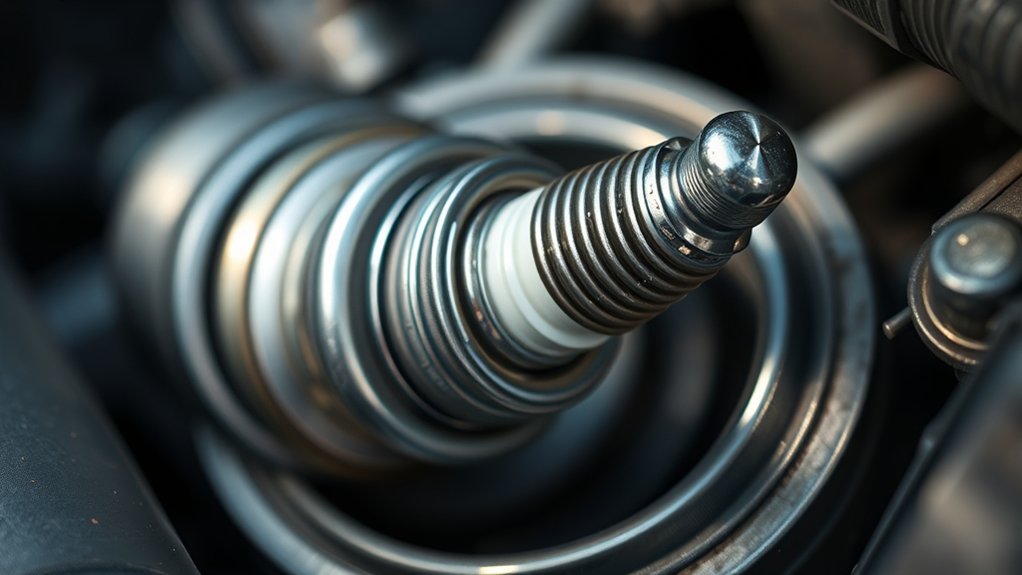
Although you might not see it working, the spark plug plays a critical role in powering your engine by igniting the air-fuel mixture inside the combustion chamber. It generates a high-voltage electrical spark at precisely the right moment, a process controlled by ignition timing.
Different spark plug types, such as copper, platinum, and iridium, offer varying conductivity and durability, affecting ignition efficiency. Proper ignition timing guarantees the spark occurs just as the piston reaches the ideal position, maximizing combustion and power output.
If the spark fires too early or late, you risk incomplete combustion or engine knocking. The spark plug’s ability to reliably produce sparks under high pressure and temperature conditions is essential for efficient engine operation and fuel economy, making its design and timing critical to your vehicle’s performance.
How Spark Plug Health Impacts Engine Performance
When spark plugs deteriorate or become fouled, your engine’s performance can drop markedly. Worn or contaminated spark plugs reduce combustion efficiency, causing misfires, rough idling, and decreased power output.
Understanding the spark plug lifespan is essential; typical ranges vary by spark plug types. Copper plugs last around 20,000 miles, while iridium or platinum types can exceed 60,000 miles.
Using the appropriate spark plug type for your engine guarantees peak ignition and longevity. Neglecting spark plug maintenance leads to increased fuel consumption and higher emissions, impacting both performance and environmental compliance.
Regular inspection and timely replacement maintain consistent spark delivery, preserving engine responsiveness and efficiency. By monitoring spark plug health, you avoid performance degradation and costly engine repairs.
How a Spark Plug Creates the Ignition Spark
Because the spark plug plays an essential role in engine ignition, understanding how it creates the ignition spark is crucial to grasping engine operation. The spark plug construction consists of a central electrode, insulator, and ground electrode, designed to withstand high voltage and temperature.
During the ignition process, your ignition coil generates a high voltage current that travels through the spark plug’s central electrode. This voltage overcomes the air gap’s resistance between the central and ground electrodes, creating an electric spark.
This spark ignites the compressed air-fuel mixture in the combustion chamber, initiating combustion. The precise gap size and durable materials in the spark plug construction guarantee consistent spark generation, making the ignition process efficient and reliable for peak engine performance.
When and How to Replace Your Spark Plug
Regularly replacing your spark plug guarantees peak engine performance and prevents misfires or inefficient combustion. You should check your vehicle’s service manual for replacement intervals, typically every 30,000 to 100,000 miles depending on spark plug types.
Use these installation tips: verify correct gap settings, apply anti-seize compound sparingly, and torque to specifications to avoid damage.
| Step | Action | Notes |
|---|---|---|
| 1 | Locate spark plugs | Consult manual |
| 2 | Remove old plugs | Use socket wrench |
| 3 | Inspect and gap plugs | Match manufacturer specs |
| 4 | Install new plugs | Hand-tighten, then torque |
| 5 | Test engine performance | Check for smooth idling |
Following these steps maintains engine efficiency and prolongs spark plug life.
Frequently Asked Questions
Can Spark Plugs Affect Fuel Efficiency?
Yes, worn spark plugs reduce fuel efficiency by disrupting ignition timing. If you don’t replace them within the spark plug lifespan, you’ll experience incomplete combustion, wasting fuel and lowering your engine’s overall performance.
Are Spark Plugs the Same for All Vehicle Types?
No, spark plug types vary considerably, so you can’t use the same one for all vehicles.
You need to check vehicle compatibility carefully to guarantee peak performance, as different engines require specific spark plug designs and materials.
What Materials Are Spark Plugs Made From?
Don’t worry about durability. Spark plug construction uses materials like iridium, platinum, and nickel alloys to guarantee spark plug longevity. These metals handle extreme heat and corrosion, giving you reliable ignition and extended performance in your engine.
Can Faulty Spark Plugs Cause Engine Misfires?
Yes, faulty spark plugs cause engine misfires and reduced engine performance. You’ll notice spark plug symptoms like rough idling, poor acceleration, and increased fuel consumption.
These signs indicate you need to inspect or replace the spark plugs promptly.
How Do Cold Weather Conditions Affect Spark Plugs?
You’ll notice cold weather impact spark plug performance as frigid temperatures thicken fuel and reduce ignition efficiency, causing harder starts and misfires.
Your engine demands more precise sparks to overcome this chilly resistance and maintain smooth operation.
Conclusion
Think of your spark plug as the tiny lightning bolt that jump-starts your engine’s heartbeat. Without its precise spark, your engine stumbles, losing power and efficiency like a flickering flame in the wind.
Keeping your spark plug healthy guarantees your engine fires smoothly and reliably. Replace it on schedule, and you’ll keep your vehicle running like a well-oiled machine, ready to conquer every road with consistent, controlled bursts of energy.
In conclusion, the spark plug is essential for maintaining your engine’s performance and reliability.