Imagine the smooth hum of your Honda Civic’s engine, running efficiently with the right type of oil circulating through its components.
Using the correct oil type for a Honda Civic is essential to maintain performance, prevent wear, and optimize fuel economy.
Since oil requirements vary based on model year, engine type, and mileage, you’ll need to understand these factors carefully.
Let’s explore what oil specifications guarantee your Civic stays in peak condition.
Key Takeaways
- Newer Honda Civics typically require 0W-20 full synthetic oil for optimal engine protection and fuel efficiency.
- Older models may use conventional or synthetic blend oils like 10W-30 or 5W-30 depending on climate and engine design.
- High-mileage Civics (over 75,000 miles) benefit from specially formulated oils with seal conditioners to reduce leaks and oil consumption.
- Always choose oils meeting API SN Plus or newer specifications and Honda’s own approvals to ensure quality and warranty compliance.
- Consult the owner’s manual for exact oil type, viscosity grade, and service intervals based on your specific Civic model and year.
Why Using the Right Oil Matters for Your Honda Civic
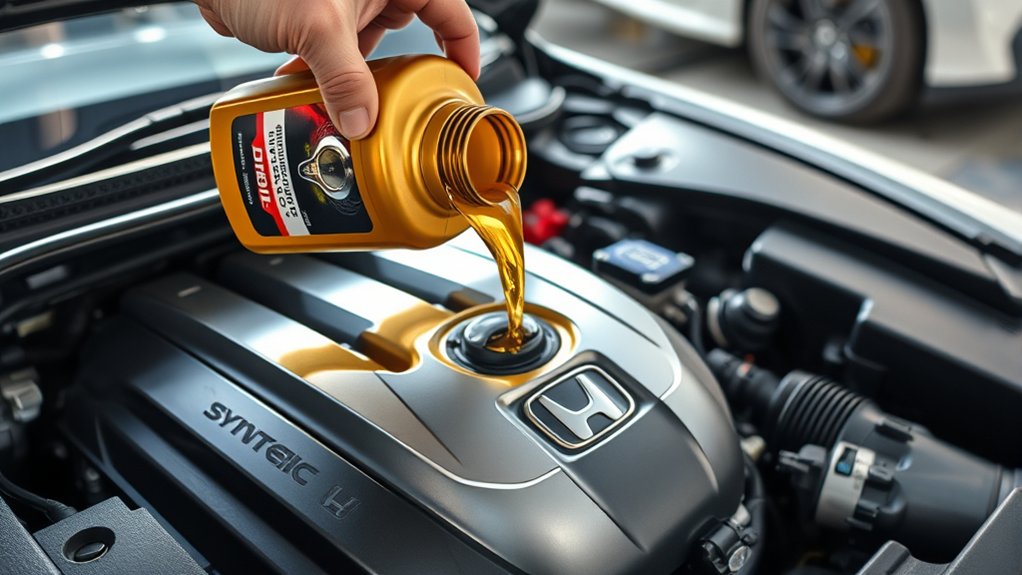
Why does using the right oil matter for your Honda Civic? Choosing the correct engine oil directly impacts oil consumption rates, engine efficiency, and long-term performance.
Using an oil with improper viscosity or additives can increase oil consumption, forcing you to top off more frequently and potentially causing engine wear.
Using oil with the wrong viscosity or additives raises consumption and risks engine damage.
Furthermore, Honda’s warranty implications are significant; failure to use manufacturer-recommended oil types could void your warranty coverage. This means repairs related to lubrication issues might not be covered, leading to costly out-of-pocket expenses.
The right oil ensures optimal lubrication, reduces friction, prevents sludge build-up, and maintains engine components within designed tolerances.
Recommended Engine Oil Types for Honda Civics
Which engine oil suits your Honda Civic best depends on factors like model year, engine type, and driving conditions. Selecting the right oil is essential for peak oil maintenance and fuel efficiency. Typically, manufacturers recommend oils that balance protection and performance.
Here are common engine oil types for Honda Civics:
- 0W-20 Synthetic Oil: Offers superior cold-start lubrication and maintains viscosity under high temperatures, enhancing fuel efficiency.
- 5W-30 Synthetic Blend: Provides a balance of protection in moderate climates and helps reduce engine wear.
- Conventional 10W-30: Suitable for older models or less demanding driving but requires more frequent changes.
- High-Mileage Oil: Contains additives to protect aging engines, reducing oil consumption and deposits.
Following these guidelines guarantees your Civic runs smoothly and efficiently.
How Oil Recommendations Vary by Model and Year
How do oil recommendations change across different Honda Civic models and years? You need to consider model year compatibility first, as Honda often updates engine designs affecting oil requirements.
Older Civics, especially those before 2006, typically call for conventional or synthetic blend oils, while newer models increasingly require full synthetic oils for optimal performance. Oil viscosity differences also play a critical role; variations in engine tolerances and operating temperatures across years dictate specific viscosity grades.
For example, a 2010 Civic might recommend 5W-20, whereas a 2020 model could specify 0W-20 for better fuel efficiency and cold start protection. To maintain engine health, always check the owner’s manual for precise oil specifications tied to your Civic’s model year and engine type, ensuring proper lubrication and compliance with Honda’s standards.
Best Oil Viscosity Grades for Honda Civics
Understanding the specific oil viscosity grades recommended for your Honda Civic can markedly impact engine performance and longevity. Oil viscosity influences how well the oil flows at different temperatures, directly affecting lubrication and wear protection.
Choosing the correct grade ensures optimal engine efficiency and durability. While oil brand perception often guides your choice, adhering to the manufacturer’s viscosity specifications is critical.
For most Honda Civics, consider these common oil viscosity grades:
- 0W-20: Ideal for newer models, promoting fuel efficiency and cold starts.
- 5W-20: Suitable for moderate climates, balancing flow and protection.
- 5W-30: Offers enhanced protection under higher temperatures.
- 10W-30: Used in older models or warmer environments.
Always consult your owner’s manual to confirm the appropriate oil viscosity for your specific model and year.
Synthetic vs. Conventional Oil: Which Is Best?

Why should you consider synthetic oil over conventional oil for your Honda Civic? Synthetic oil offers superior thermal stability and reduced oxidation, ensuring better engine protection under extreme temperatures. It maintains viscosity longer, which means less frequent oil changes and enhanced fuel efficiency.
While conventional oil can suffice for routine driving, synthetic excels in minimizing engine wear, especially if you drive in severe conditions. This isn’t an unrelated topic, as the choice directly impacts your car’s performance and longevity.
In the broader automotive lubrication context, synthetic oils contain engineered molecules designed to reduce friction and sludge buildup more effectively than conventional counterparts. For your Honda Civic, synthetic oil provides a technically advanced solution that aligns with modern engine specifications and helps maintain optimal engine health over time.
How to Check and Change Your Honda Civic’s Oil
You’ll start by checking your Honda Civic’s oil level using the dipstick to ensure it’s within the recommended range. Next, select the correct oil type based on your Civic’s model and driving conditions.
Finally, follow the proper steps to safely drain, replace the oil filter, and refill with fresh oil to maintain optimal engine performance.
Checking Oil Level
How often should you check your Honda Civic’s oil level to ensure optimal engine performance? Regular oil level checking is essential. Ideally, you should inspect it every 1,000 miles or monthly. Use the correct oil grade guidance specified in your owner’s manual to maintain engine health.
To accurately check the oil level:
- Park on a level surface and turn off the engine, allowing it to cool for 5–10 minutes.
- Locate and remove the dipstick, wipe it clean, then reinsert fully.
- Withdraw the dipstick again and observe the oil level; it should be between the minimum and maximum marks.
- If low, add oil gradually, ensuring you use the recommended oil grade to avoid engine damage.
Consistent oil level checking prevents premature wear and maintains efficient engine operation.
Choosing Correct Oil
Regularly monitoring your Honda Civic’s oil level sets the foundation for proper engine care, but selecting the right oil type and performing timely oil changes further protects your engine’s longevity and performance. Avoid confusing irrelevant topics or unconnected concepts like unrelated additives or incompatible oils; focus strictly on manufacturer recommendations. For most Civics, synthetic 0W-20 oil offers ideal viscosity and protection.
| Oil Type | Use Case |
|---|---|
| 0W-20 Synthetic | Standard recommendation |
| 5W-30 Synthetic | High mileage or older engines |
| Conventional | Budget option, less protection |
| Synthetic Blend | Moderate protection, cost balance |
| High Mileage | Engines over 75,000 miles |
Choosing the correct oil guarantees efficient lubrication and prevents engine wear, avoiding issues caused by improper oil selection.
Steps To Change
When should you check and change your Honda Civic’s oil to maintain peak engine performance? Follow the manufacturer’s recommended service intervals, usually every 5,000 to 7,500 miles, or sooner if you perform oil sampling and detect contamination or degradation.
To check and change your oil:
Warm up the engine, then turn it off and wait 5 minutes for oil to settle.
Remove the dipstick, wipe it clean, reinsert fully, then check oil level and color.
Drain the old oil by removing the drain plug, then replace the oil filter.
Refill with the specified oil type and quantity, then verify the level with the dipstick.
Accurate oil sampling and adherence to service intervals ensure your Civic’s engine runs efficiently and lasts longer.
Choosing High-Quality Oil Brands for Your Civic
Why does selecting a high-quality oil brand matter for your Honda Civic? Using premium oil ensures optimal engine performance, protection against wear, and longevity.
When choosing, consider oils formulated specifically for high mileage engines if your Civic has over 75,000 miles; these contain seal conditioners that prevent leaks and reduce oil consumption. Synthetic blend oils offer a balance between conventional and full synthetic, providing enhanced protection and improved viscosity stability at a lower cost.
Look for brands meeting API SN Plus or newer specifications and Honda’s own approvals to guarantee compatibility. Avoid generic or substandard oils that can degrade engine components.
Ultimately, investing in a reputable high mileage or synthetic blend oil brand safeguards your Civic’s engine, maintains fuel efficiency, and supports consistent performance under varying driving conditions.
Frequently Asked Questions
Can I Use Diesel Engine Oil in My Honda Civic?
You shouldn’t use diesel engine oil in your Honda Civic. Diesel oil has additives unsuitable for gasoline engines, and using it can lead to illegal oil usage issues, engine damage, and void warranties.
Stick to recommended oils.
How Often Should I Change the Oil Filter?
Think of your oil filter as your engine’s guardian angel. It’s best to replace it with every oil change interval, typically every 5,000 to 7,500 miles, ensuring oil filter compatibility and optimal engine performance.
Does Oil Type Affect Fuel Efficiency?
Yes, oil viscosity affects fuel economy. Using the correct viscosity reduces engine friction, improving efficiency.
Thicker oil increases resistance, lowering fuel economy, while thinner oil enhances smooth operation, boosting your Honda Civic’s overall fuel efficiency.
Can I Mix Different Oil Brands?
You can mix oil brands, but it’s best to avoid it for optimal performance. Two word discussion ideas like “oil mixing” highlight potential additive conflicts that may reduce lubrication quality and engine protection, so consistency matters.
What Happens if I Use the Wrong Oil Viscosity?
If you use the wrong viscosity, your engine’s lubrication suffers, increasing wear and reducing efficiency. It can cause oil contamination, leading to sludge buildup and poor performance.
Always stick to the manufacturer’s recommended oil grade.
Conclusion
Choosing the right oil for your Honda Civic is like selecting the perfect lubricant for a finely tuned clock—each drop ensures smooth, precise movement. Using the recommended viscosity and type protects your engine’s heart, maintaining peak performance and longevity. Whether synthetic or conventional, the right oil guards against wear and tear, especially as mileage climbs.
Always follow your owner’s manual to keep your Civic running like a well-oiled machine, ready for every journey ahead. When it comes to engine care, knowing what type of oil does a Honda Civic take is essential for its health and efficiency.