You put engine oil into the filler cap located on top of the engine, usually marked with an oil can icon or labeled “Engine Oil.” This is the correct place to add engine oil to keep your vehicle running smoothly.
Before opening the cap, make sure the engine is cool to avoid burns.
Use a clean funnel to pour the oil slowly, which helps prevent spills. After adding the oil, replace the cap securely to avoid leaks. Adding the right amount without overfilling is essential for engine health.
Keep checking the oil level regularly to maintain peak performance. Following these steps will help you handle engine oil maintenance effectively.
Key Takeaways
- Locate the engine oil filler cap on top of the engine block, usually marked with an oil can icon or labeled “Engine Oil.”
- Ensure the engine is cool before opening the oil filler cap to prevent burns or injuries.
- Remove the oil filler cap carefully and use a clean funnel to add engine oil to avoid spills.
- Add oil gradually, allowing it to settle, and avoid overfilling beyond the maximum dipstick mark.
- Securely replace the oil filler cap after adding oil to maintain engine pressure and prevent leaks.
How to Find and Identify the Engine Oil Filler Cap
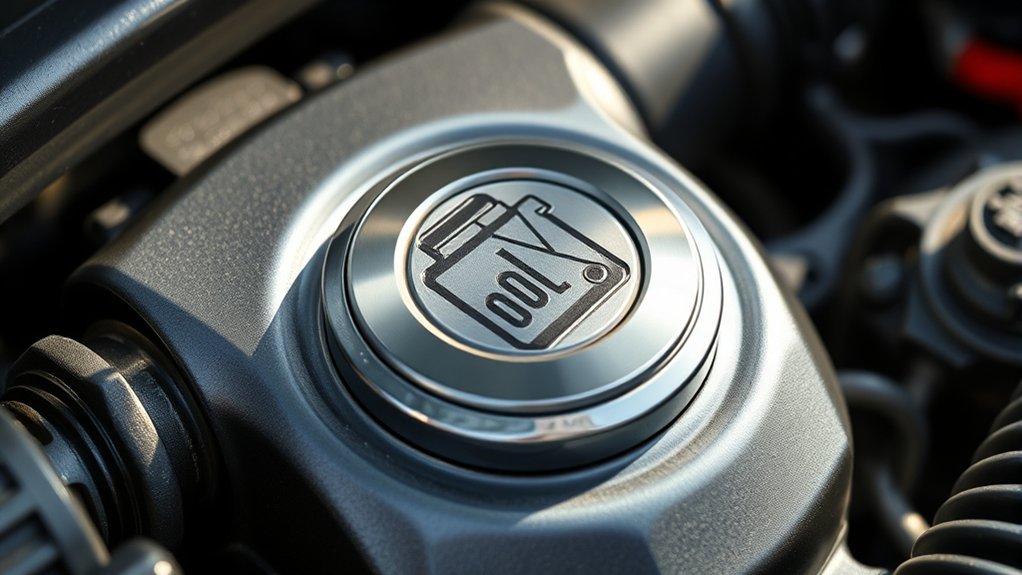
Where exactly do you find the engine oil filler cap? It’s typically located on the top of the engine block, often marked with an oil can icon or labeled “Engine Oil.” This cap is your access point for adding oil, regardless of the engine oil types recommended for your vehicle.
Before opening it, make sure the engine is cool to prevent burns or contamination. Identifying the cap correctly is essential for effective engine maintenance tips, as using the wrong opening can cause damage or contamination.
The cap usually twists off by hand and seals tightly to prevent leaks. Familiarizing yourself with its location and appearance helps you maintain proper oil levels, enhancing engine performance and longevity.
Always consult your vehicle’s manual for specifics.
How to Choose the Right Engine Oil?
How do you determine which engine oil suits your vehicle best? Start by consulting your owner’s manual for manufacturer recommendations on oil type and viscosity ratings. These ratings indicate how the oil flows at various temperatures, essential for engine protection.
Consult your owner’s manual to find the recommended oil type and viscosity for optimal engine protection.
- Check viscosity ratings (e.g., 5W-30) to match your climate and engine requirements.
- Decide between conventional and synthetic options; synthetics offer superior performance and longevity.
- Verify oil certifications like API or ACEA to guarantee quality and compliance.
- Consider your vehicle’s age and operating conditions; older engines might need higher viscosity oils.
How to Add Engine Oil Correctly
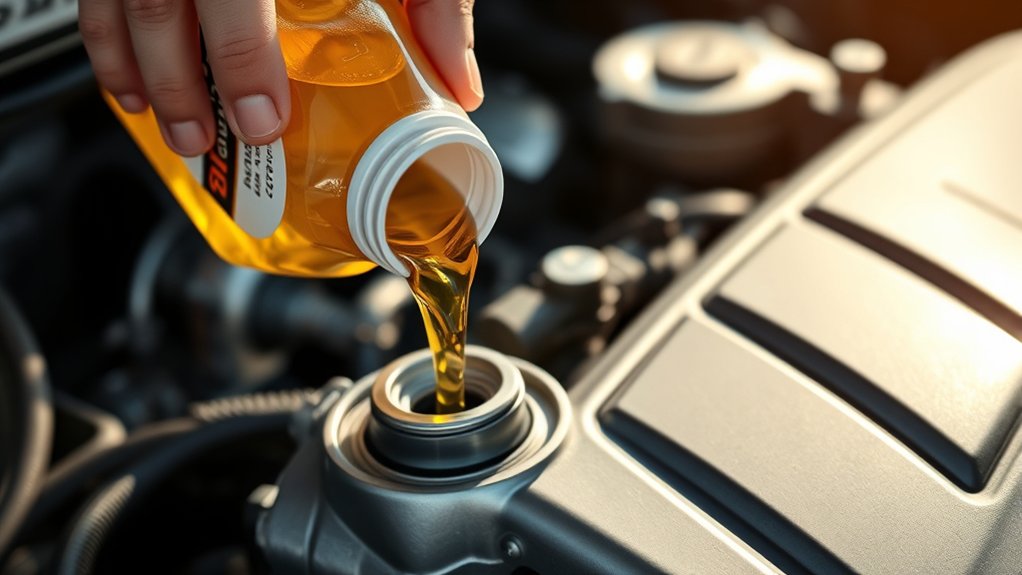
Start by locating the engine oil filler cap, typically marked with an oil can symbol, on your engine. Remove the cap carefully to prevent debris from entering the system.
Select the appropriate oil type based on your vehicle’s specifications. Using the wrong oil can impair performance.
Use a clean funnel to pour the oil, minimizing spills and ensuring accuracy. Add oil gradually, allowing it to settle before checking levels with the dipstick.
Follow maintenance tips like cleaning the filler cap and surrounding area to avoid contamination. After adding, securely replace the cap to maintain system pressure and prevent leaks.
Proper technique in adding engine oil safeguards engine components and supports peak function, so precision and cleanliness are key throughout this process.
How Much Engine Oil to Add Without Overfilling
Although adding engine oil may seem straightforward, knowing the exact amount to add is crucial to avoid overfilling, which can lead to engine damage. To determine how much oil to add without exceeding limits, follow these steps carefully:
- Consult your vehicle’s manual for oil capacity guidelines specific to your engine model.
- Use oil grade recommendations to select the appropriate viscosity and type for peak performance.
- Add oil incrementally. Pour a small amount, then wait a few minutes for it to settle before measuring.
- Avoid filling beyond the maximum mark on the dipstick to prevent pressure buildup and foaming inside the engine.
Adhering to these technical steps guarantees you maintain correct oil levels, preserving engine integrity and efficiency.
How to Check Engine Oil Levels After Adding
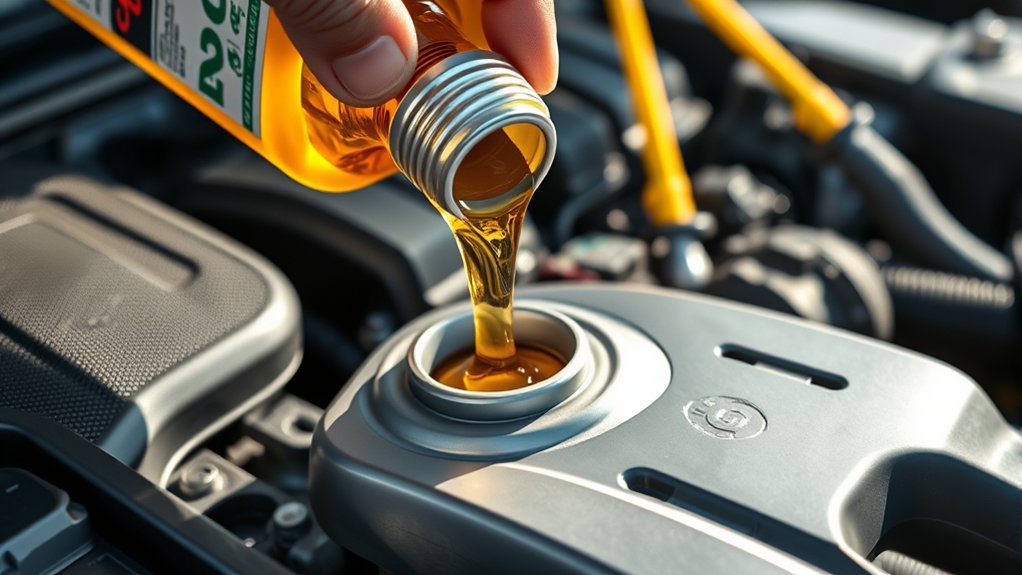
Once you’ve added the correct amount of engine oil, verifying the level guarantees you haven’t exceeded or fallen short of the ideal range. Begin by ensuring the engine is off and cooled. Use the oil dipstick usage method: remove, wipe clean, reinsert fully, then remove again to check the oil level indicators.
These indicators mark the minimum and maximum acceptable oil levels.
| Step | Description |
|---|---|
| Remove & Clean Dipstick | Wipe oil off for accurate reading |
| Reinsert Dipstick | Fully insert to get correct level |
| Check Oil Level | Oil should be between indicators |
If the oil level sits within these marks, you’re set. Otherwise, adjust accordingly for peak engine performance.
Common Mistakes to Avoid When Adding Engine Oil
When adding engine oil, you must avoid common mistakes that can compromise your engine’s performance or cause damage. Using the wrong oil viscosity can accelerate engine wear and reduce efficiency. Ignoring the maintenance schedule and oil change frequency increases the risk of sludge buildup and filter clogging.
Overfilling oil can result in leaks and damage to seals, so always measure carefully. Finally, avoid mixing oil additives without verifying compatibility, as some can harm the oil filter or catalytic converter, impacting environmental performance.
- Use the correct oil viscosity as specified.
- Follow your vehicle’s maintenance schedule precisely.
- Avoid overfilling to prevent leaks and seal damage.
- Verify compatibility before adding oil additives.
Proper leak detection and timely oil changes preserve engine health and reduce environmental impact.
Frequently Asked Questions
Can I Use Synthetic Oil in Any Car Engine?
You can use synthetic oil in most engines, but check your manual first. Synthetic advantages include better lubrication and temperature stability.
Ensuring engine compatibility prevents damage and maximizes performance, so always verify oil specifications before switching.
How Often Should I Change My Engine Oil?
Think of your engine oil as your car’s lifeblood; you should change it every 3,000 to 7,500 miles depending on your vehicle.
Follow oil change frequency guidelines and oil maintenance tips in your owner’s manual for peak performance.
What Are the Signs of Low Engine Oil?
You’ll notice decreased engine performance, warning lights, or unusual noises when the oil level is low. Monitoring these signs promptly helps prevent damage and maintains peak engine function, so always check your oil regularly.
Can Old Engine Oil Be Reused?
Reusing old engine oil is like drinking stale coffee; it loses effectiveness. You shouldn’t reuse it without proper oil filtration. Instead, follow safe oil disposal methods to protect your engine and the environment from contamination.
Is It Safe to Mix Different Brands of Engine Oil?
You can mix different brands of engine oil if their specifications match, ensuring oil compatibility. Brand differences usually don’t affect performance, but always check viscosity and certification.
This helps maintain proper engine protection and avoid potential issues.
Conclusion
Adding engine oil is like giving your car a crucial lifeline—pour it carefully into the engine oil filler cap, the heart of your vehicle’s lubrication system. Choose the right oil and add just enough, avoiding overfill to keep the engine running smoothly.
Checking levels afterward guarantees balance, like tuning an instrument. By following these steps precisely, you protect your engine’s health, extending its life and maintaining peak performance with every drive.
Remember, knowing where to put engine oil is essential for proper maintenance and ensuring your engine operates efficiently.