You’ll find the spark plug on your lawn mower screwed into the engine block near the cylinder head. It’s attached to a thick ignition wire, called the ignition lead, and often located by the handle or base of the engine.
The spark plug has a hexagonal metal body to fit a wrench easily. Knowing its exact spot helps when inspecting or replacing it to keep your mower running smoothly.
Understanding this makes maintenance simpler and more effective.
Key Takeaways
- The spark plug is located near the engine, often at the handle or base area of the lawn mower.
- It is attached to a thick wire called the ignition lead for electrical connection.
- The spark plug screws into the engine block close to the cylinder head.
- Look for a hexagonal metal body designed for wrench grip to identify the spark plug.
- Consult the mower’s owner manual for the exact spark plug location and type.
What a Lawn Mower Spark Plug Does and Why It Matters
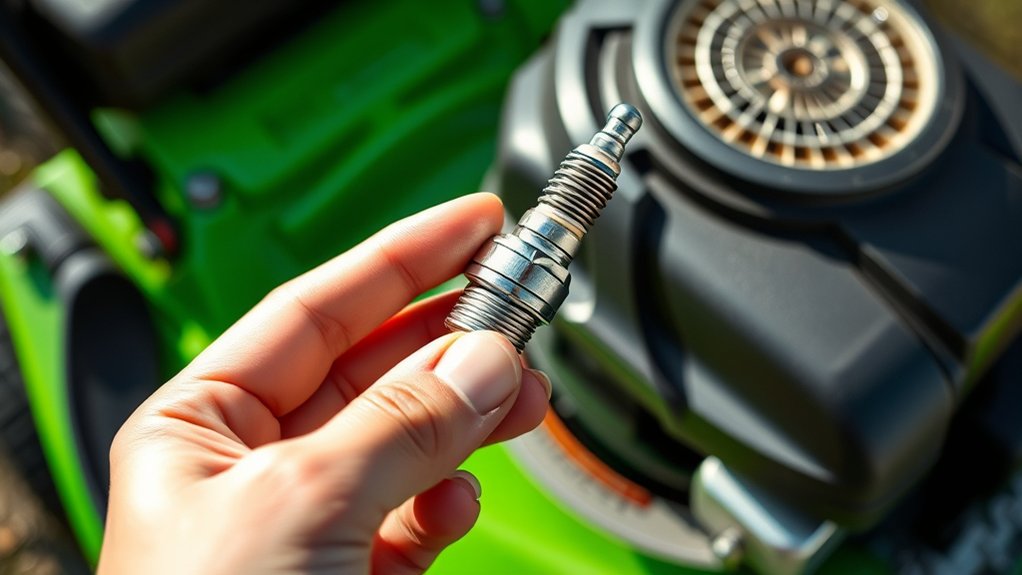
A spark plug ignites the air-fuel mixture inside your lawn mower’s engine, making it essential for starting and running smoothly. Without a functioning spark plug, your engine won’t fire properly, leading to poor engine performance or failure to start.
Different spark plug types, including copper, platinum, and iridium, offer varied durability and heat dissipation properties. Choosing the right spark plug type affects combustion efficiency and overall engine health.
Copper, platinum, and iridium spark plugs differ in durability and heat management, impacting engine efficiency and health.
Worn or incorrect spark plugs can cause misfires, reduced power, and increased fuel consumption. Regular inspection and replacement guarantee consistent ignition and peak engine performance, helping your mower run efficiently and extend its lifespan.
Understanding the role and impact of spark plug types lets you maintain your lawn mower effectively.
How to Identify and Locate the Spark Plug on Your Lawn Mower
Wondering where to find the spark plug on your lawn mower? Start by locating the engine, usually near the mower’s handle or base. The spark plug is a small, cylindrical component attached to a thick wire called the ignition lead.
Depending on your mower model, different spark plug types may be used, so check your mower compatibility in the owner’s manual or online. Generally, you’ll find the spark plug screwed into the engine block, often near the cylinder head.
It has a hexagonal metal body for easy wrench grip and a wire or boot connected to its top. Identifying your spark plug correctly guarantees you select the right replacement or perform maintenance effectively without damaging your mower.
What a Lawn Mower Spark Plug Looks Like
Once you’ve located the spark plug on your lawn mower, recognizing its appearance helps with proper handling and maintenance. A typical spark plug has a metal shell, a ceramic insulator, and a central electrode.
You’ll find different spark plug types designed for specific engines, such as standard copper, platinum, or iridium plugs, each offering varied durability and performance. Spark plug colors can also tell you about their condition; for example, a light tan or grayish color usually indicates normal operation, while black soot suggests fouling, and white deposits may point to overheating.
Knowing these visual cues and the types of plugs used allows you to choose the right replacement and maintain your mower’s engine efficiency effectively.
How to Remove and Inspect the Spark Plug Safely
Before you remove the spark plug, make certain the lawn mower is turned off and cooled down to prevent burns or accidental starts. Put on gloves and eye protection as safety precautions. Use the right spark plug tools, a spark plug socket with a ratchet wrench, to avoid damaging the plug or engine.
Carefully disconnect the spark plug wire by pulling the boot, not the wire itself, to prevent damage. Rotate the spark plug counterclockwise with your tools until it loosens, then remove it by hand. Inspect the spark plug for carbon deposits, oil, or damage, checking the electrode gap with a feeler gauge.
If needed, clean or replace the plug to guarantee proper engine performance. Reinstall the plug by hand first, then tighten with tools to avoid cross-threading.
Common Spark Plug Problems That Prevent Starting
If your lawn mower won’t start, the spark plug is often the first component you should check. Common spark plug problems like fouling, wear, or damage can cause spark plug misfires, interrupting ignition and preventing your mower from starting.
Deposits such as carbon, oil, or fuel residue can coat the plug, reducing spark effectiveness. Additionally, electrical issues like a loose or corroded spark plug wire can disrupt the flow of electricity needed for ignition.
You should inspect the plug for cracks, worn electrodes, or buildup that may hinder performance. Addressing these issues early can save you time and avoid unnecessary repairs.
When and How to Replace Your Lawn Mower Spark Plug
Replacing your lawn mower spark plug every season or after about 25 hours of use guarantees peak engine performance.
To replace it, first disconnect the spark plug wire, then use a spark plug socket to remove the old plug. Choose the right spark plug type specified in your mower’s manual, as using the wrong type can cause poor performance or damage.
Opt for trusted spark plug brands like NGK or Champion for reliability. Before installing the new plug, check the gap with a gap tool and adjust it to the recommended setting.
Screw the spark plug in by hand to avoid cross-threading, then tighten it securely with the socket. Reattach the spark plug wire, and your mower should start smoothly and run efficiently.
Tips for Maintaining Your Spark Plug to Keep Your Mower Running Smoothly
Though spark plugs are small, they play an essential role in your mower’s engine performance, so regular maintenance is key to keeping it running smoothly. Use proper cleaning techniques like gently brushing off debris and wiping electrodes with a clean cloth to improve spark plug longevity. Avoid abrasive tools that can damage the ceramic insulator.
Here’s a quick guide to maintain your spark plug effectively:
| Maintenance Task | Recommended Action |
|---|---|
| Cleaning | Use wire brush or cloth |
| Inspection | Check for cracks or wear |
| Gap Checking | Adjust gap to manufacturer specs |
| Replacement Frequency | Replace annually or after 100 hours |
Following these tips helps prevent misfires and guarantees efficient combustion, keeping your mower reliable and smooth.
Frequently Asked Questions
Can I Use a Car Spark Plug in My Lawn Mower?
You shouldn’t use a car spark plug due to spark plug compatibility issues. Lawn mower maintenance requires plugs designed for smaller engines, ensuring proper function and longevity.
Always choose the manufacturer’s recommended spark plug for best results.
How Much Does a Lawn Mower Spark Plug Cost?
You’ll find lawn mower spark plugs typically cost between $5 and $15, depending on spark plug types and spark plug brands.
Popular brands like Champion or NGK offer reliable options within this price range.
What Tools Do I Need to Change a Spark Plug?
Like clockwork, you’ll need a spark plug socket, ratchet, and gap gauge to handle different spark plug types. Changing frequency varies, so keep your tools ready to maintain peak mower performance efficiently and safely.
Can a Dirty Air Filter Affect the Spark Plug?
Yes, a dirty air filter can reduce spark plug performance by restricting airflow and causing fouling.
Regular air filter maintenance guarantees proper combustion, helping your spark plug fire efficiently and keeping your lawn mower running smoothly.
How Often Should I Check the Spark Plug in Winter?
You should check your spark plug at least once a month during winter. Regular spark plug maintenance guarantees reliable starts and efficient engine performance. This makes your winter preparation smoother and prevents unexpected mower troubles in cold conditions.
Conclusion
Now that you know where to find and care for your lawn mower’s spark plug, you’re well on your way to keeping your mower humming happily. Treating this small but mighty part with a little attention can prevent those frustrating “silent protests” when you’re ready to mow.
Regular checks and timely replacements guarantee your mower runs smoothly, saving you time and effort. A well-tended spark plug is like a quiet partner in your lawn care success.
Remember, understanding where is a spark plug on a lawn mower and maintaining it properly ensures your machine stays in top shape season after season.