You can buy engine oil from local suppliers, big-box and auto parts stores, gas stations, or online retailers.
Local shops offer quick access and expert advice, while big-box stores provide broad selections and competitive prices.
Gas stations are convenient for urgent needs but usually have limited, pricier options.
Always check viscosity, certifications, and manufacturer specs before purchasing.
If you want to optimize convenience, pricing, and product quality, there are key factors to take into account next.
Key Takeaways
- Buy engine oil locally for convenience, quick access, and expert staff assistance in selecting the right oil.
- Big-box and auto parts stores offer broad selections, competitive prices, and opportunities to compare brands on-site.
- Gas stations provide fast purchases but have limited choices and usually higher prices due to convenience markup.
- Online retailers and warehouse clubs often offer the best deals with bulk discounts and free shipping options.
- Always verify oil viscosity, type, and certifications on packaging to ensure it meets manufacturer specifications.
How to Choose the Right Engine Oil Before Buying
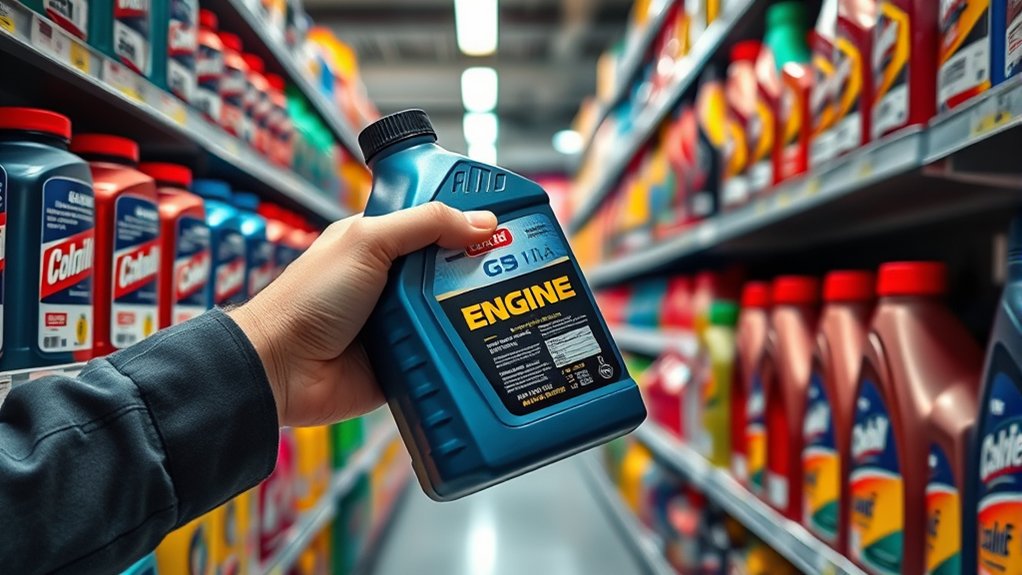
How do you determine the right engine oil for your vehicle? Start by consulting your owner’s manual for manufacturer recommendations on oil viscosity and type.
Understanding oil viscosity is essential. It reflects the oil’s thickness and flow at different temperatures. Choose the viscosity grade specified to guarantee ideal engine protection and performance.
Next, decide between synthetic vs. conventional oil. Synthetic oils offer superior stability, better high-temperature performance, and longer intervals between changes, whereas conventional oils are less expensive but may require more frequent replacement.
Consider your driving conditions; synthetic is preferable for extreme temperatures or heavy-duty use. Always verify the oil meets industry standards like API or ACEA certifications.
Buying Engine Oil Locally: Convenience and Quick Access
When you need engine oil immediately, buying locally offers unmatched convenience and speed. Local oil brands often stock a variety of viscosities and formulations suited to regional vehicle needs, ensuring compatibility.
Convenience factors such as proximity, extended store hours, and knowledgeable staff streamline your purchase, minimizing downtime. You’ll find that local suppliers maintain inventory tailored to local climate conditions, which can affect oil performance.
Additionally, you can inspect packaging and verify certifications on-site, providing assurance of product authenticity. While prices may vary, the primary advantage is rapid access, essential during emergencies or routine maintenance.
Finding the Best Deals on Engine Oil at Big-Box and Auto Parts Stores

While local stores offer quick access and personalized service, big-box and auto parts retailers provide a broader selection and competitive pricing on engine oil. You can often find discounts through bulk purchasing or loyalty programs, making these stores cost-effective.
Unlike many online retailers, they allow you to inspect packaging and verify specifications before buying. Comparing prices and brands in-store helps you avoid overpaying.
| Store Type | Price Range | Bulk Purchase Options |
|---|---|---|
| Big-Box Retailer | $20 – $50 per 5L | Yes, at discounted rates |
| Auto Parts Store | $18 – $45 per 5L | Yes, with membership |
| Online Retailers | $15 – $40 per 5L | Yes, often free shipping |
| Warehouse Clubs | $16 – $38 per 5L | Yes, quantity discounts |
| Specialty Stores | $22 – $55 per 5L | Limited |
Exploit these options to maximize value.
Buying Engine Oil at Gas Stations: Pros and Cons
Although gas stations offer the convenience of quick engine oil purchases during refueling stops, the selection and pricing often differ considerably from specialized retailers. When buying engine oil at gas stations, you’ll mostly find limited oil types, typically conventional blends under common gas station brands.
These options may not cover the full spectrum of viscosity grades or synthetic formulations required for specific engines. Additionally, prices at gas stations are often higher due to convenience markup. However, if you need oil urgently or lack access to specialty stores, gas stations provide immediate availability.
Still, for ideal engine performance, verify that the oil meets your manufacturer’s specifications. To conclude, gas stations serve as a convenient but sometimes costly source with limited oil types, while specialized retailers offer broader selections and competitive pricing.
Frequently Asked Questions
Can I Recycle Used Engine Oil After Changing It?
Yes, you can recycle used engine oil by utilizing local oil recycling options. Proper used oil disposal prevents environmental harm and complies with regulations.
Collect the oil safely and take it to authorized recycling centers or service stations.
How Often Should I Change My Engine Oil?
You don’t have to change your oil every tick of the clock, but stick to the manufacturer’s oil change frequency, usually every 3,000 to 7,500 miles.
Follow these engine maintenance tips to keep your motor purring smoothly.
What Are the Environmental Impacts of Improper Oil Disposal?
Improper oil disposal causes severe oil contamination, harming soil and water quality. You’ll contribute to ecosystem damage, disrupting wildlife habitats and aquatic life.
Always dispose of oil correctly to protect the environment and maintain ecological balance.
Is Synthetic Engine Oil Better Than Conventional Oil?
Think of synthetic oil as a high-performance athlete. It delivers superior oil performance with enhanced synthetic benefits like better viscosity, reduced engine wear, and improved temperature stability. This makes it generally better than conventional oil for your engine’s health.
Can Using the Wrong Oil Damage My Engine?
Yes, using the wrong oil viscosity or incompatible oil additives can damage your engine by reducing lubrication efficiency, increasing wear, and causing sludge buildup.
Always choose oil matching your engine’s specifications to guarantee peak performance and protection.
Conclusion
When it comes to buying engine oil, you’ve got options—each with its perks and drawbacks. Choosing the right oil is essential to keep your engine running smoothly, so don’t just grab the first bottle you see.
Whether you pick it up locally for convenience or hunt for deals at big-box stores, remember that quality shouldn’t be sacrificed. In this case, it pays to be an early bird and plan ahead to avoid costly engine damage.
Knowing where to buy engine oil can make all the difference in maintaining your vehicle’s performance and longevity.