You might not realize that when comparing Honda and Toyota, Toyota slightly outpaces Honda in long-term durability and hybrid options, despite both brands being renowned for reliability.
When choosing between them, factors like maintenance quality, driving feel, and tech features play a big role. Whether you prioritize sporty handling or broad eco-friendly choices can tip the scale.
Understanding these nuances will help you figure out which brand truly suits your lifestyle and expectations.
Key Takeaways
- Both Honda and Toyota offer strong reliability and long-term durability, with Toyota slightly leading in consistent dependability and warranty coverage.
- Honda delivers sportier performance and handling, while Toyota prioritizes smooth power delivery, comfort, and fuel efficiency, especially in hybrids.
- Toyota typically has better resale value and loyalty rates due to its reputation for reliability and comprehensive safety features.
- Honda provides advanced, user-friendly tech and sportier designs at generally more affordable starting prices than Toyota.
- Ownership satisfaction depends heavily on model history, maintenance, and local dealership service quality for both brands.
Reliability and Longevity: Honda vs Toyota
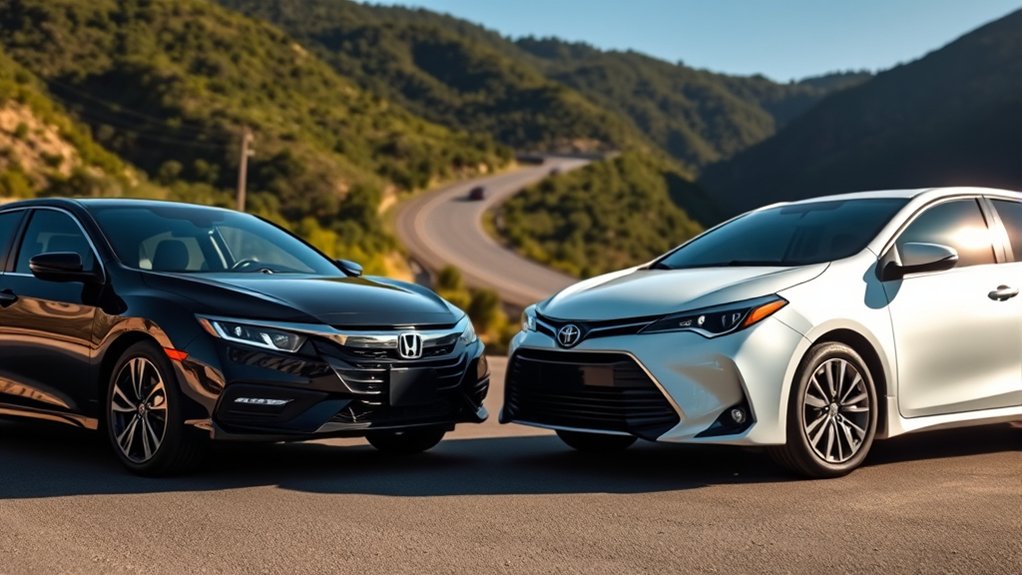
When it comes to reliability and longevity, how do Honda and Toyota really compare? Both brands have built reputations for dependability, but you should be aware of common reliability myths that can skew your judgment.
Honda and Toyota both have strong dependability reputations, but common myths can affect how we perceive their reliability.
For example, some believe Toyota’s durability always surpasses Honda’s, yet many Honda models consistently outlast expectations. Your dealership experiences also matter; routine maintenance and honest service can greatly influence a vehicle’s lifespan.
Dealers for both brands often emphasize preventative care, which helps maintain reliability over time. Statistically, Toyota and Honda score closely in long-term reliability ratings, so your choice may depend more on individual model history and how well you maintain the vehicle rather than brand alone.
Understanding these nuances helps you make a smarter decision.
Performance Comparison: Honda vs Toyota Engines and Handling
How do Honda and Toyota stack up in terms of engine performance and handling? Both brands excel but take different approaches. Honda often focuses on high-revving engines with precise engine tuning, delivering a sporty feel, especially in models like the Civic Type R.
Toyota, meanwhile, emphasizes smooth power delivery and efficiency, tuning engines for reliability and balance. When it comes to handling, consider these points:
- Honda incorporates race inspired suspensions that offer sharp cornering and responsive steering.
- Toyota uses a more comfort-oriented suspension setup, prioritizing stability over aggressive handling.
- Both brands offer sport-tuned variants, but Honda typically leans into driving dynamics more aggressively.
Choosing between them depends on whether you prioritize sporty engagement or balanced everyday performance.
Honda vs Toyota Safety Features Compared
What safety features matter most to you when choosing between Honda and Toyota? Both brands leverage precision engineering to enhance crash protection and incorporate advanced driver-assist technologies.
Toyota emphasizes its Safety Sense suite, while Honda offers Honda Sensing. These packages include adaptive cruise control and lane-keeping assist.
| Feature | Honda Sensing | Toyota Safety Sense |
|---|---|---|
| Collision Mitigation | Yes | Yes |
| Lane Keeping Assist | Yes | Yes |
| Adaptive Cruise Control | Yes | Yes |
| Hybrid Safety Tech | Integrated with hybrid innovations | Integrated with hybrid innovations |
Both systems provide robust safety, but your choice may depend on your preference for interface and additional features.
Fuel Efficiency and Eco Options: Honda vs Toyota
Curious about which brand delivers better fuel efficiency and eco-friendly options? Both Honda and Toyota excel, but each has unique strengths. When you compare their fuel economy and hybrid options, consider these points:
- Toyota leads with a broad hybrid lineup, including the Prius, known for outstanding fuel economy and compliance with strict emissions standards.
- Honda’s hybrid models, like the Accord Hybrid, use advanced battery tech to balance power and efficiency effectively.
- Both brands invest in improving emissions standards, but Toyota’s early adoption of hybrid tech gives it a slight edge in eco-friendly innovation.
If fuel economy and eco options top your list, Toyota offers more variety, while Honda provides solid performance with efficient battery tech. Your choice depends on whether you prioritize range or cutting-edge hybrid efficiency.
Technology and Infotainment: Which Brand Leads?
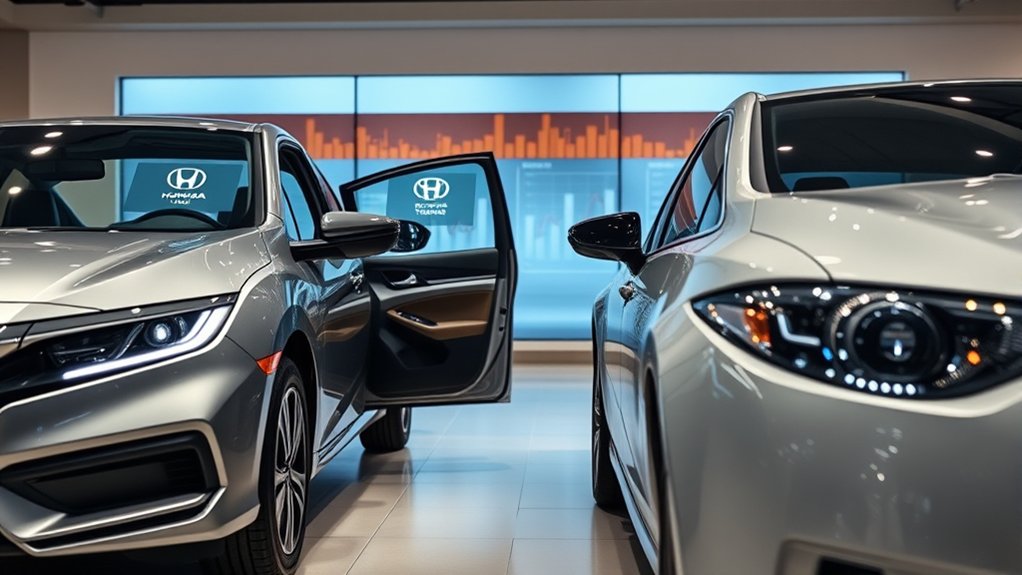
When comparing Honda and Toyota in technology and infotainment, which brand truly stands out? Both offer advanced systems, but you’ll notice some technology gaps. Honda’s infotainment usually features user-friendly interfaces and standard Apple CarPlay and Android Auto, but occasional infotainment glitches can disrupt your experience.
Toyota often integrates more safety tech, like their Safety Sense suite, and provides a robust infotainment system, though some users report slower response times and occasional software bugs. If you prioritize seamless smartphone connectivity, Honda might appeal more, while Toyota offers a broader range of driver-assist tech.
Ultimately, your choice depends on whether you value smoother infotainment operation or comprehensive safety features, as each brand excels differently in technology without a clear overall leader.
Honda vs Toyota SUVs: Which Fits Your Lifestyle?
How do you decide which SUV matches your lifestyle better: Honda or Toyota? Both brands offer reliable options, but considering your specific needs helps.
- Build and Drive: Honda SUVs typically use unibody construction, offering a smooth ride and efficient handling, ideal for city driving. Toyota, while also employing unibody designs in many models, leans toward ruggedness in some SUVs, suitable for occasional off-road use.
- Fuel Efficiency: Both brands provide hybrid variants in their SUV lineups, but Toyota’s hybrid technology often leads in fuel economy, perfect if you prioritize eco-friendly commuting.
- Space and Versatility: Honda’s SUVs generally emphasize interior comfort and cargo space, whereas Toyota balances passenger room with advanced safety features.
Assess these factors to find which aligns best with your daily routine and driving preferences.
Resale Value and Ownership Costs Compared
Why should resale value and ownership costs influence your choice between Honda and Toyota? When you buy a vehicle, you want it to hold value and cost less to maintain. Both Honda and Toyota rank high in resale value due to strong reliability trends, but Toyota often edges out Honda slightly in depreciation rates.
Ownership costs secondaries, like repairs, insurance, and fuel efficiency, also matter. Toyota’s reputation for durability can translate into lower long-term maintenance expenses, though Honda models are competitive. You’ll find that reliability trends for both brands contribute to fewer unexpected repairs, helping control ownership costs.
Ultimately, if you prioritize maximizing resale value and minimizing ongoing expenses, comparing specific models and your driving habits will help you decide which brand fits your financial goals better.
Owner Satisfaction and Loyalty: Honda vs Toyota
When you look at loyalty rates, both Honda and Toyota have strong followings, but subtle differences can influence your choice. Long-term ownership trends reveal how each brand holds up in customer satisfaction over time.
Understanding these patterns helps you see which brand might keep you happy for the years ahead.
Loyalty Rates Comparison
Which brand keeps drivers coming back time and again? When comparing loyalty rates between Honda and Toyota, both excel but differ slightly in brand perception and owner retention. Here’s what you should know:
- Toyota generally boasts higher loyalty rates, with around 50-55% of owners returning, reflecting strong brand trust and satisfaction.
- Honda’s loyalty rates hover near 45-50%, showing solid repeat ownership but slightly trailing Toyota’s consistency.
- Brand perception plays a key role. Toyota often ranks higher in reliability and resale value, influencing owner decisions to stay loyal.
If you’re weighing loyalty as a factor, Toyota’s edge in customer retention might sway you. However, Honda’s dedicated fan base also shows impressive loyalty, so your choice depends on which brand values resonate most with you.
Long-Term Ownership Trends
How do Honda and Toyota stack up over years of ownership? Both brands enjoy high owner satisfaction and loyalty, but subtle differences emerge. Toyota owners often praise the reliability and overall dealership experience, while Honda drivers sometimes report concerns about insufficient warranties.
Your long-term ownership satisfaction will also depend on local dealer support and service quality.
Here’s a quick comparison:
| Aspect | Honda | Toyota |
|---|---|---|
| Owner Satisfaction | High, but mixed warranty reviews | Consistently high |
| Loyalty Rate | Strong | Slightly higher |
| Dealership Experience | Variable, depends on location | Generally positive |
| Warranty Coverage | Sometimes seen as insufficient | More comprehensive |
| Long-Term Reliability | Excellent | Excellent |
Choosing between them means weighing warranty concerns against dealership service quality.
How to Choose Honda or Toyota Based on Your Needs
When choosing between Honda and Toyota, consider how their performance and reliability match your daily driving needs. You’ll also want to compare the features each brand offers against their pricing to find the best value.
Understanding these factors will help you decide which car suits your lifestyle and budget.
Performance and Reliability
Why does performance and reliability matter so much when choosing between Honda and Toyota? Both brands are known for dependability, but your choice should align with your specific needs influenced by factors like monetary policy and urban planning.
Here’s what to consider:
- Fuel Efficiency and Emissions: Urban planning often demands eco-friendly vehicles. Both Honda and Toyota offer efficient engines, but Toyota’s hybrid technology might edge out for stricter city regulations.
- Durability: Monetary policy impacts budget constraints, so you want a car that won’t require frequent repairs. Toyota generally scores slightly higher in long-term reliability.
- Driving Experience: Performance varies by model. Honda tends to offer sportier handling, ideal if you prioritize a dynamic driving experience over pure reliability.
Weigh these points carefully to match your lifestyle and financial situation.
Features and Pricing
Beyond performance and reliability, the features and pricing of Honda and Toyota models play a key role in your decision. You’ll want to weigh reliability quirks against budget tradeoffs carefully.
Honda often offers sportier designs and tech-rich interiors, while Toyota emphasizes safety features and fuel efficiency. Pricing varies by model and trim, so consider what you value most before deciding.
| Feature | Honda | Toyota |
|---|---|---|
| Starting Price | Generally affordable | Slightly higher entry prices |
| Tech & Infotainment | Advanced, user-friendly systems | Robust, practical interfaces |
| Safety Features | Standard but varies by model | Comprehensive, often standard |
| Fuel Efficiency | Competitive, especially hybrids | Leading in hybrid options |
| Reliability Quirks | Some models show minor issues | Known for consistent durability |
Choosing depends on your priorities and budget tradeoffs.
Frequently Asked Questions
Which Brand Has Better Customer Service and Dealership Experience?
You’ll find Toyota often scores higher in customer service and dealership experience, boosting brand loyalty through consistent support.
However, Honda’s service also impresses, so your satisfaction depends on individual dealer quality and personal preferences.
Are Honda or Toyota Vehicles Easier to Customize or Modify?
When you plunge into customization potential, Honda often leads with vast aftermarket support, making mods easier and more diverse. Toyota also offers strong options, but Honda’s enthusiast community gives you more creative freedom and parts availability.
How Do Honda and Toyota Compare in Terms of Global Market Presence?
You’ll find Toyota has a stronger global presence, thanks to its aggressive market strategy targeting diverse regions.
Honda also has a solid footprint but focuses more on specific markets, balancing innovation with regional demand effectively.
Which Brand Offers Better Financing and Leasing Options?
You’ll love how both brands pretend to outdo each other with financing options and lease terms, but honestly, their customer service and dealership experience stay pretty neck and neck, making your choice a matter of personal preference.
Are Honda or Toyota More Environmentally Responsible in Manufacturing?
You’ll find Toyota leads in environmental manufacturing with carbon-neutral goals and renewable energy use. Honda also improves sustainability, focusing on waste reduction.
Both support eco-friendly dealership service practices to minimize their environmental footprint effectively.
Conclusion
Choosing between Honda and Toyota is like picking the perfect tool for your needs—both are reliable and valuable, but each excels in different ways. Toyota offers unmatched durability and eco-friendly options, while Honda delivers sportier handling and cutting-edge tech.
Consider your driving style, maintenance preferences, and safety priorities to decide. Ultimately, focusing on the specific model history and features that matter most to you will lead to the best choice.
When it comes down to it, deciding which is better—Honda or Toyota—depends on what you value most in a vehicle.