You should check your engine oil when it’s warm because warm oil flows more freely, giving you an accurate level reading that reflects actual operating conditions.
Cold oil thickens and clings to components, causing misleading low readings that can lead to overfilling or underfilling.
Warm oil settles in the sump, showing true levels and proper viscosity.
Maintaining correct oil helps protect internal parts and optimize lubrication.
Understanding this is key for your engine’s health and performance.
Key Takeaways
- Warm engine oil flows better, providing a more accurate oil level reading on the dipstick.
- Checking oil when warm reflects the engine’s normal operating condition for reliable assessment.
- Warm oil prevents false low readings caused by thick, cold oil clinging inside the engine.
- Oil viscosity decreases with heat, ensuring proper lubrication and consistent measurement.
- Accurate warm oil checks help avoid overfilling or underfilling, protecting engine components.
How to Check Your Engine Oil When It’s Warm
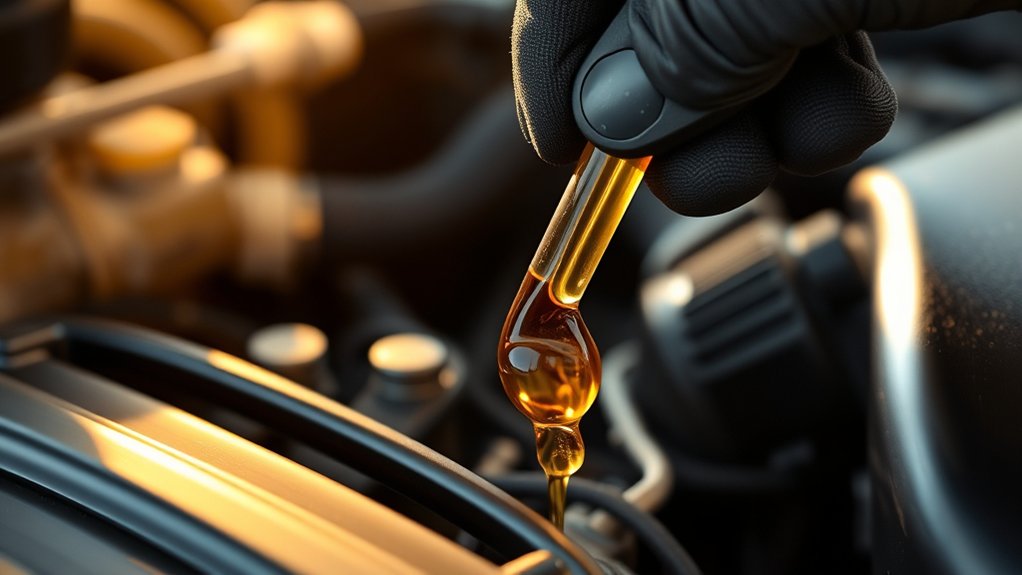
Anyone checking engine oil when it’s warm should first verify the engine has been off for a few minutes to allow the oil to settle. This pause guarantees the oil drains back into the sump, providing an accurate level reading.
When you pull out the dipstick, wipe it clean, then reinsert it fully before withdrawing it again to check the level. Pay close attention to the oil viscosity indicated by its appearance; proper viscosity is vital for ideal engine performance, as it affects lubrication efficiency and heat dissipation.
If the oil seems too thin or too thick, it may impair engine components. Regularly monitoring your warm engine oil helps maintain appropriate oil properties, preventing wear and making sure your engine runs smoothly under operating conditions.
Why Warm Engine Oil Gives a More Accurate Reading
Three key reasons explain why warm engine oil provides a more accurate reading than cold oil. First, oil viscosity decreases as temperature rises, allowing the oil to flow more freely and settle evenly in the sump. This guarantees the dipstick reflects the true oil level rather than a falsely elevated one caused by oil clinging to engine components.
Second, temperature effects reduce oil thickness, preventing pockets of oil from remaining trapped, which can distort measurements. Third, warm oil better represents the operating condition of your engine, giving you a realistic assessment of lubrication status.
The Risks of Checking Engine Oil When It’s Cold
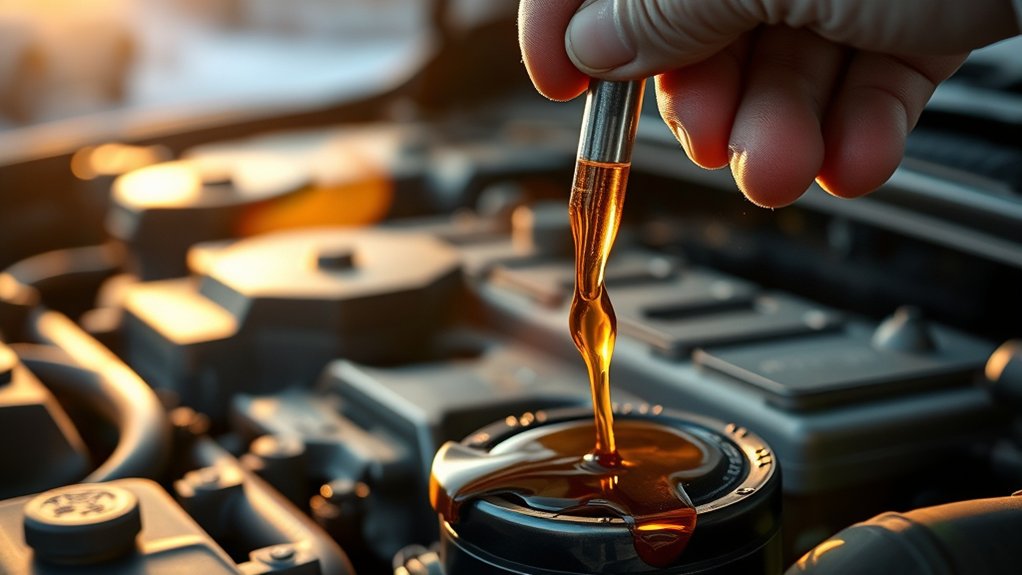
Although it might seem convenient, checking engine oil when it’s cold can lead to inaccurate readings that compromise your engine’s health. When the engine is cold, oil viscosity increases, causing the oil to thicken and cling to engine components rather than settling evenly in the oil pan.
This cold engine effect results in an artificially low oil level on the dipstick, making it difficult to assess the true quantity. Additionally, cold oil does not flow freely, so you risk misjudging the oil’s condition and potentially overlooking contaminants or degradation.
Relying on these inaccurate readings may cause you to either overfill or underfill the engine oil, both of which can damage internal parts or reduce lubrication efficiency. Always consider oil viscosity and cold engine effects before checking oil levels.
Tips for Maintaining Proper Engine Oil Levels
Maintaining proper engine oil levels requires regular checks and timely top-ups to guarantee ideal lubrication and engine performance. Start by adhering to your vehicle’s maintenance schedule for oil changes, ensuring you use the correct oil viscosity specified by the manufacturer.
Always check the dipstick reading when the engine is warm; this provides an accurate oil level measurement. Monitor engine health by observing oil color and consistency, as additives can degrade over time, reducing effectiveness.
If oil appears contaminated or low, add the appropriate oil type immediately to prevent wear. Regularly inspecting oil additives also helps maintain engine protection and efficiency. By following these precise steps, you’ll sustain peak oil performance, extend engine life, and avoid costly repairs.
Frequently Asked Questions
How Often Should I Change My Engine Oil?
You should follow your vehicle’s manual for oil change frequency, typically every 3,000 to 7,500 miles.
Regular changes minimize engine wear, ensuring lubrication efficiency and preventing damage from contaminants and degraded oil performance.
What Type of Oil Is Best for My Car?
You should choose oil based on your car’s manufacturer recommendations, balancing synthetic vs. conventional options. Synthetic oils offer better protection and longevity.
Oil viscosity must match your engine’s requirements for peak performance and efficiency.
Can Low Oil Levels Damage My Engine?
You’d think low oil levels could stop time, but they actually cause severe engine wear by reducing lubrication. Without proper oil viscosity, friction increases, damaging components and risking costly repairs.
How Do I Know if My Oil Is Contaminated?
You’ll know your oil is contaminated if the oil color turns dark or milky, indicating water or coolant mix.
Also, check the oil texture; gritty or thick oil suggests dirt or metal particles compromising engine performance.
What Tools Do I Need to Check Engine Oil?
You’ll need the oil dipstick for oil dipstick usage to measure levels accurately.
Also, keep engine oil types in mind when topping up, ensuring compatibility with your vehicle’s specifications for peak performance and protection.
Conclusion
So, you’ve been checking your engine oil cold, hoping for precision—ironic, right? Warm oil actually gives you the real deal, letting you avoid overfilling or underfilling that could harm your engine.
Next time, skip the chilly guesswork and check when the engine’s warm. It’s simple, accurate, and keeps your engine running smoothly.
Trust the science—your car will thank you, even if you don’t feel like waiting around! Always remember, the best time to check engine oil is when it’s warm.