Just as a locksmith targets the weakest lock, thieves focus on Honda catalytic converters for specific reasons. Honda catalytic converters are positioned low and exposed under many Honda models, making them quick to remove with basic tools. This accessibility makes them an easy target for theft.
Beyond accessibility, the valuable metals inside—platinum, palladium, and rhodium—command high prices on the scrap market. These precious metals are the primary motivation behind the thefts. Understanding these factors reveals why Hondas remain frequent targets.
This persistent theft trend continues because of the combination of easy access and valuable materials. Being aware of these reasons can help owners take preventive measures.
Key Takeaways
- Honda catalytic converters are mounted in accessible, low-clearance areas, enabling quick and stealthy removal.
- High concentrations of valuable metals like platinum and palladium increase the intrinsic worth of Honda converters.
- Popularity of Honda models provides a larger target pool, raising the likelihood of theft.
- Standardized parts simplify resale and replacement of stolen Honda catalytic converters, enhancing thief incentives.
- Elevated precious metal prices make theft more profitable, especially during market price surges.
Why Honda Catalytic Converters Are Easy Targets for Thieves
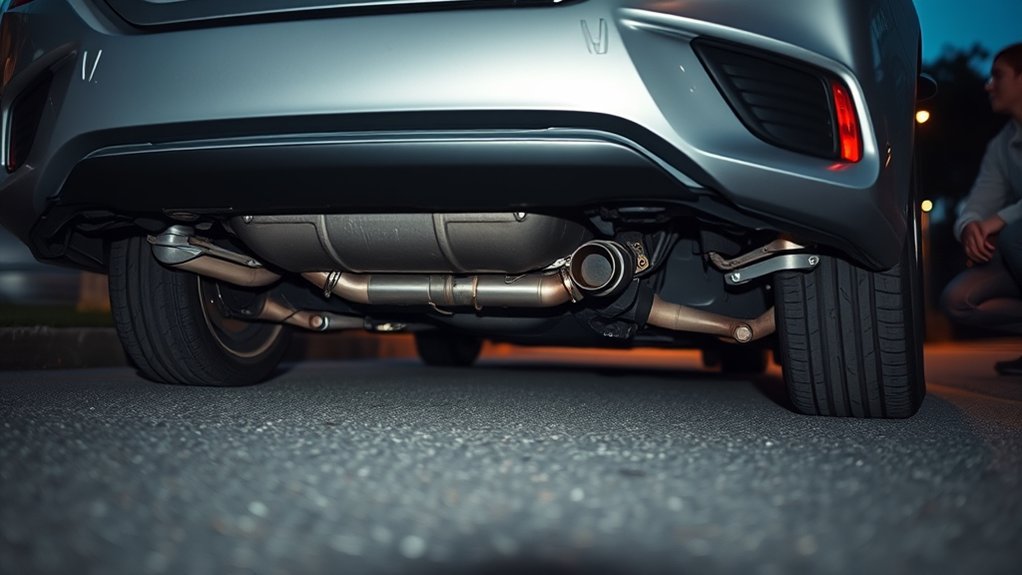
Why are Honda catalytic converters particularly vulnerable to theft? Their accessibility and design make them easy targets. You’ll find that many Honda models have catalytic converters mounted in exposed, low-clearance areas, allowing thieves to quickly cut them out with minimal effort.
This increases risk not only to your vehicle but also compromises bystander safety during the theft, as rapid, stealthy operations often occur in public spaces. To counter this, employing remote monitoring systems can alert you instantly to suspicious activity around your vehicle, enabling faster intervention.
Understanding these vulnerabilities helps you implement effective deterrents. Since Honda converters are straightforward to access, combining remote monitoring with physical protections is essential to reducing theft risk while safeguarding both your property and the safety of those nearby.
What Precious Metals Make Honda Catalytic Converters Valuable
Which precious metals give Honda catalytic converters their high value? Primarily, these converters contain platinum, palladium, and rhodium. Each metal plays a crucial role in reducing harmful emissions by catalyzing chemical reactions.
Platinum and palladium facilitate the oxidation of carbon monoxide and hydrocarbons, while rhodium excels in reducing nitrogen oxides. The concentrations of these metals in Honda converters are relatively high compared to other vehicles, increasing their market value.
Understanding the theft economics requires recognizing that the intrinsic worth of these precious metals drives theft. Thieves target Honda converters because extracting and selling these metals yields quick profits.
The metals’ high market demand and limited supply further inflate their value. Consequently, the presence of these specific precious metals directly influences the economic incentives behind catalytic converter theft.
How Scrap Prices Affect Catalytic Converter Theft
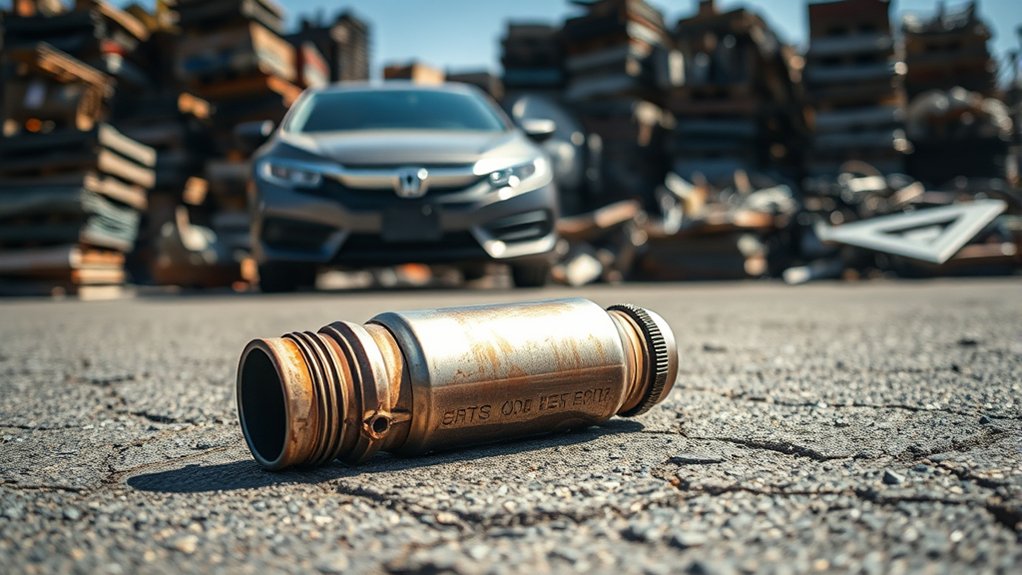
You need to monitor scrap metal market trends because fluctuations directly influence catalytic converter theft rates. When precious metal values rise, thieves find it more profitable to target Honda converters.
Understanding this correlation helps predict and mitigate theft risks effectively.
Scrap Metal Market Trends
How do fluctuations in scrap metal prices influence the surge in catalytic converter thefts? When the scrap market experiences an upswing, metal valuation rises accordingly, making catalytic converters more lucrative for thieves.
You’ll notice that as prices for key metals like platinum, palladium, and rhodium increase, the incentive to steal catalytic converters intensifies. This correlation is driven by the direct impact of market demand and global supply constraints on metal valuation.
Consequently, you can expect theft rates to spike during periods of high scrap metal prices. Staying informed about scrap market trends allows you to anticipate shifts in theft patterns, emphasizing the importance of monitoring metal valuation indexes closely to understand the financial dynamics behind catalytic converter thefts.
Impact of Metal Value
Metal valuation directly drives the frequency of catalytic converter thefts, as thieves target vehicles with components containing precious metals like platinum, palladium, and rhodium. You need to understand that fluctuations in scrap pricing significantly influence theft rates.
When the market prices for these high value metals rise, catalytic converters become lucrative targets. Since these metals are integral to converters’ function and rarity, their scrap value commands premium prices.
Consequently, elevated scrap pricing incentivizes thieves to extract converters quickly and resell them in secondary markets. Conversely, when metal prices drop, theft incidents tend to decline as potential profits diminish.
How the Popularity of Honda Models Increases Theft Risk
Why do certain vehicles attract more catalytic converter thefts than others? The answer lies in their popularity and market presence. When you consider Honda models, their widespread ownership means thieves have a larger pool of targets, increasing the likelihood of theft.
This isn’t an unrelated topic or an irrelevant idea; it’s a direct consequence of supply and demand dynamics. More Hondas on the road translate to more catalytic converters available for thieves to strip and resell.
Additionally, popular models often have standardized parts, making stolen converters easier to sell or use as replacements. So, the prevalence of Honda vehicles inherently elevates the risk you face as an owner, simply because thieves prioritize volume and resale potential in their selection process.
Why Honda Catalytic Converters Are Quick and Easy Targets for Thieves
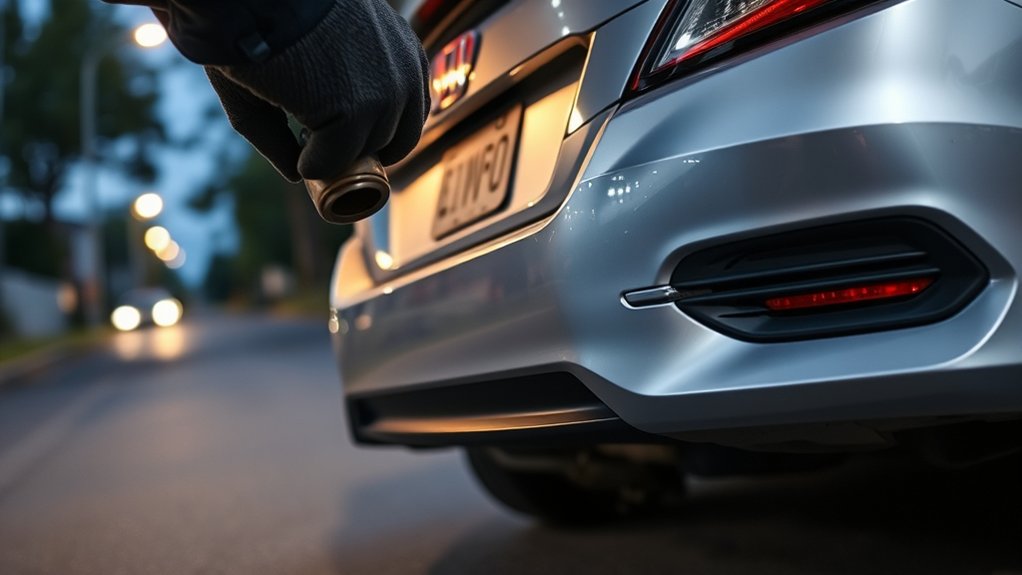
What makes Honda catalytic converters particularly vulnerable to theft is their accessibility and design. You’ll find them mounted in locations that are relatively easy to reach from underneath the vehicle, allowing thieves to remove them quickly.
Their compact size and standardized shape make extraction straightforward without specialized knowledge. This design, however, has implications for your car’s long term maintenance; frequent replacements or repairs due to theft can disrupt system calibrations, affecting overall performance.
Additionally, catalytic converters play a vital role in optimizing fuel efficiency by reducing harmful emissions. When stolen, you risk increased fuel consumption and engine strain.
Understanding this vulnerability highlights the importance of proactive measures to protect your Honda’s catalytic converter and maintain its operational integrity over time.
Tools and Techniques Used to Steal Honda Catalytic Converters
Given the ease of access and straightforward removal of Honda catalytic converters, thieves have honed specific tools and methods to exploit these vulnerabilities efficiently. You’ll often find they use cordless reciprocating saws or battery-powered angle grinders, enabling silent, swift cuts under vehicles.
These tools reduce noise and time, minimizing detection risk. Additionally, some thieves employ specialized jacks to lift vehicles quickly, facilitating rapid access. Understanding local reporting requirements is crucial because scrap yards must document metal sales, potentially deterring theft by tracking transactions.
Thieves, however, exploit gaps in reporting enforcement and focus on metal valuation, specifically the high prices for precious metals like platinum, palladium, and rhodium within Honda converters. This precise combination of tools and knowledge makes theft fast and profitable, challenging law enforcement efforts.
How Catalytic Converter Theft Impacts Honda Owners Financially
When your Honda’s catalytic converter is stolen, you face steep repair costs that can quickly add up. Insurance premiums often rise after a claim, increasing your ongoing expenses.
Additionally, the time your vehicle spends out of service creates indirect financial burdens you must consider.
Repair Costs Surge
How considerably does catalytic converter theft affect your finances as a Honda owner? Irreversible thefts force you to face substantial repair costs.
Replacing a stolen catalytic converter isn’t just about swapping parts; you have to address potential damage to the exhaust system and oxygen sensors, which adds layers to the expense. These hidden vulnerabilities in Honda models mean repair bills can escalate quickly, often reaching thousands of dollars.
Labor costs rise because mechanics must remove and reinstall components carefully to avoid further damage. Additionally, sourcing OEM parts for Hondas can be pricier than aftermarket alternatives, impacting your overall out-of-pocket expenses.
Understanding these technical and financial implications prepares you to anticipate the surge in repair costs following catalytic converter theft.
Insurance Premium Increases
Beyond the immediate repair expenses, catalytic converter theft can also influence your insurance costs as a Honda owner. Insurers view these thefts as high-risk claims, especially in areas with elevated theft rates, prompting premium hikes.
This increase directly affects your financial planning, as insurers adjust rates to offset the rising claims frequency. Inequality awareness becomes critical here; neighborhoods with lower economic resources often face disproportionate premium surges, reflecting systemic risk assessments rather than individual driver behavior.
Additionally, reduced neighborhood mobility due to theft concerns can indirectly impact insurance evaluations, as limited vehicle use may alter risk profiles over time. Understanding these dynamics helps you anticipate insurance cost fluctuations and navigate the broader socio-economic factors influencing your premiums after a catalytic converter theft.
Vehicle Downtime Expenses
Why does catalytic converter theft lead to significant vehicle downtime expenses for Honda owners? When your catalytic converter is stolen, you face immediate vehicle inoperability, requiring prompt replacement to restore functionality.
This downtime translates to direct financial losses, including rental car costs and lost work hours. Moreover, potential liability arises if you must use alternative transportation that lacks proper insurance coverage.
Insurance loopholes often complicate claims for theft-related repairs, sometimes excluding coverage for consequential losses. You might also encounter delays waiting for parts, as specific Honda models use unique converters that are costly and not readily available.
Therefore, beyond repair expenses, the downtime imposes a tangible financial burden, disrupting your daily routine and increasing out-of-pocket costs. Understanding these factors clarifies why downtime expenses significantly impact Honda owners following catalytic converter theft.
How Honda Owners Can Protect Their Catalytic Converters
When securing your Honda’s catalytic converter, what measures offer the most effective deterrence against theft? Begin by installing a catalytic converter lock or shield, which physically restricts access and complicates removal.
Consider engraving your vehicle identification number (VIN) on the converter to aid recovery and discourage thieves. Theft prevention also benefits from parking in well-lit, secure areas or inside garages to reduce vulnerability.
You should stay informed about local theft trends and engage with community awareness initiatives, as neighbors sharing information can identify suspicious activity early. Additionally, employing aftermarket alarms that detect vibrations near the undercarriage can provide immediate alerts.
How Law Enforcement and Communities Fight Catalytic Converter Theft
While individual precautions help protect your Honda’s catalytic converter, combating theft requires coordinated efforts from law enforcement and community groups. Authorities analyze patterns to pinpoint hotspots, ensuring resources aren’t wasted on irrelevant pairings or stray concepts that don’t impact theft rates.
Communities also educate members, avoiding off topic ideas that dilute focus.
Key strategies include:
- Implementing surveillance and patrols targeting known theft locations
- Partnering with scrap yards to track catalytic converter sales, preventing unrelated topics from interfering
- Promoting neighborhood watch programs that report suspicious activity promptly
Frequently Asked Questions
How Long Does It Take to Replace a Stolen Catalytic Converter?
Replacing a stolen catalytic converter typically takes 1-3 hours, depending on your car model. You should consider security upgrades to reduce car theft risks and guarantee technicians perform precise installation to maintain emissions compliance.
Are Certain Honda Models More Prone to Theft Than Others?
You might think all Hondas face equal risk, but certain models like the CR-V show higher Honda model susceptibility due to easier access. Employ theft deterrents like engraving or alarms to reduce vulnerability effectively.
Can Insurance Cover the Cost of a Stolen Catalytic Converter?
Yes, your insurance can cover stolen catalytic converters, but short term incentives to file claims may vary. Avoid unproven DIY fixes, as they might invalidate coverage or cause further damage, complicating your claim process.
What Are the Environmental Impacts of Catalytic Converter Theft?
You face increased environmental theft risks when catalytic converters vanish, releasing more pollutants. To mitigate this, you should implement security upgrades that deter theft, protecting both vehicle emissions control and broader ecological health effectively.
Are There Any Emerging Technologies to Prevent Catalytic Converter Theft?
You’ll find emerging technologies like GPS tracking, motion sensors, and catalytic converter locks enhancing prevention strategies. These precise, technical solutions actively deter theft by increasing risk and reducing easy access to catalytic converters on vehicles.
Conclusion
You might think catalytic converter theft won’t happen to you, but Honda’s design and metal content make your vehicle a prime target. Thieves exploit easy access and high scrap values, so ignoring the risk isn’t wise.
By understanding these factors and taking protective measures, you can reduce your chances of becoming a victim. Staying informed and proactive is your best defense against this costly and growing problem.
Being aware of why people steal catalytic converters from Honda can help you protect your vehicle effectively.