To change your mower spark plug, first disconnect the spark plug wire using pliers.
Use the correct spark plug socket wrench to unscrew the old plug, keeping it straight to avoid damage.
Check the new plug’s gap and thread it in by hand to prevent cross-threading, then tighten to specs with a ratchet.
Reattach the wire securely.
Regular replacement boosts engine efficiency and starting ease.
If you want to optimize performance and avoid common issues, there’s more to explore.
Key Takeaways
- Disconnect the spark plug wire by pulling the boot firmly before beginning removal.
- Use a spark plug socket and ratchet to loosen and remove the old spark plug carefully.
- Inspect the old plug for wear, carbon buildup, or damage to determine replacement need.
- Hand-thread the new spark plug to avoid cross-threading, then tighten to specified torque.
- Reattach the spark plug wire securely and check the boot for cracks or corrosion.
When to Replace Your Mower Spark Plug
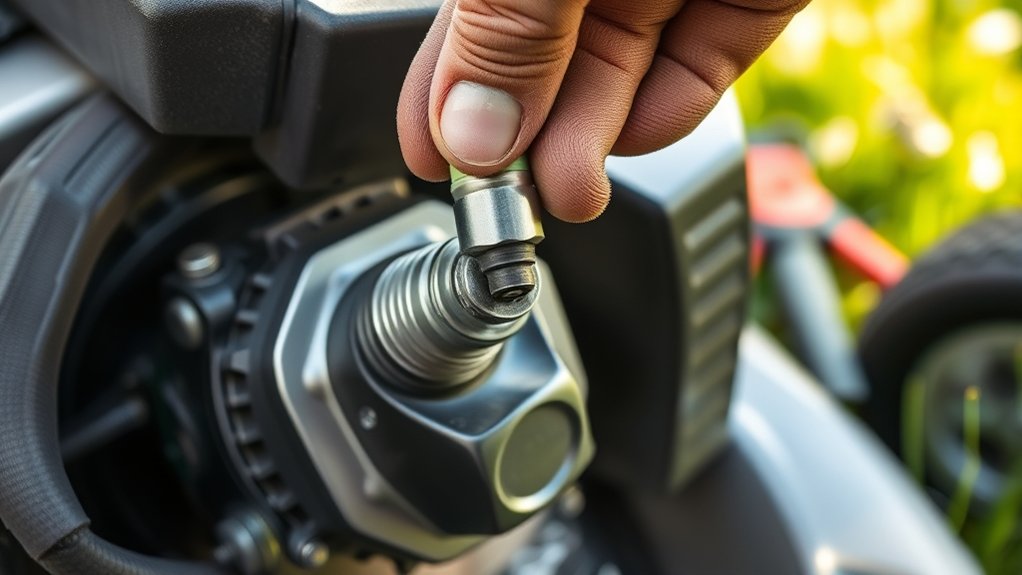
Spark plugs play a critical role in your mower’s performance, and knowing when to replace them can prevent engine issues. You should monitor for signs of malfunction such as difficulty starting, engine misfires, or reduced power output.
Excessive fuel consumption or rough idling also indicates spark plug degradation. Follow your mower’s maintenance schedule, typically replacing the spark plug every 25 to 50 hours of operation or annually, whichever comes first.
Inspect the spark plug during routine maintenance; look for worn electrodes, carbon buildup, or cracked porcelain insulators. Ignoring these signs can lead to inefficient combustion and engine damage.
Replacing the spark plug timely guarantees peak ignition, fuel efficiency, and prolongs engine life. Staying proactive with your maintenance schedule helps maintain prime mower performance without unexpected breakdowns.
Tools You Need to Change a Mower Spark Plug
Changing a mower spark plug requires a few essential tools to guarantee the job is done efficiently and safely. First, you’ll need a spark plug socket wrench, sized to fit your mower’s spark plug, for proper removal and installation without damage.
A gap gauge is vital to measure and adjust the spark plug gap, ensuring ideal spark plug maintenance. Use a wire brush or spark plug cleaner to remove carbon deposits during spark plug cleaning, which improves performance and longevity.
Additionally, have a pair of pliers handy for disconnecting the spark plug wire, and some anti-seize lubricant to apply on the threads before installing the new plug. These tools streamline the process, reduce the risk of damage, and promote effective spark plug maintenance.
Removing the Old Spark Plug
With the right tools in hand, you’re ready to remove the old spark plug safely and efficiently. First, disconnect the spark plug wire by firmly pulling the boot, avoiding damage to the wire.
Next, use a spark plug socket attached to a ratchet to turn the spark plug counterclockwise. Apply steady pressure to prevent stripping the threads. Once loose, remove the spark plug by hand.
Inspect the spark plug for wear or deposits as part of spark plug maintenance; this can indicate engine issues affecting mower performance. Keep the spark plug straight during removal to avoid damaging the cylinder head.
Proper removal guarantees that the engine remains in good condition and sets the stage for peak mower performance after replacement.
Choosing the Right Spark Plug
You need to select a spark plug type that matches your mower’s engine specifications, such as heat range and electrode design. Using a plug incompatible with your mower can lead to poor performance or engine damage.
Always check the manufacturer’s recommendations to guarantee proper fit and function.
Spark Plug Types
Although spark plugs may look similar, choosing the right type for your mower is essential for peak performance and engine longevity. Spark plug materials vary, with copper, platinum, and iridium being the most common.
Copper plugs offer excellent conductivity but wear out faster, while platinum and iridium provide longer life and better resistance to fouling. When selecting a spark plug, consider reputable spark plug brands known for quality and reliability to guarantee consistent ignition and durability.
Each material affects heat range and spark efficiency, influencing engine operation under different conditions. By understanding these factors, you can select a spark plug that matches your mower’s demands, improving fuel efficiency and reducing maintenance frequency.
Always prioritize materials and brands that meet or exceed manufacturer specifications.
Compatibility With Mower
Verifying spark plug compatibility with your mower is crucial for peak engine performance and reliability. Begin by consulting your mower specifications, typically found in the owner’s manual or on the engine label.
These specs include required spark plug type, heat range, thread size, and gap measurements. Selecting from reputable spark plug brands guarantees quality and durability, which directly affects ignition efficiency and fuel economy.
Avoid generic plugs that don’t match your mower’s specifications, as mismatched plugs can cause misfires, hard starts, or engine damage. Always confirm the exact model number recommended for your mower’s engine.
Installing the New Spark Plug
Begin by carefully threading the new spark plug into the engine’s cylinder head by hand to avoid cross-threading. Once it’s snug, use a spark plug socket and ratchet to tighten it further.
Follow the manufacturer’s torque specifications precisely. Over-tightening can damage the threads, while under-tightening may cause poor engine performance. Remember, proper spark plug care is essential for mower longevity.
After tightening, reconnect the spark plug wire firmly to guarantee a secure electrical connection. As a maintenance tip, inspect the spark plug boot for cracks or corrosion before reattaching.
These steps guarantee peak ignition and efficient engine operation. Consistently applying these maintenance tips will help you avoid common spark plug issues and keep your mower running smoothly season after season.
Testing Your Mower After Spark Plug Change
Once you’ve installed the new spark plug, you’ll need to test your mower to confirm proper operation. This step guarantees you’ve resolved any starting issues and restored peak engine performance.
Begin by following these key checks:
- Attempt to start the engine; it should turn over quickly without hesitation.
- Listen for smooth, consistent engine sounds indicating stable combustion.
- Observe for any unusual smoke or smells during operation.
- Check that the mower runs at steady RPMs without stalling.
- Monitor responsiveness when you adjust the throttle or engage the blades.
If the mower starts easily and runs smoothly, your spark plug replacement was successful. Proper testing prevents further mechanical problems and confirms your mower’s readiness for regular use.
Troubleshooting Common Spark Plug Issues
If your mower still struggles after replacing the spark plug, it’s important to diagnose common issues that might be causing the problem. Spark plug wear can affect engine performance, leading to misfires, hard starting, or rough idling.
Check the electrode gap and verify the plug is the correct type for your mower. Also, inspect for carbon deposits or oil fouling, which indicate underlying engine issues.
| Symptom | Possible Cause |
|---|---|
| Engine misfires | Spark plug wear/gap |
| Hard starting | Faulty spark plug |
| Rough idle | Carbon deposits |
| Low power output | Incorrect plug type |
Addressing these will restore peak engine performance and extend your mower’s lifespan.
Frequently Asked Questions
How Often Should You Clean a Mower Spark Plug?
You should clean your mower’s spark plug every 25 hours of use to guarantee ideal spark plug maintenance. This routine helps maintain efficient mower performance and prevents engine misfires or starting issues.
Can a Bad Spark Plug Cause Mower Fuel Issues?
Yes, spark plug failure can cause mower fuel issues by disrupting combustion, reducing fuel efficiency.
When your spark plug misfires or fouls, your engine burns fuel inefficiently, leading to poor performance and increased fuel consumption.
What Is the Cost Range for Replacing a Spark Plug Professionally?
You won’t pay a fortune. Professional spark plug replacement typically costs $20 to $60, depending on spark plug types and labor. Follow installation tips like proper gap setting and torque to guarantee peak mower performance and longevity.
Are Spark Plugs Universal for All Mower Brands?
You won’t find universal spark plug types for all mowers. You need to check your mower compatibility because different brands require specific plugs based on size, heat range, and electrode design for peak performance and safety.
How Do Weather Conditions Affect Spark Plug Performance?
Cold weather can hinder ignition, while heat may cause fouling, so you’ll need to take into account spark plug types suited for temperature extremes.
Regular seasonal maintenance guarantees peak performance despite these contrasting weather challenges.
Conclusion
Changing your mower spark plug is essential for maintaining engine performance, preventing misfires, and ensuring easy starts. You’ll gather the right tools, remove the old plug carefully, select the correct replacement, install it properly, and test your mower thoroughly.
By following these steps, you’ll optimize fuel efficiency, reduce emissions, and extend your mower’s lifespan. Stay proactive, stay precise, and keep your mower running strong season after season.
Regular maintenance, including how to change a mower spark plug, is key to keeping your equipment in top condition and ready for any mowing task.