If you inspect your spark plug, you’ll likely see signs of a fouled spark plug, such as excessive carbon buildup, oily deposits, or a black sooty coating—each indicating fouling.
These visual signs are clear indicators that something is wrong with your ignition system.
You might also notice white blistering on the insulator caused by heat damage or cracks in the electrode from wear.
These cues show your ignition system isn’t working efficiently, which can lead to engine misfires and reduced performance.
Understanding these details can help you identify specific fouling types and decide whether to clean or replace the spark plug.
Key Takeaways
- Fouled spark plugs have excessive carbon buildup appearing as dry, black deposits on the electrode.
- Oily deposits on the plug indicate oil contamination from leaks into the combustion chamber.
- White, blistered areas on the insulator show signs of heat damage and overheating.
- Black, sooty coatings suggest carbon fouling caused by a rich fuel mixture.
- Visible cracks or erosion around the electrode reveal wear and potential plug failure.
What Is a Fouled Spark Plug: And Why It Matters
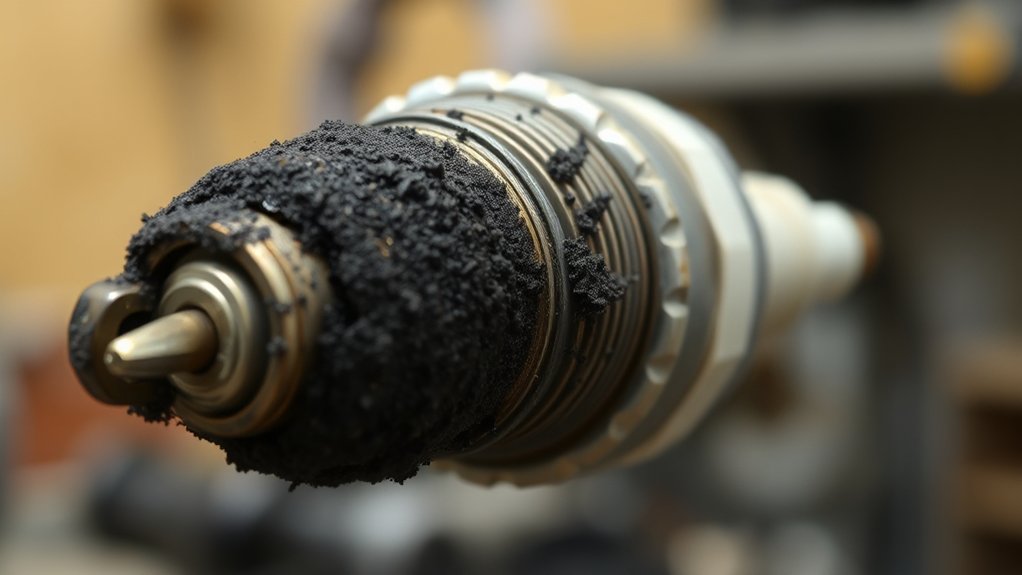
A fouled spark plug occurs when deposits build up on the electrode or insulator, disrupting the spark needed for effective combustion. Since the spark plug function is to ignite the air-fuel mixture within the combustion chamber, any interference in the ignition system compromises engine performance.
When fouling happens, the spark weakens or fails, causing misfires, reduced power, and increased emissions. You need to understand this because a compromised ignition system can lead to inefficient fuel usage and potential engine damage over time.
Maintaining clean spark plugs guarantees ideal ignition timing and combustion efficiency. Recognizing the impact of fouled plugs helps you prioritize timely inspection and replacement, keeping your engine running smoothly and preventing costly repairs linked to ignition failure.
Visual Signs of a Fouled Spark Plug
Understanding the effects of a fouled spark plug on engine performance leads naturally to identifying its physical indicators. When inspecting, focus on fouled spark plug characteristics such as excessive carbon buildup, oily deposits, or a white, blistered appearance. These signs reveal combustion issues or contamination.
Spark plug inspection tips include closely examining the electrode and insulator for discoloration, wear, or damage. A fouled spark plug often shows a black, sooty coating indicating carbon fouling, or a wet, oily surface suggesting oil fouling. You should also check for cracks or erosion around the electrode.
Recognizing these visual cues helps diagnose engine problems early and maintain peak performance. Precise inspection using these guidelines guarantees you identify fouled spark plugs before they cause serious engine damage.
Common Types of Fouled Spark Plugs Explained
When spark plugs foul, they do so in distinct ways that directly affect engine function. Understanding the common types helps you diagnose issues quickly:
- Carbon Buildup: This results from a rich fuel mixture, leaving dry, black deposits on the electrode. It impedes spark formation and reduces combustion efficiency.
- Oil Contamination: Oil leaking into the combustion chamber coats the spark plug with wet, oily residue, often due to worn piston rings or valve seals. This fouling disrupts ignition and causes misfires.
- Heat Damage and Electrode Erosion: Excessive heat causes electrode erosion and blistering. Prolonged exposure leads to excessive wear, increasing the gap and weakening the spark, which can cause poor engine performance.
Recognizing these types lets you address underlying problems to restore peak spark plug function.
Engine Symptoms of Fouled Spark Plugs
Several engine symptoms can indicate that your spark plugs are fouled, directly impacting performance and efficiency. You might notice rough idling, where the engine runs unevenly or vibrates excessively. This happens because fouled plugs disrupt the consistent ignition of the air-fuel mixture.
Additionally, you could experience hesitation or misfires during acceleration, signaling ignition issues caused by poor spark quality. Reduced fuel economy is another clear sign; incomplete combustion forces your engine to consume more fuel to maintain power.
You may also detect a noticeable drop in engine performance, such as sluggish acceleration and lower power output. If your vehicle struggles to start or stalls frequently, fouled spark plugs are often the culprit behind these ignition issues, affecting the overall reliability and smooth operation of your engine.
When to Clean or Replace Fouled Spark Plugs
Recognizing the symptoms of fouled spark plugs is only the first step; knowing the right moment to clean or replace them guarantees your engine maintains peak performance. Use these guidelines to decide:
- Inspect electrode wear: If the electrode shows minor deposits or carbon buildup, apply proper cleaning techniques like wire brushing or spark plug cleaner to restore function.
- Evaluate damage severity: When electrodes are eroded, cracked, or heavily fouled beyond cleaning, follow replacement tips by selecting plugs matching your engine specifications.
- Monitor engine performance: Persistent misfires or poor fuel economy after cleaning indicate replacement is necessary to avoid further engine damage.
Frequently Asked Questions
Can Fouled Spark Plugs Damage the Catalytic Converter?
Yes, fouled spark plugs can cause catalytic converter damage by allowing unburned fuel into the exhaust, overheating the converter.
You should prioritize spark plug maintenance to prevent inefficiencies and costly catalytic converter repairs.
How Does Fuel Type Affect Spark Plug Fouling?
Like a painter’s brush affected by paint type, fuel quality and spark plug materials influence fouling rates. Poor fuel leaves deposits quicker, while advanced materials resist buildup, ensuring consistent ignition and longer spark plug life under varying conditions.
Do Fouled Spark Plugs Impact Fuel Efficiency?
Yes, fouled spark plugs disrupt the fuel mixture’s combustion, lowering fuel efficiency. You should follow maintenance tips like regular inspections and cleaning to guarantee peak spark plug performance.
This helps maintain proper fuel mixture for better engine efficiency.
Can Weather Conditions Cause Spark Plug Fouling?
Yes, weather impact can cause spark plug fouling. You’ll need regular spark plug maintenance to prevent moisture, cold temperatures, or humidity from causing deposits or corrosion.
These issues impair ignition and reduce engine performance.
Are Fouled Spark Plugs Covered Under Vehicle Warranty?
You typically won’t get warranty coverage for fouled spark plugs since they’re considered normal wear items. However, if fouling results from a defect, your warranty might cover it within the specified spark plug lifespan.
Conclusion
Now that you know what a fouled spark plug looks like and why it matters, don’t let your engine cough and sputter in silence. Like a heartbeat skipping beats, a fouled plug disrupts performance and efficiency.
Keep an eye out for the signs, and clean or replace plugs promptly to maintain smooth operation. Remember, a well-maintained spark plug is the spark that keeps your engine firing at its best.
Taking care of your spark plugs helps ensure your vehicle runs efficiently and reliably. Knowing what a fouled spark plug looks like is key to timely maintenance and preventing bigger engine problems.