You should replace spark plugs as soon as you notice signs like engine misfires, rough idling, or reduced fuel efficiency.
Following the recommended intervals based on your plug type is also important. Copper plugs need changing every 20,000 to 30,000 miles, while platinum and iridium last 60,000 to 100,000 miles.
Driving style and engine performance can also affect their lifespan. Proper selection and timely replacement help maintain peak engine function.
Explore how to diagnose, select, and install spark plugs effectively.
Key Takeaways
- Replace spark plugs every 20,000-30,000 miles for copper, and every 60,000-100,000 miles for platinum or iridium types.
- Inspect spark plugs if experiencing engine misfires, rough idling, or reduced fuel efficiency as signs of wear.
- Worn electrodes, cracks, deposits, or excessive gap widening indicate the need for replacement.
- Replace spark plugs promptly to avoid engine damage and increased operational costs.
- Follow manufacturer recommendations for heat range, thread size, and gap specifications when replacing spark plugs.
How to Diagnose Spark Plug Wear
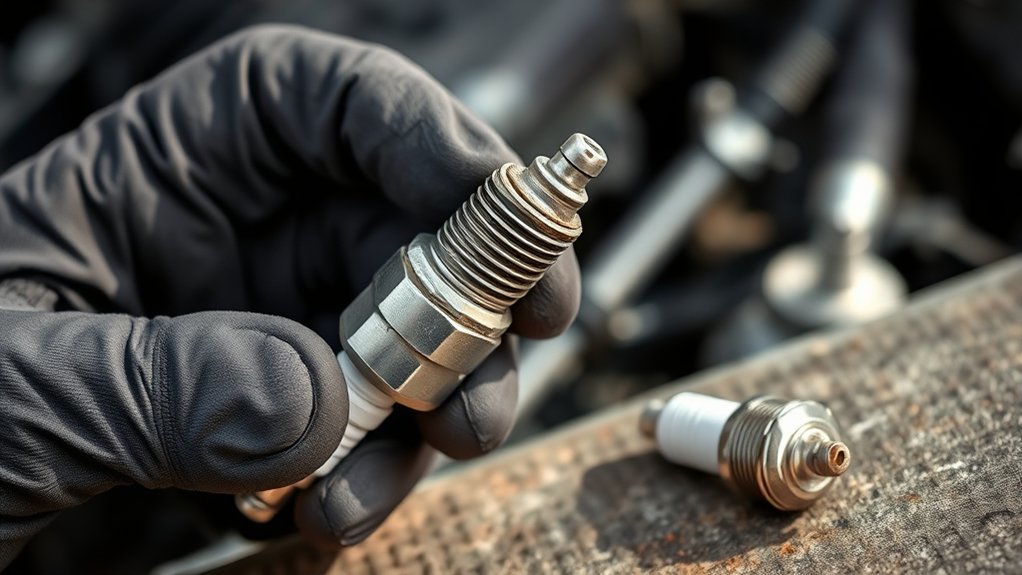
How can you tell when your spark plug is wearing out? Start with a thorough spark plug inspection. Remove the plug and examine it closely under good lighting. Focus on wear indicators such as electrode erosion, rounded edges, or excessive gap widening. These signs suggest your spark plug is losing efficiency.
Check the insulator for cracks or deposits, which can affect performance. Use a feeler gauge to measure the electrode gap accurately; an increased gap often signals wear. Also, inspect for discoloration patterns that can hint at overheating or improper combustion.
Common Signs of Worn or Faulty Spark Plugs
You’ll notice engine misfires or hesitation during acceleration when spark plugs wear out. These issues often lead to reduced fuel efficiency, as incomplete combustion wastes fuel.
Recognizing these symptoms early helps you maintain peak engine performance.
Engine Misfire Symptoms
Although engine misfires can stem from various issues, worn or faulty spark plugs are among the most common causes. When a spark plug deteriorates, it disrupts the ignition timing, causing incomplete combustion.
You might notice your engine stuttering or hesitating during acceleration, indicating inconsistent firing. This irregularity directly affects engine performance, leading to rough idling or a noticeable loss of power.
Additionally, misfires often trigger the check engine light, signaling you to investigate further. If you experience these symptoms, inspect your spark plugs for wear, fouling, or damage.
Addressing spark plug issues promptly guarantees precise ignition timing and efficient engine operation, preventing further mechanical complications and maintaining overall vehicle reliability.
Reduced Fuel Efficiency
When spark plugs wear out or become fouled, they fail to ignite the air-fuel mixture efficiently, causing your engine to consume more fuel than necessary. This inefficiency disrupts the fuel system’s balance and lowers overall combustion efficiency, directly impacting fuel economy. You might notice a decrease in miles per gallon, indicating reduced fuel efficiency.
Here’s why worn spark plugs affect your fuel economy:
- Incomplete combustion leads to unburned fuel, wasting resources.
- The fuel system compensates by injecting more fuel to maintain power.
- Engine strain increases, causing inefficient fuel utilization.
Monitoring these signs helps you maintain peak combustion efficiency and prevents unnecessary fuel consumption, ensuring your vehicle runs cost-effectively and smoothly.
How Spark Plug Types Impact Replacement
Since different spark plug types are designed with varying materials and construction, they directly affect your vehicle’s replacement intervals and performance. Copper plugs, with their excellent conductivity, offer strong initial performance but wear out faster due to softer electrodes.
Platinum plugs provide improved longevity through harder electrodes and better resistance to heat, while iridium plugs, featuring finer electrode design, deliver superior durability and consistent spark quality. The heat range of each plug influences combustion temperature management, impacting engine efficiency and component lifespan.
Additionally, the plug gap must be precisely set to accommodate the specific spark plug type, as variations affect ignition timing and fuel combustion. Understanding these performance differences and longevity factors helps you choose the right spark plug, ensuring peak engine operation and timely replacement.
Spark Plug Replacement Intervals Explained
Understanding the differences in spark plug materials and designs directly influences how often you need to replace them. Spark plug materials like copper, platinum, and iridium each have distinct lifespans affecting replacement intervals. Performance upgrades often demand spark plugs that handle higher stress, altering these intervals further.
Knowing spark plug materials helps determine ideal replacement schedules for optimal engine performance.
Consider these key factors for replacement intervals:
- Copper spark plugs typically require replacement every 20,000 to 30,000 miles due to faster electrode wear.
- Platinum and iridium plugs last longer, often between 60,000 and 100,000 miles, thanks to their durable electrodes.
- Vehicles with performance upgrades might need more frequent checks and replacements to maintain peak combustion efficiency.
How Driving Habits Affect Spark Plug Life
Although spark plug materials set a baseline for lifespan, your driving habits play an essential role in determining how long they actually last. The fuel type you use affects combustion efficiency, influencing spark plug wear.
Frequent short trips prevent the engine from reaching ideal temperature, causing deposits to build up faster on the plugs. Conversely, long trips at steady driving speed promote cleaner combustion and extend plug life.
Aggressive acceleration patterns and harsh driving conditions increase electrode erosion, reducing spark plug lifespan. Temperature extremes also impact durability by affecting material expansion and contraction.
Additionally, vehicle age and maintenance habits directly influence engine performance and spark plug effectiveness. To maximize spark plug life, adapt your driving style by avoiding abrupt acceleration, maintaining consistent speeds, and ensuring regular engine inspections aligned with your vehicle’s specific conditions.
Consequences of Delaying Spark Plug Replacement
Your driving habits and maintenance routines directly impact how long your spark plugs remain effective, but neglecting timely replacement can lead to immediate and long-term issues. Delaying replacement compromises spark plug longevity and engine performance.
Here are key consequences:
- Reduced Fuel Efficiency: Worn spark plugs cause incomplete combustion, increasing fuel consumption.
- Engine Misfires and Rough Idling: Faulty spark plugs disrupt ignition timing, resulting in misfires and unstable engine operation.
- Potential Engine Damage: Prolonged use of deteriorated plugs stresses ignition coils and catalytic converters, leading to costly repairs.
To enhance spark plug longevity, adhere strictly to recommended maintenance tips. Regular inspections and timely replacements guarantee peak ignition performance and prevent avoidable engine issues. Ignoring these signs not only affects your vehicle’s reliability but also escalates operational costs over time.
Choosing and Installing Spark Plugs
To guarantee ideal engine performance, you need to select spark plugs that match your vehicle’s specifications, including heat range and thread size.
Once you have the correct plugs, follow a precise installation process: start by removing the old plugs, inspecting the gap on the new ones, and then carefully threading them by hand before tightening to the manufacturer’s torque. Proper installation prevents misfires and maintains fuel efficiency.
Selecting Correct Spark Plugs
When selecting the correct spark plugs, you need to take into account factors such as engine type, heat range, and electrode material to guarantee peak performance and longevity. Understanding spark plug materials and spark plug heat ranges is essential.
Here’s what to evaluate:
- Engine Specifications: Match the spark plug to your engine’s requirements, focusing on heat range to prevent fouling or overheating.
- Spark Plug Materials: Choose between copper, platinum, or iridium electrodes. Iridium offers superior durability and performance but at a higher cost.
- Heat Range: Select a heat range suitable for your engine’s operating temperature. A colder plug suits high-performance engines, while a hotter plug fits everyday driving.
Step-by-Step Installation Guide
Selecting the right spark plug lays the foundation for proper installation and ideal engine performance. Begin by identifying the correct spark plug types recommended for your engine, focusing on specifications like heat range and thread size.
Gather essential installation tools, including a spark plug socket, torque wrench, and gap gauge. Before installation, inspect and adjust the spark plug gap to manufacturer specifications.
Remove the old spark plug carefully using the socket wrench, avoiding damage to the threads. Apply a small amount of anti-seize compound to the new spark plug threads to prevent future seizing.
Thread the spark plug by hand initially to avoid cross-threading, then tighten it to the specified torque using the torque wrench. Finally, reconnect the spark plug wire securely to guarantee proper ignition.
Frequently Asked Questions
Can Spark Plugs Cause Engine Misfires?
Yes, worn spark plugs can cause engine misfires by disrupting combustion. If you don’t replace them within their spark plug lifespan, your engine performance suffers, leading to rough idling, reduced power, and increased fuel consumption.
What Tools Are Needed to Remove Spark Plugs?
You’ll need a spark plug socket, ratchet wrench, and extension to remove spark plugs. Different spark plug types may require specific socket sizes.
Proper spark plug maintenance guarantees you choose the right tools and prevent damage during removal.
How Do Cold Weather Conditions Affect Spark Plugs?
Cold weather effects cause spark plugs to work harder during ignition, increasing wear and fouling risk. You should prioritize spark plug maintenance to guarantee peak performance, prevent misfires, and maintain efficient cold starts in low temperatures.
Are Spark Plugs Recyclable or Disposable?
Like a worn-out battery, you can recycle spark plugs to reduce environmental impact. Despite their limited lifespan, properly recycling metals in spark plugs helps you minimize waste and conserve resources, supporting sustainable automotive maintenance practices.
Can Faulty Spark Plugs Damage the Catalytic Converter?
Yes, faulty spark plugs can damage the catalytic converter by causing incomplete combustion.
If you ignore warning signs like rough idling or poor acceleration, you risk shortening your spark plug lifespan and harming the converter’s efficiency.
Conclusion
Replacing spark plugs on time is like tuning a finely crafted instrument—neglecting it disrupts performance and efficiency. By recognizing wear signs and understanding how types and driving habits affect lifespan, you can keep your engine in top shape.
Adhering to recommended intervals ensures your engine runs smoothly and reliably. Don’t let delays cause costly damage; choose the right plugs and install them properly to maintain peak ignition.
Stay proactive for peak engine performance and remember, knowing when to replace spark plugs is key to extending your vehicle’s life.