You can clean a fouled spark plug yourself using a wire brush or specialized cleaner to remove carbon or oily deposits.
Make sure the engine is cool before starting, and inspect the plug for cracks or excessive wear first.
Avoid using harsh abrasives that could damage the plug. Always reset the gap to manufacturer specifications after cleaning to ensure optimal performance.
While cleaning can restore performance in many cases, persistent fouling or damage means the spark plug should be replaced.
Learn how to effectively clean, recognize when to replace, and prevent fouling for better engine health.
Key Takeaways
- Yes, fouled spark plugs can be cleaned using a wire brush or specialized cleaner to remove carbon and deposits.
- Ensure the engine is cool and disconnect the spark plug wire before cleaning to avoid damage or injury.
- Avoid harsh abrasives to prevent electrode damage and always inspect for cracks or excessive wear before cleaning.
- After cleaning, adjust the spark plug gap to manufacturer specifications for optimal performance.
- If fouling persists or damage is present, replacement is necessary as cleaning will no longer restore efficiency.
What Causes Spark Plugs to Get Fouled
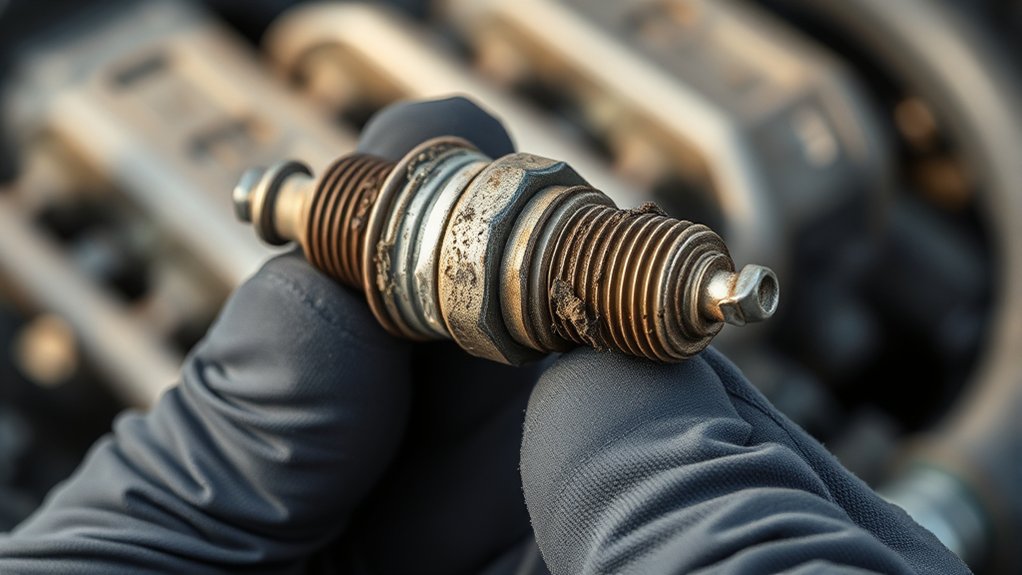
Although spark plugs are designed to operate under high temperatures and pressure, several factors can cause them to become fouled, impairing their function. Poor fuel quality contributes greatly by leaving deposits like carbon or lead on the electrodes, which disrupts the spark path.
Incorrect ignition timing also plays a critical role; if the timing is too advanced or delayed, incomplete combustion leaves unburned fuel residues that accumulate on the plug. Additionally, excessive oil consumption or a rich air-fuel mixture can coat the plug with oily or carbonaceous deposits.
You should be aware that these conditions increase electrode wear and reduce spark efficiency, leading to misfires and reduced engine performance. Understanding these causes helps you maintain ideal spark plug performance and engine reliability.
How to Spot a Fouled Spark Plug
You can spot a fouled spark plug by recognizing common symptoms like rough idling, misfires, or reduced fuel efficiency. A close visual inspection will reveal deposits such as carbon buildup, oil, or ash on the electrode and insulator.
Monitoring engine performance indicators helps confirm if the spark plug is the source of the problem.
Common Fouling Symptoms
When a spark plug becomes fouled, several distinct symptoms emerge that can help you quickly identify the issue. Recognizing these signs allows you to choose appropriate cleaning methods based on fouling types. Key symptoms include:
Engine misfires or rough idling: Fouling interrupts the spark, resulting in inconsistent combustion and vibration.
Difficulty starting the engine: Deposits on the electrodes reduce spark efficiency, causing prolonged cranking.
Decreased fuel efficiency and power output: Incomplete combustion due to fouling leads to poor performance and higher fuel consumption.
Visual Inspection Tips
Since a spark plug’s condition directly reflects the engine’s combustion process, conducting a visual inspection provides critical insights into fouling issues. You’ll want to use specific inspection techniques to identify visual cues signaling fouling.
Look for ash deposits, oil coating, or carbon buildup on the electrode and insulator. These signs indicate combustion anomalies or contamination.
| Visual Cue | Possible Cause | Inspection Technique |
|---|---|---|
| Light tan color | Normal operation | Compare to manufacturer specs |
| Black, dry soot | Carbon fouling | Check electrode deposits |
| Oily residue | Oil fouling | Inspect insulator surface |
Carefully note these details; they guide your cleaning approach and help diagnose underlying issues effectively.
Engine Performance Indicators
Visual inspection reveals physical signs of fouling, but engine performance indicators often provide the earliest and most practical clues of spark plug issues. When a spark plug fouls, it disrupts ignition timing, leading to incomplete combustion and reduced engine efficiency.
You can detect these issues through rough idling or engine misfires, indicating inconsistent spark delivery; decreased fuel economy, reflecting inefficient combustion cycles; and difficulty starting the engine, often caused by weak or absent sparks.
Monitoring these performance indicators helps you identify fouled spark plugs before damage worsens. Addressing ignition timing irregularities and restoring peak engine efficiency promptly prevents further mechanical degradation and guarantees reliable operation.
Can You Safely Clean a Fouled Spark Plug Yourself?
How can you safely clean a fouled spark plug yourself without causing damage? First, verify the engine is cool and disconnect the spark plug wire to prevent accidental ignition. Use a wire brush or specialized spark plug cleaning tool to gently remove carbon deposits from the electrode and insulator.
Avoid harsh abrasives that can erode the electrode or alter the gap. Inspect the spark plug for cracks or excessive wear; if present, replacement is safer than cleaning. When performing spark plug cleaning as part of DIY maintenance, handle the plug carefully to prevent bending or breaking the electrode.
After cleaning, check and adjust the spark plug gap to manufacturer specifications. Proper spark plug cleaning can restore performance but requires precision to avoid compromising spark efficiency or engine function.
What You’ll Need to Clean Spark Plugs
Cleaning spark plugs effectively requires a few essential tools and materials to guarantee thorough removal of deposits without damaging the component. Different spark plug types, such as copper, platinum, or iridium, need gentle handling and specific cleaning tools to preserve their delicate electrodes and insulators.
To prepare, gather the right equipment to assure safe and efficient cleaning:
- Wire brush or specialized spark plug cleaner: removes carbon buildup without abrasion.
- Carburetor or brake cleaner: dissolves stubborn oily residues.
- Compressed air or a clean rag: clears loosened debris from crevices.
Using these cleaning tools appropriately prevents damage to the spark plug’s firing gap and thread, preserving performance. Having these ready helps you maintain peak engine efficiency by restoring fouled spark plugs to near-original condition.
Step-by-Step Guide to Cleaning Fouled Spark Plugs
Before you start, verify the spark plug is completely removed from the engine and cooled down to prevent damage or injury. First, identify the spark plug type, iridium, platinum, or copper, as cleaning methods vary slightly.
Use a wire brush or specialized spark plug cleaner to gently remove carbon deposits from the electrode and insulator. Avoid abrasive materials that could damage delicate parts.
For stubborn fouling, apply a carburetor or brake cleaner spray, let it sit briefly, then scrub again. Inspect the spark plug gap with a feeler gauge, adjusting it to the manufacturer’s specifications if needed.
Finally, wipe the plug dry with compressed air or a lint-free cloth. Proper cleaning restores function and extends the life of most spark plug types without compromising performance.
When Cleaning a Fouled Spark Plug Isn’t Enough
If your engine continues to misfire or run poorly after cleaning the spark plug, the issue may run deeper than fouling alone. You’ll need to evaluate whether the spark plug’s condition has deteriorated beyond repair.
In such cases, replacing the spark plug is often the only reliable solution to restore proper engine performance.
Persistent Engine Performance Issues
Even after thoroughly cleaning a fouled spark plug, you might still experience engine misfires, rough idling, or decreased fuel efficiency. These persistent issues often indicate underlying problems beyond the spark plug itself.
Key factors to evaluate include:
- Fuel quality: Low-grade or contaminated fuel can cause incomplete combustion, leading to fouling and poor engine performance.
- Ignition timing: Incorrect timing disrupts the spark plug’s firing sequence, reducing combustion efficiency and causing misfires.
- Engine deposits: Carbon buildup on valves and cylinders can impair combustion and spark plug function despite cleaning.
Addressing these factors requires diagnostic tools like a fuel analyzer or timing light to pinpoint exact causes. Ignoring them risks ongoing engine inefficiency, even if the spark plug appears clean and functional.
When Replacement Becomes Necessary
Although cleaning a fouled spark plug can restore function in some cases, you’ll need to replace it when signs of physical damage, persistent deposits, or electrode wear remain after cleaning. Fouled indicators such as cracked insulators, eroded electrodes, or excessive carbon buildup that resists standard cleaning techniques signal irreversible deterioration.
If repeated cleaning fails to eliminate deposits or improve spark performance, the plug’s efficiency is compromised. Additionally, corrosion or damage from overheating requires replacement rather than restoration. Relying solely on cleaning techniques when these fouled indicators exist risks ongoing engine misfires, reduced fuel efficiency, and emission issues.
Consequently, carefully inspect the spark plug after cleaning and opt for replacement when you identify structural damage or unremovable fouling to maintain peak engine performance and reliability.
Spark Plug Cleaning vs. Replacement: What’s Best?
How do you decide whether to clean or replace a fouled spark plug? Consider the spark plug lifespan first. If it’s nearing or past the manufacturer’s recommended mileage, replacement is usually best. If it’s relatively new, cleaning techniques like using a wire brush or specialized spark plug cleaner can restore function efficiently. Evaluate the fouling severity and physical condition as well.
- Light carbon deposits can often be removed effectively with proper cleaning techniques.
- Severe electrode wear or damage indicates replacement to maintain engine performance.
- Persistent fouling after cleaning suggests underlying engine issues, making replacement necessary.
Ultimately, balancing cost, time, and reliability helps you choose the right approach between cleaning and replacing fouled spark plugs.
Tips to Prevent Spark Plugs From Getting Fouled Again
To prevent spark plugs from fouling again, you need to address the root causes that lead to deposit buildup and electrode wear. For effective fouling prevention, regularly inspect your engine’s air-fuel mixture; a rich mixture often causes carbon deposits.
Use the correct spark plug heat range specified by your vehicle manufacturer to avoid overheating or fouling. Follow maintenance tips such as timely oil changes and guaranteeing a clean air filter to minimize contaminants entering the combustion chamber.
Additionally, avoid frequent short trips that prevent the engine from reaching ideal operating temperature, which promotes fouling. Proper ignition system maintenance, including checking ignition coils and wires, guarantees consistent spark delivery.
Implementing these fouling prevention strategies will extend spark plug life and maintain engine performance.
Why Regular Spark Plug Maintenance Matters
Preventing spark plug fouling is just one aspect of keeping your engine running efficiently; regular maintenance plays an essential role in sustaining spark plug performance over time. Adhering to recommended maintenance schedules guarantees ideal spark plug longevity and prevents engine misfires, poor fuel economy, and increased emissions.
Regular maintenance ensures spark plug longevity and optimal engine performance, preventing misfires and emissions.
You should focus on:
- Inspecting spark plugs periodically for wear, deposits, and electrode erosion.
- Cleaning or replacing plugs according to manufacturer guidelines to maintain consistent ignition.
- Checking ignition system components to prevent conditions that accelerate fouling.
Frequently Asked Questions
How Do Different Fuel Types Affect Spark Plug Fouling?
Different fuel compositions impact combustion efficiency, causing varied spark plug fouling. Higher impurities or additives increase deposits, while cleaner fuels burn efficiently, reducing fouling.
You should choose fuel matching your engine’s specifications for ideal performance.
Can Fouled Spark Plugs Cause Engine Misfires?
If you notice engine misfires coinciding with faulty spark plug types, it’s no surprise. Fouled plugs disrupt the spark timing, directly impairing engine performance.
You’ll need precise inspection to guarantee ideal combustion and smooth operation.
What Is the Lifespan of a Typical Spark Plug?
You can expect a typical spark plug’s lifespan to range from 30,000 to 100,000 miles, depending on spark plug materials like iridium or platinum and the spark plug heat range suited for your engine’s operating conditions.
Are Spark Plug Cleaners Safe for All Engine Types?
Spark plug cleaners can cause complications; cautiously consider compatibility with your engine’s design. For safe spark plug maintenance, select cleaning methods tailored to your specific engine type to prevent damage and guarantee peak performance and longevity.
How Often Should Spark Plugs Be Inspected Professionally?
You should schedule spark plug maintenance inspections every 30,000 to 50,000 miles, depending on your vehicle. Regular inspection frequency guarantees peak performance, prevents fouling, and extends engine life by identifying wear or damage early.
Conclusion
Now that you know how to spot and clean a fouled spark plug, the real question remains: is cleaning enough to restore peak performance? While cleaning can work temporarily, ignoring underlying issues might lead to recurring fouling or engine damage.
Before you decide, consider the plug’s condition and your engine’s needs carefully. Regular maintenance isn’t just a suggestion—it’s essential to keep your engine running smoothly and avoid costly repairs down the line.
In conclusion, can you clean a fouled spark plug and expect lasting results? Yes, but only as a temporary fix. Addressing the root causes and performing regular maintenance is key to preventing fouling and ensuring optimal engine performance.