To fix a spark plug wire, first inspect it for cracks, burns, or corrosion.
Carefully remove the old wire by pulling the boot, not the cable, to avoid damage. Use a multimeter to check the wire’s resistance, ensuring it matches the manufacturer’s specifications.
Choose a replacement wire that is correctly rated and the same length as the original.
Apply dielectric grease to the connections to prevent moisture and corrosion. Install the new wire firmly, routing it away from heat sources and sharp edges to avoid wear.
After installation, test the continuity of the wire to confirm proper function.
Understanding each step will help you maintain peak engine performance and ensure reliable ignition.
Key Takeaways
- Inspect spark plug wires for cracks, corrosion, and excessive resistance using a multimeter before attempting repair.
- Remove old spark plug wires one at a time to maintain correct firing order during replacement.
- Use a spark plug wire puller to safely detach wires without damaging the boot or cable.
- Apply dielectric grease to connection points to prevent moisture and ensure a secure fit.
- Test new or repaired wires with a multimeter to confirm proper continuity and resistance levels.
How to Identify a Faulty Spark Plug Wire
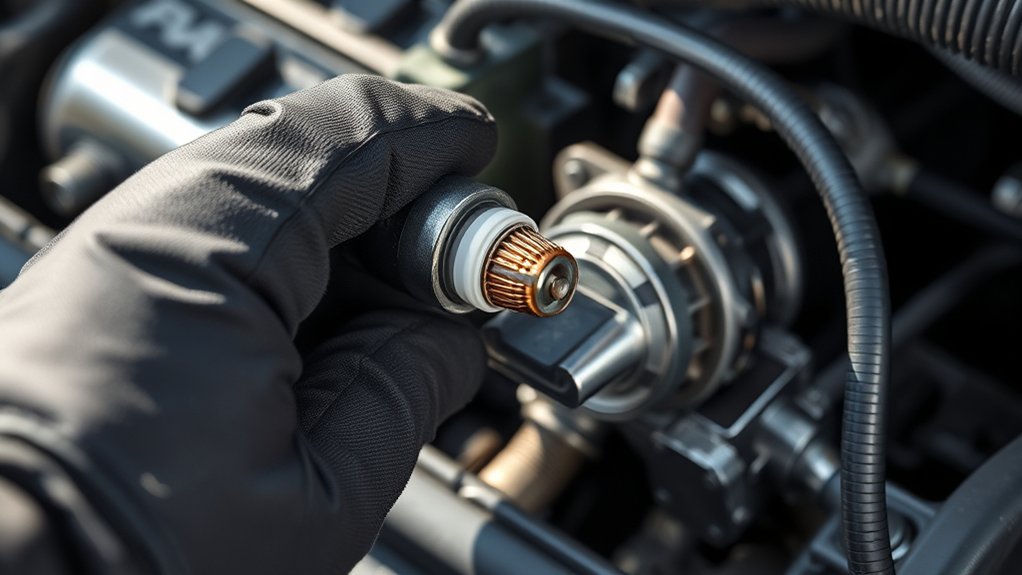
How can you tell if a spark plug wire is faulty? First, inspect the wire insulation for cracks, burns, or brittleness, as damaged insulation compromises electrical flow. Next, check for corrosion or loose connections at both ends, where the wire meets the spark plug and distributor.
Different spark plug types may require specific wire gauges and insulation ratings; verify your wires match these specifications. Use a multimeter to measure resistance. Values exceeding manufacturer recommendations indicate a faulty wire.
You might also notice engine misfires or rough idling, signs that the wire isn’t delivering consistent voltage. By systematically examining wire insulation, connections, and electrical resistance, you can precisely identify a defective spark plug wire before proceeding with repairs or replacements.
When to Replace the Entire Spark Plug Wire Set
You should replace the entire spark plug wire set if you notice multiple wires with cracks, corrosion, or excessive wear. Replacing the full set guarantees consistent performance and prevents future misfires caused by weak or damaged wires.
This proactive approach saves time and maintains engine efficiency.
Signs of Wire Damage
Several key indicators reveal when spark plug wires have deteriorated beyond repair and require complete replacement. Begin with a thorough visual inspection, checking for cracks, splits, or fraying on the wire insulation. Any sign of wire corrosion, especially at the connectors or along the wire length, indicates compromised conductivity.
Additionally, look for hardened or brittle sections that can easily break under stress. If you notice arcing marks or burn spots, these are clear signs of electrical leakage. Wires exhibiting inconsistent resistance readings during testing also signal internal damage.
When multiple wires show these symptoms, replacing the entire spark plug wire set guarantees reliable ignition performance and prevents engine misfires caused by intermittent or failed connections. Don’t risk partial fixes when widespread deterioration is evident.
Benefits of Full Replacement
Replacing the entire spark plug wire set at once guarantees consistent electrical performance across all cylinders and minimizes the risk of engine misfires. This full replacement guarantees you achieve peak performance improvement and longevity benefits, as worn wires degrade unevenly over time.
You’ll maintain ideal ignition timing and reduce maintenance frequency by avoiding patchwork repairs.
| Benefit | Explanation |
|---|---|
| Uniform Resistance | Guarantees equal electrical flow |
| Reduced Misfires | Eliminates weak or damaged wires |
| Improved Fuel Economy | Consistent spark delivery |
| Simplified Maintenance | One-time replacement saves effort |
| Longevity Benefits | New wires last longer, resisting wear |
Replacing all wires simultaneously is a precise, effective approach to sustain engine reliability and performance.
What Tools You Need to Fix Spark Plug Wires
A few essential tools streamline the process of fixing spark plug wires efficiently. You’ll need a spark plug wire puller to grip and remove wires without damage, preserving wire maintenance and connection integrity.
A digital multimeter helps you test wire continuity and resistance, ensuring the new or repaired wire performs effectively. Use a wire stripper and crimper to prepare and secure replacement terminals correctly.
Additionally, dielectric grease protects the connection points from moisture and corrosion, further supporting connection integrity. Having a basic socket set allows you to access spark plugs easily.
These tools combined let you maintain precise wire maintenance standards, ensuring reliable ignition system performance without compromising safety or efficiency.
How to Safely Remove Old Spark Plug Wires
Start by ensuring the engine is completely cool to prevent burns or damage. Properly disconnecting the old spark plug wires is critical for effective spark plug maintenance and preserving the wire connection integrity. Follow these steps:
Grasp the boot firmly at the wire connection, not the wire itself. Twist the boot gently to loosen before pulling it off. Use a spark plug wire puller if the boot is stuck.
Avoid yanking or pulling the wire directly to prevent internal damage. Inspect the wire and boot for cracks or wear once removed.
How to Choose the Right Replacement Spark Plug Wires
When selecting replacement spark plug wires, focus on the wire material, as it affects conductivity and durability. Make sure the length matches your engine’s specifications for proper fit and performance.
Also, choose wires with adequate heat resistance to withstand your engine’s operating temperatures.
Wire Material Options
Selecting the right wire material for your replacement spark plug wires directly affects engine performance and longevity. Different wire types offer varying resistance ratings, critical for maintaining ideal spark delivery and minimizing electromagnetic interference.
When choosing wire materials, consider these options:
- Copper core: Low resistance but less EMI suppression; ideal for high-performance engines.
- Carbon-impregnated silicone: Higher resistance, excellent EMI reduction; suits daily drivers.
- Spiral-wound stainless steel: Balanced resistance and durability; common OEM choice.
- Kevlar-braided silicone: Enhanced durability and flexibility; resists heat and abrasion.
- Magnetic suppression wire: Incorporates ferrite cores to reduce radio noise.
Match wire types and resistance ratings to your engine’s specifications for reliable ignition and peak efficiency.
Length and Fit
Choosing the right wire material sets the foundation, but ensuring your replacement spark plug wires have the correct length and fit guarantees peak performance. Incorrect wire length causes tension or slack, leading to fit issues that can disrupt the electrical connection or damage components.
Measure existing wires carefully before purchasing replacements. Use the table below to identify proper length tolerances and fit considerations:
| Wire Length (inches) | Common Fit Issues | Recommended Action |
|---|---|---|
| <12 | Excess tension, connector strain | Select longer wire |
| 12–18 | Ideal for tight engine bays | Confirm secure connector fit |
| >18 | Slack, risk of abrasion | Trim or select shorter wire |
| Variable | Misrouting or kinks | Route wires following OEM paths |
Avoid fit issues by matching the wire length precisely to your engine layout and connector type for reliable ignition performance.
Heat Resistance Levels
Although spark plug wires may appear similar, their heat resistance levels vary considerably and directly impact durability and performance under engine conditions. When selecting replacement wires, prioritize those with superior heat resistance to guarantee longevity and consistent spark delivery.
Focus on the quality of the wire insulation, as it must withstand high temperatures without degrading.
Consider these factors when choosing wires based on heat resistance:
- Insulation material type (silicone, EPDM, or fiberglass)
- Maximum temperature rating specified by the manufacturer
- Resistance to oil and chemical exposure near the engine
- Thickness and durability of the wire insulation layer
- Compatibility with your engine’s operating environment and heat zones
Selecting wires with appropriate heat resistance prevents premature failure and maintains peak engine function.
How to Install New Spark Plug Wires Step-by-Step
Begin by ensuring the engine is cool and the ignition is off to prevent injury. Next, remove the old spark plug wires one at a time to avoid mixing their order.
Start with a cool engine and ignition off; remove old spark plug wires one at a time to keep order.
Match each new wire to the correct length, confirming spark plug compatibility. Attach the boot firmly to the spark plug terminal and the distributor or ignition coil end, ensuring a snug fit.
Follow wire maintenance tips by routing wires away from hot engine parts and sharp edges to prevent damage and interference. Use clips or separators to keep wires organized and spaced evenly.
Double-check connections for tightness, ensuring no loose contacts. Proper installation maximizes engine performance and minimizes misfires, so take care to install each wire correctly and verify compatibility before finalizing.
How to Test Spark Plug Wires After Replacement
After installing new spark plug wires correctly, verifying their functionality guarantees your engine runs smoothly. Start with spark plug testing to confirm proper ignition. Use a multimeter to check wire continuity, making sure no breaks or high resistance exist. Follow these steps:
Set the multimeter to the ohms setting. Connect probes to each end of the spark plug wire. Observe the resistance reading; typical values range from 1,000 to 15,000 ohms per foot.
Replace wires if continuity is broken or resistance exceeds specifications. Perform a visual inspection for cracks or damage.
This wire continuity test is essential to detect faulty wires that could cause misfires or poor engine performance. Proper spark plug testing after replacement guarantees reliable ignition and peak engine operation.
How to Avoid Common Spark Plug Wire Mistakes
When working with spark plug wires, you must avoid common mistakes that can compromise engine performance and reliability. First, never pull wires by the cable; always grip the boot to prevent internal damage.
During spark plug maintenance, verify wires are routed correctly to avoid contact with hot engine parts or sharp edges that cause insulation wear. Avoid crossing wires, which can cause electromagnetic interference and misfires.
Use proper wire handling tools to maintain the boot’s integrity and prevent connector damage. Check for cracks, burns, or corrosion regularly and replace damaged wires promptly.
Secure wires with clips or holders to prevent excessive movement and strain. Following these steps guarantees ideal spark plug wire function, prolongs wire lifespan, and maintains consistent engine performance.
Frequently Asked Questions
Can Faulty Spark Plug Wires Affect Fuel Efficiency?
Yes, faulty spark plug wires with damaged wire insulation cause misfires, reducing combustion efficiency. You should prioritize spark plug maintenance to guarantee proper ignition timing, improving fuel efficiency and preventing power loss or increased emissions.
How Often Should Spark Plug Wires Be Inspected?
You should Inspect spark plug wires every 30,000 miles during routine spark plug maintenance. Check for wear, cracks, or corrosion, and perform wire replacement promptly to guarantee peak engine performance and prevent misfires.
Are Spark Plug Wires Universal for All Car Models?
No, spark plug wires aren’t universal. You need to match spark plug types and wire materials to your car’s specifications for peak performance.
Using incorrect wires can cause misfires and damage ignition components. Always verify compatibility.
What Are Symptoms of Spark Plug Wire Interference?
Like static on an old radio, spark plug wire interference causes engine misfires, rough idling, and poor acceleration.
You’ll want timely spark plug maintenance and wire replacement to restore smooth, efficient engine performance and prevent further damage.
Can Damaged Spark Plug Wires Cause Engine Misfires?
Yes, damaged spark plug wires can cause engine misfires. You should perform spark plug wire replacement promptly to maintain proper ignition system maintenance, ensuring consistent spark delivery and preventing performance issues or engine damage.
Conclusion
Fixing your spark plug wires might seem like rocket science, but with the right tools and steps, it’s straightforward. Always identify faults early and replace wires promptly to avoid engine misfires or damage.
Follow safety protocols when removing old wires and choose replacements that match your vehicle’s specs exactly. After installation, thoroughly test the wires to guarantee peak performance.
Avoid shortcuts—precision here saves you from endless troubleshooting down the road. Proper care and attention when you fix a spark plug wire ensure your engine runs smoothly and reliably.