If your spark plug gap is too small, you’ll experience reduced spark intensity that weakens ignition efficiency. This leads to misfires, rough idling, sluggish acceleration, and poor engine responsiveness.
Fuel combustion becomes incomplete, raising fuel consumption and emissions while lowering overall performance. Over time, you might notice increased throttle hesitation and inconsistent engine operation.
Proper measurement and adjustment using a gap gauge are essential, along with regular maintenance to avoid these issues and guarantee peak engine function.
There’s more to uncover about managing spark plug performance.
Key Takeaways
- A too-small spark plug gap reduces ignition efficiency, causing weak sparks and incomplete fuel combustion.
- Engine power and acceleration decrease due to insufficient spark intensity.
- Fuel consumption increases as incomplete combustion wastes fuel.
- Misfires and rough idling occur from irregular or weak spark delivery.
- Throttle hesitation and muted engine responsiveness indicate the need for gap adjustment.
Why the Spark Plug Gap Size Matters
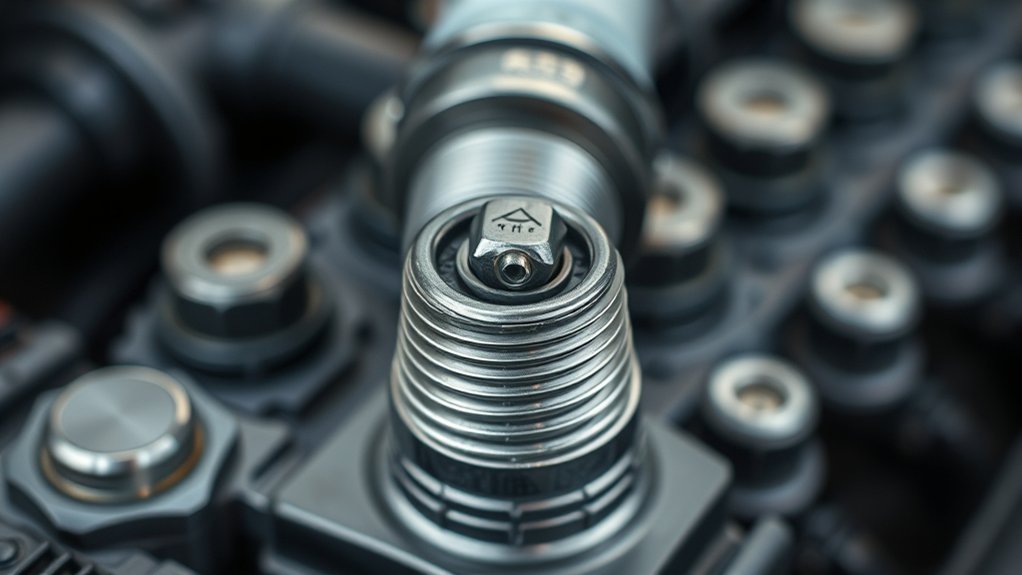
Although it might seem like a minor detail, the spark plug gap size directly affects your engine’s ignition efficiency. The spark plug importance lies in its role to ignite the air-fuel mixture within the combustion chamber.
If the gap isn’t precise, the spark may be weak or inconsistent, leading to misfires or incomplete combustion. Gap precision guarantees the spark has the correct voltage to jump across the electrodes, providing maximum ignition timing and power delivery.
Too wide a gap requires higher voltage, risking weak sparks, while too small a gap can cause insufficient spark energy. Maintaining the exact gap specified by your engine manufacturer assures efficient combustion, improves fuel economy, and reduces emissions.
You should always measure and adjust the spark plug gap meticulously to maintain engine performance.
Recognizing Signs of a Too-Small Spark Plug Gap
When the spark plug gap is too small, you’ll notice specific performance issues that signal inadequate spark energy. One primary indicator is reduced ignition efficiency, which affects fuel combustion consistency.
You might observe sluggish acceleration or a decrease in overall engine power because the spark plug characteristics fail to generate a strong enough spark to ignite the air-fuel mixture effectively. Additionally, fuel consumption may increase as incomplete combustion occurs.
Your engine’s responsiveness could feel muted, and you might detect subtle hesitation during throttle input. These signs don’t necessarily point to a complete failure but suggest the spark plug gap needs adjustment to restore proper ignition efficiency.
Misfires and Rough Idling From a Too-Small Spark Plug Gap
Since a too-small spark plug gap restricts the spark’s intensity, your engine can experience misfires and rough idling. The diminished spark weakens ignition efficiency, disrupting spark timing and causing incomplete combustion.
This leads to inconsistent engine performance, noticeable as hesitation or trembling during idle.
| Symptom | Cause |
|---|---|
| Engine Misfire | Weak spark fails to ignite fuel |
| Rough Idling | Erratic combustion cycles |
| Hesitation | Delayed or irregular spark timing |
Fuel Economy Impact of a Too-Small Spark Plug Gap
If your spark plug gap is too small, your engine won’t burn fuel as efficiently as it should, directly impacting your vehicle’s fuel economy. A reduced gap limits the spark’s intensity, resulting in incomplete combustion.
A spark plug gap that’s too small reduces spark intensity, leading to inefficient fuel combustion and lower fuel economy.
This lowers combustion quality, forcing your engine to consume more fuel to maintain power output. Over time, this inefficiency reduces fuel efficiency, causing you to spend more on fuel. Additionally, poor combustion increases unburnt fuel residues, which can degrade engine performance and emissions.
Ensuring the spark plug gap matches manufacturer specifications enhances the spark’s reach and energy, improving combustion quality. This precision allows your engine to extract maximum energy from fuel, improving fuel efficiency and reducing operating costs.
Thus, maintaining the correct spark plug gap is essential for peak fuel economy.
Engine Troubles That Come From a Too-Small Spark Plug Gap
Although a too-small spark plug gap might seem minor, it can trigger several engine troubles that compromise performance and reliability. When the gap is too narrow, ignition efficiency drops because the spark struggles to jump, leading to incomplete combustion. This directly affects engine performance.
You might notice:
- Misfires and rough idling due to insufficient spark energy.
- Reduced power output as the engine fails to burn fuel efficiently.
- Increased deposits on the spark plug, further hindering spark generation.
Each of these issues stems from impaired ignition efficiency, which disrupts the combustion process. Over time, this can cause inconsistent engine operation and accelerate wear on ignition components.
Maintaining the correct spark plug gap guarantees effective spark generation, supporting consistent engine performance and longevity.
How to Measure and Adjust a Spark Plug Gap
When you measure and adjust a spark plug gap correctly, you guarantee maximum ignition and engine performance. Start by selecting the proper tool, such as a feeler gauge, to measure the gap.
Verify your vehicle’s manual for exact gap specifications, as these vary by spark plug types. To adjust, gently bend the ground electrode to widen or narrow the gap without damaging the plug.
| Spark Plug Type | Typical Gap (mm) | Recommended Tool |
|---|---|---|
| Copper | 0.6 – 0.7 | Feeler Gauge |
| Platinum | 0.7 – 0.8 | Gap Gauge Tool |
| Iridium | 0.6 – 0.7 | Wire-Type Gauge |
| Double Platinum | 0.7 – 0.8 | Feeler or Gap Tool |
| OEM Spec | Varies | Manufacturer Guide |
Always follow manufacturer specs for precise adjustments.
Maintenance Tips to Keep Your Spark Plug Gap Optimal
To maintain ideal spark plug gaps, you need to routinely inspect and clean your plugs, guaranteeing they remain free of deposits that can alter the gap size. This proactive care promotes spark plug longevity and peak performance. Follow these steps:
- Remove the spark plugs at recommended intervals and visually check for fouling, corrosion, or wear that might affect the gap.
- Use a gap gauge to verify the spacing, adjusting carefully with a gapping tool if necessary.
- Clean any carbon or oil deposits gently with a wire brush or specialized cleaner to prevent buildup impacting ignition efficiency.
Consistently applying these maintenance tips helps you avoid misfires and engine inefficiencies caused by an incorrect spark plug gap. This guarantees your engine runs smoothly and prolongs the service life of your spark plugs.
Next Steps for a Smoother-Running Engine
To guarantee a smoother-running engine, you need to master accurate gap adjustment techniques using precise tools like a feeler gauge or gapper. Choosing the proper tools helps you set the spark plug gap consistently within manufacturer specifications.
Regular maintenance, including periodic inspections and adjustments, keeps your ignition system operating efficiently and prevents performance issues.
Gap Adjustment Techniques
Anyone working on engine maintenance knows that precise spark plug gap adjustment is essential for ideal performance. To guarantee the gap is neither too small nor too large, you must rely on accurate gap measurement methods and appropriate gap adjustment tools.
Start by using a feeler gauge to measure the existing gap precisely. If adjustment is necessary, use a gap adjustment tool like a wire-type or coin-type gapping tool to carefully bend the ground electrode.
Follow these steps:
- Measure the current gap with a feeler gauge.
- Gently adjust the gap by bending the electrode outward or inward.
- Re-measure to confirm the gap matches manufacturer specifications.
This methodical approach minimizes misfires and optimizes combustion efficiency, promoting smoother engine operation.
Choosing Proper Tools
Selecting the right tools for spark plug maintenance directly impacts the accuracy and efficiency of your work. To properly set gap specifications, you need precise measuring instruments like a feeler gauge or a gap tool calibrated for different spark plug types.
Digital gap tools offer enhanced accuracy, especially for modern, fine-tolerance plugs. Using improper tools risks incorrect gaps, which can lead to engine misfires or poor performance.
Always verify your spark plug types before selecting your gauge; some require unique handling due to electrode design. Additionally, a torque wrench guarantees that you install plugs without over-tightening, preserving thread integrity.
Regular Maintenance Tips
After confirming your spark plug gaps are accurately set using appropriate tools, maintaining consistent engine performance relies on regular upkeep routines. To optimize spark plug longevity and engine performance, follow these key maintenance tips:
- Inspect and Clean: Regularly check spark plugs for carbon deposits or wear, and clean them with a wire brush if necessary to prevent misfires.
- Replace on Schedule: Adhere to manufacturer-recommended intervals for spark plug replacement to avoid performance degradation.
- Check Ignition System: Test ignition wires and coils periodically to confirm proper voltage delivery to the plugs, which supports efficient combustion.
Frequently Asked Questions
Can a Too-Small Spark Plug Gap Damage the Catalytic Converter?
Yes, a too-small spark plug gap can reduce spark plug performance and engine efficiency, causing incomplete combustion that increases unburned fuel. This excess fuel can damage the catalytic converter over time by causing overheating and contamination.
How Does Spark Plug Gap Affect Emissions?
Spark plug gap governs gas ignition, greatly guiding spark plug efficiency and emissions control. If gap’s incorrect, combustion falters, fueling faulty emissions, frustrating your vehicle’s environmental impact and performance precision.
You must maintain proper gap for ideal outcomes.
Are Certain Spark Plug Types More Prone to Gap Issues?
Yes, certain spark plug types like fine-wire or iridium can be more prone to gap consistency issues due to their delicate electrodes.
You’ll need to check and adjust the gap carefully to guarantee peak performance.
Can Weather Conditions Influence Ideal Spark Plug Gap Size?
Like adjusting a camera lens for clarity, you’ll tweak the spark plug gap based on weather effects. Cold, dense air demands a slightly wider gap for ideal combustion, while hot, humid conditions call for a narrower spark plug gap.
Does a Small Spark Plug Gap Impact Engine Starting in Cold Weather?
Yes, a small spark plug gap reduces ignition efficiency, making cold starting harder. You’ll experience weaker sparks that struggle to ignite the air-fuel mixture, especially in low temperatures.
This causes delayed or failed engine starts in cold weather.
Conclusion
Think of your spark plug gap like the precise distance between two train tracks—too narrow, and the spark can’t leap efficiently, causing misfires and rough idling. If your gap’s too small, your engine’s performance and fuel economy suffer, much like a train struggling on faulty rails.
By regularly measuring and adjusting the gap, you guarantee smooth combustion and peak engine health. Keep this fine balance, and your engine will run like a well-oiled machine.
Understanding what happens if spark plug gap is too small helps you maintain optimal engine performance and avoid unnecessary issues.