If your engine oil is low, it’s important to take immediate action to prevent damage. First, park your car on a level surface and ensure the engine is cool.
Then, check the oil level using the dipstick. If the oil level is below the minimum mark, add the correct oil type gradually through the oil filler cap. Be careful to avoid overfilling, as too much oil can also cause problems.
Low engine oil can lead to overheating, unusual noises, and severe engine damage.
To keep your engine in good condition, maintain regular oil level checks and schedule timely oil changes.
Understanding the causes of low engine oil and practicing proper maintenance will help extend your engine’s life and performance.
Key Takeaways
- Check the engine oil level with a dipstick on a cool engine and level surface before taking any action.
- Add the correct oil type slowly using a funnel, then recheck to avoid overfilling.
- Address any visible oil leaks or unusual noises immediately to prevent further engine damage.
- Monitor for dashboard warnings, overheating, or smoke, and stop driving if these signs appear.
- Consult a mechanic if the oil warning light persists, oil leaks are visible, or unusual engine behavior continues.
How to Check Your Engine Oil Level Safely
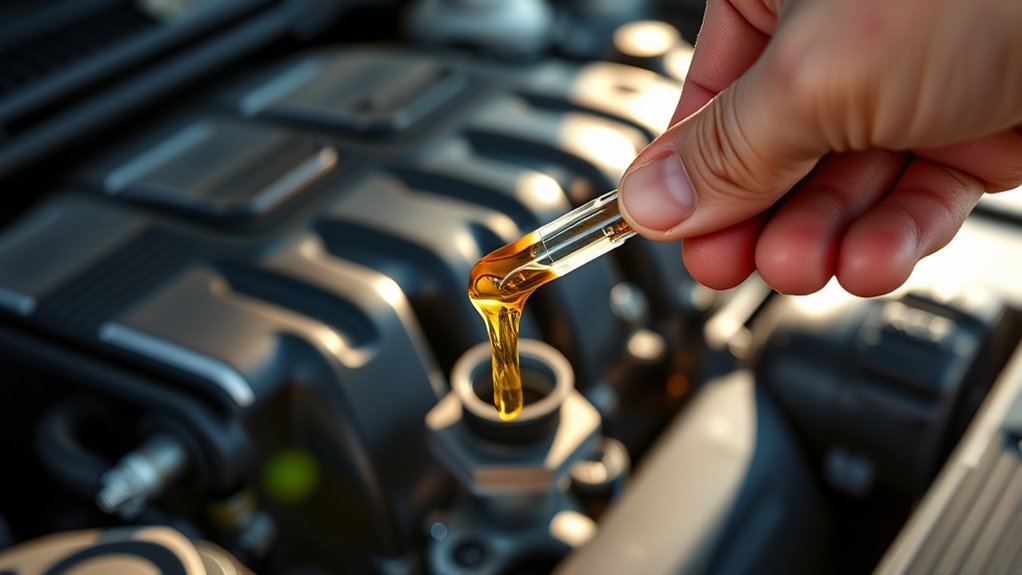
Anyone checking engine oil should first verify the vehicle is on a level surface and the engine is cool or has been off for at least 10 minutes. This guarantees an accurate reading and prevents burns.
Begin by engaging safe parking: apply the parking brake and verify the transmission is in “Park” or neutral. Open the hood and locate the oil dipstick, usually marked by a brightly colored handle.
Start by securing the vehicle with the parking brake and locating the brightly colored oil dipstick under the hood.
Pull the dipstick out completely, wipe it clean with a lint-free cloth, then reinsert it fully. Remove it again and observe the oil level relative to the dipstick’s minimum and maximum markers.
Proper oil dipstick usage prevents misreading due to oil film or contamination. If the oil level falls below the minimum mark, further action is necessary to maintain engine performance and longevity.
How to Add Engine Oil When It’s Low
First, make sure you select the correct engine oil type and viscosity specified in your owner’s manual. Next, locate the oil filler cap on the engine, remove it, and use a funnel to pour in the oil slowly.
Finally, recheck the oil level with the dipstick to avoid overfilling and secure the cap tightly.
Choosing The Right Oil
When adding engine oil, selecting the correct type is essential to maintain ideal performance and avoid potential damage. You need to consult your vehicle’s owner manual for the recommended oil specifications, focusing on viscosity ratings such as 5W-30 or 10W-40, which indicate the oil’s flow characteristics at different temperatures.
Synthetic options often provide superior protection, enhanced stability, and longer intervals between changes compared to conventional oils. However, always confirm compatibility with your engine.
Using the wrong viscosity or oil type can lead to inadequate lubrication, increased wear, or even engine failure. Pay attention to industry standards like API or ACEA ratings to verify quality.
Choosing the right oil guarantees peak engine efficiency, reduces friction, and extends engine life, especially when topping off low oil levels.
Step-by-Step Oil Addition
Adding engine oil correctly requires a systematic approach to guarantee proper lubrication without overfilling. First, verify the engine is cool and parked on level ground. Select oil matching the recommended oil viscosity and containing proper oil additives for your engine.
Follow these steps:
- Remove the dipstick, wipe it clean, and reinsert it fully.
- Pull out the dipstick to check the current oil level.
- Slowly add oil through the filler cap in small increments.
- Wait a minute, then recheck the oil level with the dipstick.
- Stop adding once the oil reaches the “full” mark, avoiding overfill.
This method guarantees peak engine performance and longevity by maintaining the correct oil volume and preserving additive effectiveness.
Signs Low Engine Oil Is Causing Damage
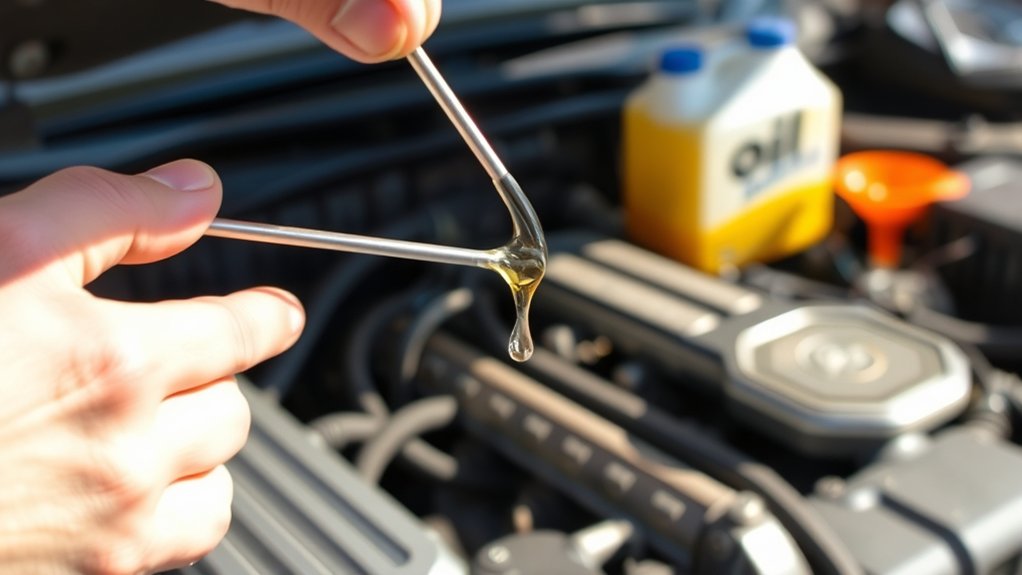
If your engine oil is low, you might notice the engine overheating or hear unusual knocking or ticking noises. Your dashboard may also display warning lights indicating low oil pressure or temperature issues.
Recognizing these signs early helps prevent serious engine damage.
Engine Overheating Symptoms
Although engine oil primarily lubricates moving parts, insufficient levels can quickly lead to engine overheating. Without enough oil, friction increases, causing excessive engine heat that your cooling system may struggle to manage.
Coolant issues can worsen the problem, but low oil alone can raise engine temperature dangerously.
Watch for these engine overheating symptoms indicating low oil damage:
- Temperature gauge rising above normal range
- Steam or smoke emitting from under the hood
- Unusual warmth or burning smell inside the cabin
- Warning lights for engine temperature or oil pressure activating
- Decreased engine performance or stalling during operation
If you notice these signs, check your oil level immediately to prevent severe engine damage caused by overheating and inadequate lubrication.
Unusual Engine Noises
Beyond overheating, low engine oil often causes distinct mechanical noises that signal internal damage. When your engine oil dips below safe levels, the lubrication fails, leading to increased friction and wear. You’ll notice unusual engine sounds that vary in severity and type, indicating specific issues.
| Noise Type | Possible Cause |
|---|---|
| Knocking | Worn bearings due to poor lubrication |
| Ticking | Valve train components lacking oil |
| Squealing | Oil pump struggling or low oil pressure |
| Grinding | Metal-on-metal contact from severe oil shortage |
Pay close attention to these noise types. Ignoring them can cause irreversible engine damage. If you detect any unusual engine sounds, check your oil level immediately and add oil as needed to protect your engine’s integrity.
Warning Light Indicators
How can you quickly identify when low engine oil is causing serious damage? Your vehicle’s dashboard alerts are the first line of defense. The oil pressure warning light is critical. It signals insufficient oil pressure, which can lead to severe engine wear or failure. Ignoring this alert risks costly repairs.
Watch for these warning signs on your dashboard:
- Oil pressure warning light illuminating or flashing
- Engine temperature gauge rising rapidly
- Dashboard oil level indicator showing low status
- Warning messages like “Check Oil” or “Oil Change Required”
- Unusual vibrations paired with dashboard alerts
Respond immediately to these indicators. They’re engineered to prevent engine damage by alerting you to dangerously low oil conditions before catastrophic failure occurs.
Why Engine Oil Runs Low: Common Causes
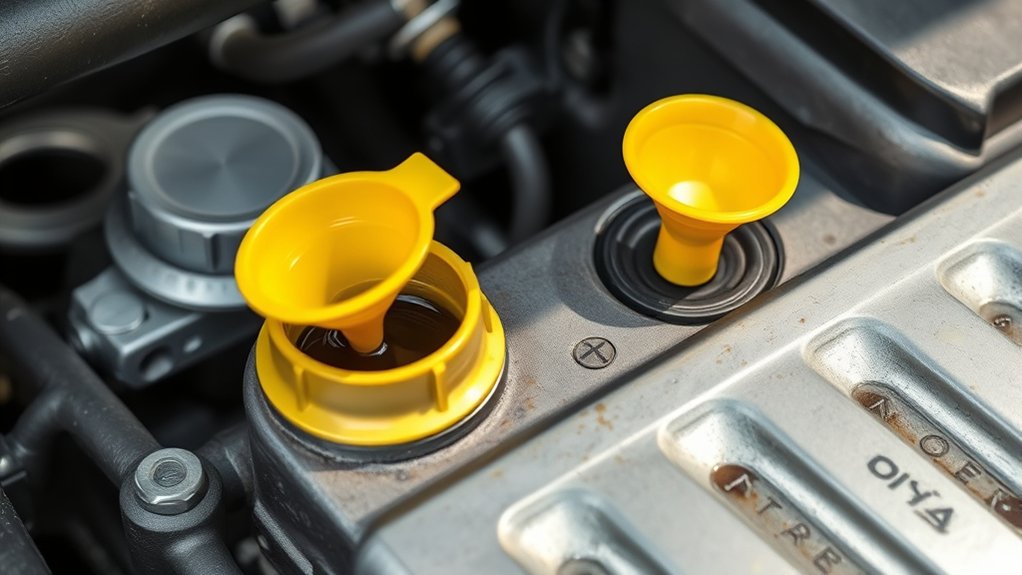
Several factors can cause your engine oil level to drop unexpectedly. Understanding oil consumption factors and engine wear helps you identify the root causes.
Oil leaks from gaskets or seals, burning oil due to worn piston rings, and high engine temperatures accelerate oil loss. Additionally, driving habits and engine design influence oil consumption rates.
| Cause | Description |
|---|---|
| Oil Leaks | Damaged seals or gaskets allow oil escape |
| Burning Oil | Worn piston rings let oil enter combustion |
| Engine Wear | Increased clearance leads to higher consumption |
| Driving Habits | Aggressive driving raises oil burn rate |
| Engine Design | Some engines naturally consume more oil |
Monitoring these factors helps you maintain proper oil levels and prevent engine damage.
When to Perform a Full Engine Oil Change
When should you perform a full engine oil change to guarantee peak engine performance? You need to follow the recommended oil change frequency specified by your vehicle’s manufacturer, typically every 3,000 to 7,500 miles.
Besides mileage, consider these critical factors prompting a full oil change with oil filter replacement:
- Noticeable oil darkening or contamination
- Engine overheating or unusual noises
- Frequent short trips causing oil degradation
- Severe driving conditions like towing or dusty environments
- Warning lights on the dashboard indicating oil issues
Performing a full engine oil change with a fresh oil filter replacement guarantees ideal lubrication, prevents engine wear, and maintains fuel efficiency. Neglecting this maintenance risks engine damage and costly repairs.
Always adhere to your vehicle’s maintenance schedule to protect your engine’s longevity.
How to Prevent Your Engine Oil From Running Low
Maintaining the recommended oil change intervals is essential, but preventing your engine oil from running low between changes plays a key role in engine health. To do this effectively, follow specific oil maintenance tips: regularly check the oil level using the dipstick when the engine is cool and on a level surface.
Perform regular inspections for leaks, especially around the oil pan and valve cover gaskets. Monitor oil consumption by noting any significant drops between checks, which could indicate underlying issues. Use the manufacturer-recommended oil grade to guarantee peak performance and minimize burn-off.
Additionally, avoid prolonged idling and harsh driving conditions that accelerate oil degradation. By incorporating these practices, you’ll maintain proper lubrication, reduce engine wear, and extend your vehicle’s lifespan.
When to See a Mechanic for Low Engine Oil Issues
If you notice your engine oil level dropping rapidly despite regular top-ups, it’s crucial to consult a mechanic promptly. Rapid oil loss often signals a serious problem like oil leakage or internal engine damage that you can’t fix alone. A timely mechanic consultation helps prevent costly repairs or engine failure.
Seek professional help immediately if you experience:
- Persistent oil warning light despite adding oil
- Visible oil leakage under your vehicle
- Burning oil smell or blue smoke from the exhaust
- Engine overheating or unusual noises
- Sudden drops in oil pressure readings
Addressing low engine oil issues with expert diagnostics guarantees your engine remains reliable and avoids further damage. Don’t delay mechanic consultation when these warning signs appear.
Frequently Asked Questions
What Type of Engine Oil Is Best for My Car Model?
You should choose engine oil with the correct oil viscosity specified in your car’s manual, ensuring it contains appropriate oil additives for wear protection and cleanliness.
Always use manufacturer-recommended grades to optimize performance and engine longevity.
Can Synthetic Oil Improve Engine Performance?
Yes, synthetic oil offers synthetic benefits like superior lubrication and thermal stability, enhancing engine efficiency. In a performance comparison, it reduces friction and wear better than conventional oil, improving overall engine performance and longevity considerably.
How Does Engine Oil Affect Fuel Efficiency?
You’ll improve fuel efficiency by using the right oil viscosity, which reduces engine wear and friction.
Thicker or incorrect viscosity oil increases resistance, making your engine work harder and consume more fuel.
Is It Safe to Drive Immediately After Adding Oil?
Yes, you can drive immediately after adding oil, as long as the oil level is within the recommended range.
However, avoid long trips until the engine circulates the new oil thoroughly for ideal protection.
How Long Does Engine Oil Typically Last After Topping Up?
Think of your engine oil like a candle’s flame. It lasts only as long as its quality allows.
After topping up, monitor oil level indicators closely, but follow your vehicle’s oil change frequency for ideal performance and protection.
Conclusion
Think of your engine oil as the lifeblood of your vehicle—without enough, your engine’s heart can falter. By regularly checking and topping off oil, you keep that essential flow steady and prevent costly damage.
Stay vigilant for warning signs and understand when to call in a mechanic. Taking these precise steps guarantees your engine runs smoothly, like a well-oiled machine, safeguarding performance and extending your vehicle’s lifespan.
Don’t let low oil drain your drive. If you notice your engine oil is low, act promptly to maintain your vehicle’s health and avoid serious issues.