Yes, spark plug wires can go bad over time, which can significantly impact your engine’s performance. Common symptoms include misfires, rough idling, and lower fuel efficiency.
You should watch for visible damage such as cracks or burns on the wires. Using a multimeter to measure resistance can help detect hidden faults that are not easily seen.
Exposure to heat, moisture, and vibration speeds up the deterioration process. Regular inspections and timely replacements—typically every 30,000 to 50,000 miles—are essential.
Understanding these factors helps you keep your ignition system reliable and efficient.
Key Takeaways
- Spark plug wires can deteriorate over time due to heat, moisture, and mechanical stress, affecting engine performance.
- Signs of bad wires include engine misfires, rough idling, decreased fuel efficiency, and visible wire damage.
- Electrical resistance in spark plug wires increases as they age, which can be measured with a multimeter to detect faults.
- Radio static interference often indicates spark plug wire issues related to insulation breakdown or arcing.
- Manufacturers recommend replacing spark plug wires every 30,000 to 50,000 miles or every 5 years regardless of visible condition.
Can Spark Plug Wires Go Bad?
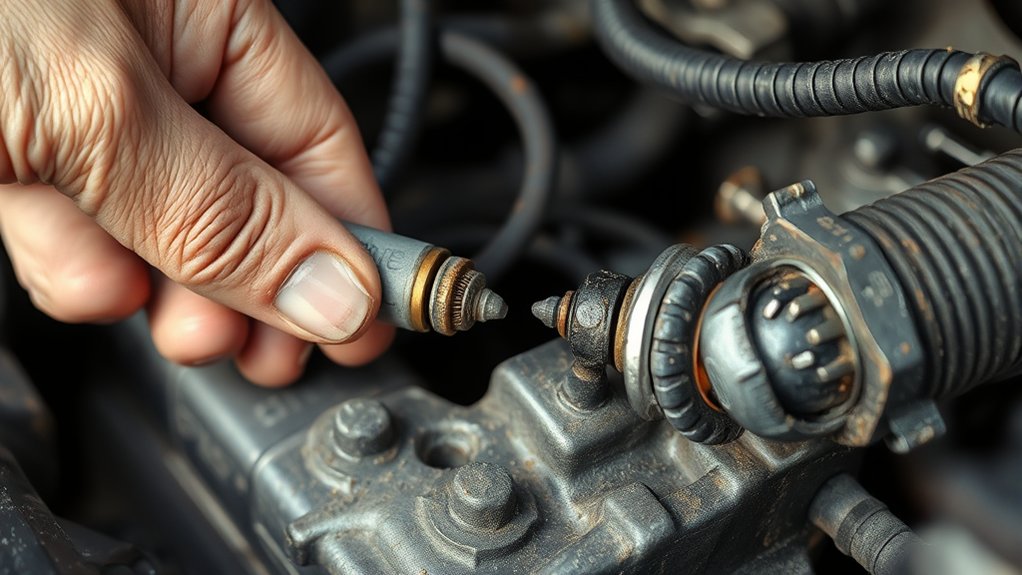
How do you know if your spark plug wires have gone bad? While spark plug types vary, such as copper, platinum, or iridium, the wires connecting them can also degrade over time.
Spark plug wires are typically made from materials like silicone, EPDM rubber, or fiberglass-reinforced cores, designed to withstand high voltage and heat. However, exposure to engine heat, oil, and vibration causes insulation breakdown and increased resistance.
Spark plug wires endure harsh conditions, leading to insulation breakdown and higher resistance over time.
When wire materials deteriorate, electrical conductivity drops, impairing spark delivery. This can lead to misfires or inefficient combustion, even if the spark plugs themselves remain in good condition.
Regular inspection of wire materials for cracks, brittleness, or corrosion is essential since spark plug wires do go bad, affecting overall ignition system performance despite the durability differences linked to various spark plug types.
What Are the Signs of Bad Spark Plug Wires?
When should you suspect that your spark plug wires are failing? Typically, noticeable signs include engine misfires, rough idling, and decreased fuel efficiency. Since spark plug types vary, the compatibility of wire materials with these plugs is essential; degraded insulation or corrosion on wires can disrupt the electrical flow.
You might also detect visible damage like cracks, burns, or brittleness on the wires, which compromises conductivity. Additionally, electrical interference causing radio static can indicate wire deterioration. Using an ohmmeter, you can measure resistance—higher than recommended values suggest the wires are compromised.
Because wire materials differ in conductivity and durability, choosing the correct type for your spark plugs guarantees peak performance and longevity. Recognizing these signs early helps maintain engine reliability and prevents further damage.
How Do Bad Spark Plug Wires Affect Engine Performance?
Although spark plug wires may seem like simple components, their condition directly impacts your engine’s performance by ensuring consistent electrical delivery to the spark plugs. When these wires degrade, you’ll notice a drop in spark efficiency and erratic ignition timing, which compromises combustion quality and power output.
Bad spark plug wires affect your engine by:
- Causing misfires due to weak or inconsistent spark delivery.
- Disrupting ignition timing, leading to inefficient fuel combustion.
- Increasing fuel consumption as incomplete combustion forces compensation.
- Generating rough idling and reduced acceleration because of irregular firing sequences.
Maintaining ideal spark plug wire condition preserves spark efficiency and precise ignition timing, essential for smooth engine operation and peak performance.
What Causes Spark Plug Wires to Go Bad?
Understanding why spark plug wires deteriorate helps you prevent the performance issues caused by faulty wiring. Spark plug deterioration often stems from prolonged exposure to heat, vibration, and contaminants.
The main culprit is wire insulation breakdown, which compromises the wire’s ability to conduct electricity efficiently. Over time, insulation cracks, allowing electrical leaks that disrupt spark delivery. Mechanical stress from engine movement also accelerates wear.
Moisture and oil exposure worsen the insulation’s condition, leading to corrosion and shorts.
| Cause | Effect | Emotion |
|---|---|---|
| Heat Exposure | Insulation cracks | Frustration |
| Vibration | Wire fatigue | Concern |
| Contaminants (Oil, Moisture) | Corrosion, shorts | Urgency |
Recognizing these causes helps you maintain reliable ignition performance and avoid costly repairs.
When Should You Replace Spark Plug Wires?
You should replace spark plug wires if you notice visible wear like cracks or corrosion, or if your engine shows signs of misfiring and reduced performance. Ignoring these issues can lead to inefficient combustion and higher fuel consumption.
Most manufacturers recommend replacing spark plug wires every 30,000 to 50,000 miles to maintain ideal engine function.
Signs Of Wire Wear
Several clear indicators signal when spark plug wires need replacement to maintain peak engine performance. Over time, the wire insulation can degrade, compromising electrical conductivity and causing misfires.
You should inspect your wires regularly for:
- Cracks, brittleness, or visible damage on the wire insulation, which expose the core to moisture and contaminants.
- Corrosion or buildup on the wire terminals, reducing electrical flow.
- Increased resistance measured with a multimeter, indicating diminished conductivity.
- Signs of arcing or burn marks along the wire length, a symptom of insulation failure.
If you notice any of these conditions, replacing the spark plug wires promptly prevents further electrical inefficiencies and guarantees consistent ignition system performance.
Impact On Engine Performance
Although spark plug wires might seem like minor components, their condition directly affects engine performance and fuel efficiency. When these wires degrade, they compromise ignition efficiency, reducing the voltage that reaches the spark plugs.
This drop leads to incomplete combustion, causing engine misfire, rough idling, and decreased power output. You’ll notice your vehicle struggling to accelerate smoothly or stalling unexpectedly. Poor ignition efficiency also increases fuel consumption, as the engine compensates for lost power.
If you experience these symptoms, inspecting and replacing worn spark plug wires is critical. Maintaining ideal wire integrity guarantees consistent electrical flow, preventing misfires and preserving overall engine performance. Addressing wire issues promptly keeps your engine running efficiently and minimizes long-term damage.
Recommended Replacement Intervals
Because spark plug wires endure constant heat, vibration, and electrical stress, they wear out over time and require timely replacement. To maintain peak engine performance, understanding the replacement frequency based on wire longevity is vital.
Follow these guidelines to determine when to replace your spark plug wires:
- Manufacturer’s recommendation: Check your vehicle’s manual for specific intervals, typically every 30,000 to 50,000 miles.
- Visual inspection: Replace if you notice cracks, corrosion, or brittle insulation.
- Performance symptoms: Misfires, rough idling, or decreased fuel efficiency signal wire degradation.
- Age factor: Even without visible damage, replace wires every 5 years to prevent unexpected failure.
Adhering to these intervals guarantees you avoid performance issues and maintain dependable ignition system operation.
How to Check Spark Plug Wires for Damage
To check spark plug wires for damage, start with a thorough visual inspection to spot cracks, burns, or corrosion. Next, use a multimeter to test the wire resistance, ensuring it falls within the manufacturer’s specified range.
These steps help you identify faulty wires before they cause engine performance issues.
Visual Inspection Techniques
A thorough visual inspection of spark plug wires reveals signs of wear, damage, or potential failure that can affect engine performance. To accurately assess wire condition, gather basic inspection tools such as a flashlight, magnifying glass, and a clean cloth. Follow these steps:
- Examine the insulation for cracks, burns, or melting that indicate heat damage or electrical leakage.
- Check for corrosion or buildup at the terminal ends, which can impair conductivity.
- Look for signs of physical wear like abrasions or cuts caused by engine vibrations or contact with sharp components.
- Inspect the wire routing to guarantee proper placement, avoiding tight bends or contact with hot surfaces.
Regular visual inspections help you spot issues early, preventing misfires and maintaining ignition system reliability.
Testing Wire Resistance
When you suspect spark plug wires may be compromised despite a clean visual inspection, measuring their resistance provides a precise assessment of their internal condition. Begin by identifying the wire types in your vehicle, as resistance specifications vary between carbon core, spiral wound, and other designs.
Use a digital multimeter set to the ohms (Ω) scale for resistance testing. Disconnect the wire from both the spark plug and ignition coil, and place the meter probes at each end of the wire.
A resistance reading considerably higher than the manufacturer’s recommended value indicates internal damage or deterioration. Consistently low resistance may also signal a short circuit. Regular resistance testing helps you maintain ideal ignition performance and prevents misfires caused by degraded wires.
How to Pick the Best Spark Plug Wires
How do you determine which spark plug wires deliver peak performance and durability? Focus on these critical factors to guarantee ideal ignition efficiency:
- Wire Material: Choose wires with high-quality conductors like copper or a copper core for excellent electrical conductivity and minimal resistance.
- Insulation Type: Select insulation resistant to heat, oil, and chemicals, such as silicone or EPDM rubber, to withstand engine conditions and prevent signal loss.
- Resistance Rating: Verify the resistance per foot matches manufacturer specifications to avoid weak sparks or interference.
- Connector Quality: Opt for corrosion-resistant terminals with secure fittings to maintain consistent electrical contact and reduce maintenance.
Frequently Asked Questions
Can Bad Spark Plug Wires Cause Poor Fuel Economy?
Yes, bad spark plug wires degrade spark plug performance, causing incomplete combustion. This inefficiency reduces fuel efficiency, so you’ll notice poorer mileage and increased emissions.
Replacing faulty wires restores ideal ignition and fuel economy.
Are Spark Plug Wires Universal or Vehicle-Specific?
Spark plug wires aren’t universal; you need to verify spark wire compatibility with your vehicle’s ignition system components. Using the correct wires maintains peak performance, prevents misfires, and protects your ignition system from damage.
How Do Spark Plug Wires Differ From Ignition Coils?
You’ll find spark plug wires transmit voltage using specific wire materials, while ignition coils generate that high voltage.
Spark plug types influence wire design, ensuring ideal conductivity and resistance tailored for each ignition system’s performance needs.
Can Moisture Damage Spark Plug Wires?
Yes, moisture effects can damage spark plug wires by causing corrosion and electrical shorts. You should perform regular spark plug maintenance to inspect and replace wires, ensuring peak engine performance and preventing misfires caused by moisture intrusion.
Is It Safe to Drive With Faulty Spark Plug Wires?
You wouldn’t want to ignore spark plug symptoms. It’s unwise to drive with faulty wires. Delaying wire replacement risks misfires and engine damage.
Act promptly to guarantee peak performance and avoid costly repairs down the road.
Conclusion
Spark plug wires can degrade over time, with studies showing up to 30% of engine misfires stem from faulty wires. If you notice rough idling or poor acceleration, don’t ignore these signs—they directly affect your engine’s efficiency.
Regularly inspect for cracks or corrosion and replace wires every 30,000 to 50,000 miles to maintain peak performance. Choosing high-quality wires guarantees durability and consistent ignition, keeping your engine running smoothly and reliably.
To ensure your engine performs at its best, always pay attention to the condition of your spark plug wires and replace them as needed. Spark plug wires can go bad, and timely maintenance is key to avoiding engine problems.