To clean oil out of spark plug wells, first remove the ignition coil and use compressed air or a soft brush to clear loose debris.
Apply a degreaser to oily areas and let it sit before scrubbing gently with a lint-free cloth or synthetic brush.
Avoid excess moisture, then dry thoroughly with compressed air.
Inspect spark plugs for fouling and replace if necessary.
If you want to understand causes and prevention, there’s more essential info ahead.
Key Takeaways
- Remove ignition coils and use compressed air or a soft brush to clear loose debris from spark plug wells.
- Apply brake cleaner or engine degreaser to oily areas and let it sit for several minutes before scrubbing.
- Gently scrub the wells with a small synthetic-bristle brush or lint-free cloth to remove oil residue.
- Use compressed air or a precision vacuum to dry and extract loosened oil from the wells thoroughly.
- Avoid excessive moisture during cleaning to prevent electrical issues and ensure wells are completely dry before reassembly.
How to Identify Oil in Spark Plug Wells
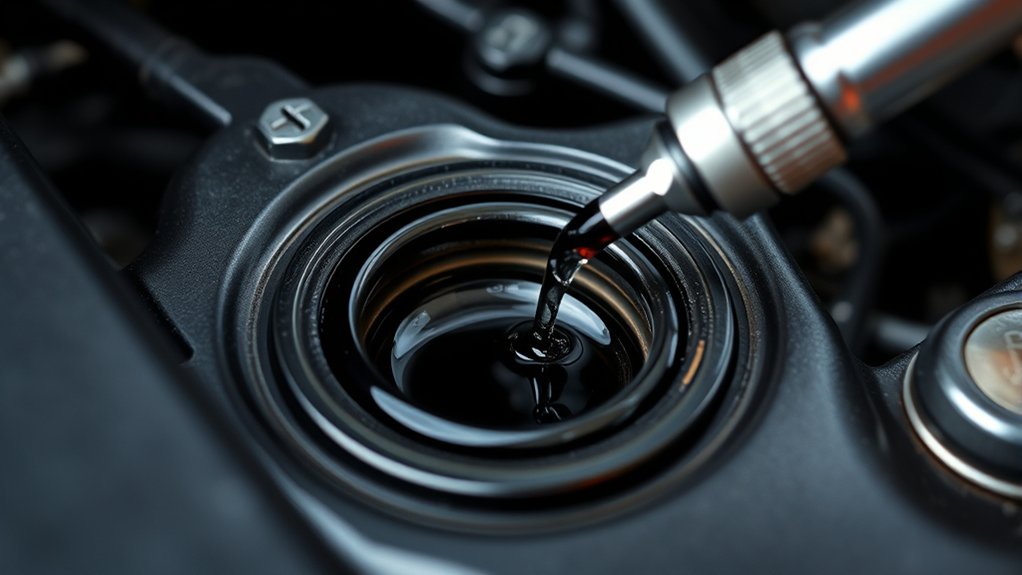
Oil in spark plug wells often appears as dark, wet residue surrounding the spark plug and inside the well itself. To accurately identify this issue, use oil detection methods such as visual inspection under adequate lighting and a clean cloth to wipe the area.
Spark plug symptoms like misfires, rough idling, or poor acceleration often correlate with oil contamination. You should remove the ignition coil to access the well and check for oily deposits.
Misfires, rough idling, or poor acceleration may signal oil contamination in spark plug wells—check by removing the ignition coil.
Additionally, inspect the spark plug for oil fouling, which manifests as wet, blackened electrodes. If you observe these signs, it confirms oil presence. Early detection is critical to prevent engine performance degradation.
Regular checks using these oil detection methods help you maintain peak engine function and address spark plug symptoms promptly.
Tools and Materials Needed to Clean Oil From Spark Plug Wells
To clean oil from spark plug wells effectively, you’ll need specific tools like a spark plug socket, extension bar, and a clean cloth. Use recommended cleaning materials such as brake cleaner or engine degreaser to remove oil residues safely.
Don’t forget safety equipment like gloves and eye protection to prevent injury during the process.
Essential Cleaning Tools
Cleaning oil out of spark plug wells requires a specific set of tools designed to reach tight spaces and remove contaminants effectively. You’ll need a flexible, narrow brush to scrub the wells without damaging components.
A precision vacuum or compressed air device helps extract loosened oil and debris efficiently. Use a pair of tweezers or needle-nose pliers for removing stubborn residues. Gloves protect your hands from oils and solvents during the cleaning process.
These tools support proper cleaning techniques, ensuring thorough maintenance without harming the engine. Following these maintenance tips will help you maintain spark plug wells in prime condition, preventing misfires and engine damage caused by oil contamination. Prepare these essential cleaning tools before starting for a smooth, effective cleanup.
Recommended Cleaning Materials
Once you have gathered the right tools, selecting the proper cleaning materials will guarantee you remove oil effectively without damaging the spark plug wells. Start with specialized cleaning solvents designed to break down automotive oils without corroding metal or rubber components. Use a solvent with low residue to prevent future fouling.
Next, employ oil absorbents such as lint-free microfiber cloths or oil-absorbent pads to soak up loosened oil efficiently. Avoid using abrasive materials that might scratch the wells. Additionally, a small brush with synthetic bristles can assist in agitating stubborn deposits after applying the solvent.
Finally, make certain you have clean, dry rags to wipe away any remaining solvent and oil before reassembling. Using these materials precisely will maintain the integrity and function of your spark plug wells.
Safety Equipment Needed
Three essential pieces of safety equipment will protect you while removing oil from spark plug wells: gloves, eye protection, and a respirator or mask. Wearing rubber gloves prevents skin contact with harmful oils and solvents.
Safety goggles shield your eyes from splashes and debris. A respirator or mask guards against inhaling fumes.
| Equipment | Purpose |
|---|---|
| Rubber Gloves | Protect skin from chemicals |
| Safety Goggles | Prevent eye irritation and injury |
| Respirator/Mask | Filter harmful fumes and vapors |
| Protective Clothing | Avoid contamination of your clothes |
Always wear these to guarantee your safety during the cleaning process. Proper protection minimizes risks and keeps you safe from chemical exposure and mechanical hazards.
How to Clean Oil From Spark Plug Wells
Begin by removing any loose debris from the spark plug wells using compressed air or a soft brush to prevent contaminants from entering the engine. Next, apply a degreaser specifically designed for automotive use to the oily areas. Let it sit for several minutes to break down the oil.
Use a lint-free cloth or a small brush to gently scrub the wells, making sure you don’t push oil deeper. Avoid excessive moisture to prevent electrical issues. After cleaning, use compressed air again to dry the wells thoroughly.
This process is critical for effective spark plug maintenance and helps with oil leak prevention by identifying and eliminating oil accumulation early. Regular cleaning guarantees peak engine performance and prevents misfires caused by oil contamination.
How to Inspect Spark Plugs After Cleaning
After thoroughly cleaning the spark plug wells, your next step is to inspect the spark plugs themselves for signs of wear, fouling, or damage. Proper spark plug inspection guarantees peak engine performance and prevents misfires. Use precise cleaning techniques before inspection to remove any residual oil or debris.
Focus on these key points:
- Check the electrode for erosion or rounded edges.
- Look for carbon buildup indicating fouling.
- Inspect the insulator for cracks or chips.
- Measure the electrode gap with a feeler gauge to verify specifications.
- Assess for oil deposits that suggest underlying seal issues.
What Causes Oil to Leak Into Spark Plug Wells
You’ll often find oil in spark plug wells due to leaks from valve cover gaskets or worn seals. Engine component wear, such as degraded gaskets or damaged seals, allows oil to seep into these areas.
Identifying these common leak sources is essential before you start cleaning.
Common Leak Sources
Any oil leak into spark plug wells typically originates from a few common sources related to engine seal integrity. When gasket failure occurs, oil can seep past the valve cover gasket, entering the wells.
Additionally, incorrect oil viscosity can exacerbate leaks by allowing oil to flow more freely through compromised seals. Here are the primary leak sources to check:
- Valve cover gasket failure or improper installation
- Spark plug tube seals deteriorated or damaged
- Cracked or warped valve cover allowing oil escape
- Loose or missing valve cover bolts causing poor sealing
- Excessive oil pressure forcing oil past weak seals
Understanding these sources helps you target repairs precisely, minimizing further contamination and ensuring reliable engine performance.
Engine Component Wear
When engine components wear down, they compromise the seals and surfaces that keep oil contained, allowing it to leak into spark plug wells. This wear reduces engine longevity by diminishing the effectiveness of lubrication, causing oil to escape through gasket failures or cracked valve cover surfaces.
You need to identify worn parts early to prevent further damage and maintain proper lubrication effects.
| Component | Wear Effect |
|---|---|
| Valve Cover Gasket | Hardens, cracks, leaks oil |
| Spark Plug Tube Seals | Shrinks, loses sealing ability |
| Cylinder Head Surface | Warps, prevents tight gasket fit |
| Camshaft Seals | Degrades, leaks pressurized oil |
Regular inspection and timely replacement guarantee peak sealing and protect engine longevity.
How to Prevent Oil Leaks in Spark Plug Wells
Although oil leaks in spark plug wells can seem inevitable, you can greatly reduce their occurrence by regularly inspecting and maintaining key engine seals. Effective oil leak prevention starts with thorough spark plug maintenance and seal care. Focus on these steps:
Inspect valve cover gaskets for cracks or hardening. Check spark plug tube seals for deformation or damage. Clean spark plug wells during routine maintenance to detect leaks early. Use manufacturer-recommended sealants and parts during repairs. Avoid over-tightening spark plugs, which can damage tube seals.
When to Replace Valve Cover Gaskets and Seals
If you notice persistent oil accumulation in the spark plug wells despite regular cleaning, it’s a clear sign you need to replace the valve cover gaskets and seals. Proper valve cover maintenance prevents oil leaks that compromise engine performance and safety.
Gasket replacement is critical when the seals crack, harden, or visibly deform.
| Symptom | Emotional Impact |
|---|---|
| Continuous oil leaks | Frustration |
| Engine misfire signs | Anxiety |
| Visible gasket damage | Urgency |
| Frequent cleaning need | Exhaustion |
| Potential engine damage | Concern |
Address gasket replacement promptly to maintain a clean engine bay and reliable spark plug function. This step safeguards against costly repairs and guarantees your engine runs smoothly.
When to Call a Mechanic for Spark Plug Well Oil
You should call a mechanic for spark plug well oil issues once you notice persistent oil accumulation that cleaning doesn’t resolve or if your engine shows signs like misfires, rough idling, or decreased performance. A professional’s mechanic expertise is essential for accurate diagnosis and effective repair, which may involve replacing valve cover gaskets or addressing deeper engine problems.
Call a mechanic for persistent spark plug well oil issues and engine symptoms like misfires or rough idling.
Before proceeding, request a detailed cost assessment to understand repair expenses and avoid unexpected charges. Here are key indicators to seek mechanic assistance:
- Recurrent oil presence after cleaning
- Engine misfires or rough running
- Difficulty starting the engine
- Unusual engine noises
- Warning lights on the dashboard
Timely mechanic intervention prevents further engine damage and guarantees peak vehicle performance.
Frequently Asked Questions
Can Oil in Spark Plug Wells Damage Engine Performance?
Yes, oil contamination in spark plug wells can impair engine performance by causing misfires and poor ignition. You should remove the oil promptly to maintain ideal combustion and prevent further damage to ignition components and overall engine efficiency.
How Often Should Spark Plug Wells Be Checked for Oil?
You should perform spark plug inspection at least every 30,000 miles to prevent catastrophic oil leaks.
Regular checks guarantee oil leak prevention, maintaining peak engine performance and avoiding costly repairs caused by neglected oil buildup in spark plug wells.
Are Certain Car Models More Prone to Spark Plug Well Oil Leaks?
Yes, certain car models are more prone to spark plug well oil leaks due to common causes like valve cover gasket wear.
You should prioritize regular car maintenance to inspect and replace gaskets, preventing oil contamination effectively.
What Are the Risks of Ignoring Oil in Spark Plug Wells?
Ignoring oil in spark plug wells is like letting rust silently claim a sword’s edge. Oil leak causes misfires and corrosion, jeopardizing engine maintenance.
Act promptly to prevent costly damage and guarantee peak engine performance.
Can Using Synthetic Oil Reduce Spark Plug Well Leaks?
Yes, using synthetic oil benefits leak prevention by maintaining better viscosity and stability under heat. You’ll reduce gasket wear and oil breakdown, which lowers the risk of spark plug well leaks and improves engine reliability.
Conclusion
Now that you’ve cleaned the oil from your spark plug wells, you’re one step closer to a smoother-running engine. Remember, pinpointing the source and preventing leaks is key—like sealing a leaky faucet before it floods your kitchen. Regular inspections and timely gasket replacements keep your engine’s spark alive and well.
If the oil problem persists or feels out of hand, don’t hesitate to call a mechanic to avoid bigger engine headaches down the road. Taking care of oil in spark plug wells promptly helps maintain engine performance and prevents further damage. Keeping your spark plug wells clean is essential for a reliable and efficient engine.